
• Moon

Moon: China confirms its agenda

Published on 04 November 2026

China's manned lunar program has been clearly on display for several years. At the end of October, the goal of having Chinese astronauts walk on the Moon before 2030 was officially confirmed.

Moon: China confirms its agenda

China’s first lunar mission dates back to 2007 with Chang’e 1, an automated probe that orbited our natural satellite. China has since methodically progressed through the technical stages of landing robotic spacecraft on the lunar surface and deploying rovers, even achieving the first landing on the far side (Chang’e 4) in January 2019. Two other missions have also brought back samples from our celestial neighbor: from the near side in 2020 with Chang’e 5, and then from the far side in 2024 with Chang’e 6 (another first).

Rumors regarding a crewed component of the Chinese lunar program have been confirmed over the years, given the testing of the necessary spacecraft. Since the 7th Manned Space Academic Conference, held at Beihang University in Beijing on October 31st, the mission schedule has been clarified, with the goal of sending Chinese astronauts to the Moon before 2030 .

ELEMENTS OF THE CHINESE MANNED LUNAR PROGRAM

For several years, the Chinese space agency CNSA (China National Space Administration) and the one more specifically in charge of manned flights, the CMSA (China Manned Space Agency), have regularly announced progress in the development of the means necessary for astronauts from their country to walk on the Moon.

SPACESHIPS, LAUNCHER AND DIVING SUIT

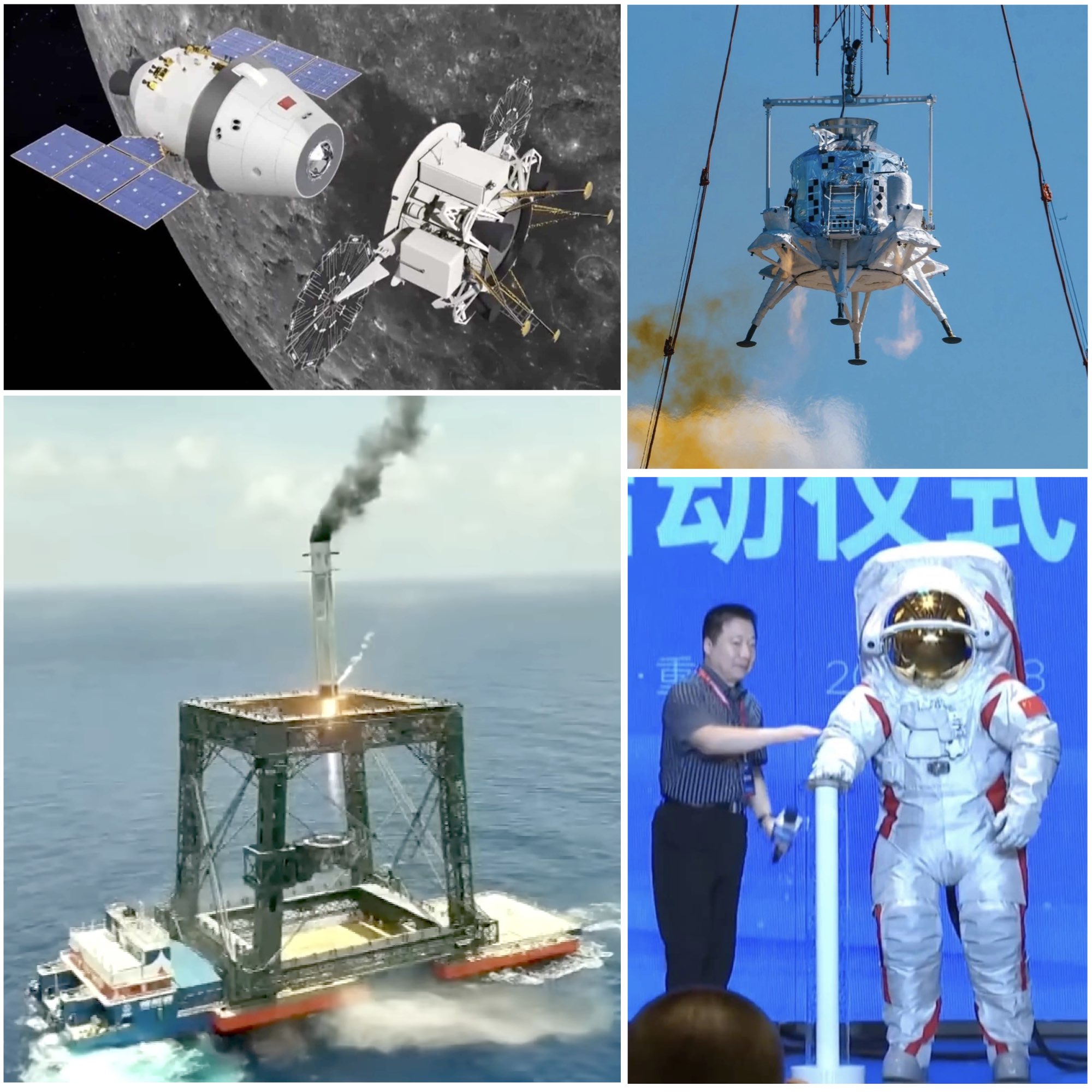
The new crewed spacecraft Mengzhou , tested in automatic orbit around Earth in 2020, has since undergone ejection tests in case of a problem on the launch pad or in flight. During the summer of 2025, images showed successful ground tests of the lunar module Lanyue using an impressive gantry. In 2026, the CZ-10 launch vehicle demonstrated that its first stage could be recovered .

Finally, you can’t walk on the Moon without a spacesuit . While China has mastered this technology for some years due to the extravehicular activities required for the operation of its Tiangong station (or China Space Station), it presented, in October 2024 , the model designed for our natural satellite and named Wangyu a little later .

The main elements of the Chinese manned lunar program. Top left: illustration of the Mengzhou spacecraft (left) with the Lanyue lander. Top right: ground test of the Lanyue lunar lander . Bottom left: return of the first stage of the CZ-10 launcheron a barge at sea last July. Bottom right: the Wangyu lunar spacesuit presented by Yang Liwei, the first Chinese astronaut (Shenzhou-5 mission in 2003).
© Cité de l’espace based on CNSA/CMSA

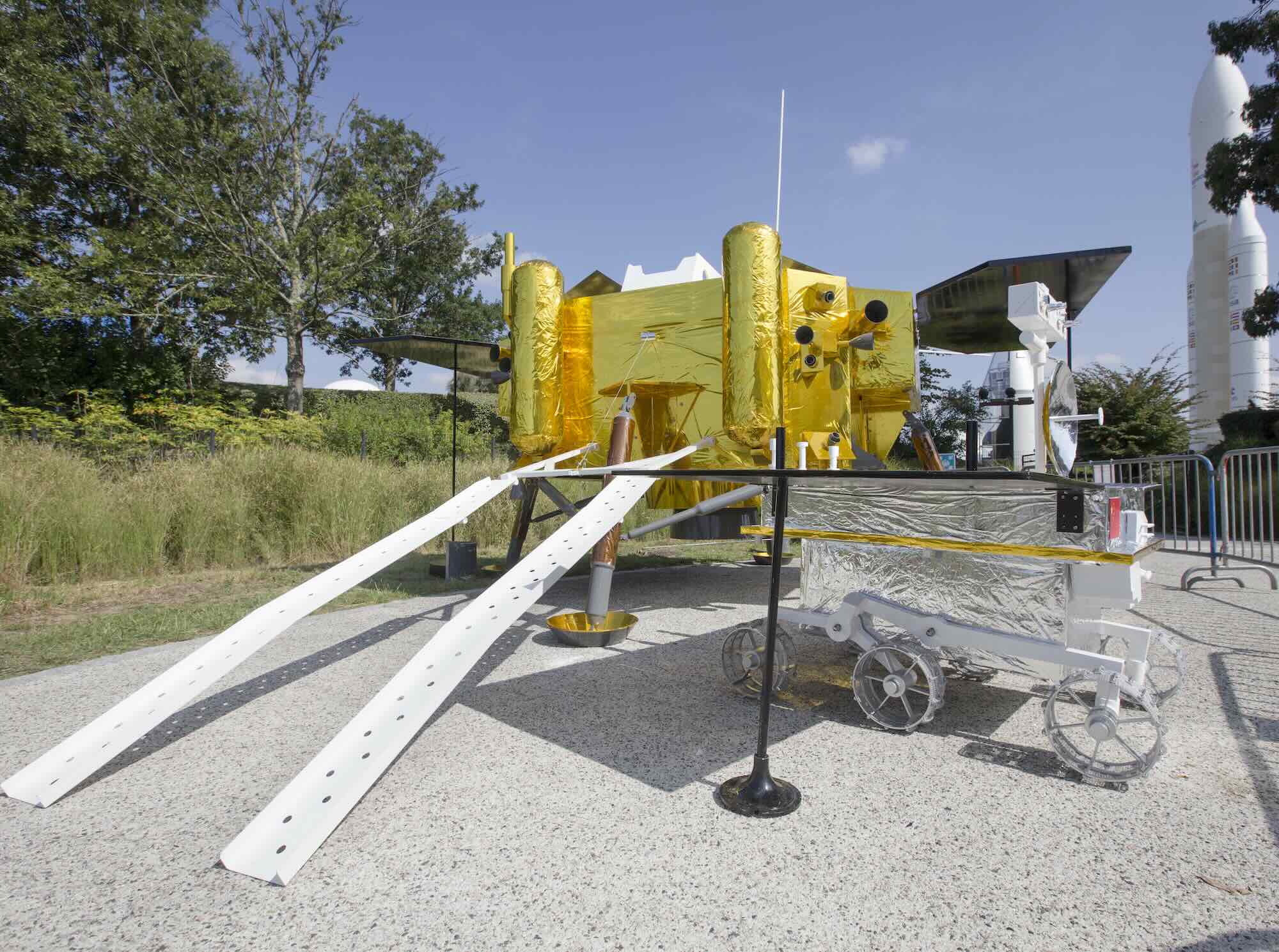
In its gardens, the Cité de l’espace in Toulouse displays a full-size model of the Chinese probe Chang’e 4 and its rover Yutu-2.
Robotic lunar missions allow China to prepare for manned missions.

© Cité de l’espace/Laurent Garcia

TWO LAUNCHES TO THE MOON

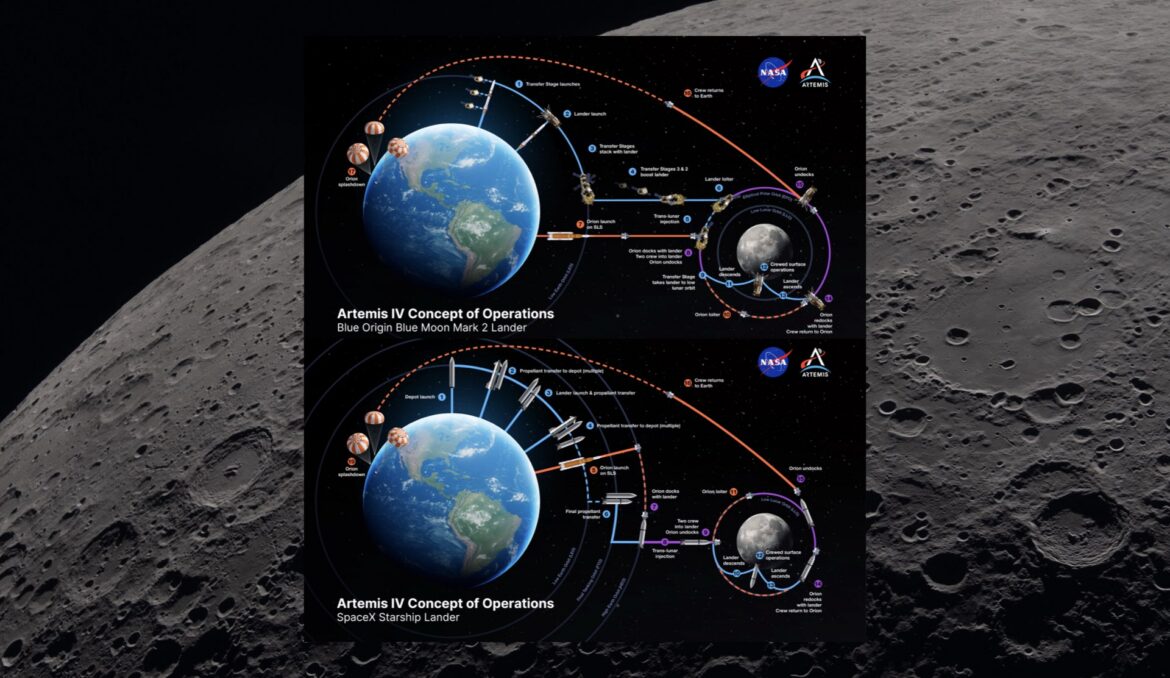
While NASA relies on a complex architecture using the private sector for landers and spacesuits, the CNSA and CMSA seem to favor a more “classic” approach , which nevertheless relies on two separate launches.

First, a CZ-10 will launch the Lanyue lunar module (equipped with a propulsion stage) into lunar orbit. Then, another CZ-10 will transport the astronauts to the Moon aboard the Mengzhou spacecraft . Both vehicles will dock with the Moon to allow for the transfer of the crew (partially or entirely) into the lander.

Once the lunar landing and surface operations are complete (including at least one spacewalk), Lanyue will bring the Chinese lunar walkers back to Mengzhou . It is aboard this spacecraft that the crew will return to Earth.

BEFORE 2030

Communication surrounding China’s lunar program oscillates between images and press releases disseminated by national media and “leaks” circulating on social media. Technical information remains minimal, however, and the precise timeline has largely relied on corroborating information.
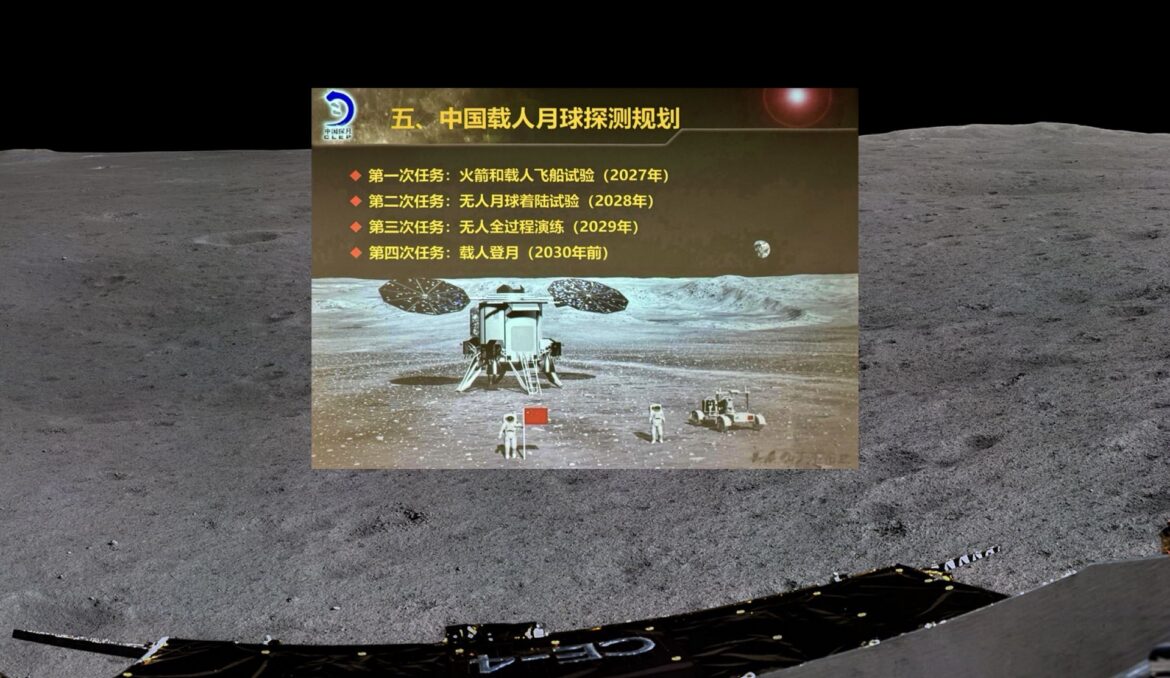
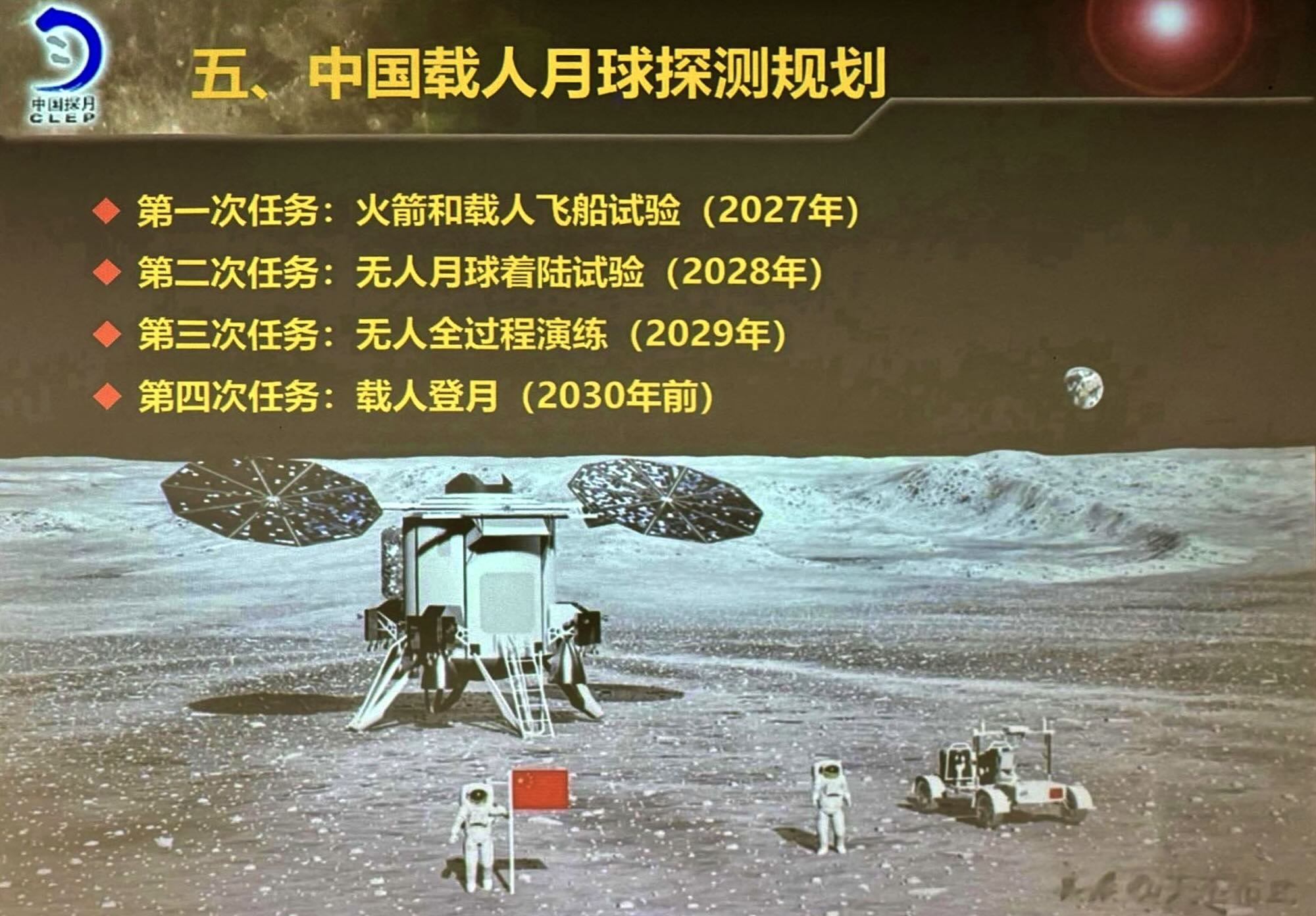
Nevertheless, on October 31st, at the 7th Manned Space Academic Conference held at Beihang University in Beijing, Wang Xiang, deputy chief designer of China’s manned space program, confirmed the principle mentioned earlier (two launches). Furthermore, a slide outlining a timeline of the next steps was widely shared on social media during the event.

The report reveals that in 2027, the launch vehicle and its crewed spacecraft (the CZ-10 and Mengzhou) will be tested during a flight . The following year, in 2028, China will land a Lanyue lander on the Moon in automatic mode. In 2029, a mission rehearsal without astronauts on board is announced (involving an automatic rendezvous of Mengzhou and Lanyue around the Moon).

Finally, the complete mission, with Chinese astronauts on the Moon, is planned “before 2030“ .

The slide that circulated on social media after the 7th Manned Space Academic Conference on October 31, 2026, indicates 2027 for a joint test flight of the CZ-10 and Mengzhou spacecraft, 2028 for an automated lunar landing of Lanyue, and 2029 for an automated test of both Mengzhou and Lanyue. Finally, the Chinese crewed mission to the Moon is specified as occurring “before 2030“.
© DR/Used for illustrative purposes.

THE IMPORTANCE OF THE YEAR 2029 FOR CHINA

We know that October 2029 will mark the eightieth anniversary of the founding of the People’s Republic of China . This is why this date is often considered as the date for a mission that would then take on an aspect that is both political and symbolic.

This agenda, with 2029 in sight, also explains why the White House pushed for Artemis IV in 2028, wanting Americans to return to the Moon before China lands there for the first time.

Related articles