
• Exploration

Moon, Mars and Titan: NASA and Japan unveil their joint projects

Published on 19 November 2026

JAXA and NASA have reviewed their joint projects. From the crewed rover scheduled for 2031 to the polar LUPEX mission in 2028, as well as the exploration of Mars and Titan, the agreement sets the timeline for the years ahead.

Moon, Mars and Titan: NASA and Japan unveil their joint projects

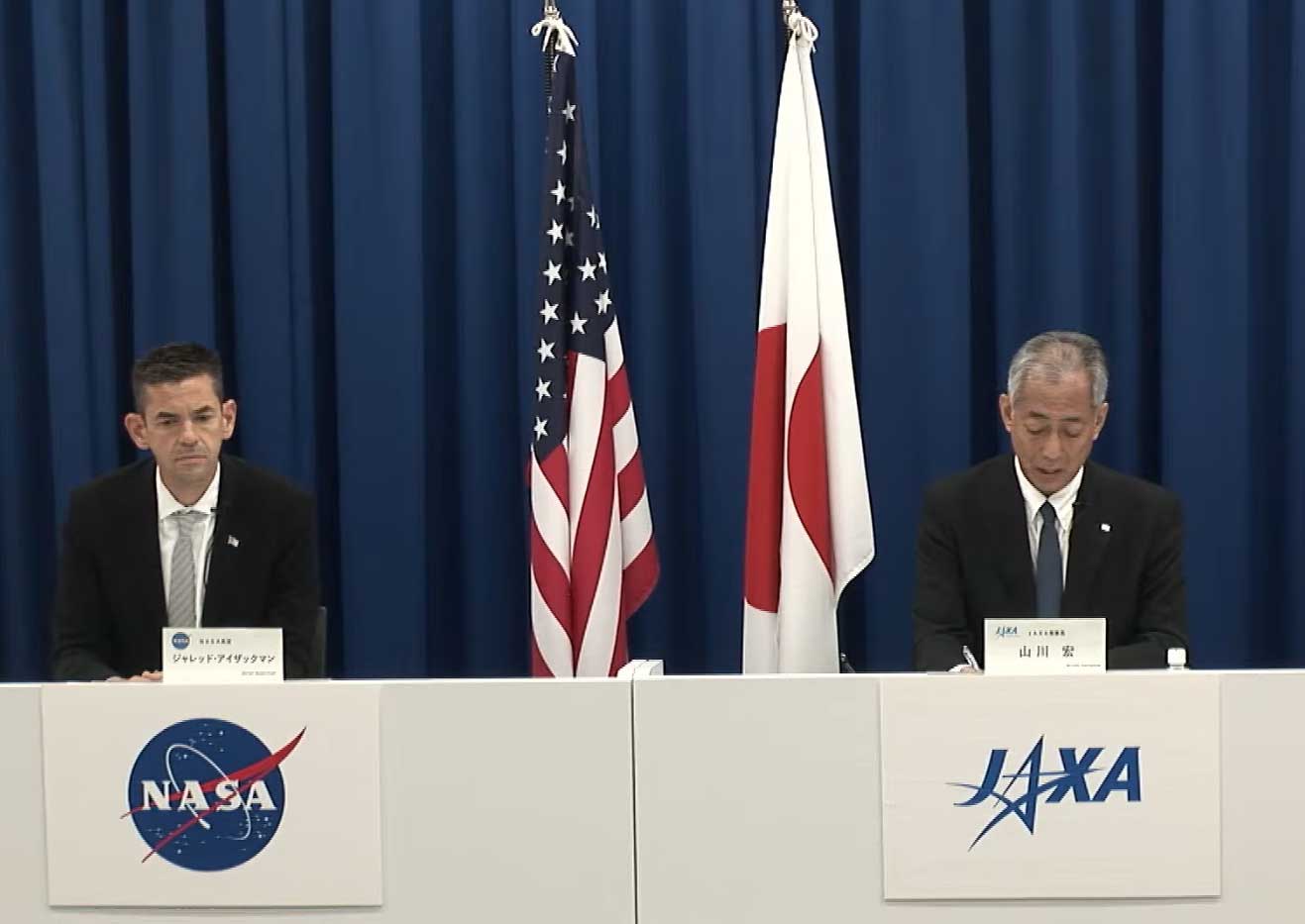
Meeting in Tokyo, JAXA President Hiroshi Yamakawa and NASA Administrator Jared Isaacman reviewed the future of their space cooperation. Between the refocusing of the Artemis lunar program, the development of a crewed pressurized rover, and sending probes toward the moons of Mars and Saturn, this meeting helped set the course and clarify the strategic priorities of both agencies for the coming years.

Jared Isaacman and Hiroshi Yamakawa presented their upcoming joint projects.

© JAXA

Joint Projects for the Moon

JAXA to Provide a Pressurized Rover for Artemis Missions

Lunar exploration is the centerpiece of the projects between the two agencies. As we know, NASA’s priority is now to establish a base at the Moon’s south pole. With this in mind, NASA announced this year that it is accelerating its schedule with the launch of the Artemis III mission in 2027, before considering Artemis IV in 2028. Japan’s major contribution centers on the development of a crewed pressurized rover. “A pressurized rover is exactly what we can call a mobile lunar base as we envision it, because it will offer both habitability and mobility,” explained JAXA President Hiroshi Yamakawa. The vehicle’s launch is scheduled for 2031. This vehicle will allow crews to conduct research farther and longer on the lunar surface. “The pressurized rover will give our astronauts the ability to conduct more scientific research and operate in places that would otherwise be out of reach,” said NASA Administrator Jared Isaacman. This agreement confirms that these developments will open access to the lunar surface for Japanese astronauts. In April 2024, U.S. President Joe Biden even announced that under the Artemis program, the first non-American to walk on the Moon would be Japanese. That phrasing was not reused by the head of the American agency. We know that negotiations are underway with Italy, which has also promised a pressurized rover in exchange for two seats on the lunar surface. Other negotiations are also taking place with the European Space Agency. “I look forward to seeing our astronauts stand side by side on the lunar surface,” Isaacman simply said. And for now, no exact date or Artemis mission number has been given for the landing of the first Japanese astronaut on the lunar surface.
The LUPEX Robotic Mission to Examine Lunar South Pole Resources

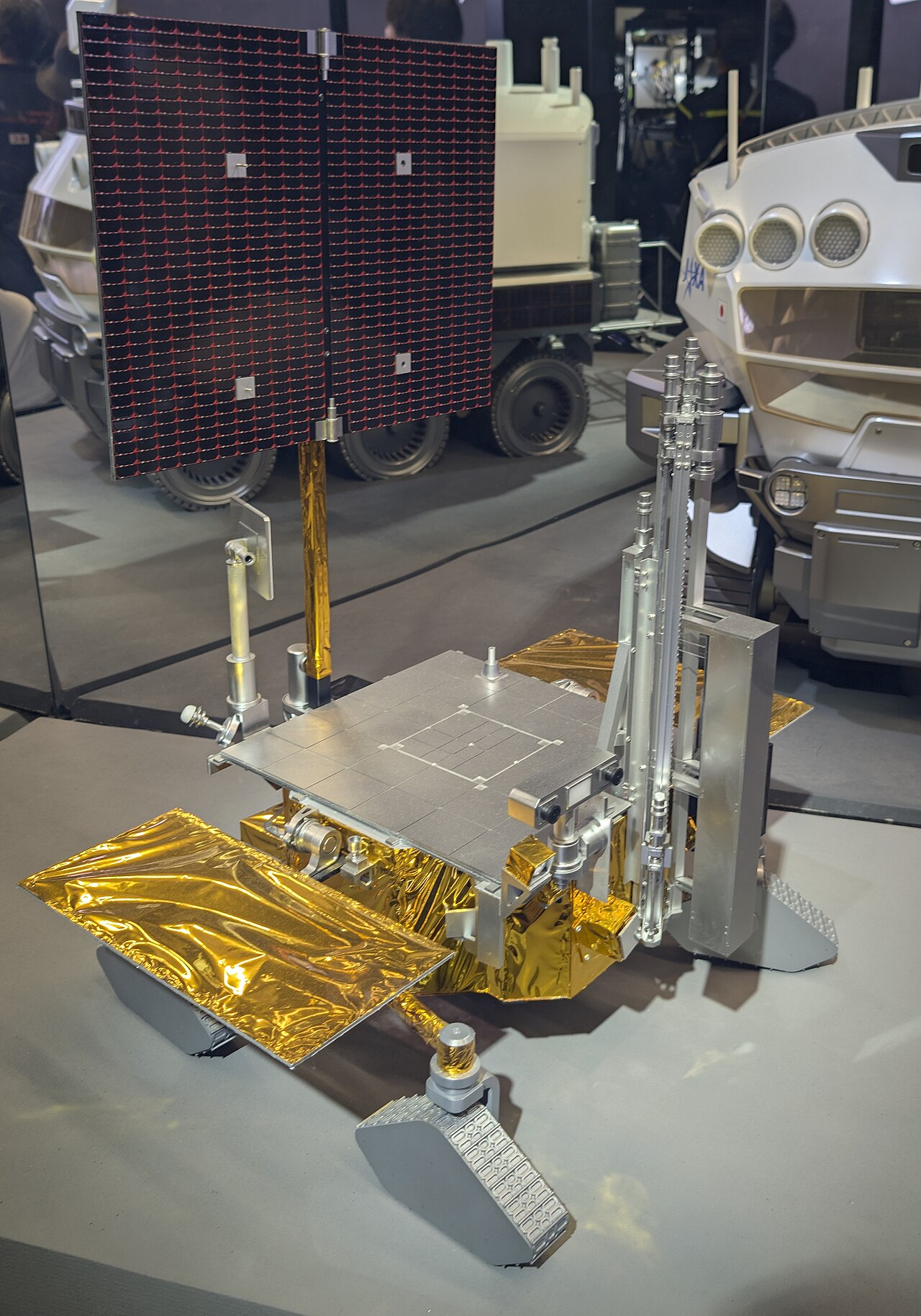
Before deploying crews and heavy infrastructure on the surface, robotic reconnaissance is an essential preliminary step. In 2028, the joint LUPEX (Lunar Polar Exploration mission) will have the main objective of directly exploring the polar regions of the Moon. This robotic mission will analyze in detail the presence of water ice and the distribution of volatile resources trapped in the soil of craters located at the south pole. By accurately measuring the amount of accessible water and the terrain’s topography, LUPEX will provide strategic scientific and mapping data. This ground information will help secure the choice of location for the future lunar base and effectively plan the routes of the crewed pressurized rover ahead of its arrival.

Quarter-scale model of LUPEX in 2025 at the JAXA pavilion at Expo 2025.

© Artem G. / CC BY 4.0

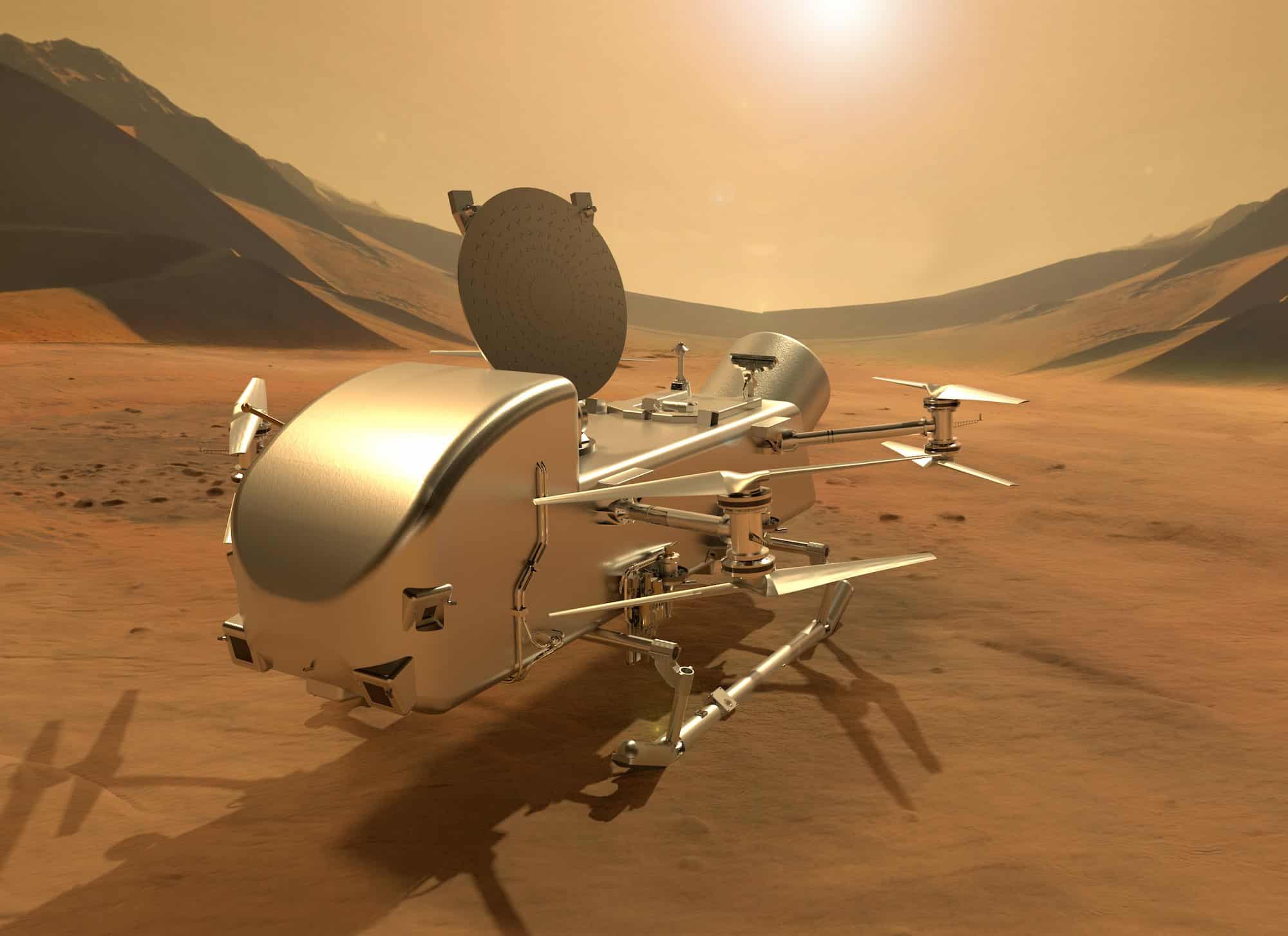
JAXA will provide seismic measurement equipment for NASA’s Dragonfly mission.

© NASA

Cooperation Toward Mars, Titan, and Also in Low Orbit

NASA and JAXA Cooperate on the MMX and Dragonfly Missions, as Well as Post-ISS Plans

Beyond the Moon, the two agencies are continuing their work on Solar System exploration missions. The MMX (Martian Moons eXploration) mission, led by JAXA, launched on October 19. It is set to study the moons Phobos and Deimos while returning samples to Earth by 2031. European instruments are part of the journey, including the French MIRS spectrometer and the Franco-German rover IdeFIX. NASA has also provided two instruments: MEGANE, a spectrometer to measure the chemical composition of Phobos’s subsurface, and a sampler. The P-Sampler, designed by Honeybee Robotics, will lift and collect dust from the surface of Mars’s moon. “NASA is very proud to contribute scientific instruments and we look forward to studying some of these samples when they return in 2031,” said Jared Isaacman.

In parallel, Japan will provide seismic measurement equipment for NASA’s Dragonfly mission, the science octocopter that will study the complex chemistry of Saturn’s moon Titan. Its launch is also scheduled for 2028. Finally, this alliance builds on cooperation in low Earth orbit. Resupplying the International Space Station will continue via the Japanese HTV-X cargo spacecraft, while the two agencies study new usage models to prepare for the period following the retirement of the ISS.

Related articles