




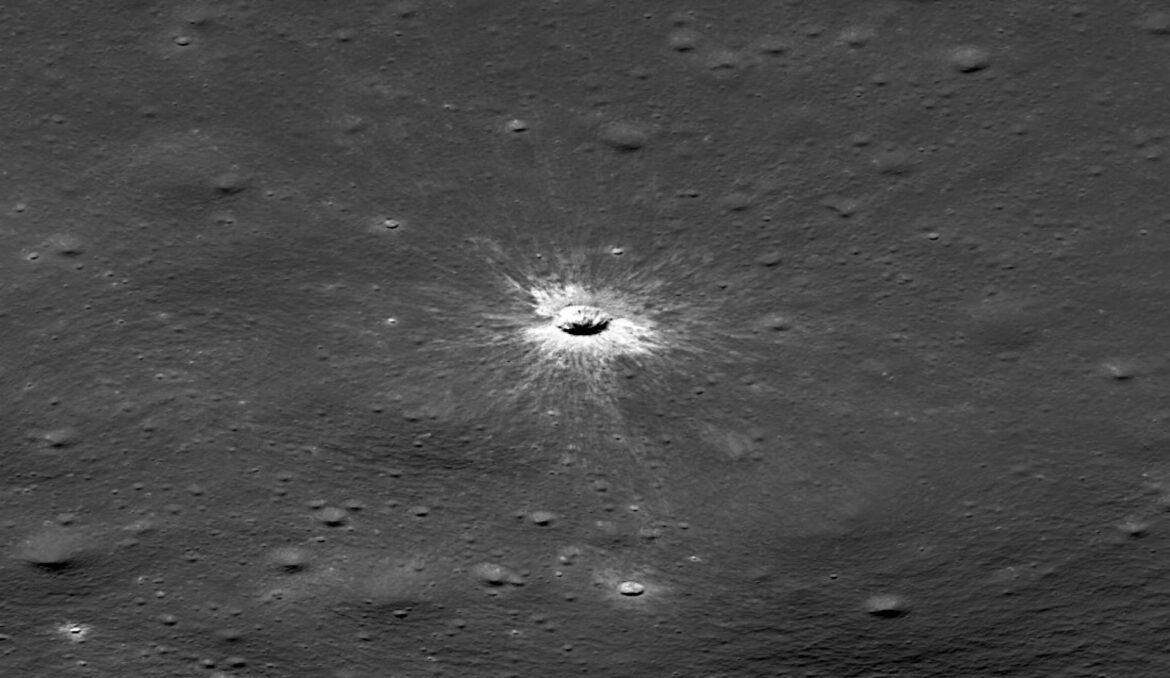

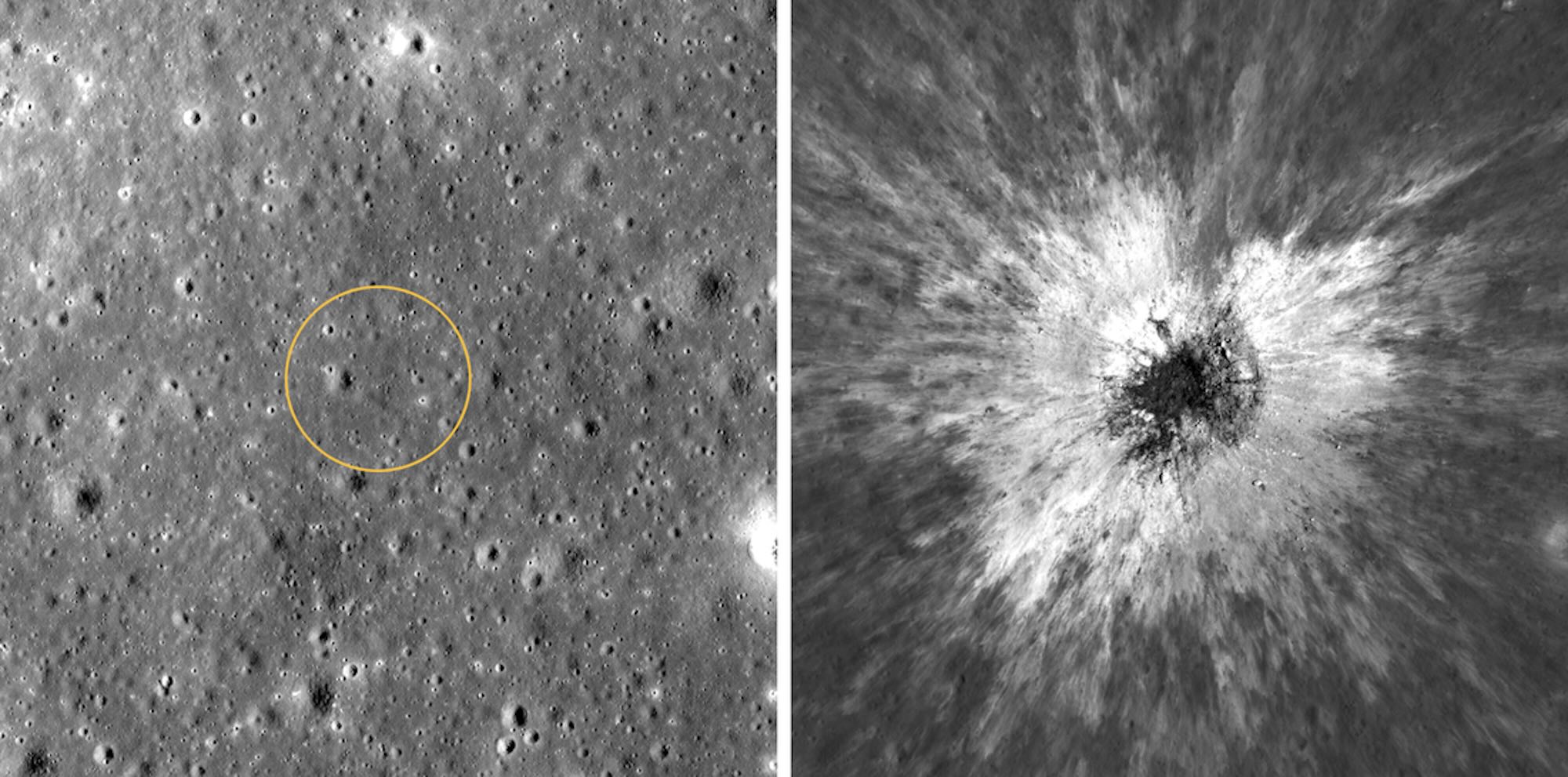
These two images cover the same 925-meter square area on the Moon. The image on the left was taken by the Lunar Reconnaissance Orbiter (LRO) before the impact. The yellow circle shows the diameter of the crater formed in 2024.
The image on the right reveals the dramatic change resulting from the impact, with the formation of a new crater named McGetchin.
© NASA/GSFC/Intuitive Machines
ONCE A CENTURY
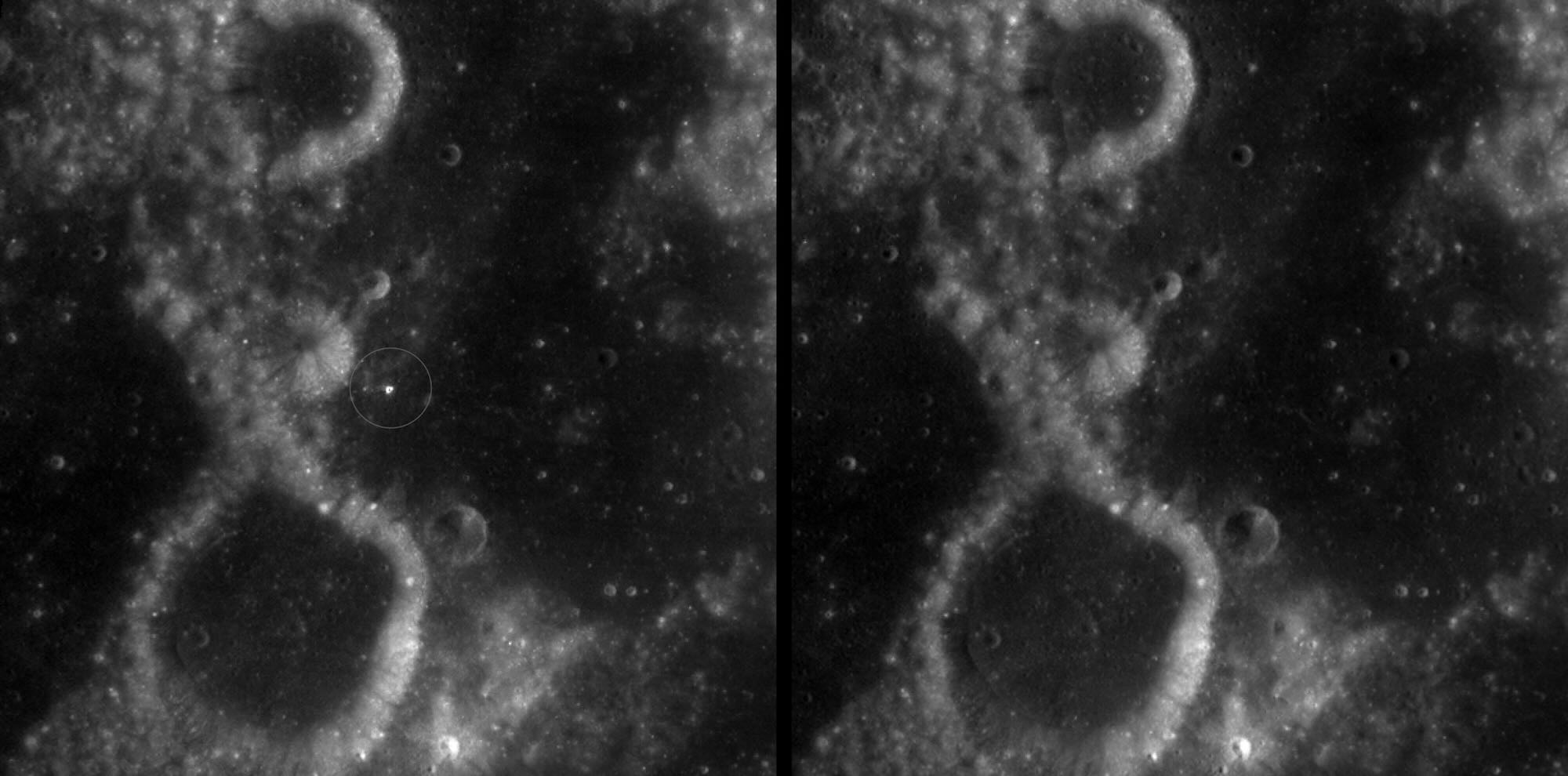
To learn more, it was decided to examine this area more closely using one of the two NACs (Narrow Angle Cameras) on Lunar Reconnaissance Orbiter (LRO). While the image covers a narrower portion of the lunar surface, the resolution is thus reduced from 100 meters per pixel to 2 meters per pixel.
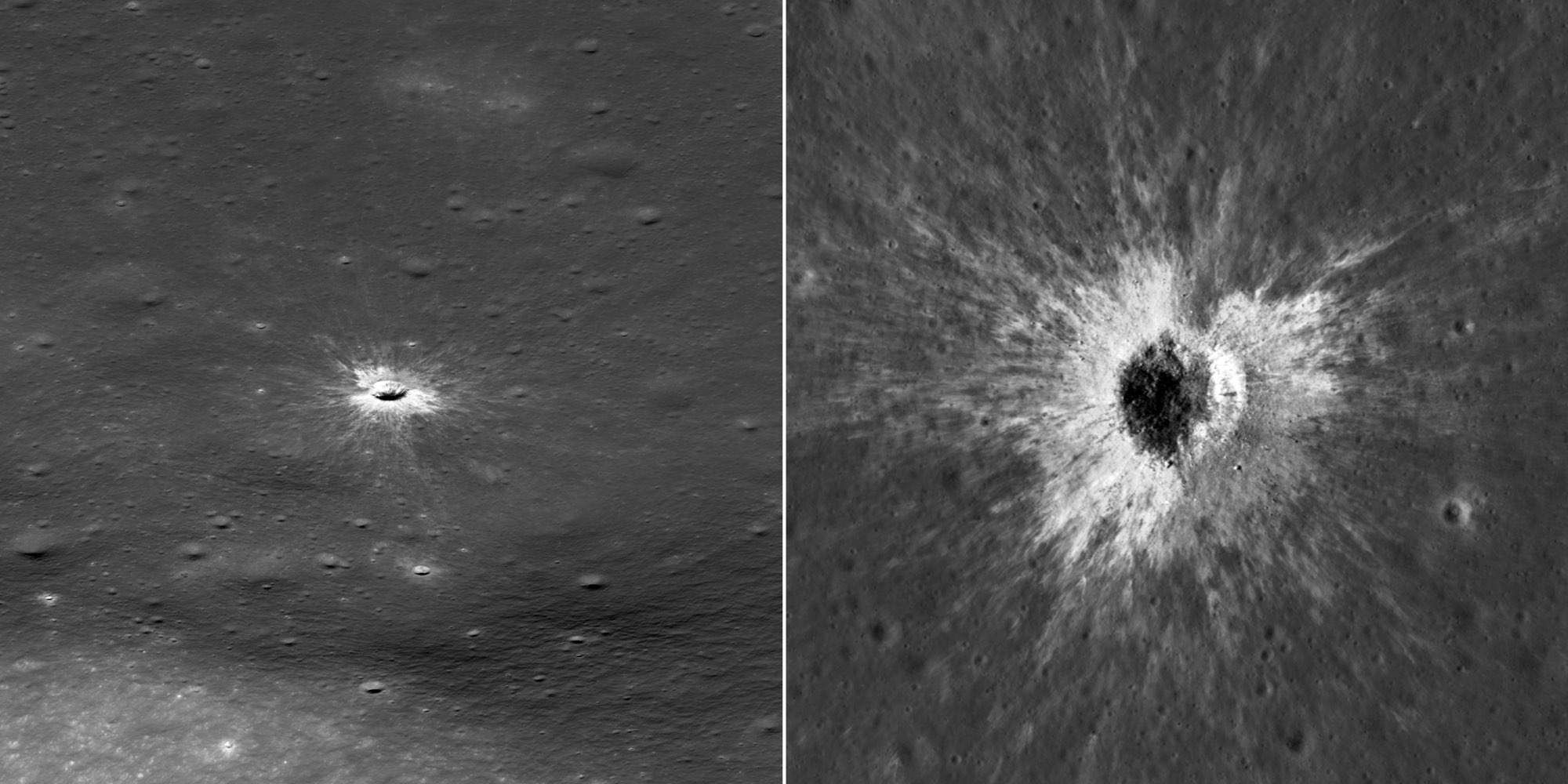
The crater formed in 2024 then shows a width of 222 meters and a depth of 43 meters . In some places, the crater rim rises to 8 meters above the surrounding surface. Calculations indicate that such an impact occurs on average only once every 132 years . According to NASA, the object that struck the Moon (asteroid or comet) must have been similar in size to a 3- to 6-story building (keeping in mind that in the United States, the ground floor is considered the first floor).



