





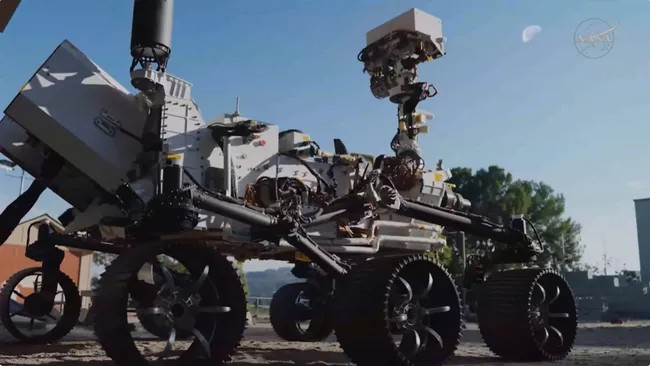
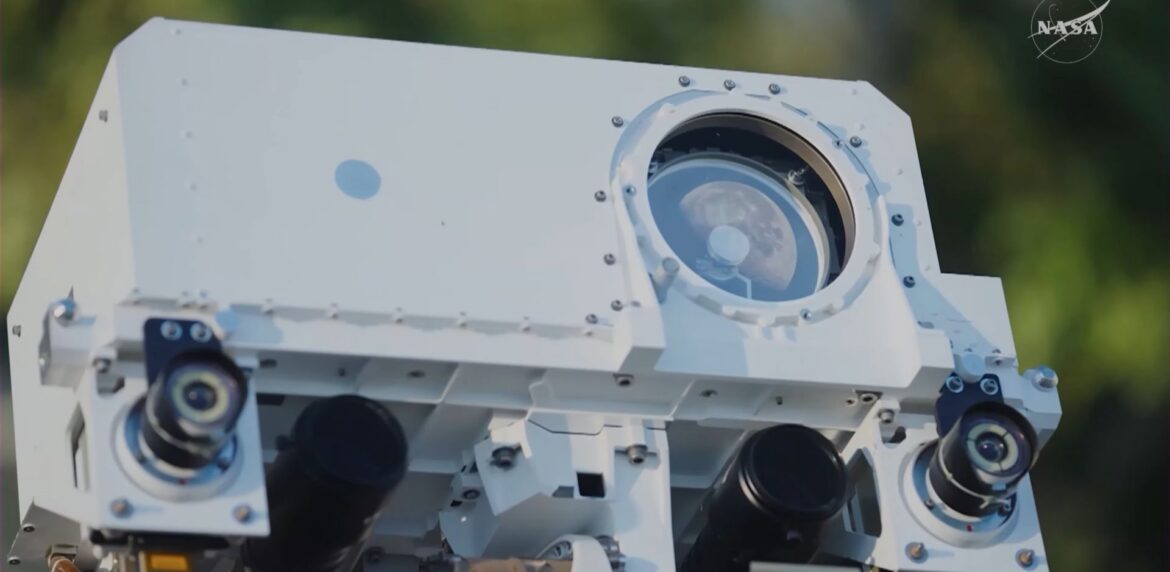


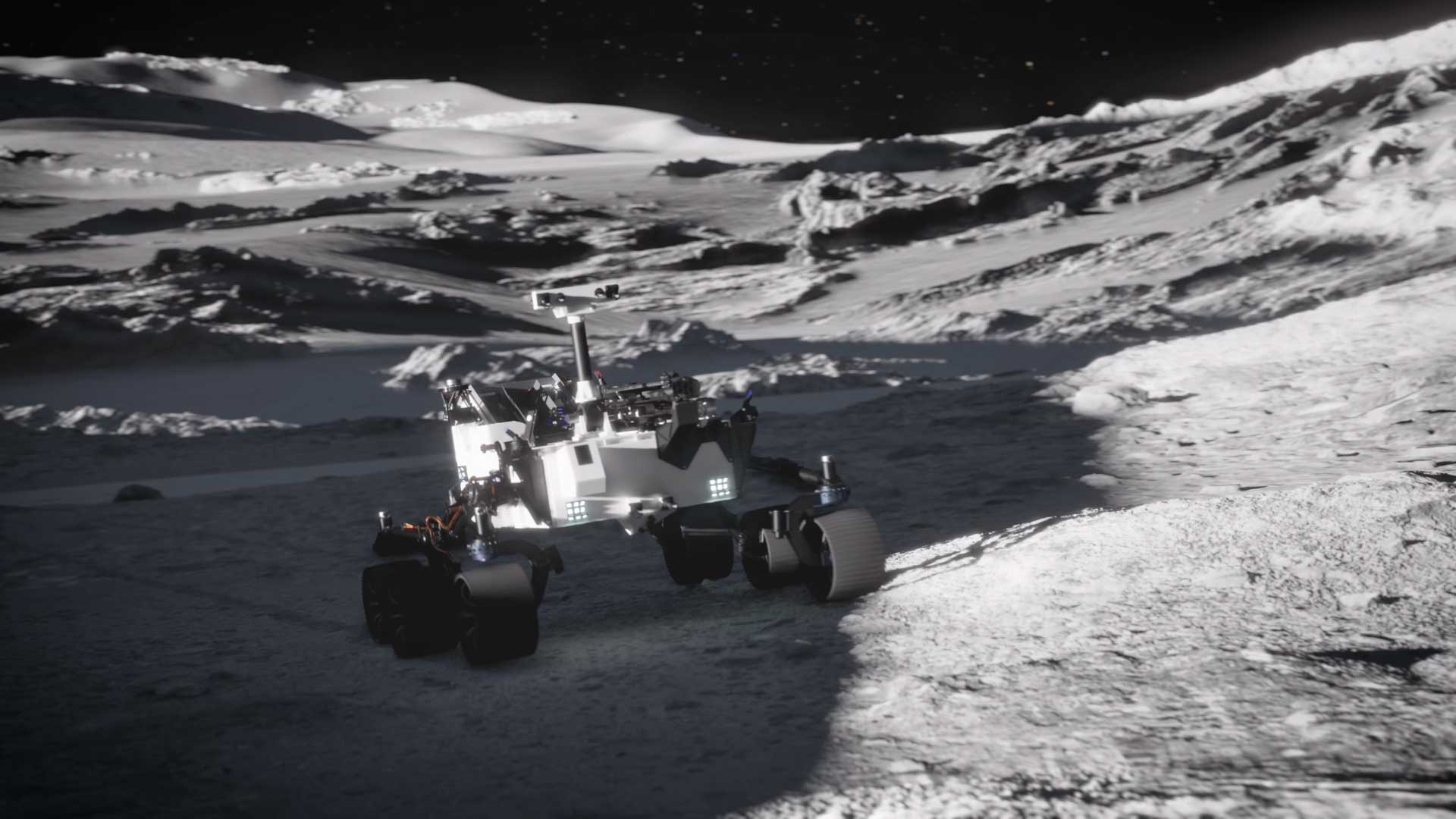
PROMISE doit aller étudier la glace d’eau au pôle sud de la Lune. Il sera acheminé par un atterrisseur cargo Blue Moon Mark 1 de Blue Origin.
© NASA
Why is NASA sending the PROMISE rover to the Moon?
A mission of opportunity to map resources at the lunar south pole
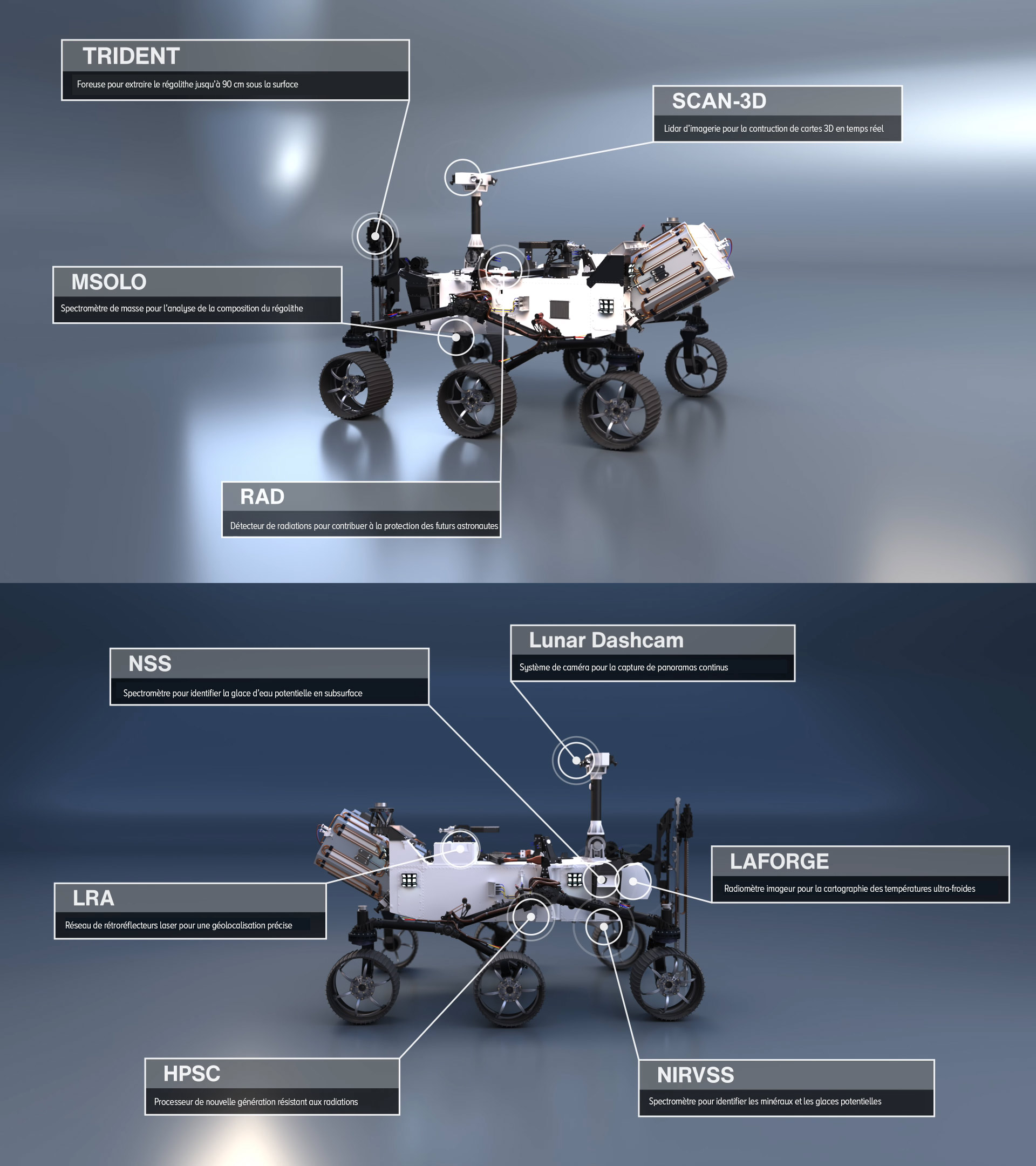
The main objective of the PROMISE rover (Polar Rover for Observation, Mapping, and In-Situ Exploration) is to assess the environment and the presence of volatiles at the Moon’s south pole. This region draws major scientific and operational interest due to craters whose floors have remained plunged in permanent darkness for billions of years, potentially preserving significant deposits of water ice. The Lune Épisode II exhibition, at the Cité de l’espace, helps visitors understand the stakes of using resources on the Moon. To carry out this exploration campaign with an initial duration of 18 months, PROMISE will carry more than ten scientific instruments and technology demonstrations. The mission fits into the drive to collect on-the-ground data before deploying more complex infrastructure. “Our scientific discoveries and technological innovations directly contribute to ensuring a prepared, safe, and sustainable human presence on other worlds, and that naturally begins with the lunar base,” specified Nicky Fox, associate administrator for NASA’s Science Mission Directorate, during the official presentation of the mission. “It is a science mission of opportunity, but it is built thanks to the ingenuity of the entire agency using a combination of spare flight components and engineering tests from our Mars rovers.”



