• Exploration
  • Mars

MMX: A groundbreaking exploration of Mars’ moons

Published on 14 October 2026

Martian Moons eXploration is a mission designed to study the moons of the Red Planet and bring back samples from one of them, Phobos, something that has never been done before. The launch from Japan took place on October 19th.

MMX: A groundbreaking exploration of Mars’ moons

While Mars has received the most probes and landers of any planet from us, its allure as the fourth world in the Solar System (and its potential to harbor life) has often overshadowed the study of its two modest, irregularly shaped moons. The smaller of the two, Deimos , at 15 km wide , orbits approximately 23,460 km from Mars. The larger of the two, Phobos, at 26.8 km wide, orbits 9,378 km from the Red Planet, or about 6,000 km from its surface. Because these moons resemble certain asteroids, the question of their origin remains open. Are they bodies formed alongside Mars, the result of a collision (as with Earth’s Moon), or captured asteroids? The MMX mission of the Japanese space agency JAXA could well provide valuable clues.

SUCCESSFUL TAKEOFF

UPDATED OCTOBER 20

The launch of MMX atop a Japanese H3 rocket took place as planned on October 19 at 9:41 PM CET. Mission partner CNES organized a live video broadcast of the event from the Cité de l’espace (Space City) with the following participants: Réjane Ibos (MIRS Systems Test Manager), Simon Tardivel (scientific analyst for the Idéfix® rover), and Élisabeth Canalias (CNES’s Flight Dynamics Contribution Manager for MMX). The discussions were moderated by Nicolas Berton , science communicator at the Cité de l’espace.

The article below explains the principle of the MMX mission.

Recording of the live broadcast organized by CNES and dedicated to the launch of MMX. 
The launch takes place at 56:10.

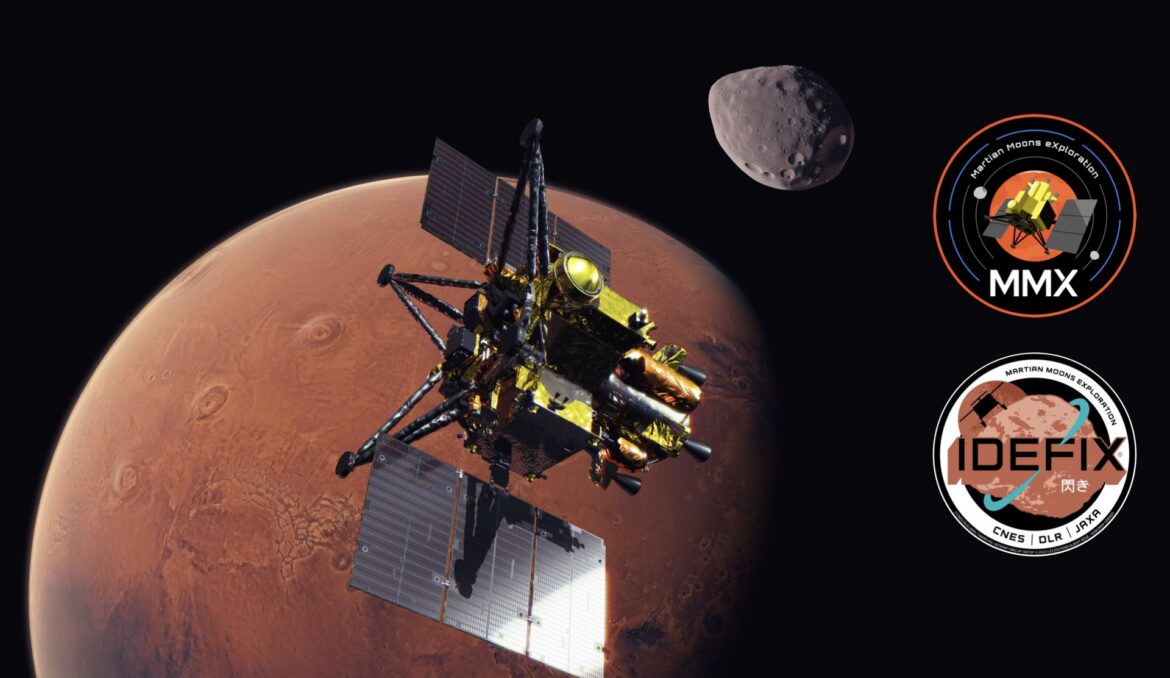
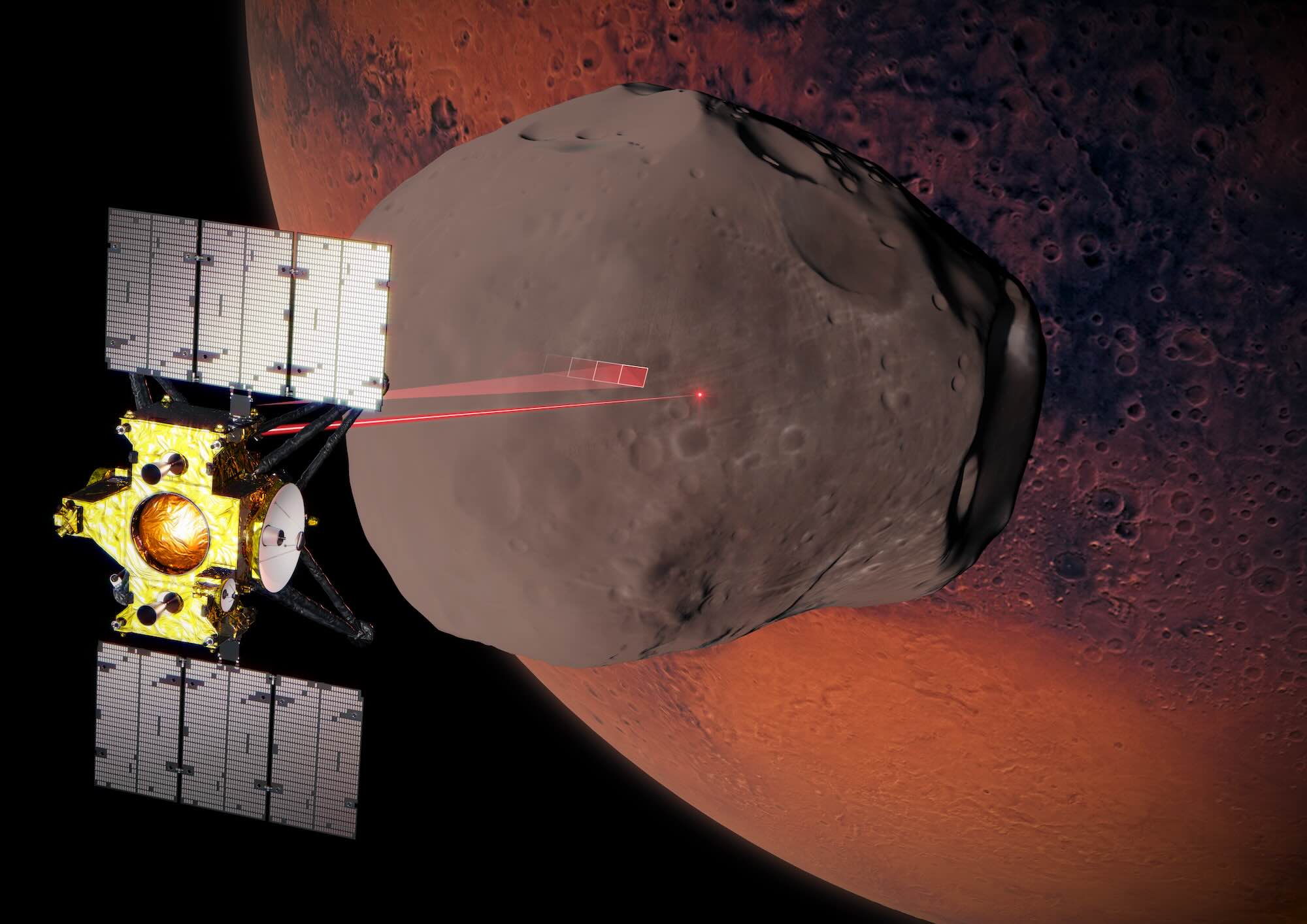
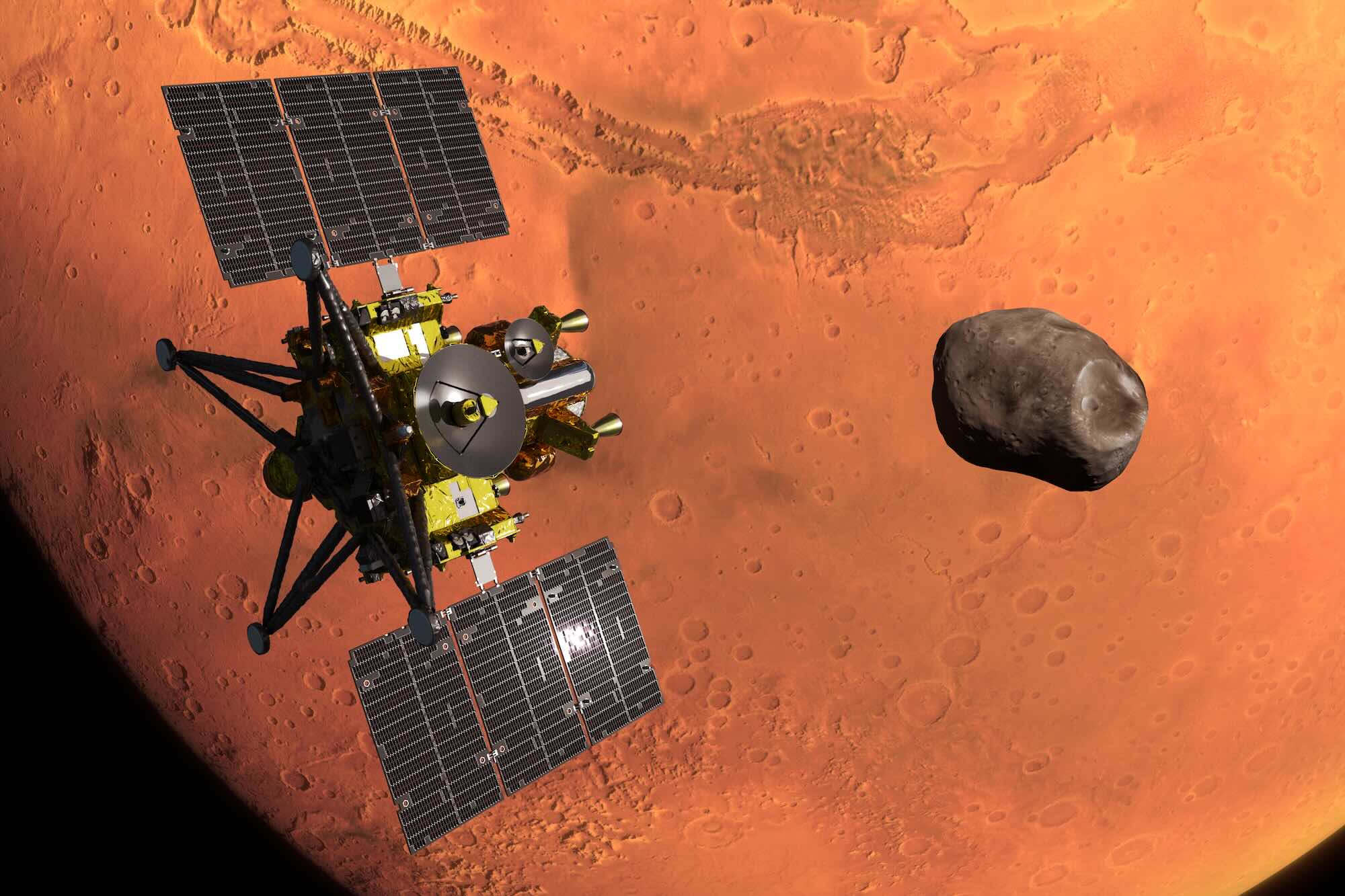
Illustration showing the Japanese MMX probe approaching Mars’ moon Phobos.
© JAXA

MARS AND ITS MOONS

MMX reverses the usual order of priorities for probes sent around Mars. Thus, instead of primarily studying the Red Planet and occasionally scrutinizing Phobos and Deimos, the Japanese mission will primarily explore the two smaller moons (with an emphasis on Phobos) and will also observe Mars.
The JAXA robotic explorer is a massive 4.2-ton spacecraft at launch, equipped with seven scientific instruments and two others considered technology demonstrators. It also carries a small Franco-German rover named Idefix (see below) equipped with two scientific instruments.

A LONG JOURNEY

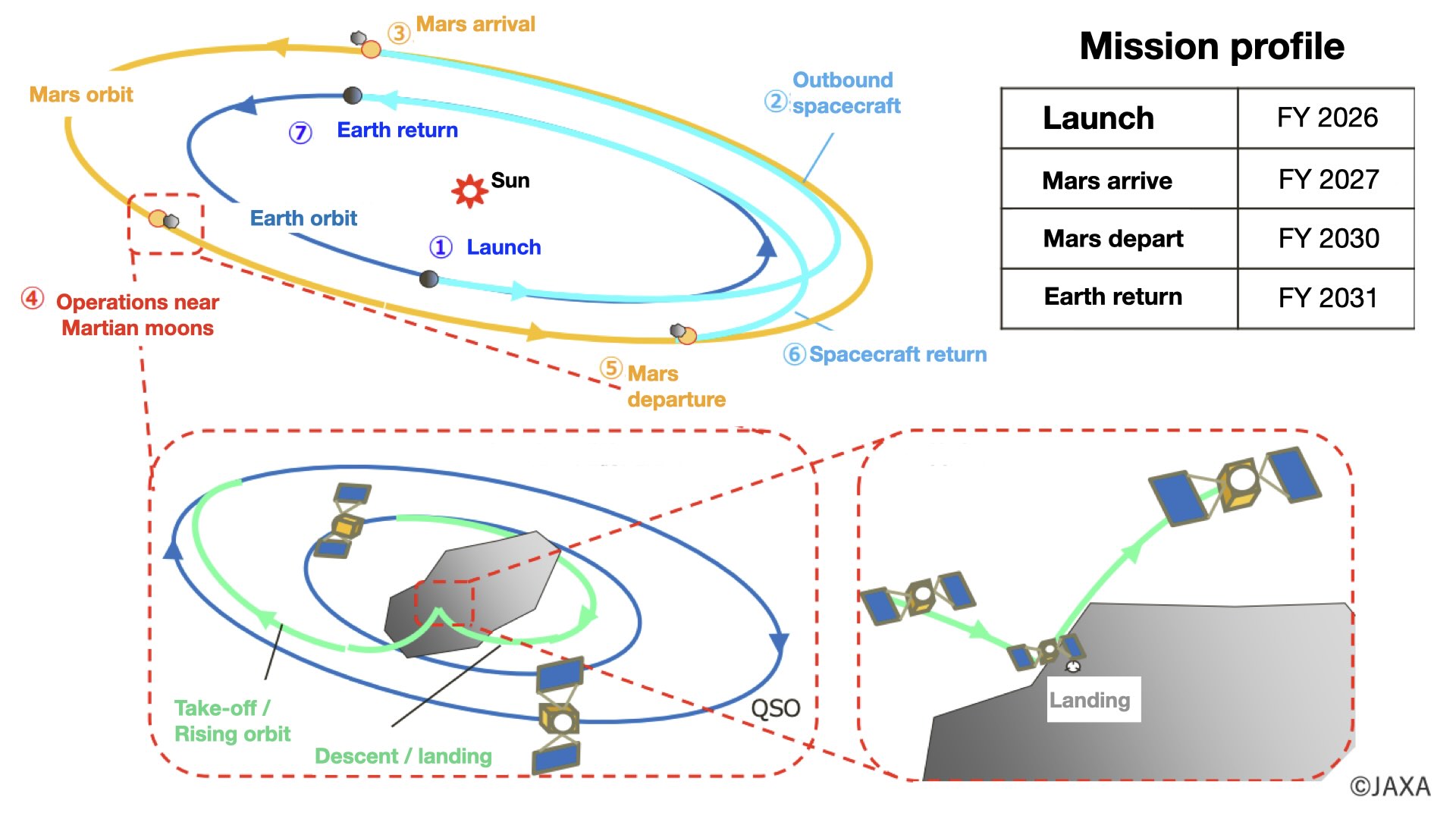
After its planned launch this October, MMX will travel to Mars, arriving on the planet in August 2027. After passing within 500 km of Mars, the probe will enter an orbit in September 2027 that will allow it to remain constantly close to Phobos. A phase of study and reconnaissance of this moon will then begin. Once a suitable area is identified, MMX will deploy the Idefix rover onto the surface of Phobos . Later, the Japanese probe will land twice on the small moon to collect samples . The return journey can then begin in November 2030. Before that, MMX will have spent four months studying the smaller of the two moons, Deimos, without landing on it. Finally, in 2031, the JAXA spacecraft will arrive close to Earth and drop a capsule containing samples taken on Phobos, which will land by parachute in Australia.

JAXA diagram summarizing the main stages of the MMX mission.
© JAXA

TWO MAJOR SPACE FIRSTS

The MMX mission will achieve two major space firsts: driving on the surface of Phobos , Mars’ moon, and collecting samples there.

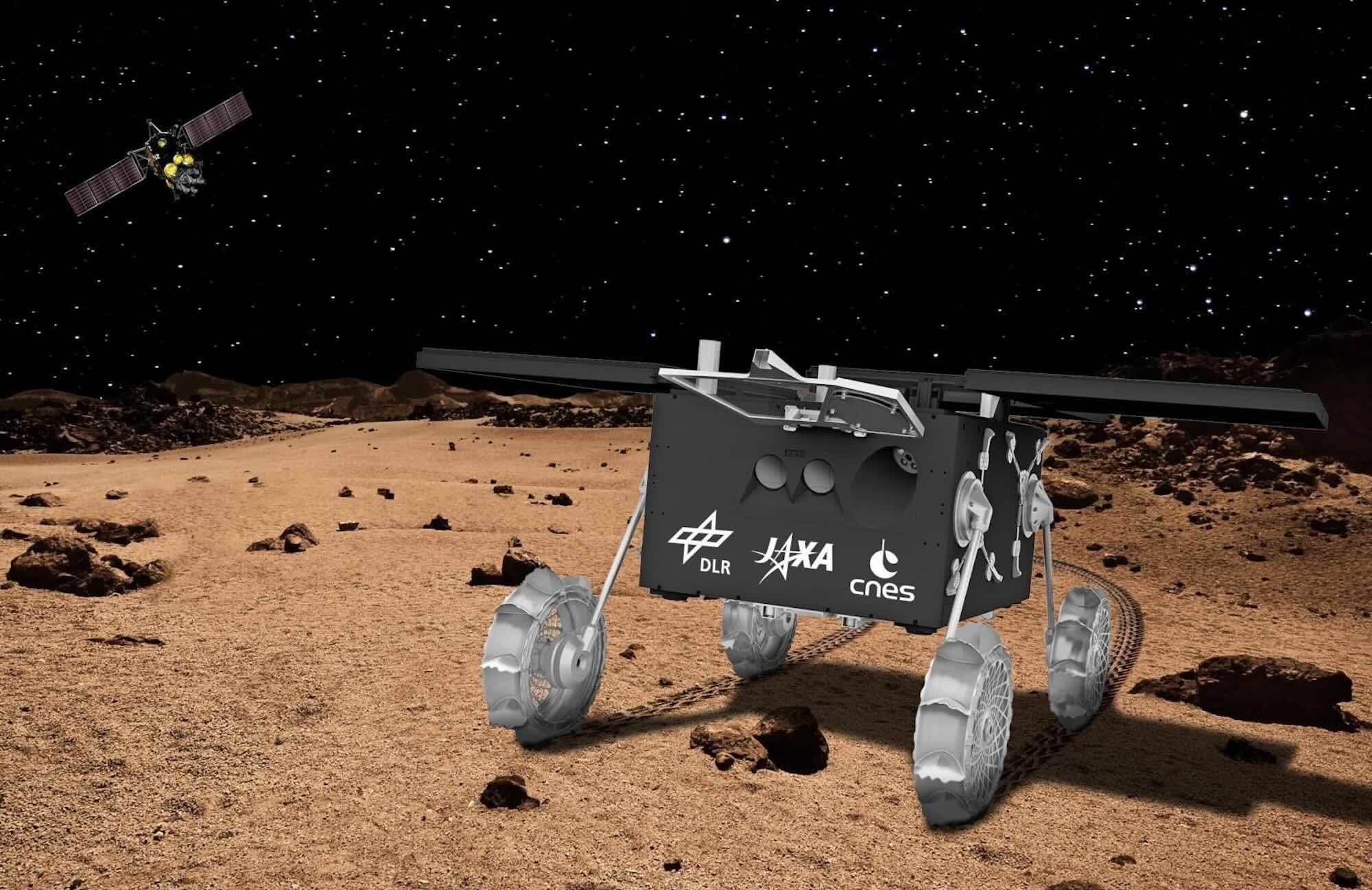
The small Idefix rover on the surface of Phobos after being released by the MMX probe (illustration).
© CNES

IDEFIX: 100 DAYS ON PHOBOS

Once the surface of Phobos is better known thanks to MMX, ground controllers will be able to program a delicate phase during which the Japanese probe will approach to within 100 to 40 meters of the surface to deploy a small, 25-kg rover about the size of a microwave oven. Named Idefix , it was designed and built by the French space agency CNES and its German counterpart DLR. Its four wheels deploy to automatically right the rover, regardless of which side it lands on upon arrival.

A GRAVITY 1800 TIMES WEAKER THAN ON EARTH

Idefix will face a very hostile environment with extreme temperature variations (-150°C in the shade and +60°C in the sun). He will move across the surface of Phobos in a gravity 1800 times weaker than on Earth.

Despite the challenges, CNES and DLR are aiming for 100 days of exploration and study (with two onboard scientific instruments) of the surface using their rover.
If its name reminds you of an iconic little dog from a famous comic strip, know that it’s no coincidence!

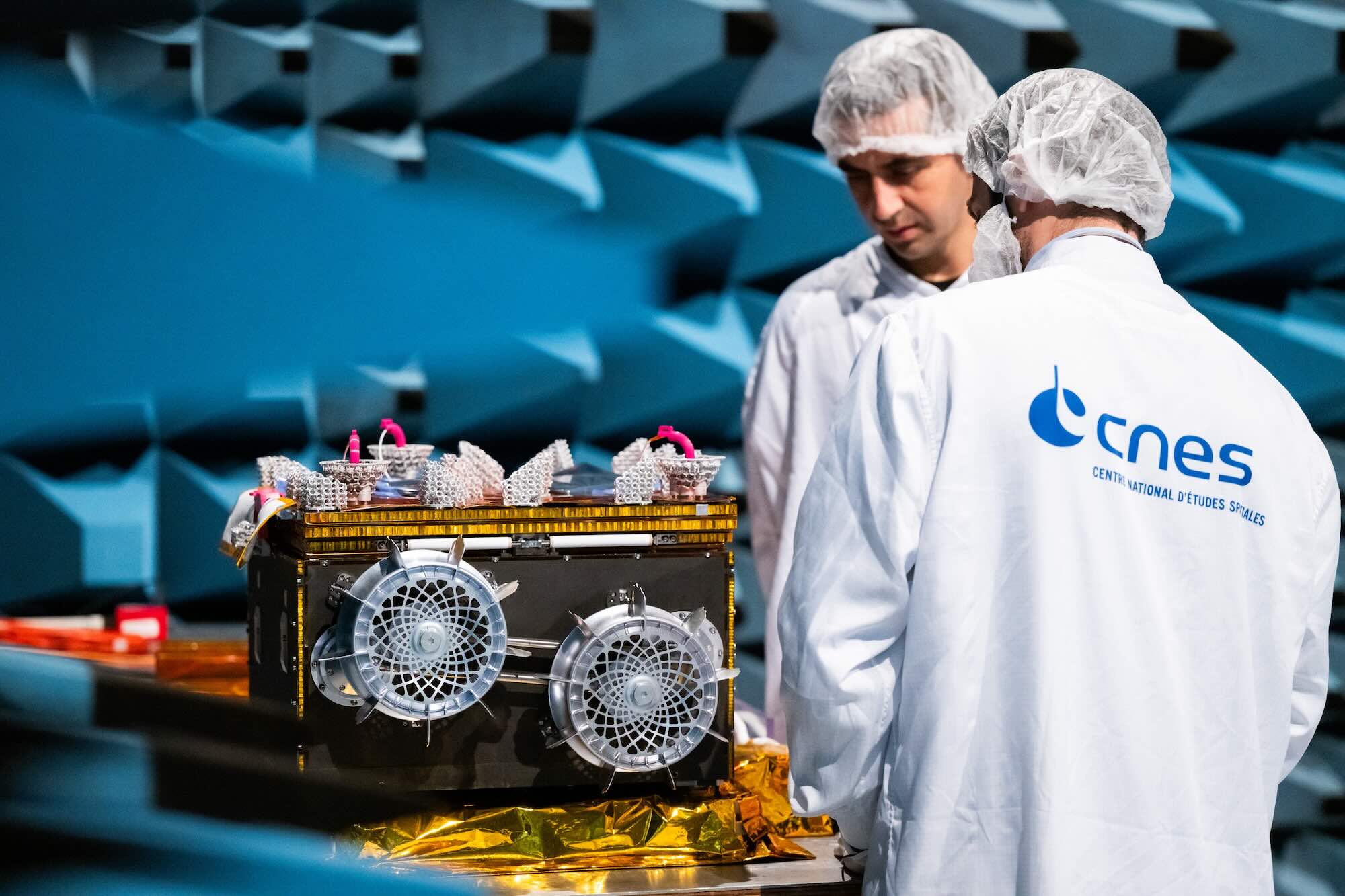
Idefix during testing at Airbus in Toulouse.
© CNES

CNES video on the MMX mission and the Idefix rover.

IDEFIX: A NAME THAT CONTINUES A TRADITION

The Idefix rover continues a French tradition of drawing inspiration from characters in the famous Asterix the Gaul comics. For example, the first French satellite in 1965 was named Asterix. In 1979, the technological capsule designed to measure the performance of the Ariane 1 launcher during its maiden flight was nicknamed  Obelix (Asterix’s friend). With Idefix, the Franco-German MMX rover pays homage to Obelix’s faithful little dog. Éditions Albert René even declared themselves “proud and happy that the rover bears the name of the famous little dog created by Albert Uderzo and René Goscinny.”

BRING BACK 10 GRAMS OF PHOBOS

Idefix will act as a scout, providing information about the surface of Phobos. This information is crucial for preparing the mission’s other major first: collecting samples from the largest of Mars’ small moons.
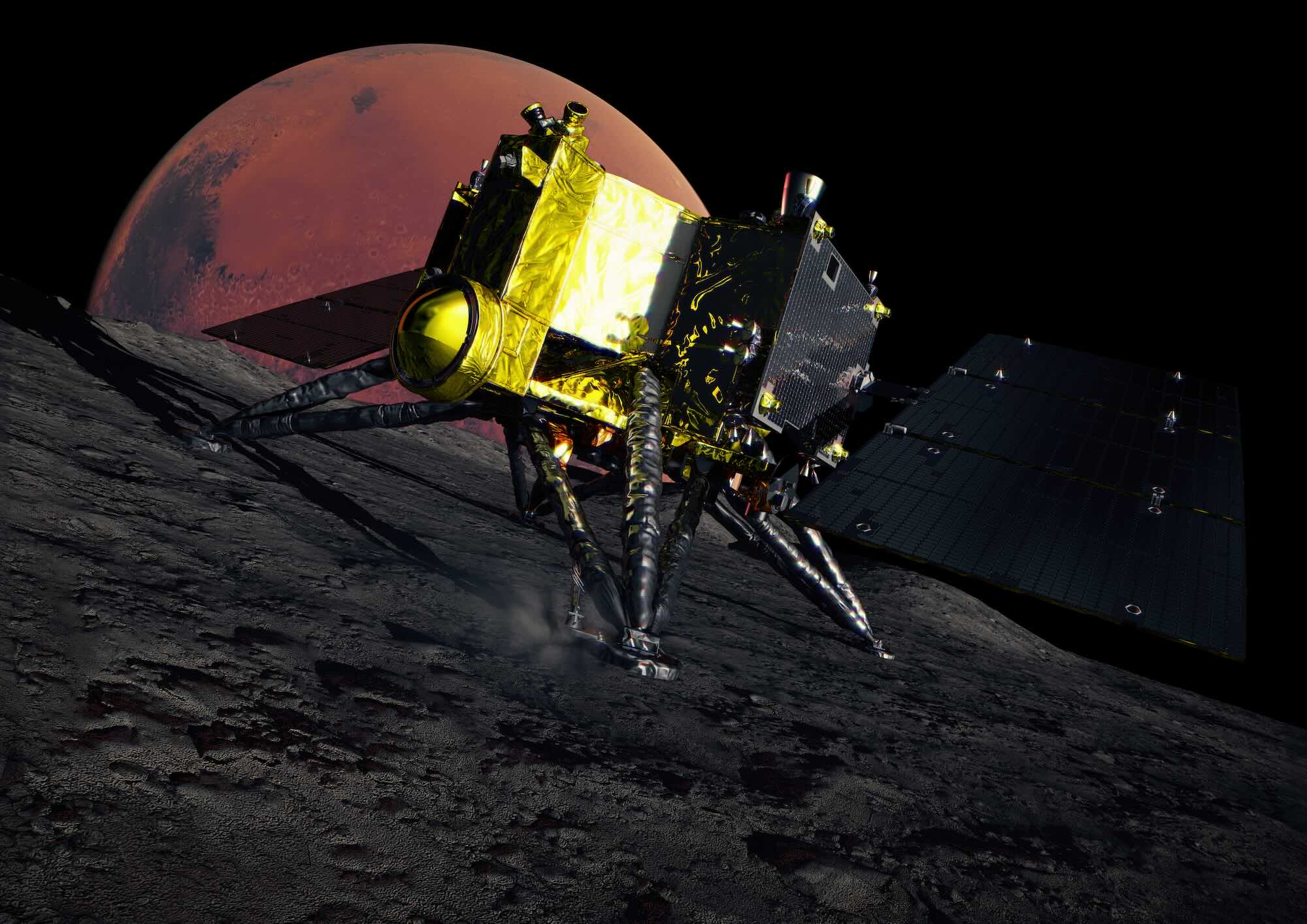
JAXA plans for the probe to touch down on Phobos twice to collect these samples . The goal is to obtain a total of 10 grams of soil samples from two different areas in order to better characterize the moon and try to understand its origin.

MMX will also remotely study Mars’ moon Phobos before landing there (illustration).
© JAXA

MMX lands on Phobos to collect samples (illustration).
© JAXA

THE LEGACY OF HAYABUSA2

Collecting samples from an object with extremely low gravity proves to be a very delicate operation . Low gravity requires approach and departure maneuvers that are both precise and delicate. The sample collection process is far from straightforward, as the surface reacts very differently to extraction in such low gravity. For this delicate operation, JAXA can draw on the success of its Hayabusa2 mission, during which it successfully collected samples from the asteroid Ryugu (twice in 2019), which were then returned to Earth in 2020 using a deployed capsule. The similarities with MMX, an asteroid also exhibiting extremely low gravity, are readily apparent.

HAYABUSA2 AT THE CITÉ DE L’ESPACE

The mission whose technological legacy serves MMX is featured at the Cité de l’espace (Space City) in Toulouse.
Located on the first floor of the exhibition area, at The Solar System Quay, a space has been set aside for the two samples from the asteroid Ryugu . Visitors can examine the first sample, measuring 1.9 mm in diameter and weighing 2.1 mg, under an electron microscope. The second can be observed with the naked eye in its transport container under nitrogen. The exhibition is complemented by models of the Franco-German lander Mascot , the Hayabusa 2 probe (at a scale of 1/6), and finally, a 1/2000 scale model of the asteroid Ryugu, allowing visitors to experience the asteroid’s surface firsthand.

hayabusa rygu

Ryugu’s samples are installed at the Solar System Wharf on the 1st floor of the exhibitions.

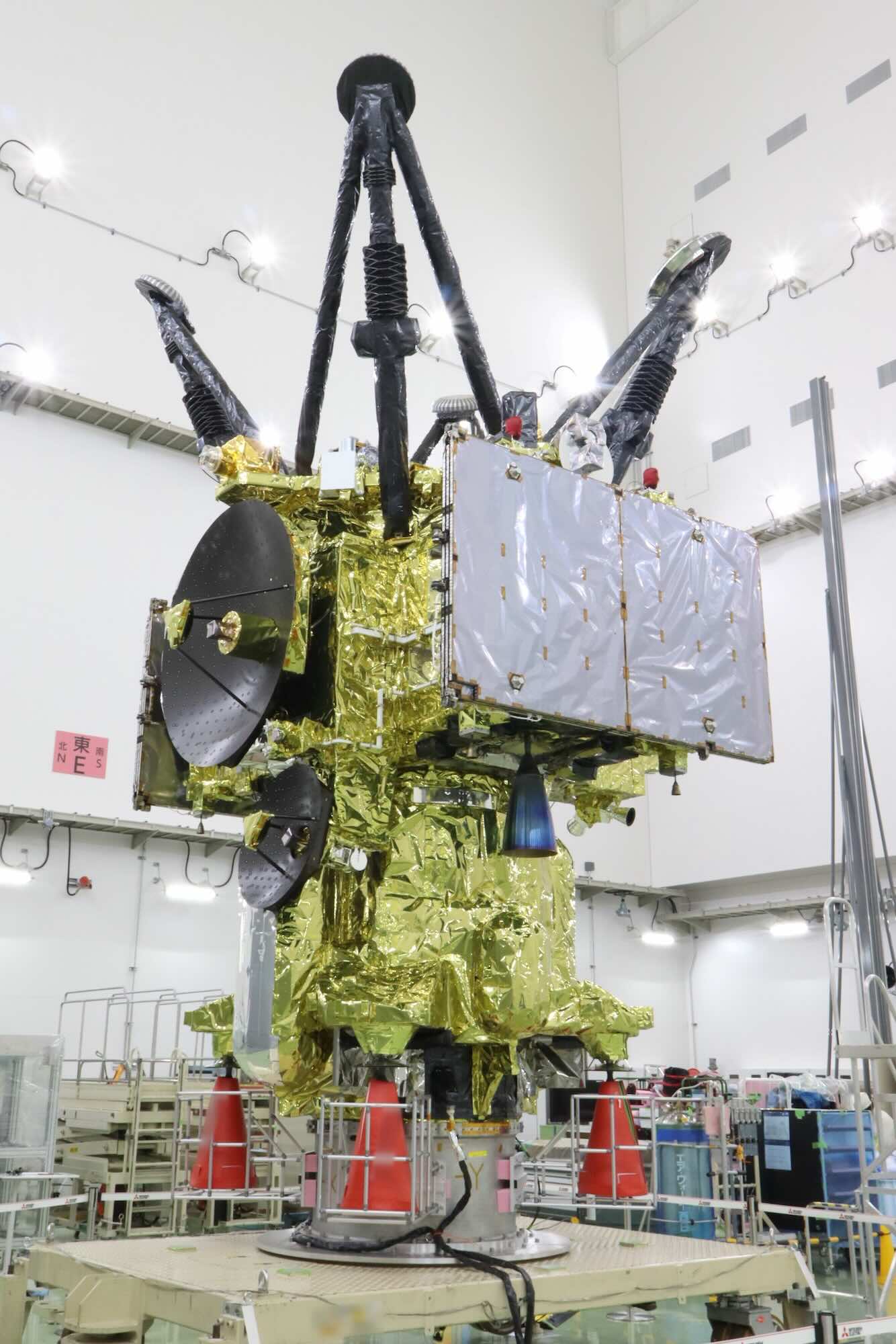
Photo of the MMX probe on the ground during preparations before its launch. Note at the top the four landing legs that will be used to touch down on Phobos.
© JAXA

MMX: AN INTERNATIONAL COOPERATION

The MMX mission, operated by the Japanese space agency JAXA, relies on international cooperation . As explained earlier, the Idefix rover was provided by CNES and DLR . The role of the French space agency CNES also includes providing the MIRS scientific instrument (an infrared spectrometer on the Japanese probe) as well as navigation and trajectory determination around Phobos and for landing on it. CNES’s expertise in this area is based in particular on its participation in the European Rosetta mission (with the Philae lander landing on comet 67P), as well as Hayabusa2 (the arrival of the small MASCOT lander on the asteroid Ryugu).
The European Space Agency (ESA) contributes by providing equipment enabling the MMX probe to communicate and by making its ground antenna network available.
NASA provides an instrument, its ground antenna network, and the Phobos sample collection system. The Australian Space Agency is also involved. Let’s not forget that the capsule containing the precious samples from Phobos will land in Australia.

Related articles