

• Moon

Lunar base: NASA accelerates deliveries and wants to recycle a Mars rover

Published on 01 July 2026

NASA has awarded $600 million in private contracts for four lunar landings before the end of 2028 and is considering repurposing a nuclear-powered Mars rover, PROMISE, to explore the South Pole. It currently serves as a testbed on Earth for engineers at JPL.

Lunar base: NASA accelerates deliveries and wants to recycle a Mars rover

There’s no time to waste. The goal is to establish a base on the lunar surface , and Jared Isaacman , the head of NASA, is determined to demonstrate progress. He will therefore provide monthly updates on the progress of the “Moon Base” program . The first update took place on Tuesday, June 30, 2026. The American space agency announced the awarding of contracts totaling nearly $600 million for sending scientific equipment . In addition to these commercial partnerships, NASA hopes to reuse the younger sibling of Curiosity and Perseverance . PROMISE would allow for testing the capabilities of these rovers on Earth and could be sent to the Moon ‘s south pole .

Firefly Aerospace’s Blue Ghost 1 landed on the Moon in March 2025. This was the first successful soft landing by a private company.

© Firefly Aerospace


Four additional robotic missions for 2028

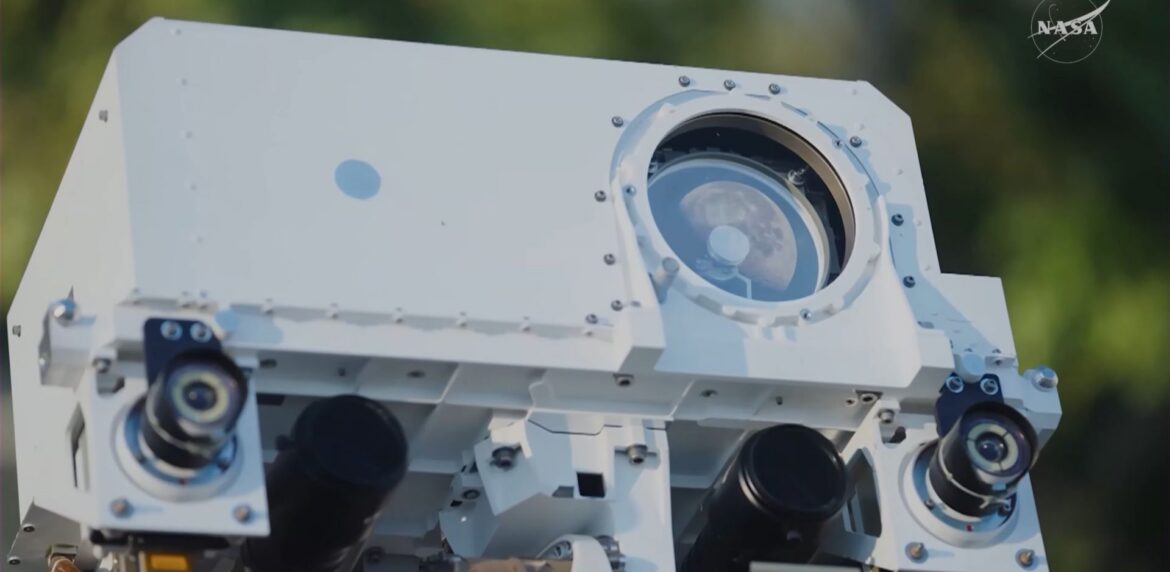
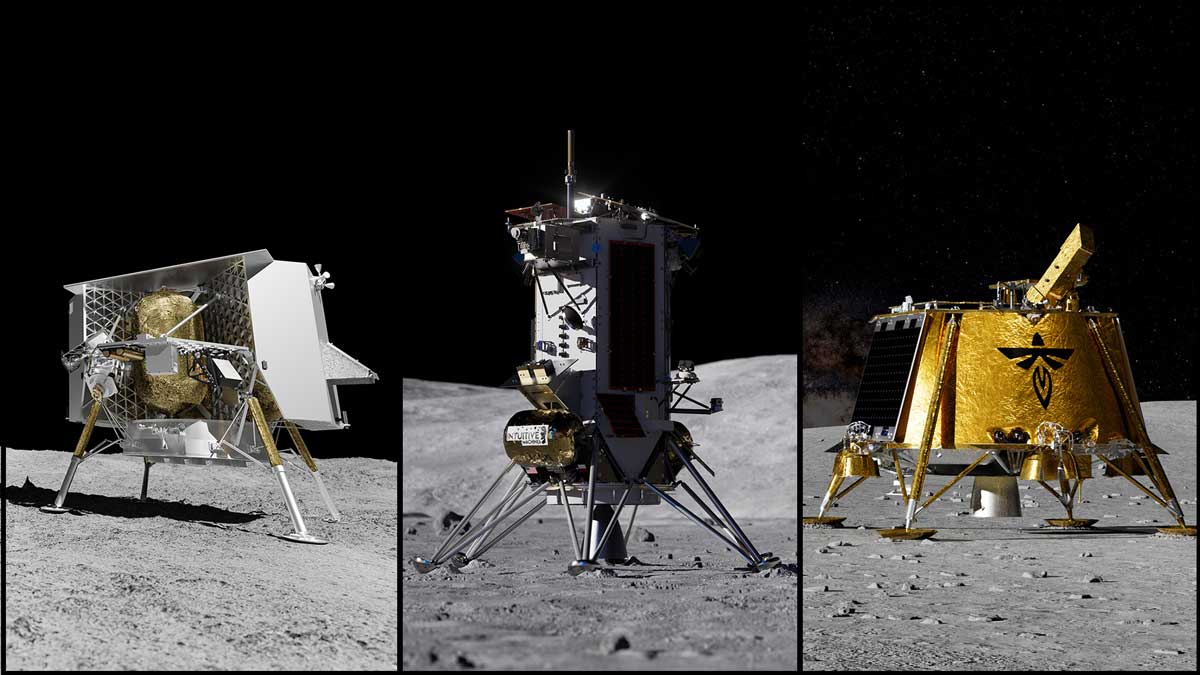
When we talk about sending cargo, goods, or experiments to the Moon , we’re referring to the Commercial Lunar Payload Services (CLPS ) initiative. Astrobotic , Intuitive Machines , and Firefly Aerospace have already sent or attempted to send landers with varying degrees of success. To date, only Firefly Aerospace’s Blue Ghost has achieved all its objectives. On June 30, NASA announced it had selected three companies to deliver four new missions to the lunar surface by the end of 2028. These missions aim to prepare the ground for the future lunar base . They will allow for the testing and expansion of necessary technologies. ” We want to get back into a rhythm. We want to do a lot of rehearsals ,” says Jared Isaacman. ” It’s a method from the playbook that worked very well for NASA during the 1960s. We didn’t jump straight to Apollo 11. ” Each lander will carry an identical set of three scientific instruments: a stereo camera to study dust plumes during landing (SCALPSS), a laser reflector for navigation (LRA) and a spectrometer to measure radiation (LETS).

A massive investment in the private sector

The funding, distributed among commercial partners, illustrates NASA’s strategy of leveraging industry to increase mission frequency. Astrobotic received $297.9 million for two deliveries, while Firefly Aerospace and Intuitive Machines were awarded $144.2 million and $148.3 million, respectively, for one mission each. ” These new awards to our commercial partners, totaling nearly $600 million to land more missions on the Moon with science payloads, demonstrate our commitment to accelerating our efforts to establish a long-term presence on the lunar surface ,” said Lori Glaze, associate administrator for the Human Flight Mission Directorate at NASA Headquarters in Washington. ” This gives us more opportunities to develop the skills we need to thrive there .”

Astrobotic will carry out two missions, Firefly Aerospace and Intuitive Machines one mission each.

© NASA


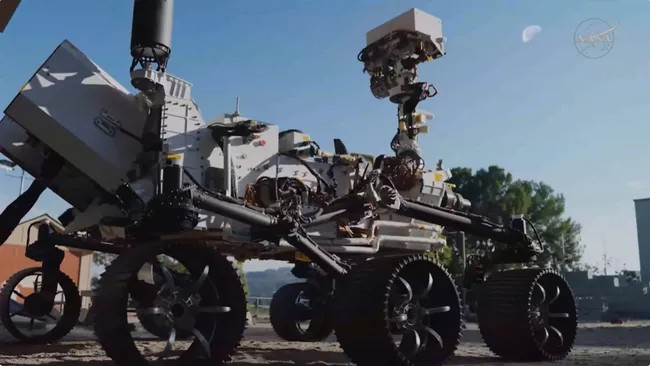
The OPTIMISM rover is used at JPL to test obstacle crossings before programming these movements on Perseverance or Curiosity.

© NASA


PROMISE: A Martian legacy for the lunar poles

No need to worry about the sun anymore

The most surprising announcement concerns the PROMISE project ( Polar Rover for Observation, Mapping, and In-Situ Exploration ). This project aims to study the feasibility of sending a technical development model to the Moon , a twin of the Mars rovers Curiosity and Perseverance . It already exists and is currently being used at the Jet Propulsion Laboratory (JPL) as a ground testbed to test commands before sending them to Mars . Until now, it was called OPTIMISM and could be repurposed for a clean lunar mission. PROMISE’s main advantage lies in its power source: a radioisotope thermoelectric generator (RTG). Unlike solar-powered rovers such as VIPER , PROMISE would not require sunlight to operate . This capability is crucial for exploring the permanently shadowed regions of the Moon’s south pole , where temperatures drop drastically and where the presence of water ice is suspected. Visitors to the Cité de l’espace can discover in the animation, ”  The Rovers take center stage “, the advantages of Perseverance’s nuclear propulsion compared to the solar energy used by Zhurong , the Chinese Martian rover. 

The end of ground testing?

However, sending this rover to the Moon would also deprive engineers of a ground-based testbed. This twin allows them to simulate strategies for overcoming obstacles, for example.  ” It makes sense, initially, when a problem arises, to want to test it here before sending it to Mars ,” said Jared Isaacman. ” But we now have years of experience operating both rovers on the surface of Mars , and we have this equipment in which taxpayers have invested heavily. So the question arose: what if we sent it to the Moon? ” Following the announcement of the cancellation of the Mars Sample Return mission , this is another sign demonstrating this administration’s disinterest in robotic missions to Mars . Immediately after NASA’s announcement, engineers expressed their disappointment on social media. Doug Ellison, who works on Curiosity ‘s cameras, among other things, posted a black and white photo of the rover in its hangar on Bluesky, with ChemCam facing down. The decision has not yet been made, and modifications will need to be made to the rover to adapt it to the Moon . ” We’re considering it ,” NASA posted on its X account, along with a video of the rover.


Doug Ellison, an engineer at JPL, posted this OPTIMISM image on his BlueSky account, which is clearly very pessimistic.

© Doug Ellison’s X account

Related articles