

• Moon

MAGPIE, a European rover on the Moon in 2029

Published on 03 September 2026

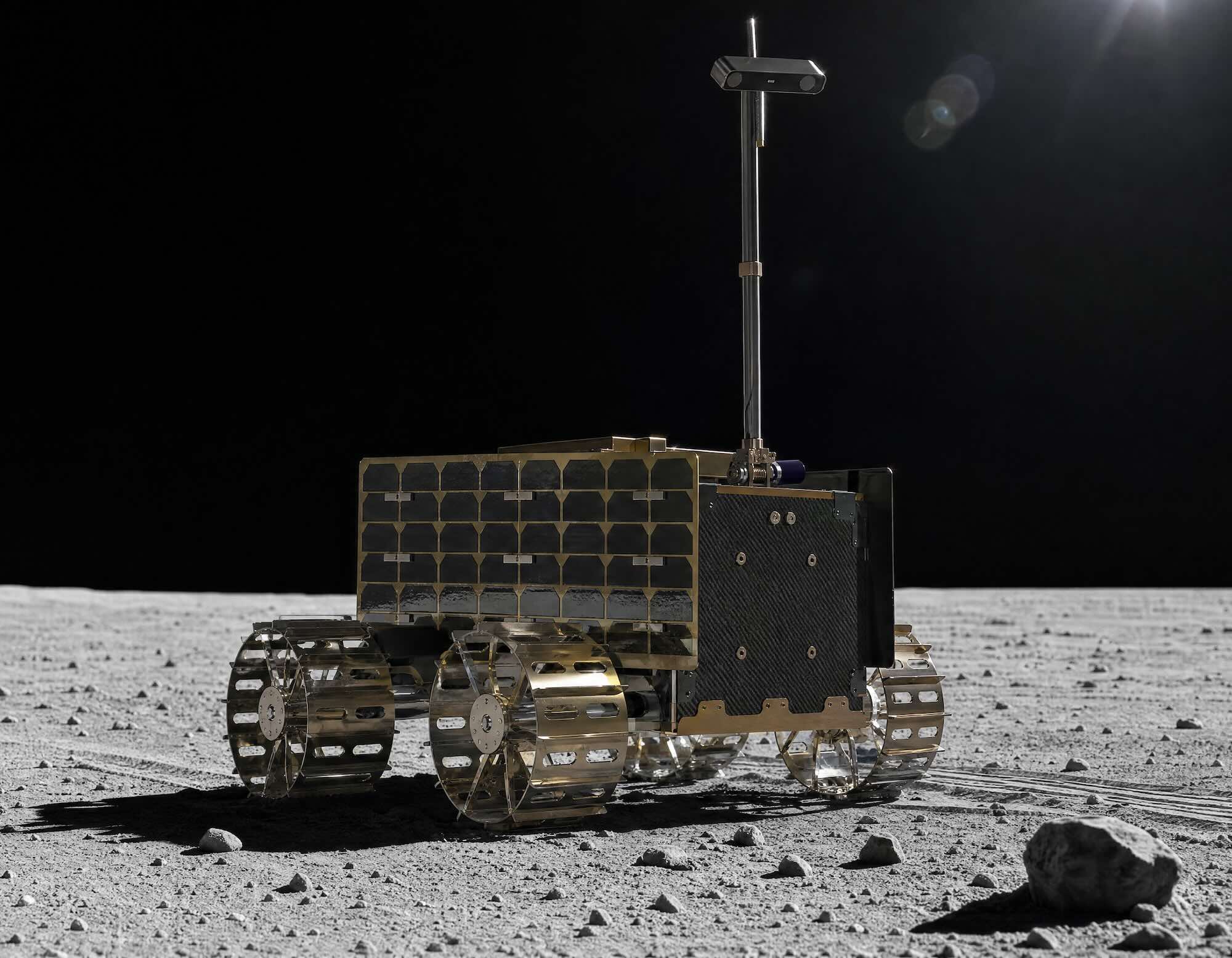
The European Space Agency's (ESA) small rover, named MAGPIE, will be taken to the Moon in 2029 by a lander from the Japanese private company ispace. Its subsidiary, ispace-Europe, will manufacture it.

MAGPIE, a European rover on the Moon in 2029

With MAGPIE , the European Space Agency (ESA) is preparing to drive on the Moon and more specifically at the South Pole , a region that has become a priority in the renewed exploration of our natural satellite.

A MAGPIE TO ROLL ON THE MOON

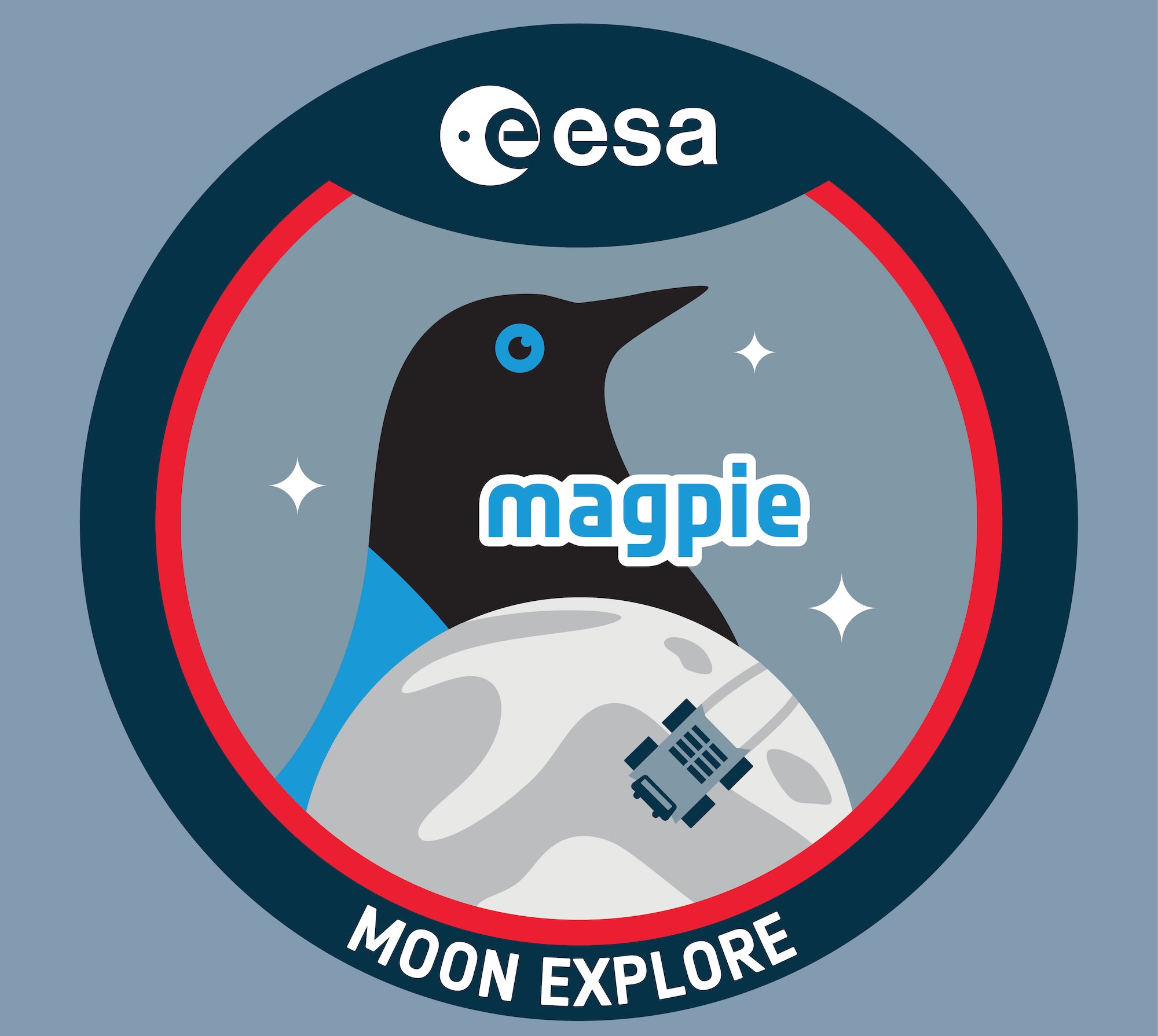
In English, “magpie” refers to a magpie, a bird of the corvid family known for its intelligence. A stylized magpie is also featured on the mission’s official logo.

It is also an acronym, as MAGPIE stands for Mission for Advanced Geophysics and Polar Ice Exploration . Designed to operate for 10 Earth days, the ESA rover will indeed seek to detect, among other things, the presence of water in the form of ice.

The MAGPIE logo depicts a stylized magpie with the rover driving on the Moon.
© ESA

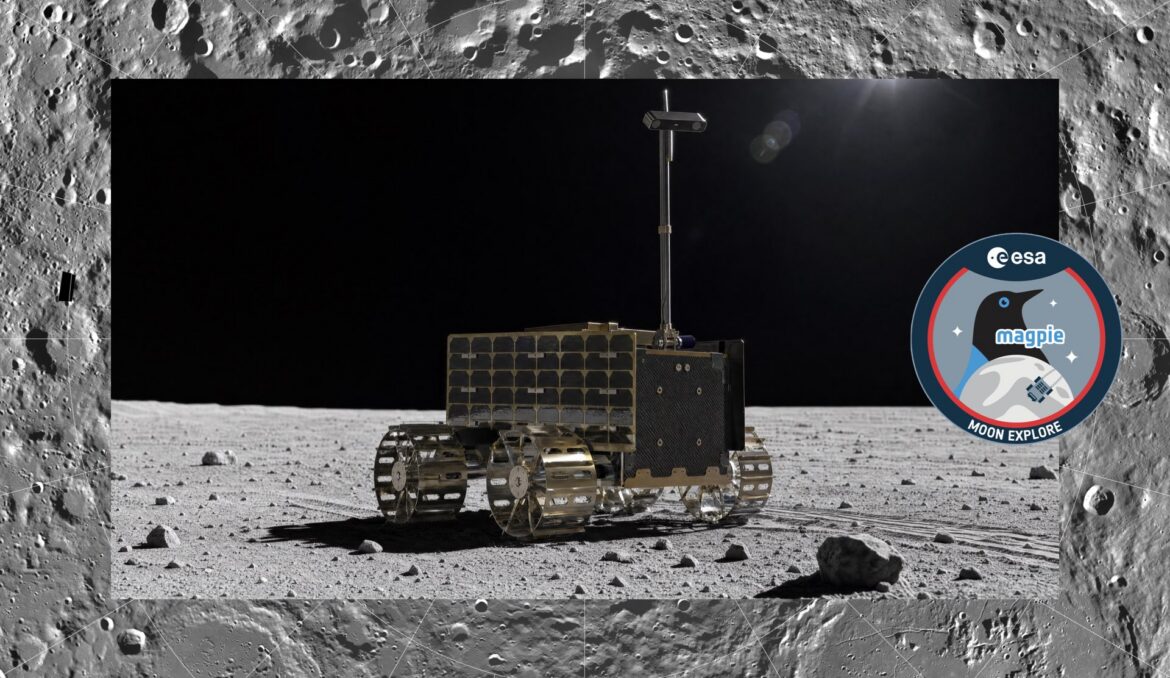
Illustration of the ESA’s MAGPIE lunar rover.
© ispace

EUROPE AND JAPAN ON BOARD

MAGPIE is part of the ESA’s ” small missions” initiative, through which the agency welcomes proposals from private institutions or companies to explore, for example, the Moon, with a target budget of around fifty million euros. It is within this framework that the ESA selected ispace-Europe to build the rover . This private company is the European subsidiary, based in Luxembourg, of the Japanese company ispace. ispace is responsible for delivering the rover to the Moon’s South Pole during its fourth mission (Mission 4), which it plans to conduct using one of its landers. The launch is scheduled for 2029. It’s worth noting that ispace has already attempted to land on our natural satellite twice, unfortunately without success .
The fact that the MAGPIE rover will be transported by ispace for Mission 4 is due to a collaboration between the ESA and its Japanese counterpart, JAXA (Japan Aerospace eXploration Agency).

THE LUNAR SOUTH POLE

A PRIME DESTINATION FOR RETURNING TO THE MOON

The choice of the Moon’s South Pole for the MAGPIE rover demonstrates once again the importance of this region for the renewal of lunar exploration (as explained by the Cité de l’espace in Toulouse with its exhibition “Moon – Episode II “). The Chinese Chang’e 7 mission , which was postponed due to weather, targeted this same region. The Chinese space agency CNSA and NASA had previously identified the most promising sites in the south polar region of our natural satellite, both for scientific reasons and the ease of landing. The American agency has also recently confirmed its intention to establish a lunar base ( Moon Base ) at the South Pole, hoping to exploit any water ice that might be hidden beneath the surface.
MAGPIE’s stated objective is therefore logically to detect this water ice, along with other elements, while also conducting a geological analysis. The European rover will be equipped with scientific instruments including a radar capable of probing the subsoil and a drill.

The ESA and ispace-Europe teams at the signing ceremony for the MAGPIE rover in Copenhagen, Denmark, during the Space for Inspiration event on September 1 and 2, 2026.
© ESA-A. Conigli

Related articles