
• Crewed Flights
  • Moon

Artemis II: The Success of Orion’s Return

Published on 11 April 2026

The Orion Integrity capsule splashed down as planned off the coast of California at 5:07 p.m. local time on April 10. Reid Wiseman, Victor Glover, Christina Koch, and Jeremy Hansen are back after their historic journey around the Moon.

Artemis II: The Success of Orion’s Return

The first crewed mission around the Moon in the 21st century began on April 1st with the spectacular launch of the SLS rocket from Florida. A few days later, the four astronauts Reid Wiseman, Victor Glover, Christina Koch, and Jeremy Hansen were orbiting our natural satellite, setting a distance record and sending back stunning photographs.

On the tenth day of flight, the mission concluded with the successful completion of the delicate return phase .

FAREWELL TO ESM

THE EUROPEAN SERVICE MODULE HAS FULFILLED ITS PART OF THE MISSION

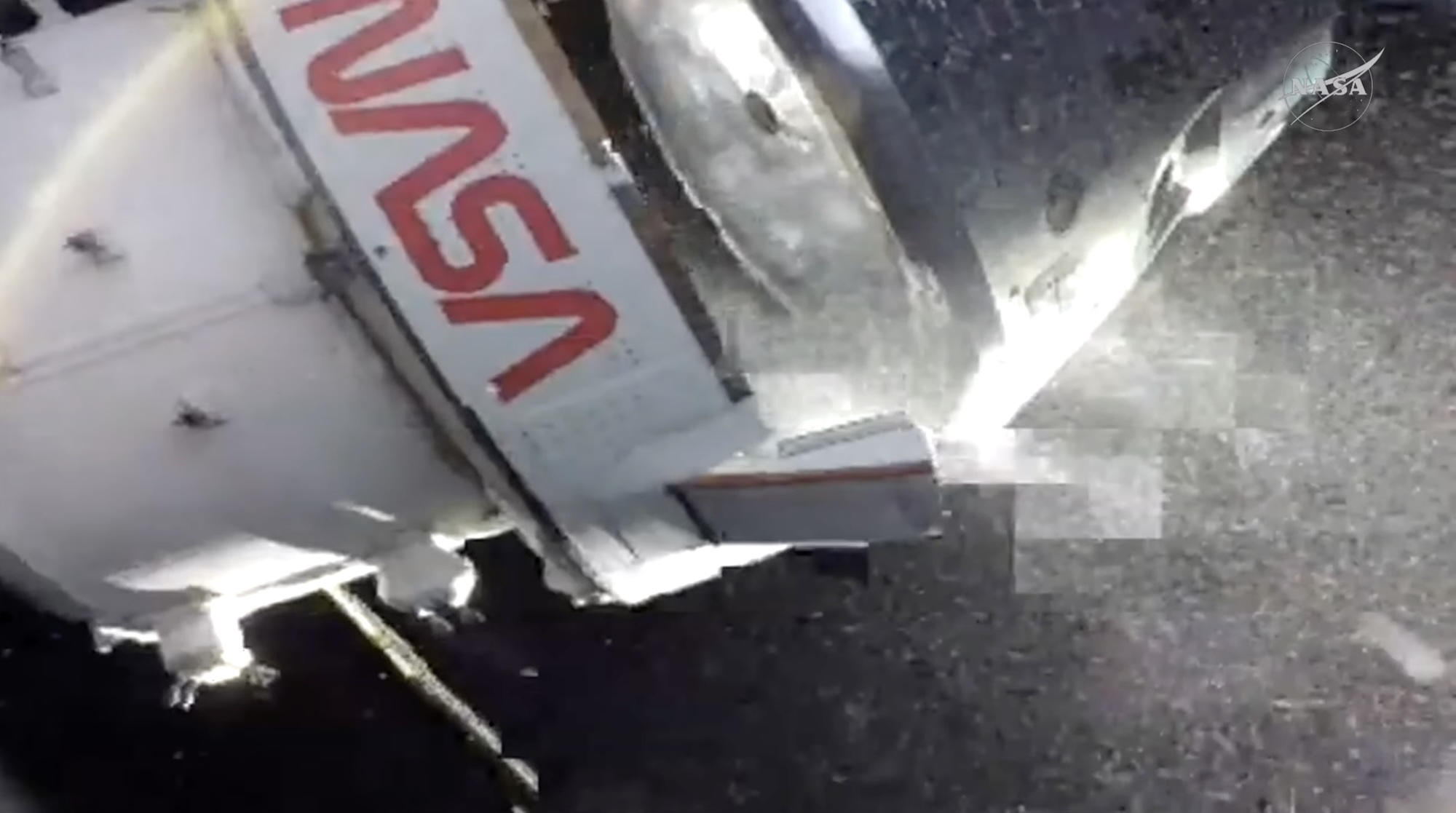
Drawn by Earth’s gravitational field, the Orion spacecraft steadily gained speed, approaching our planet faster and faster. Approximately 30 minutes before splashdown, the Orion capsule, named Integrity, separated from its European Service Module (ESM). Provided by the European Space Agency , the ESM houses the spacecraft’s main propulsion system as well as essential systems without which the Earth-Moon-return journey cannot be accomplished.
To avoid becoming orbital debris, the ESM followed a reentry trajectory into the atmosphere, where it burned up.

Screenshot showing the separation between the ESM (left) and the Orion capsule, filmed live by a camera located at the end of one of the European module’s solar panels.
© NASA screenshot by Cité de l’espace

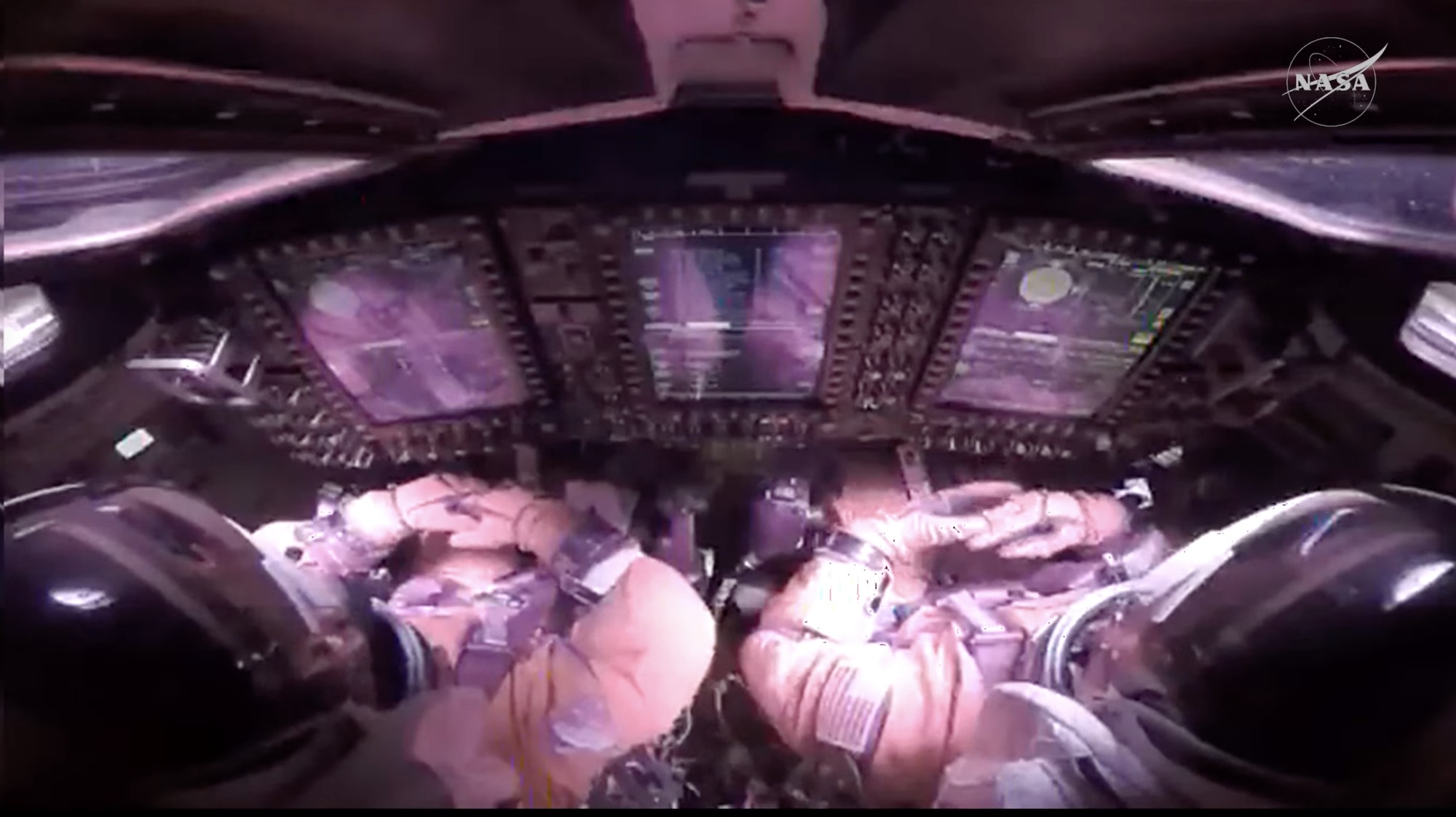
View from inside the Orion capsule shortly before radio communications were lost.
© NASA screenshot by Cité de l’espace

A SHIELD UNDER SURVEILLANCE 

Traveling at just over 39,000 km/h , the Orion capsule entered the atmosphere at 4:53 PM on April 10, California time (1:53 AM on April 12 for mainland France). The astronauts were then protected by a heat shield capable of withstanding temperatures of approximately 2,800°C resulting from the high velocity of arrival.
The unexpected degradation of a similar heat shield during the unmanned Artemis I mission in 2022 had raised concerns for Artemis II , but NASA had assured that a modification to the reentry profile would provide sufficient safety margins. The resumption of radio communications with the crew after a (planned) 6-minute blackout was, however, met with relief.

A PERFECT WATER LANDING

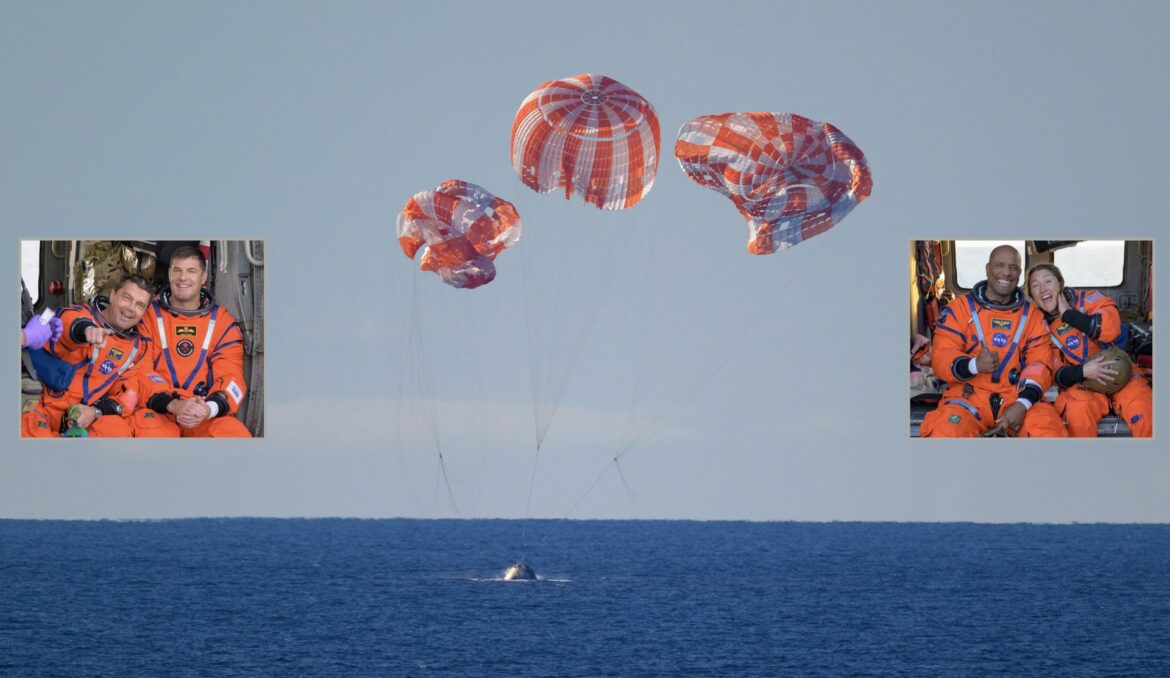
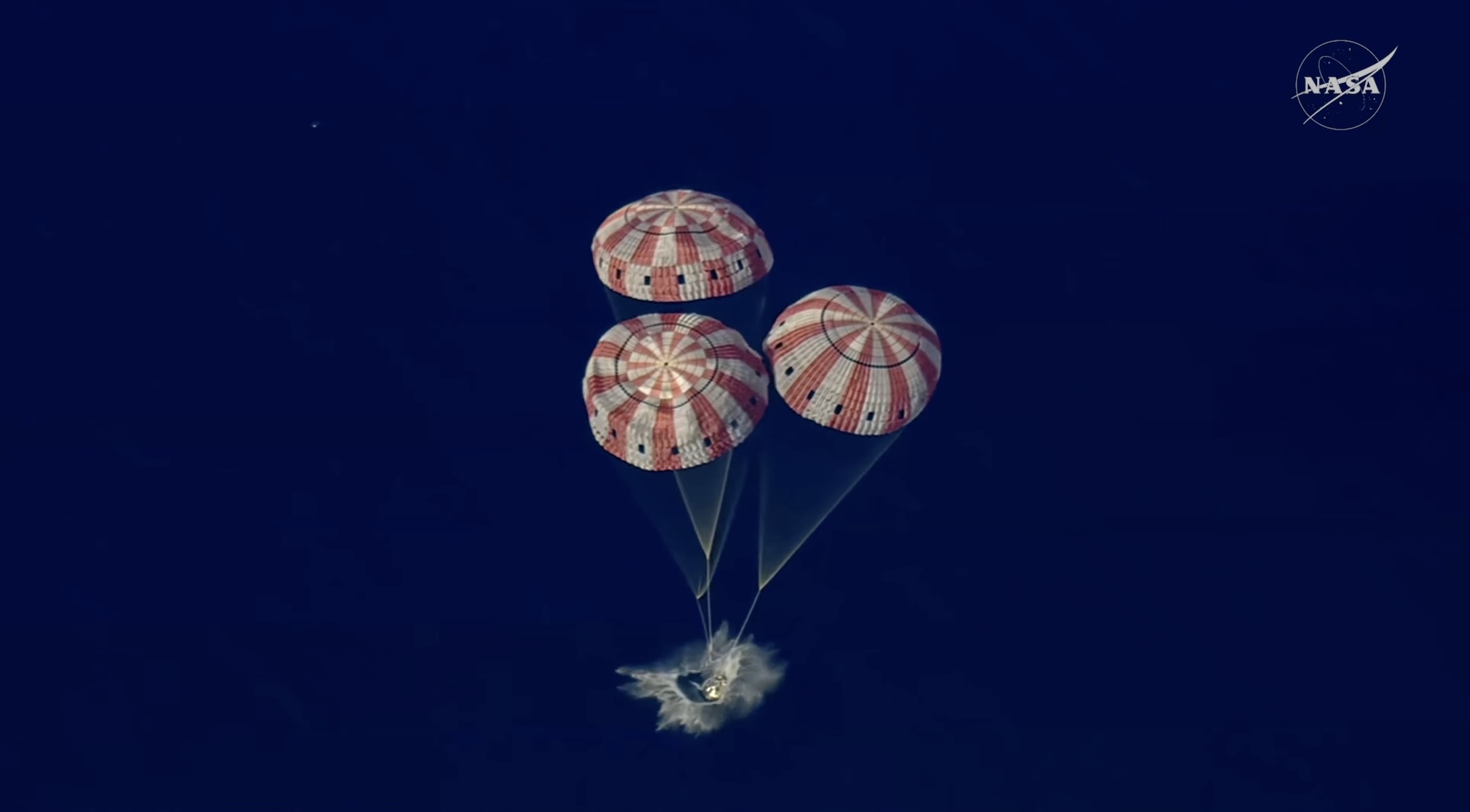
Having successfully completed reentry under the protection of its heat shield, Orion now had to descend the final kilometers using the successive deployment of 11 parachutes, the last three of which, known as the main parachutes, were 35 meters wide. Slowing to less than 35 km/h, Integrity touched down in the Pacific Ocean off San Diego at 5:07 PM local time on April 10 , or 2:07 AM on April 11 for mainland France.
Commander Reid Wiseman assured that his crew was in excellent condition while the capsule’s securing operations were underway.
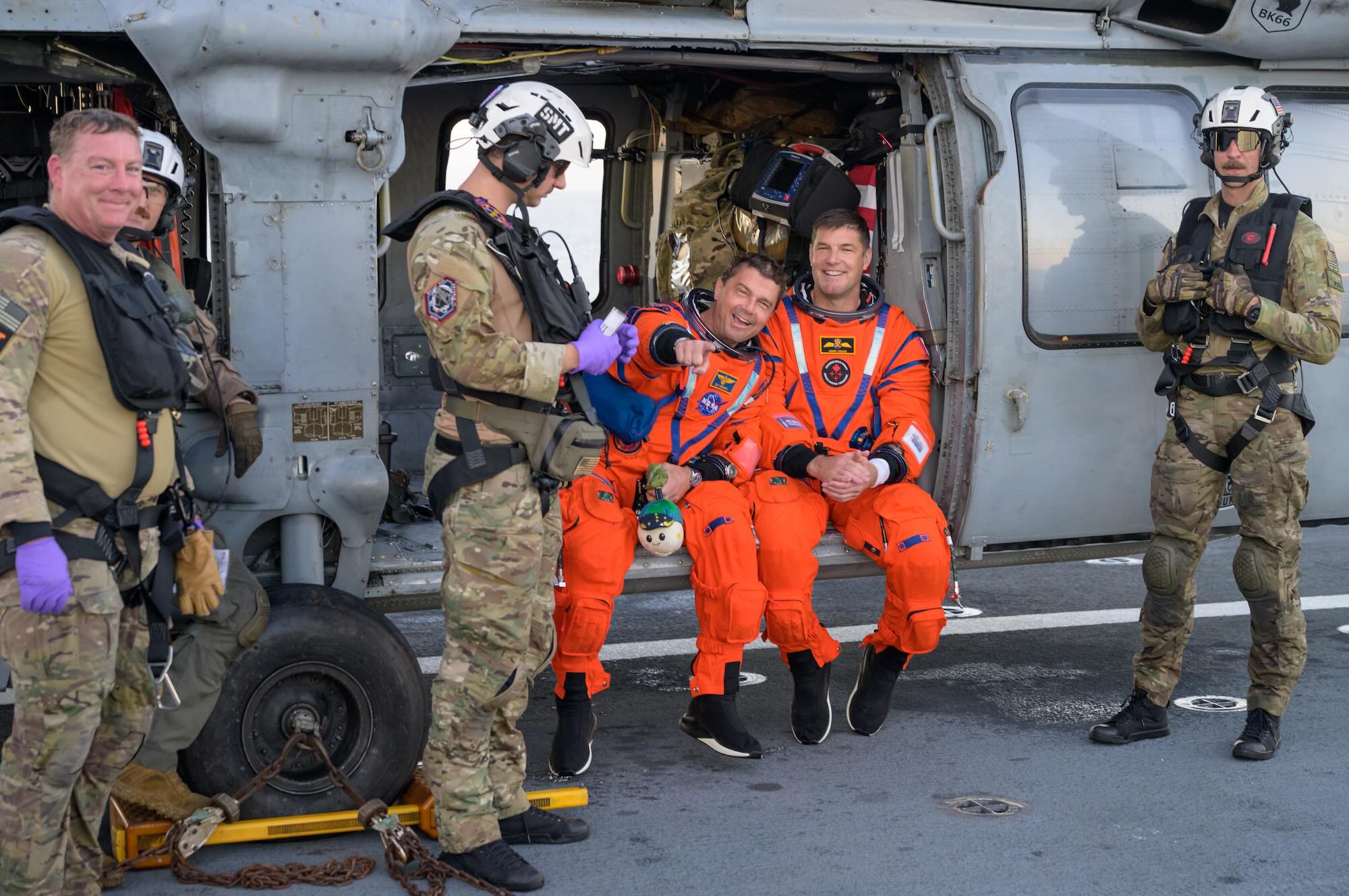
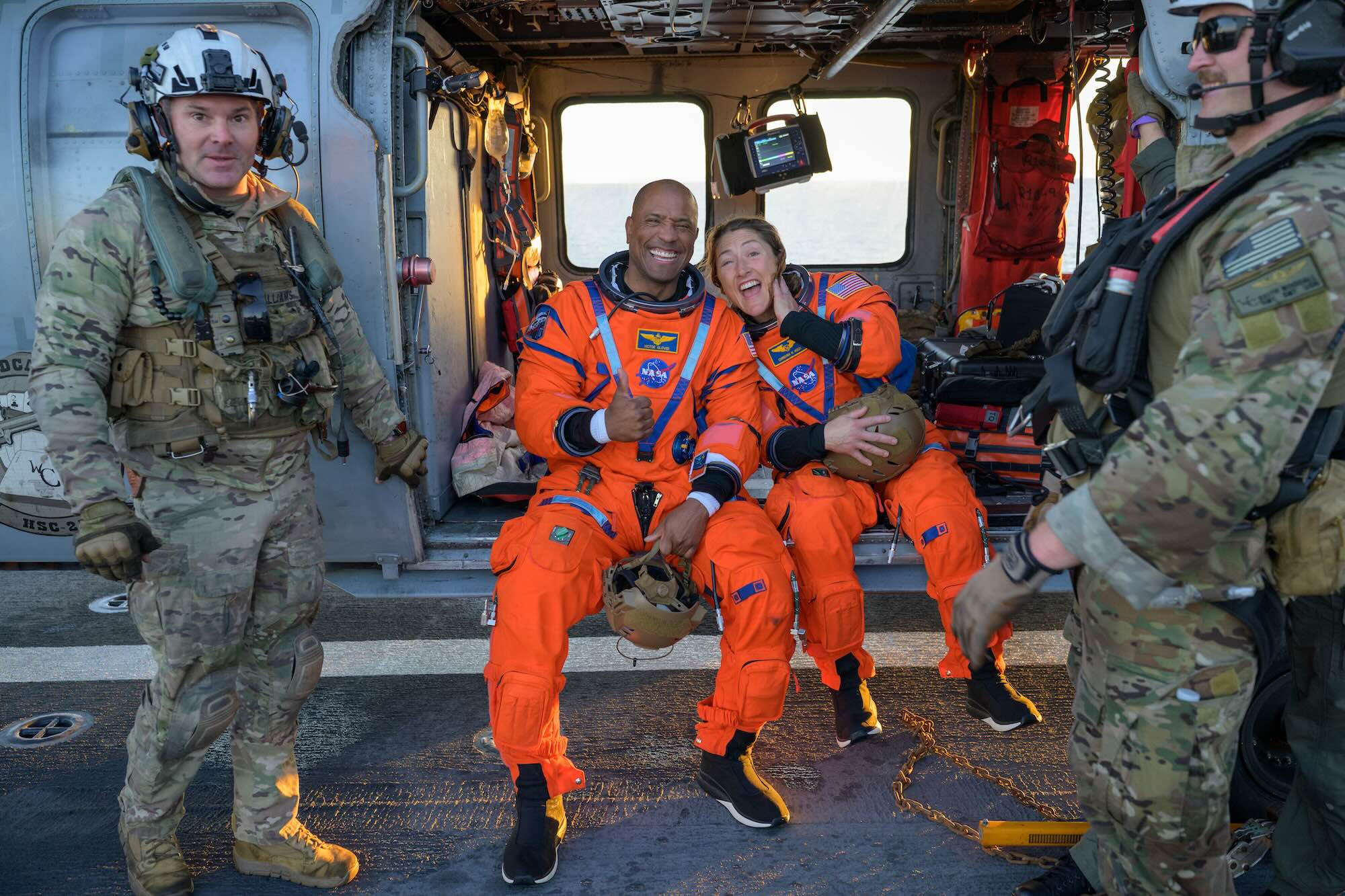
The four astronauts were first to be recovered by helicopters and taken to the nearby US Navy ship USS John P. Murtha. After a medical evaluation, the crew would return to shore and then board a plane bound for Houston.

The moment of Integrity’s splashdown.

© NASA screenshot by Cité de l’espace

U.S. Commander Reid Wideman and Canadian Jeremy Hansen arrive by helicopter aboard the U.S. Navy ship USS John P. Murtha after being winched from the capsule.
© NASA/Bill Ingalls

Victor Glover and Christina Koch arrive by helicopter aboard the U.S. Navy ship USS John P. Murtha after being winched aboard.
© NASA/Bill Ingalls

Related articles