• Launch
  • Moon

Artemis II has lifted off

Published on 02 April 2026

On April 1st at 6:35 PM (Florida time), the SLS rocket placed the Orion spacecraft and its four astronauts into orbit around the Earth. The launch to the Moon is scheduled for the second day of the flight.

Artemis II has lifted off

After having its launch slot repeatedly postponed for technical reasons, the first manned lunar mission in more than 50 years began on April 1 at 6:35 p.m. local time from NASA’s Kennedy Space Center in Florida.

A LITTLE SUSPENSE

The countdown of just over 48 hours unfolded largely without major problems, demonstrating the effectiveness of the ground teams’ work after the technical issues encountered in February.
However, there was still some suspense. Less than two hours before the launch window opened, NASA reported a communication failure with the Flight Termination System (FTS), which, if left unresolved, would have resulted in a cancellation.

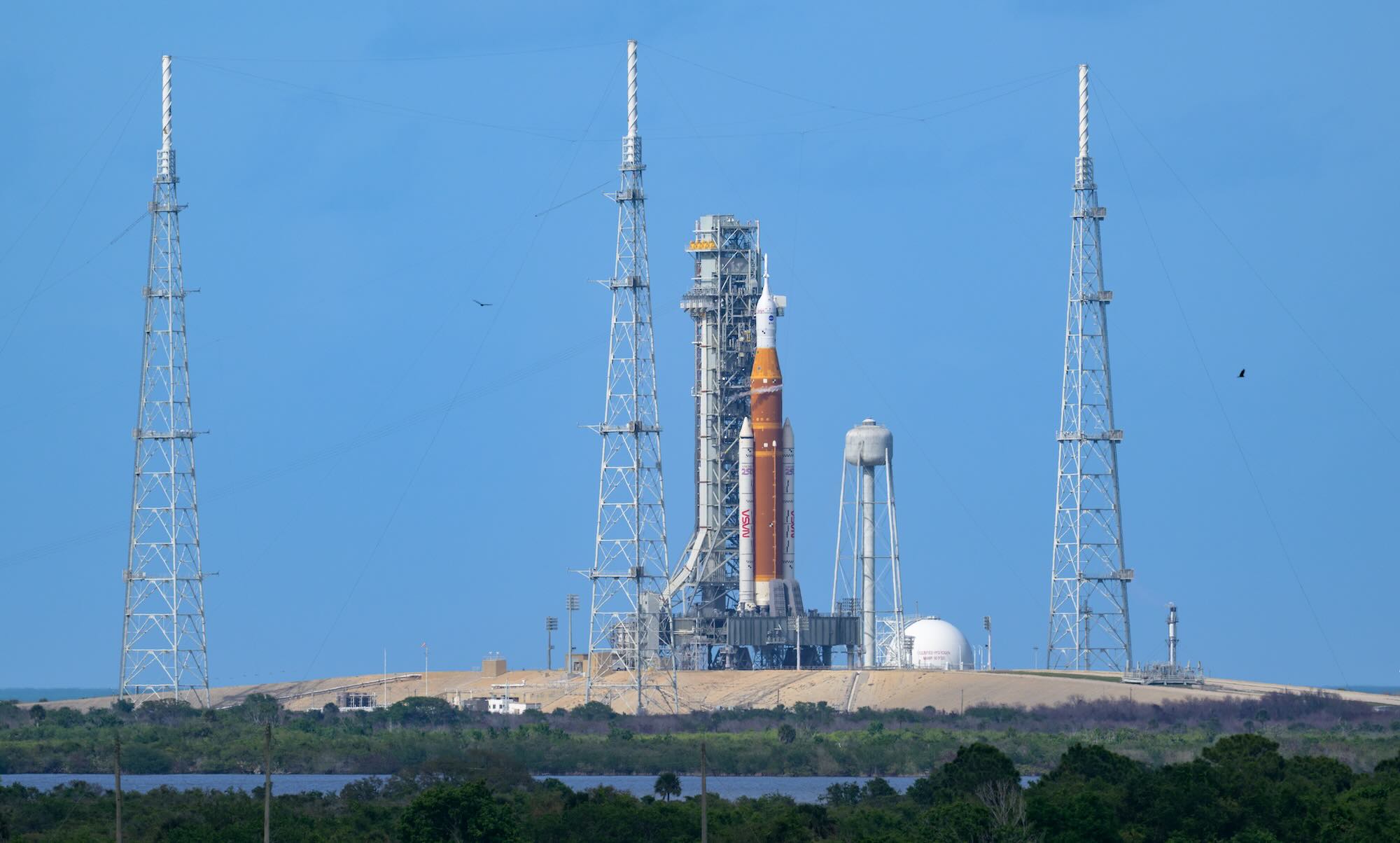
The Artemis II SLS rocket on its launch pad LC-39B at the Kennedy Space Center in Florida on April 1.
© NASA/Bill Ingalls

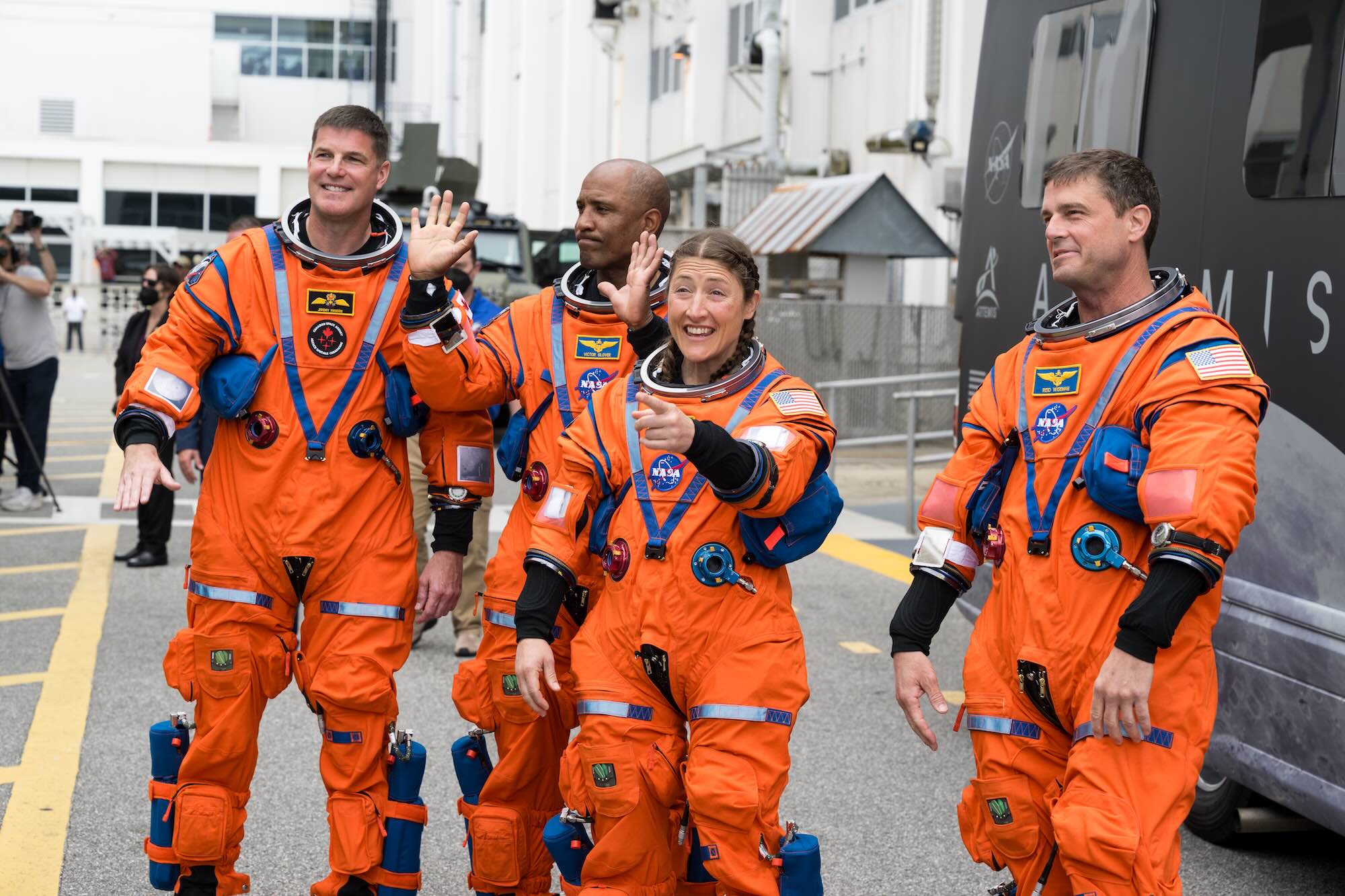
The Artemis II crew on April 1st as they head to launch pad LC-39B. From left to right: Jeremy Hansen, Victor Glover, Christina Koch, and Reid Wiseman.
© NASA/Aubrey Gemignani

A DELAYED START OF 11 MINUTES

The weather, although estimated at 80% favorable, was characterized by rain near the launch pad. As time passed, the threat receded. Finally, one of the batteries in the capsule’s Launch Abort System (LAS) displayed an abnormal temperature. The teams determined that this was a measurement error and not a genuine malfunction.

After a final surprise regarding telemetry, the scheduled takeoff time of 18:24 was slightly delayed to 18:35.

AN IMPRESSIVE liftoff

With the countdown paused at -10 minutes, launch director Charlie Blackwell-Thompson asked her colleagues in charge of the various systems (both ground and launch vehicle) and constraints (such as weather) to give their “go” or “no go.” The green light was given unanimously.
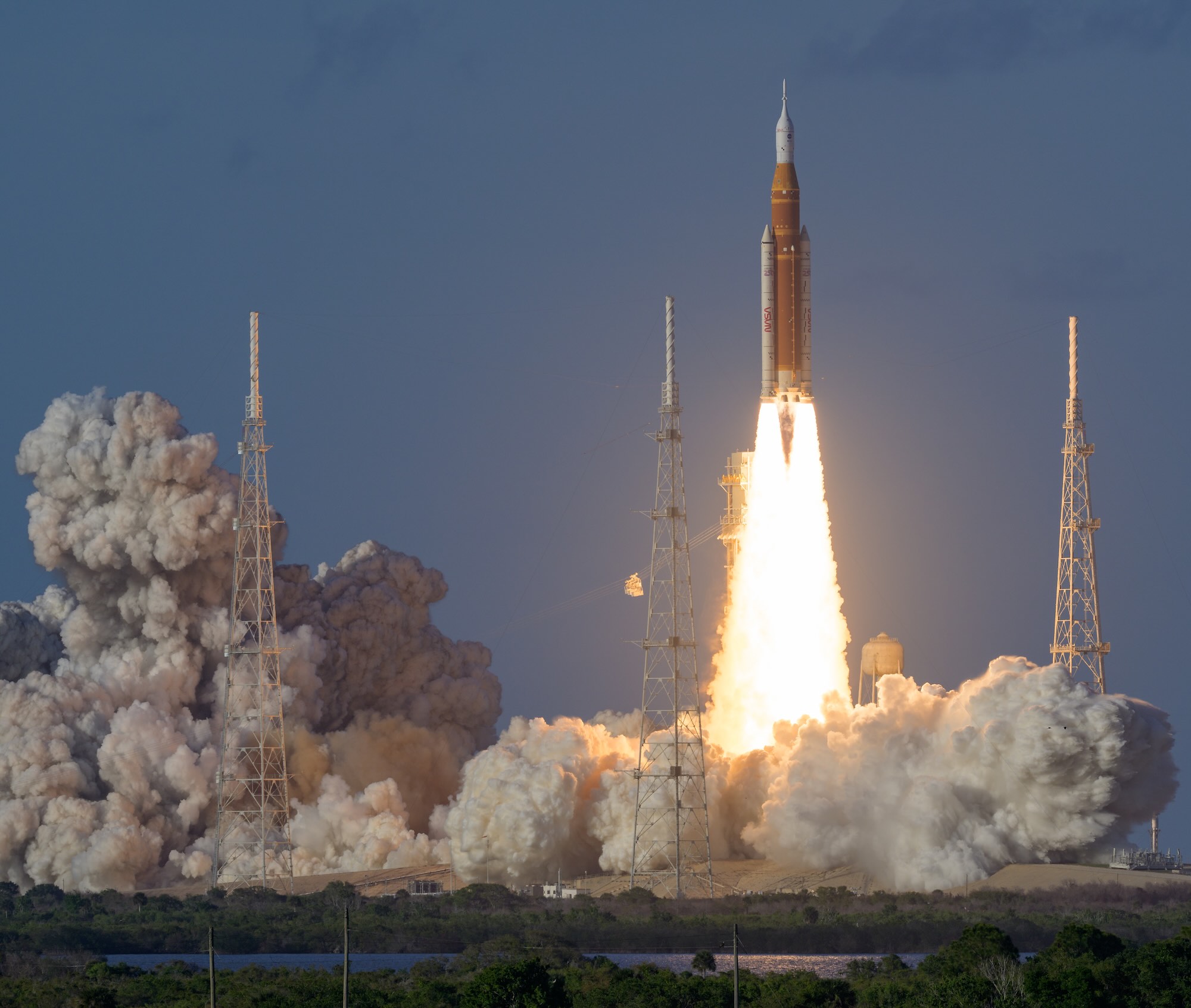
At 6:35 p.m. local time, the four RS-25 boosters from the Space Shuttles ignited. Six seconds later, the two side boosters ignited, signaling the launch of the SLS (Space Launch System). Just 58 seconds later, the SLS was already supersonic! After a two-minute, 30-second ascent, the two boosters were jettisoned.

Eight minutes after liftoff, the main stage boosters shut down and the upper ICPS stage (with the Orion spacecraft at its top) separated to reach Earth orbit.

The Artemis II Space Launch System (SLS) launched on April 1st at 6:35 PM Florida time.
© NASA/Bill Ingalls

Recording of NASA’s live broadcast for the start of the Artemis II mission on April 1st.

ESM: THE INDISPENSABLE EUROPEAN CONTRIBUTION

Twenty minutes after launching from Florida, the European Service Module (ESM) completed a crucial milestone: the deployment of its four solar panels, essential for generating electrical power. It’s worth noting that the Orion Integrity capsule cannot complete its round trip to the Moon without the ESM , highlighting the importance of the European Space Agency’s (ESA) contribution, which provides NASA with this vital module.

AROUND THE EARTH

Built for the ESA by Airbus, with Thales Alenia Space as a subcontractor, a similar ESM was inaugurated during the Artemis I automated mission in late 2022. With Artemis II, a European ESM is now providing support for a crewed mission.
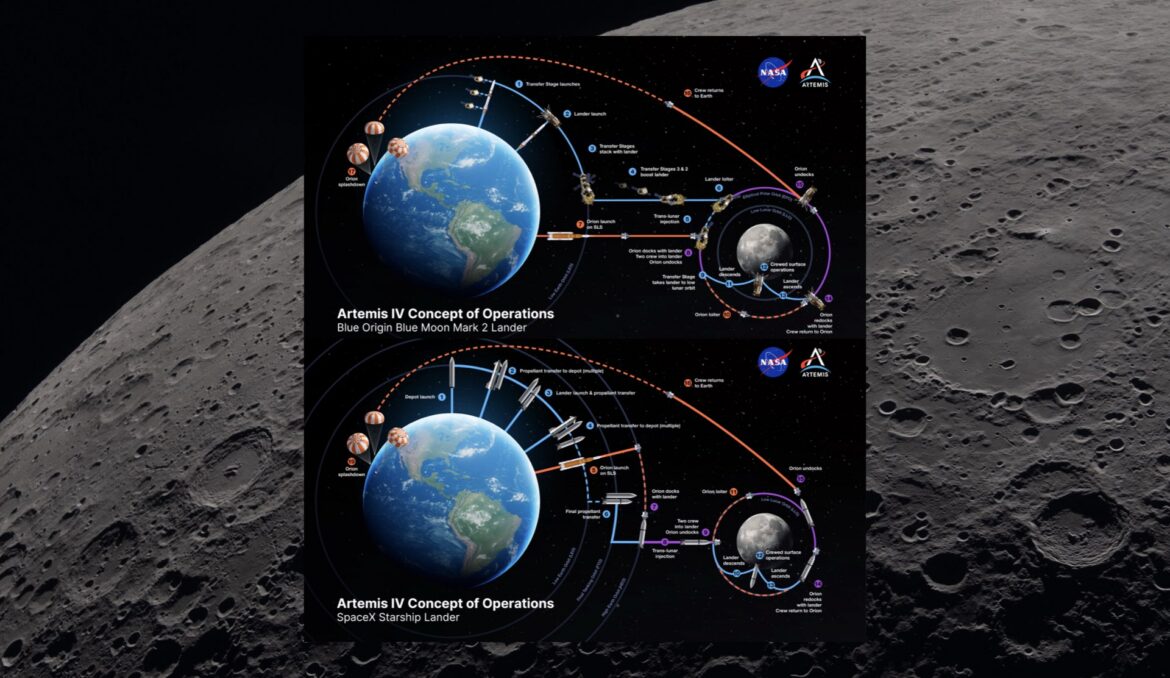
A few hours after liftoff, the Orion/ESM duo will separate from the ICPS. A significant amount of work awaits the crew, as a Proximity Operations Demonstration phase will take place. By operating in close proximity to the ICPS, Orion will rehearse certain procedures that will be used during rendezvous with lunar landers on future missions.

Updated April 2

The Proximity Operations Demonstration phase was successfully completed.
NASA indicated that some unforeseen issues encountered after launch (radio link problems and issues with the onboard toilets) have been resolved.

DEPARTURE FOR THE MOON ON THE SECOND DAY OF FLIGHT

The Orion/ESM duo will remain in Earth orbit until the final hours of April 2 (Universal Time). The ignition of the ESM’s main propulsion system will then allow it to head towards the Moon.
The flyby of our natural satellite is scheduled for the sixth day of flight, and the return to Earth is planned for the tenth day.

This NASA live is monitoring the mission.

Related articles