
• Moon

The Artemis II mission flies by the Moon and sets a new distance record

Published on 07 April 2026

The Artemis II mission flew past the Moon, reaching a record human-wide distance of 406,771 km from Earth. The crew came within 6,500 km of the Moon and conducted scientific observations. This paves the way for a sustainable return of humanity to the lunar surface.

The Artemis II mission flies by the Moon and sets a new distance record

This was the highlight of the Artemis II mission . On the night of April 6-7, day 6 of the mission, the Artemis II Orion capsule performed its lunar flyby . This was a major technical and scientific milestone for NASA’s space program. The crew of four astronauts reached the farthest distance ever traveled by humans from Earth . The previous record was held by the crew of Apollo 13 more than 50 years ago. This ten-day test flight , which did not include a lunar landing, served to validate the onboard and life support systems before the next steps, which include a permanent return to the surface of our natural satellite.

When Apollo 13 passed the symbolic 400,171 km mark, the crew announced that two uncatalogued craters would be named Integrity and Carroll, after Reid Wiseman’s deceased wife.

© NASA

A DISTANCE RECORD BEYOND THE LEGACY OF APOLLO

A PALPABLE EMOTION IN THE HEART OF THE VOID OF SPACE

On April 7 at 1:02 a.m. (French time), the Orion spacecraft reached a distance of 406,771 kilometers from Earth, setting a new benchmark for crewed spaceflight. This figure officially surpasses the record of 400,171 kilometers held since 1970 by the Apollo 13 mission . This symbolic milestone was officially crossed at 7:57 p.m. To celebrate this moment, the crew chose to name two craters on the far side of the Moon that had not yet been cataloged. One was named Integrity, after the Orion capsule of Artemis II . The other was named Carroll, after the wife of mission commander Reid Wiseman , who passed away from cancer in 2020. Inside the cabin, the crew was overcome with emotion. “ A few years ago, we embarked on this journey as part of our close-knit astronaut family, and we lost a loved one, ” explained Canadian astronaut Jeremy Hansen . The four crew members, fighting back tears, embraced to mark the moment. Earlier, the astronauts had also been moved by a posthumous message from Jim Lovell , commander of Apollo 13 and command module pilot of Apollo 8. He symbolically passed the torch to them by welcoming them to his “old quarters.” “ By surpassing the farthest distance humans have ever traveled from planet Earth , we do so while honoring the extraordinary efforts and achievements of our predecessors in human space exploration ,” added Jeremy Hansen. “ This is the thrill and honor of a lifetime ,” added Victor Glover, the mission pilot.

The crew members took turns making observations of the far side and the near side and taking photos.

© NASA


SCIENTIFIC OBSERVATIONS FROM THE FLYBY ORBIT

SHADOW, LIGHT, AND RADIO SILENCE

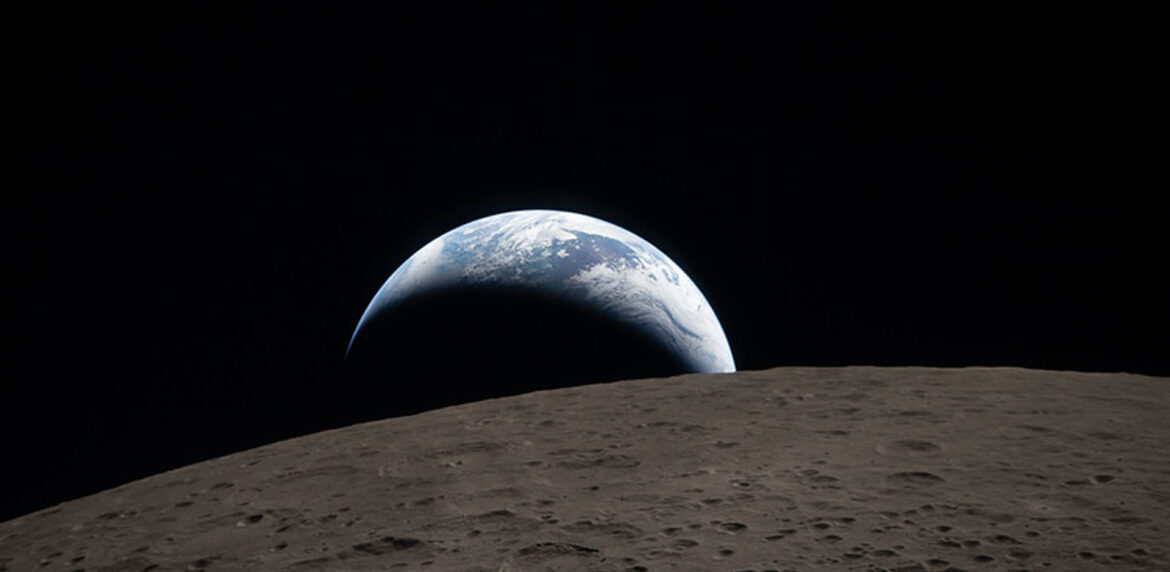
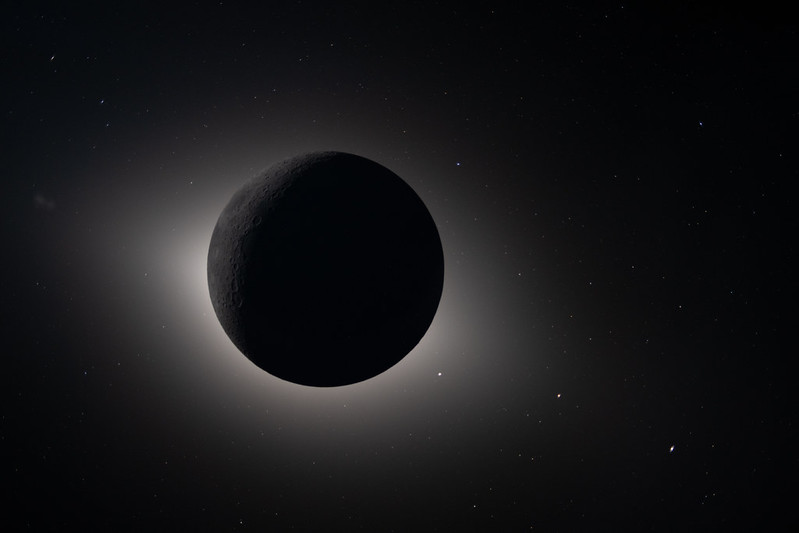
The pass behind the Moon caused a complete interruption of communications with Earth for about 40 minutes. Just before this period of silence, the astronauts and the public watching the live broadcasts witnessed an “Earthset .” Our planet disappeared behind the Moon before reappearing during an “Earthrise” a few minutes later. The crew also observed a total solar eclipse lasting 53 minutes from their unique position, a spectacle during which the solar corona formed a brilliant halo around the Moon ‘s black disk . Mission specialist Christina Koch shared her experience: ” Something suddenly drew me to the lunar landscape, and it became real. And the truth is, the Moon truly is its own body in the universe .”

The crew witnessed an Earthset. In this image, all of humanity is gathered together, except for the four from Artemis II.

© NASA

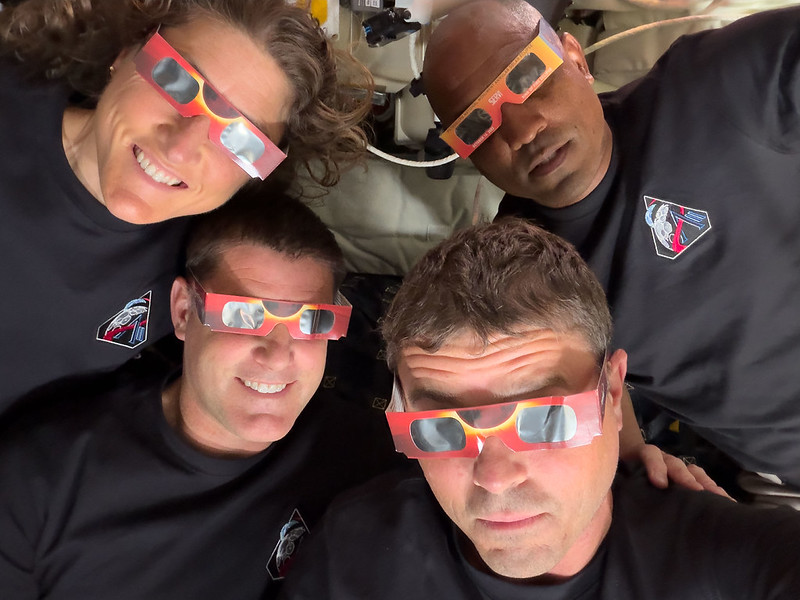
Equipped with special glasses, the four astronauts were able to witness a solar eclipse… just for themselves.


THE HUMAN EYE, A TOOL OF GEOLOGICAL PRECISION

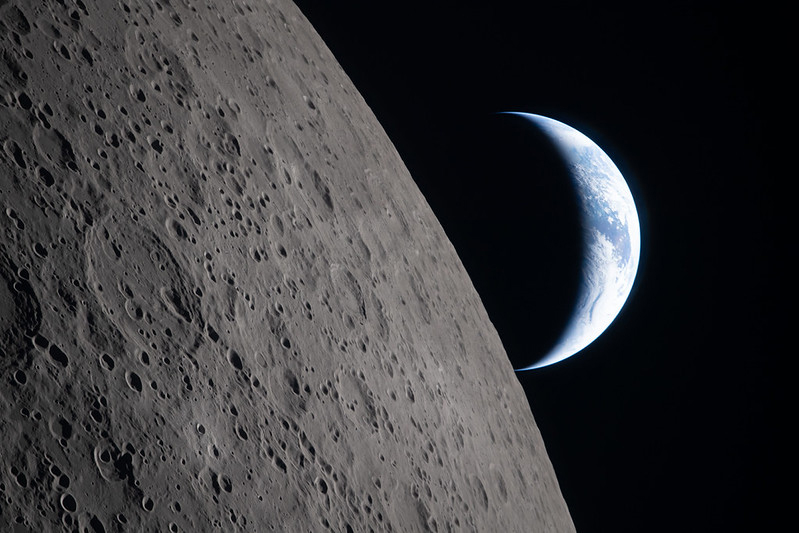
To carry out their scientific mission, the astronauts took turns in pairs at the window, following instructions from NASA researchers to identify and photograph specific sites. The main focus was observing craters at the terminator, the transition zone between day and night, where grazing sunlight highlights textures and relief. The astronauts also described the surface as having shades of brown and green, confirming observations made by the Apollo crews. Finally, the crew reported at least five bright flashes, evidence of meteorite impacts on the far side. ” You really brought the Moon closer to us today. And we can’t thank you enough ,” commented Kelsey Young, science operations manager for Artemis.

PREPARING FOR A SUSTAINABLE RETURN TO THE LUNAR SURFACE

This flyby is primarily a full-scale test for the Orion spacecraft and its life support systems. While this mission simply bypasses the Moon, it prepares for Artemis III and IV, which respectively plan an orbital rendezvous test and a landing near the lunar south pole. President Donald Trump congratulated the crew during a direct call : ” Today, you made history and made all of America truly proud, incredibly proud .” For NASA, the goal remains establishing a permanent presence. ” They are charting new frontiers for all of humanity ,” affirmed Lori Glaze, NASA’s administrator in charge of exploration systems development. “Their dedication is much more than a matter of records; it fuels our hope for a bold future.”

a2-pao-event-shot

The crew received congratulations from the President of the United States, Donald Trump.

© NASA

Relive the entire lunar flyby of Artemis II.

© NASA


Related articles