• Launch

Vulcan launcher failed on its fifth flight

Published on 16 November 2026

The Vulcan rocket, operated by the American company United Launch Alliance, experienced a failure during its fifth flight on November 15th from Florida. All 40 satellites of the Amazon Leo constellation are lost.

Vulcan launcher failed on its fifth flight

Online retail giant Amazon plans to launch its own constellation of satellites dedicated to web connectivity, called Amazon Leo (for Low Earth Orbit). Following two test satellites launched in October 2023, fourteen more flights have placed 396 operational satellites around Earth . To ensure a rapid ramp-up and avoid relying on a single provider, Amazon has signed contracts with SpaceX, United Launch Alliance, Arianespace, and, unsurprisingly, Blue Origin, the space company of billionaire Jeff Bezos, Amazon’s founder.

The November 15 launch entrusted 40 Amazon Leo satellites to United Launch Alliance .

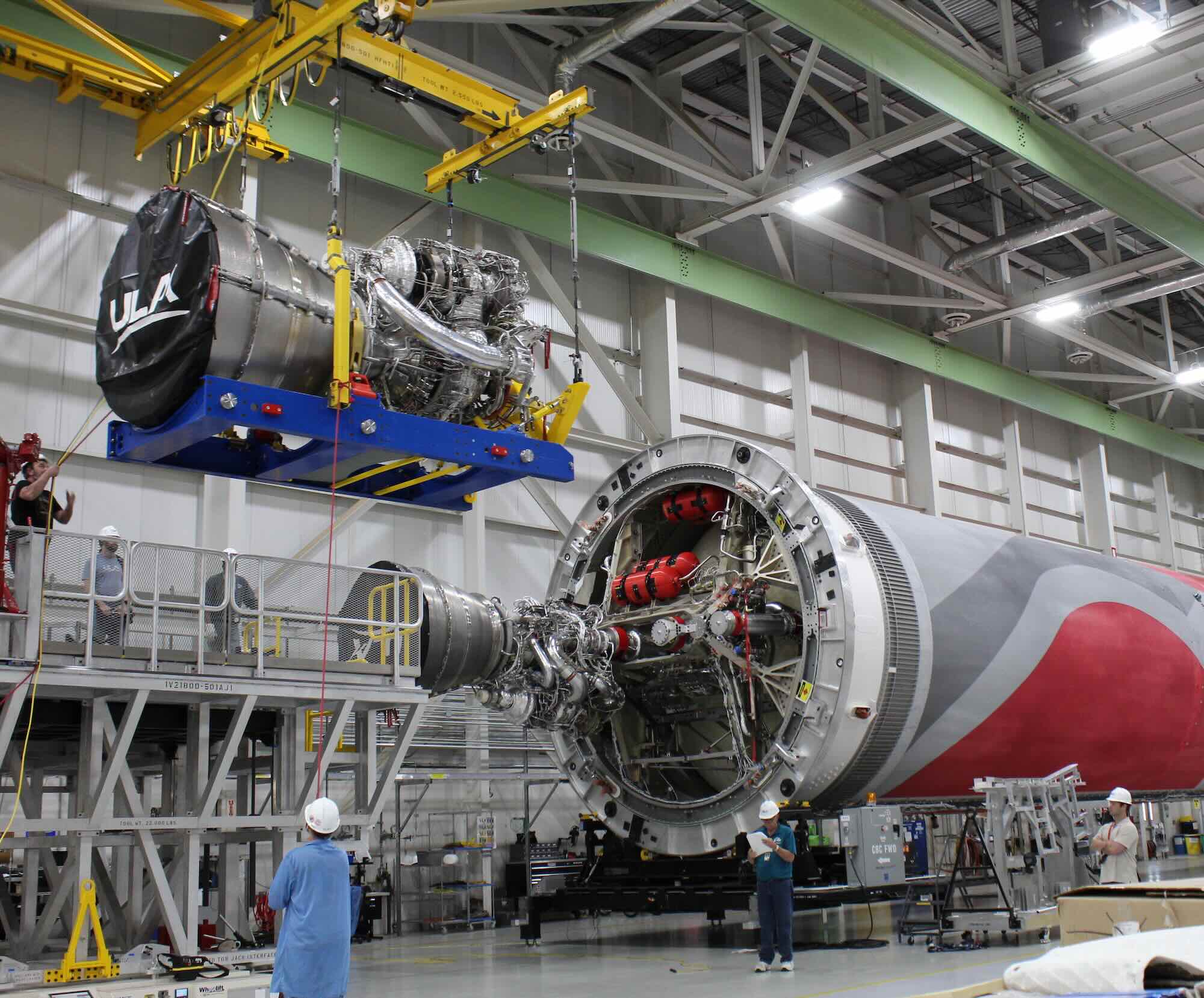
Installation of the second BE-4 motor on the main stage of a United Launch Alliance (ULA) Vulcan Centaur rocket.
The BE-4 is supplied by Blue Origin, Jeff Bezos’s space company.
© ULA

ULA CLEARS BLUE ORIGIN OF WRONGDOING

UPDATED NOVEMBER 20

United Launch Alliance (ULA) has provided further details regarding the failure of its Vulcan Centaur rocket during the November 15th flight .
The American company first clarified that while it reported an anomaly at the ten-minute mark of the flight, this did not mean that the Centaur upper stage (which had taken over several minutes prior) was at fault. In fact, the Centaur had failed to compensate for the performance deficit of the main stage . The main stage is powered by two BE-4 engines manufactured by Blue Origin, Jeff Bezos’s space company. However, a valve failure on a BE-4 engine was the cause of the explosion of Blue Origin’s New Glenn rocket on May 28th . The two BE-4 engines on the Vulcan’s main stage on November 15th had, however, undergone a modification by Blue Origin. In another statement, ULA explained that “preliminary indications are that the low booster thrust was the result of inadequate fuel supply from the vehicle to the BE-4 engines, not from the performance of the engines.“
For the time being, ULA is therefore ruling out the possibility that the Blue Origin BE-4s are the source of the problem and is investigating their fuel supply (i.e., the stage manufactured by ULA).

FIRST VULCAN FLIGHT FOR AMAZON LEO

This isn’t the first time Amazon has entrusted its satellites to the American company United Launch Alliance (ULA), a joint venture between Lockheed Martin and Boeing. Since 2025, ULA has successfully launched 27 satellites into orbit nine times using its Atlas V rocket . However, this launcher uses a Russian RD-180 engine on its first stage. With the war in Ukraine and the impossibility of purchasing new Russian engines, as well as the desire to rely on an entirely American solution, ULA decided to gradually phase out the Atlas V in favor of its newer, more powerful Vulcan Centaur (or simply Vulcan) launcher. Thus, for its fifth missionafter its maiden flight in January 2024 , the Vulcan launch on November 15, 2026, carried 40 Amazon Leo satellites under its fairing, instead of the 27 carried by the Atlas V. This was the first ULA launch for Amazon using the Vulcan .
The launch from launch pad SLC-41 at Cape Canaveral Space Force Station in Florida took place at 12:11 PM local time. In a statement, ULA indicated that the flight was unsuccessful.

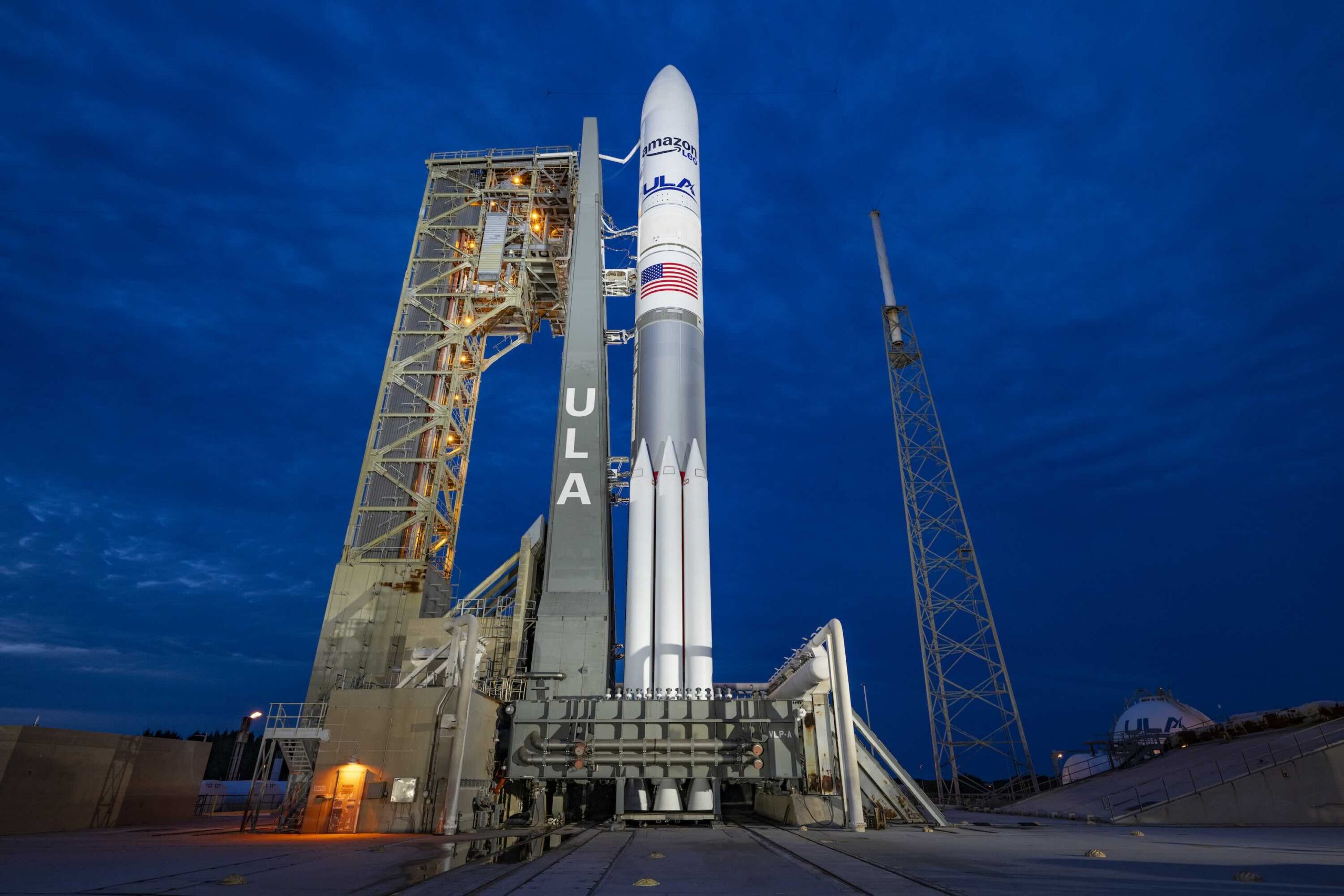
The first Vulcan Centaur launcher dedicated to launching Amazon Leo satellites (previously, ULA had used its Atlas V for Amazon).
On November 15, the Vulcan (here, on its launch pad before liftoff) flew in its VC6L configuration with six side boosters (three on each side) and an extended fairing.
© ULA

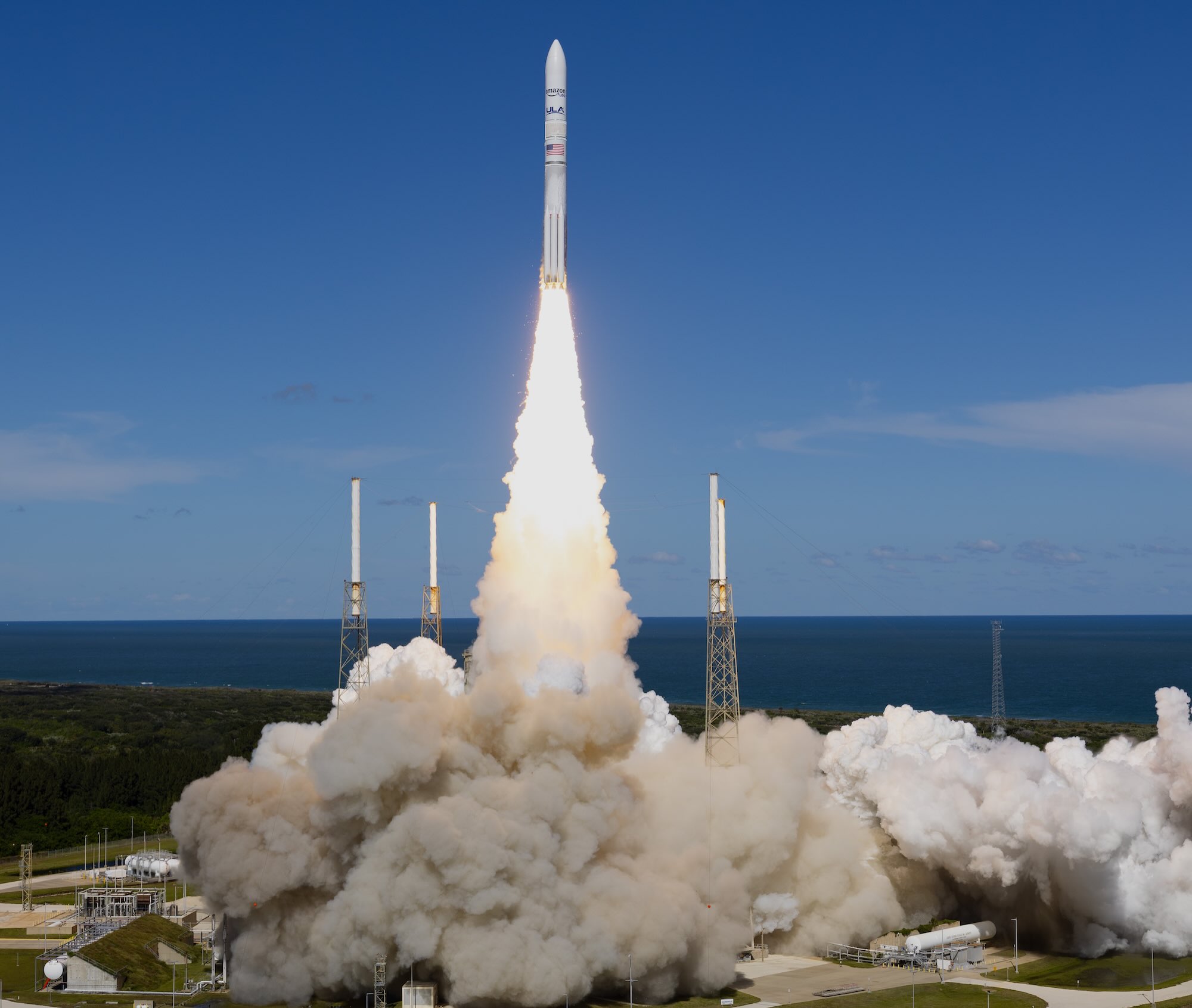
ULA’s fifth Vulcan Centaur rocket launched from Florida on November 15, carrying 40 Amazon Leo satellites.
© ULA

A CAUSE THAT REMAINS TO BE DETERMINED

ULA’s press release states that “the Vulcan vehicle launched from Space Launch Complex 41 suffered an anomaly 10 minutes into the flight and failed to deliver the Amazon mission to orbit.” The 40 satellites are therefore lost. During the tenth minute of ascent, the Centaur V second stage had taken over from the main stage a few minutes earlier, leading to speculation that the malfunction might have affected this stage, which uses RL-10C boosters (which consume liquid hydrogen and oxygen) and is the successor to a family of upper stages dating back to the 1960s.
However, telemetry relayed during ULA’s live broadcast (see below) shows that the Centaur V second stage took over after approximately 5 minutes and 40 seconds of flight, whereas the official mission description indicated that this phase should have occurred about 40 seconds earlier.

BLUE ORIGIN SUPPLIES THE MAIN STAGE BOOSTERS FOR THE VULCAN

This delay of approximately forty seconds in the flight plan has led some observers to suspect a performance issue with the main stage, powered by two BE-4 engines that consume liquid methane and oxygen. These two engines are supplied by Blue Origin and were responsible for the explosion of the company’s New Glenn launch vehicle on May 28, which uses the same engines on its first stage. Blue Origin acknowledged that a valve failure on one of the BE-4 engines was the cause. However, the two BE-4 engines on the Vulcan launch of November 15 were modified to incorporate lessons learned from the May 28 explosion. For the moment, there is no official indication that the BE-4 engines are the source of the malfunction. ULA also stated a few days after the November 15 failure that the Blue Origin engines are not at fault (see update at the beginning of the article).

ULA PROMISES ” full TRANSPARENCY” 

While this is the first failure for ULA’s Vulcan Centaur , it’s worth noting that on two previous occasions, one of its side boosters (GEM-63XL type, supplied by Northrop Grumman) malfunctioned, without preventing the mission’s success. The cause of the November 15th failure therefore remains to be determined . ULA has pledged “full transparency“ regarding its “investigation process, which utilizes rigorous methodology and corrective action.”
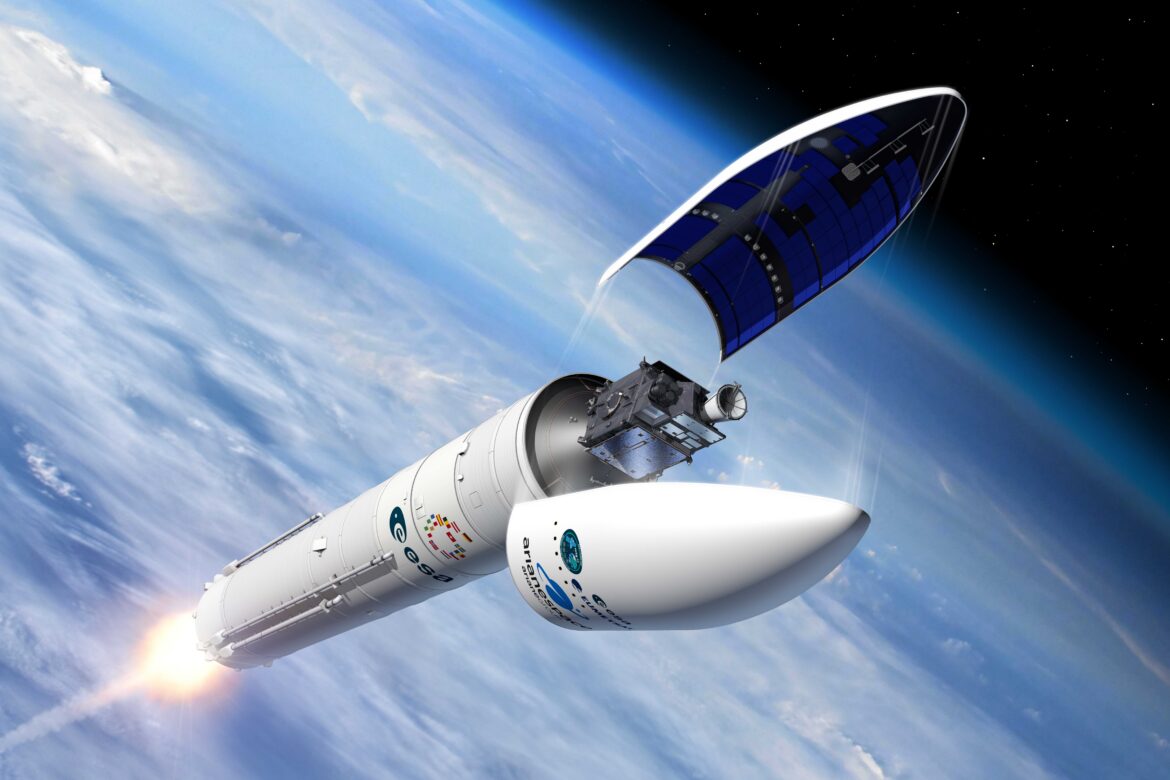
The next launch of Amazon Leo satellites into orbit is scheduled for November 23rd with Ariane 6. The European launcher will carry 36 satellites under its fairing.

Recording of the ULA live broadcast of the Vulcan mission on November 15th. The separation between the primary and secondary stages occurs at 54:30 in the video. The live broadcast ends approximately ten minutes later without any announcement of the failure.

Related articles