




• Satellite

Ariane 6 launches MTG-I2, to improve European weather forecasts

Published on 28 August 2026

The Ariane 6 launcher lifted off from Kourou to place the MTG-I2 satellite into geostationary orbit. This observation tool will allow for real-time monitoring of severe storms to better protect European populations and secure our activities.

Ariane 6 launches MTG-I2, to improve European weather forecasts

Updated on August 28, 2026 at 7:00 AM

On Thursday, August 27, 2026 , the European Ariane 6 launcher lifted off from the Guiana Space Centre in Kourou for mission VA270. It carried the MTG-I2 weather satellite to geostationary orbit , located 36,000 kilometers above the Earth. This flight represents the fourth launch of the year for the European rocket and marks its very first mission to this orbit. A major step towards strengthening the EUMETSAT observation network.

Relive the launch 

The flight took off at 10:10 PM from Kourou, French Guiana.

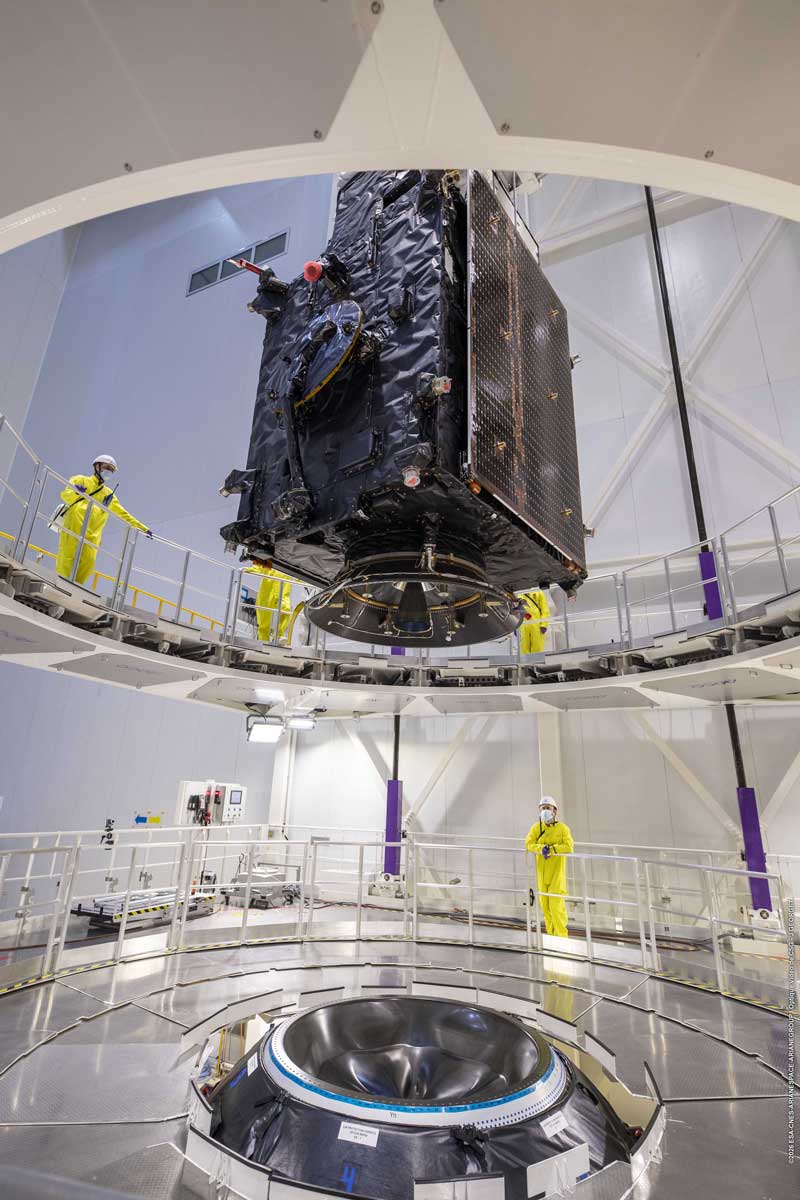
MTG-I2 during its integration onto the Ariane 6 launcher adapter at the Guiana Space Centre.
© 2026 ESA-CNES-ARIANESPACE-ArianeGroup\Optique Video de CSG–J. Georget.

Ariane 6 ever higher

For the first time, the European launcher deployed a satellite into geostationary orbit.

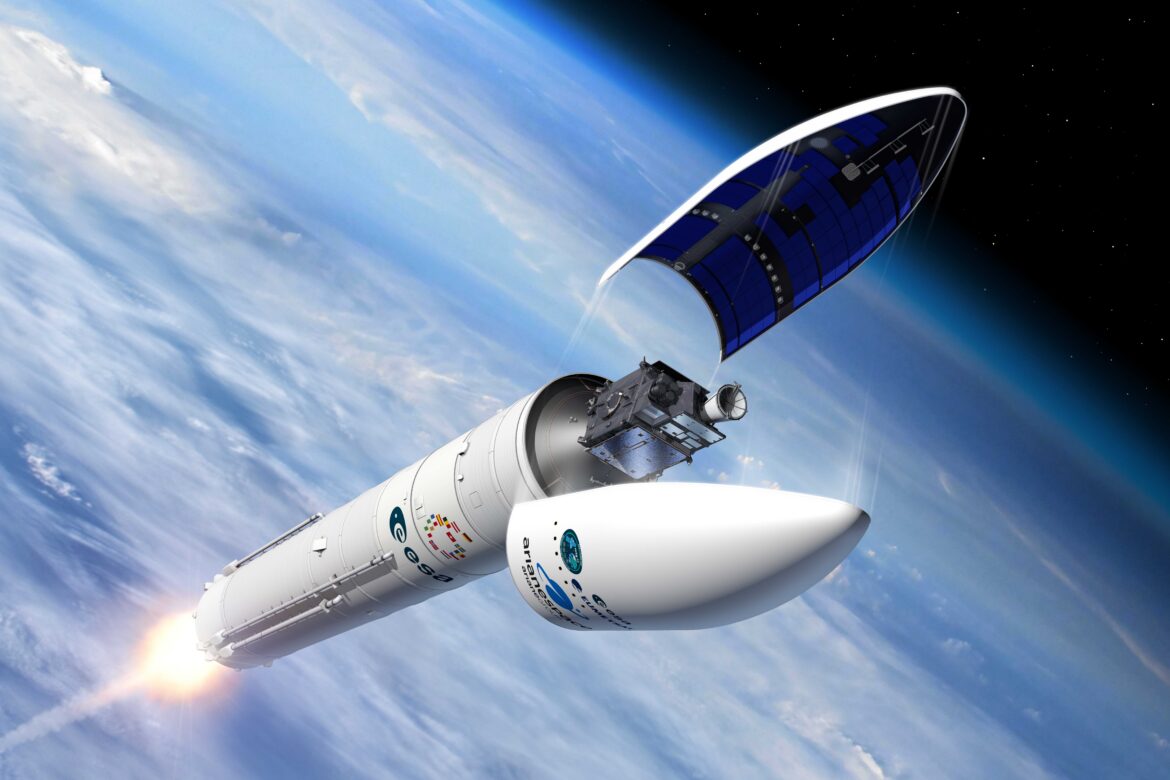
For this VA270 flight, the operator Arianespace used the Ariane 62 version , characterized by the use of two boosters, unlike the Ariane 64 version with four boosters that performed the first three flights of the year . The launcher carried a single payload without a companion payload. It was a relatively short and direct mission of approximately 36 minutes from liftoff to separation of the meteorological satellite. During this phase, the Vinci engine of the upper stage ignited only once to inject the spacecraft into its geostationary trajectory. This was an opportunity for the European launcher to demonstrate its versatility. Adapted to missions to low Earth orbit, Ariane 6 is also capable of reaching the higher orbits that contributed to the success of its predecessor, Ariane 5 . ” By carrying out this mission, Europe’s sovereign launch capability, Ariane 6, will enable the collection of essential meteorological data for forecasting, monitoring and warning systems, data which is critical for many sectors of daily life ,” said Karolene Arnu, director of the Ariane business unit at Arianespace, during a press conference on August 19.

The renewal of European meteorological observation

MTG-I2 will allow images to be obtained twice as fast as previous generation satellites

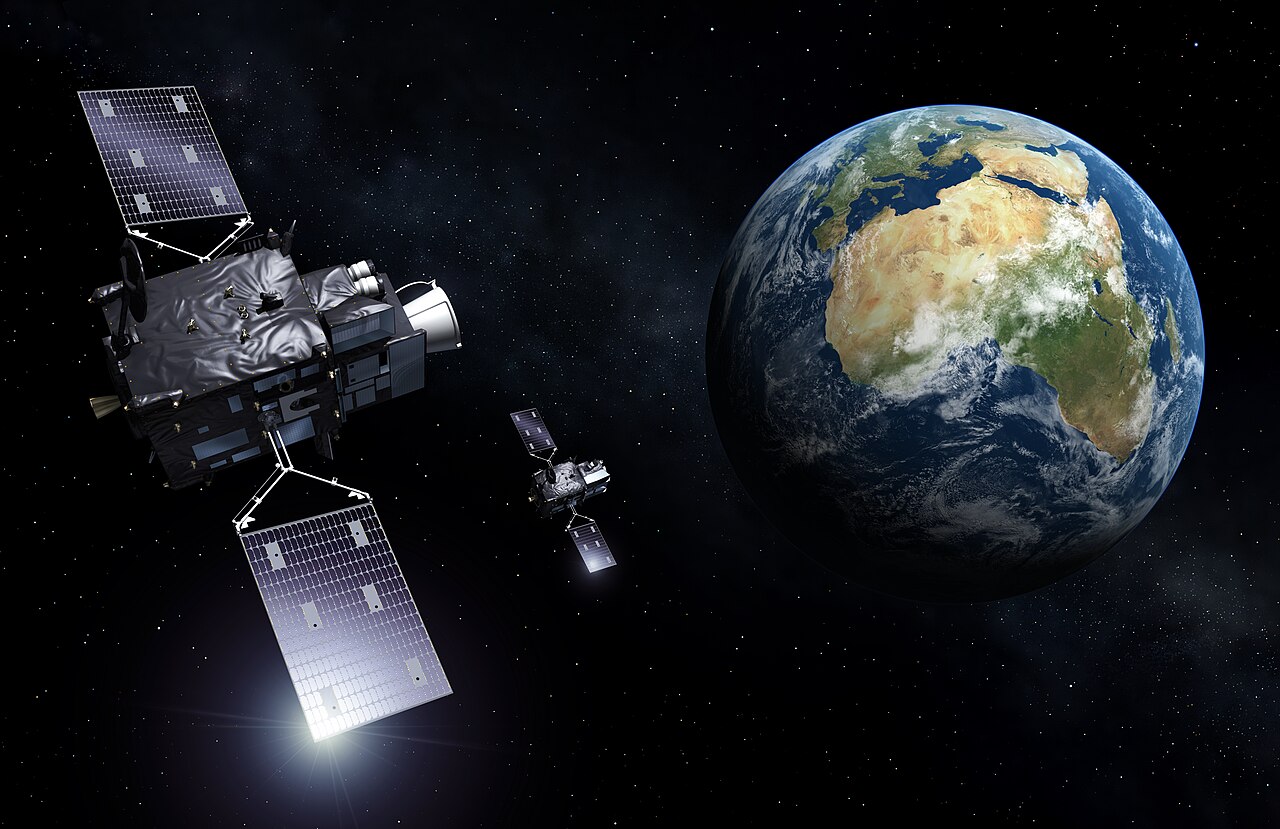
The MTG-I2 (Meteosat Third Generation Imager 2) satellite, weighing approximately 3.8 tons at launch, is designed for a nominal lifespan of just over ten years. Positioned 36,000 kilometers above the equator, it is equipped with two state-of-the-art instruments: the Flexible Combined Imager (FCI) and the Lightning Imager (LI). The FCI will provide images of Europe every two and a half minutes, twice the frequency of second-generation satellites , enabling near real-time monitoring of rapidly evolving phenomena such as storms, forest fires, and ash clouds. ” MTG-I2’s rapid scanning of Europe will be invaluable for the immediate forecasting of hazardous phenomena ,” said Phil Evans, Director General of EUMETSAT, in a statement. “ It will provide data that will support meteorologists seeking to track the complete lifecycle of severe storms, from their formation to their dissipation .” This continuous monitoring offers unprecedented analytical capabilities for specialists in the field. “ For forecasters, MTG-I2 is like going from a series of snapshots to a live video feed from space, ” explains Thomas Blackmore, lead scientist for the Space Data Products and Systems team at the UK Met Office. MTG-I2 joins MTG-I1, launched in 2022, and MTG-S1, launched in 2025 on a SpaceX Falcon 9 rocket . By 2035, this network will comprise six satellites: four MTG-I and two MTG-S.

By 2035, this satellite network will include 4 MTG-I satellites (foreground) and 2 MTG-S satellites (background)

© ESA

Related articles