





• Podcast Ici Occitanie

Explosion of the New Glenn launch vehicle during a static test in Florida

Published on 29 May 2026

Blue Origin's New Glenn rocket exploded during a static fire test. No injuries were reported, but the damage to the launch pad is significant. It could remain grounded until 2027. This is a major setback, as NASA is counting on this rocket for the Artemis missions.

Explosion of the New Glenn launch vehicle during a static test in Florida

This is a major setback that Blue Origin and NASA could have done without. On May 28, 2026, at Cape Canaveral Space Center in Florida, the New Glenn heavy-lift launch vehicle was destroyed during a static fire test . The explosion occurred shortly after the ignition of the seven BE-4 first-stage engines on launch pad LC-36. No personnel were injured, but the damage to the launch infrastructure is significant. This event marks a halt to the program, which had started very well and was preparing to conduct its fourth flight very soon after the failed satellite deployment on the previous flight . For NASA, this major incident comes two days after announcements regarding the deployment of a lunar base , the first phase of which relied heavily on the Blue Moon Mk1 , Blue Origin’s cargo spacecraft, and its New Glenn launch vehicle.

The explosion of the New Glenn as seen by SpaceFlight Now cameras.

© SpaceFlight Now X Account

And suddenly the New Glenn explodes…

A routine test interrupted by an explosion

The incident occurred around 9:00 PM local time (3:00 AM French time) while Blue Origin was conducting a static fire test, a test of engine ignition while the rocket remains attached to the ground. This test was intended to prepare for the NG-4 mission, scheduled for June 4, which was to launch satellites for the Amazon Leo constellation into orbit . According to initial observations, the failure appears to have originated in the first-stage engine section , which uses a mixture of methane and liquid oxygen.

Staff safety and condition of facilities

Immediately after the incident, the company confirmed that no injuries were reported. However, the force of the explosion caused visible damage to Launch Complex 36. Videos of the incident show, in particular, the collapse of one of the lightning protection towers surrounding the launch pad. ” All personnel have been accounted for and are safe. It’s too early to know the root cause, but we are already working to find out, ” reacted Jeff Bezos, the founder of Blue Origin, on his X account. ” Very difficult day, but we will rebuild everything that needs rebuilding and we will resume flights. It will be worth it. “

Will the Moon have to wait even longer?

What will be the impacts of the unavailability of the New Glenn on the next steps of the Artemis program?

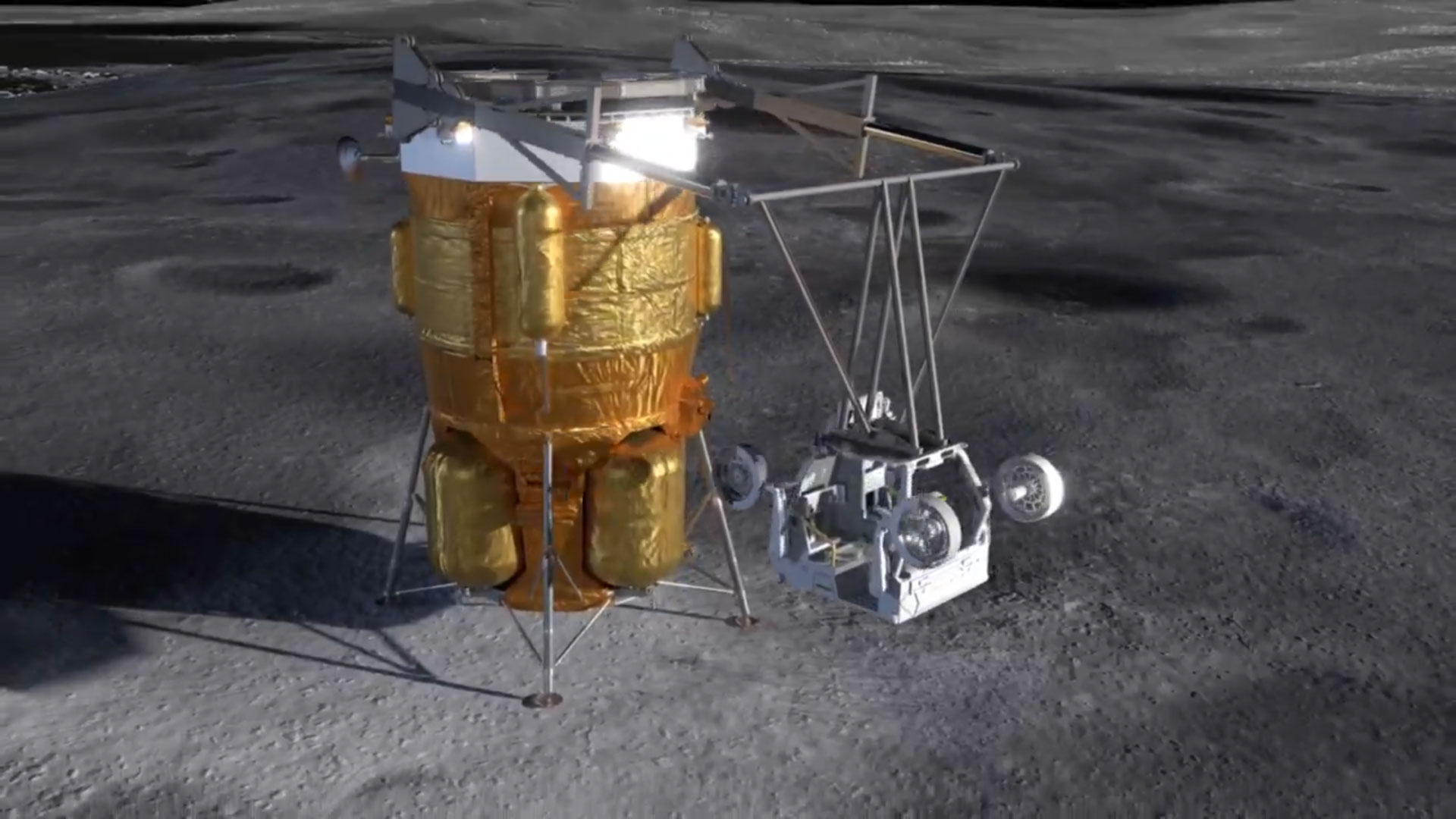
The New Glenn rocket plays a key role in NASA’s strategy for returning to the Moon. It is slated to launch the Blue Moon Mark 1 lander, whose demonstration flight was scheduled for the end of 2026. NASA had just announced the new timeline for deploying a ground-based lunar base at the Moon’s south pole. This flight interruption could lead to delays for future Artemis missions . NASA is also counting on Blue Origin to provide the Blue Moon Mark 2 , the crewed version of the spacecraft intended to serve as a lander. The Artemis III mission , scheduled for 2027, was planned as a rendezvous in Earth orbit between the Orion capsule and the Artemis program’s lander(s): SpaceX’s Starship and Blue Origin’s Blue Moon Mark 2, launched into orbit by a New Glenn rocket. The American space agency is therefore closely monitoring the evolving situation. “ Spaceflight is unforgiving, and developing a new heavy-lift launch capability is extraordinarily difficult ,” said NASA Administrator Jared Isaacman. “ We will work with our partners to support a thorough investigation into this anomaly, assess the short-term mission impacts , and resume rocket launches. ” As with Starship, whose Super Heavy booster failure prompted an FAA investigation , Blue Origin will have to provide explanations and make corrections to be cleared to fly again. And, regarding the physical damage to the launch pad, which is currently the only one capable of accommodating the New Glenn, the launch vehicle could remain grounded for an extended period , possibly until 2027.

The Blue Moon Mk2, launched by a New Glenn rocket, is intended to carry equipment to the Moon. A first mission was planned for the end of the year.

© NASA

Related articles