The Very Large Telescope spots a barely visible exoplanet

Published on 16 July 2026

Astronomers have identified Beta Pictoris d, a third exoplanet in this system. Located 63 light-years away, this gas giant is the faintest and least massive exoplanet ever imaged directly from the ground using the VLT.

The Very Large Telescope spots a barely visible exoplanet

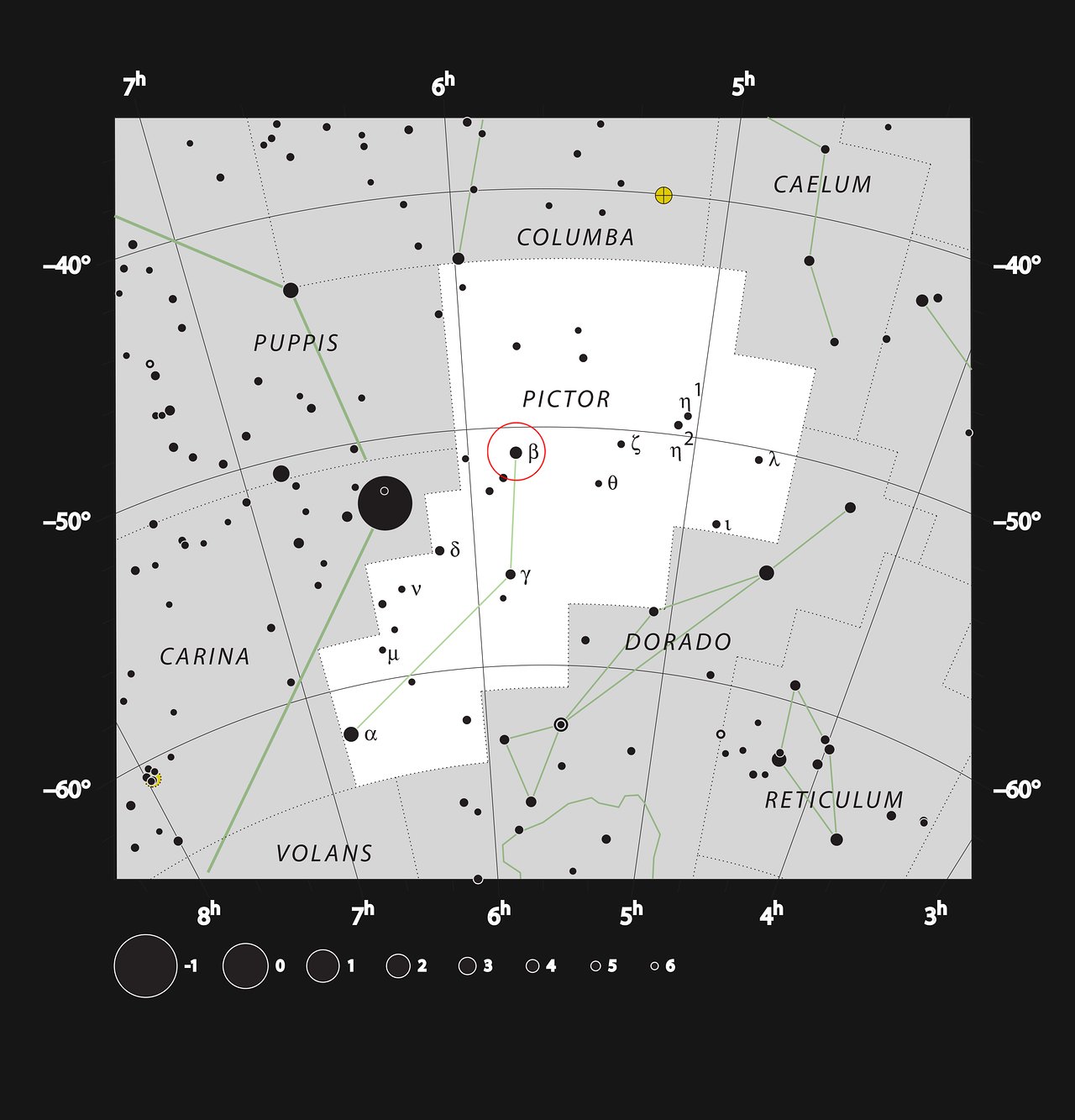
An international team of astronomers has announced the detection of a third exoplanet orbiting the star Beta Pictoris . This star is located 63 light-years from Earth in the constellation Pictor, visible in the southern hemisphere. Named Beta Pictoris d, this gas giant was identified through direct imaging by the ESO’s Very Large Telescope , located in Chile. Its discovery was confirmed by the analysis of data archived over eleven years. It is one of the faintest objects ever imaged from our planet .

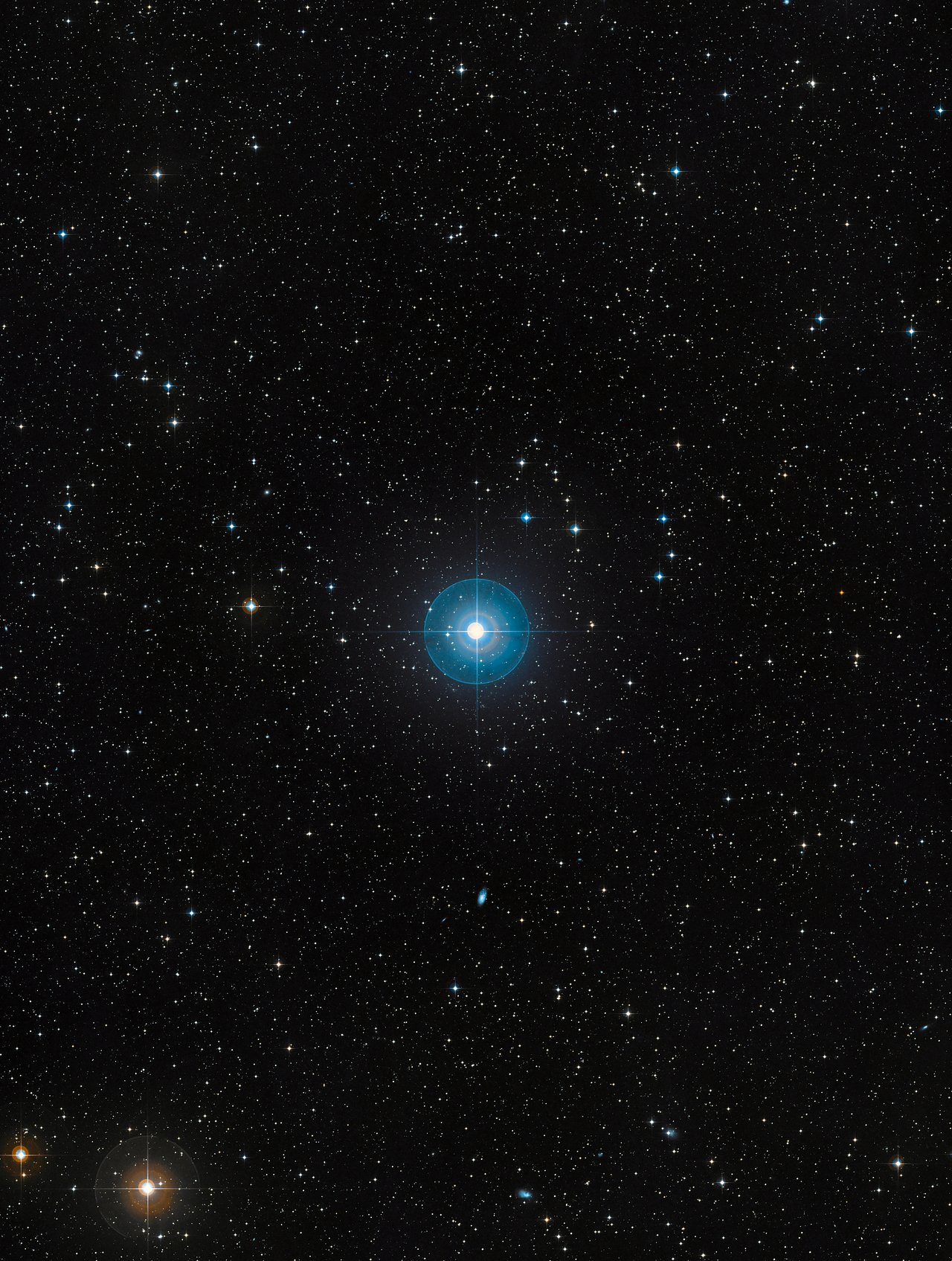
Beta Pictoris has been spotted in the star system of Beta Pictoris, the second brightest star (β), in the constellation Pictoris. This constellation is only visible in the southern hemisphere.

© ESO, IAU and Sky & Telescope / ESO/Digitized Sky Survey 2

Detection made possible by direct imaging

Characteristics specific to gas giants

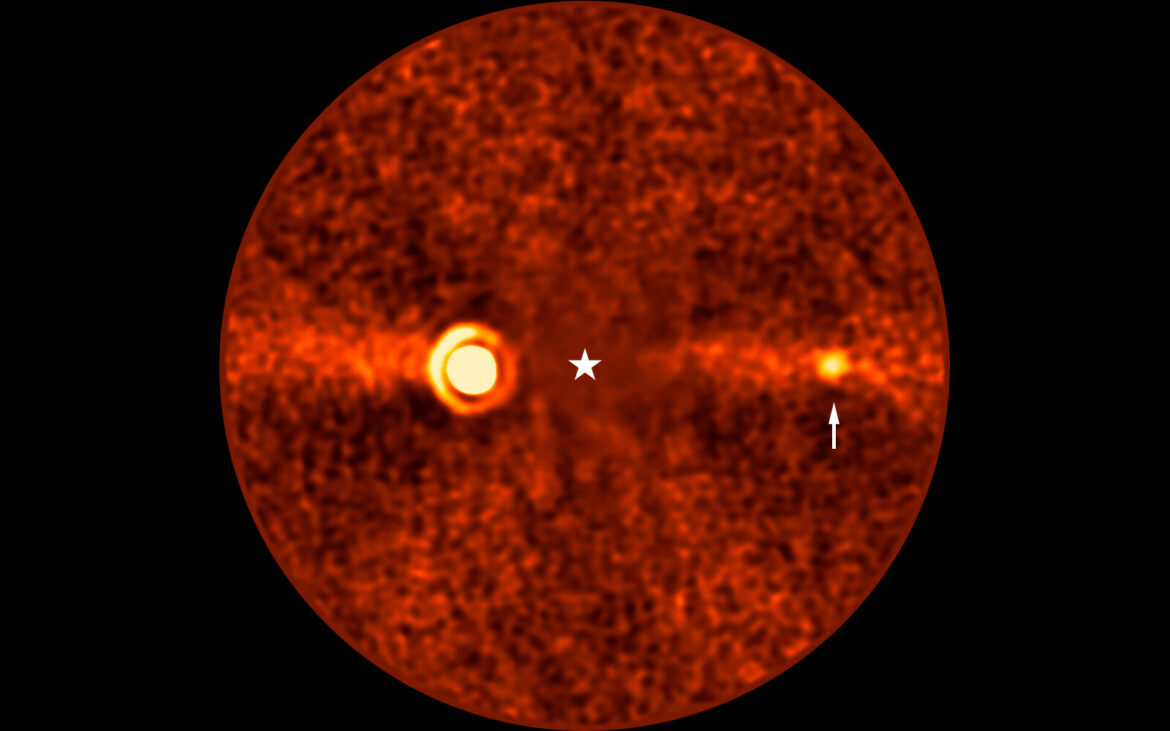
The discovery of this new celestial body occurred while researchers were initially studying another object in the system. ” This was a serendipitous discovery ,” said Ben Sutlieff, an astronomer at the University of Edinburgh, in a statement from the ESO and co-author of the study published in The Astronomical Journal Letters . ” Initially, we wanted to observe a known planet in the system, Beta Pictoris b, in more detail to see how it was evolving over time .” But upon closer inspection, the researchers made a surprising discovery. ” There’s something else out there. Did you see it? “ recalls Markus Bonse, a researcher at the European Southern Observatory (ESO), exclaiming. They had just spotted another object, distinct from Beta Pictoris b, but with a very low luminosity. Indeed, Beta Pictoris d is 100 times less bright than its neighbor. ” This makes it the faintest exoplanet ever observed directly from Earth ,” says Markus Bonse.

She was hiding in the archives

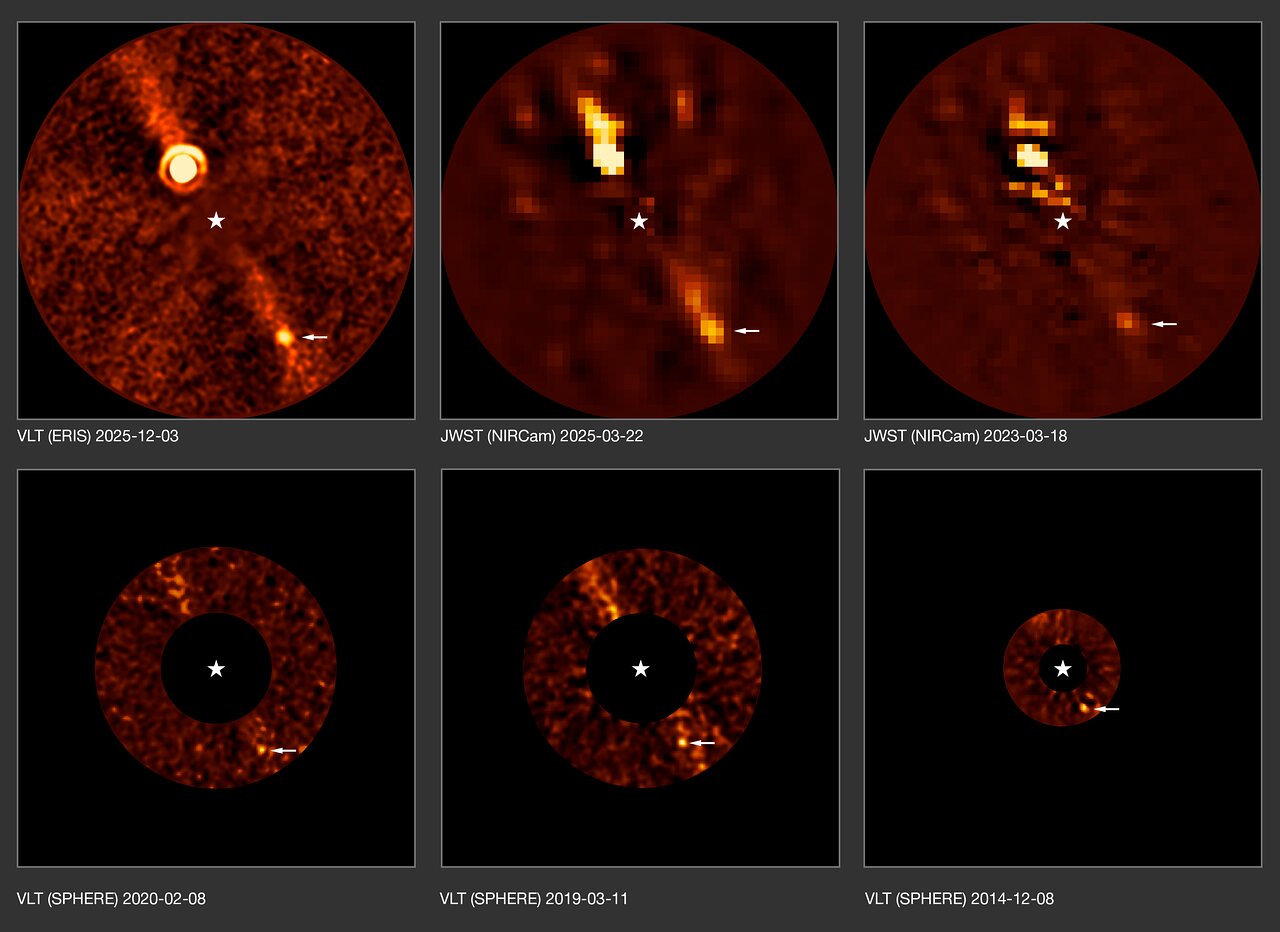
To confirm the presence of this planet, further observations would have been needed over many years. So the researchers took the opposite approach. Since this system had already been observed by the SPHERE instrument on the Very Large Telescope and even by NirCam on the James Webb Space Telescope , they searched the archives. And there it was. ” These detections in the SPHERE archive data are not only very exciting in themselves, but also because they suggest that a number of treasures are still hidden in the VLT instrument archives! ” explains Valentin Christiaens, co-author of the study and researcher at CEA Paris-Saclay. Direct imaging observations led to the conclusion that Beta Pictoris d is smaller and cooler than its two older siblings, b and c. But with an estimated mass of about 2.4 times that of Jupiter, it is the least massive exoplanet ever observed from the ground. Its position also helps explain the unusual shape of the dust and debris disk surrounding the star. This discovery underscores the importance of discovering exoplanets through direct imaging, rather than solely through the transit technique, when an exoplanet passes in front of its star. In the future, the Extremely Large Telescope, the European observatory under construction on Cerro Armazones at an altitude of over 3,000 meters in the Atacama Desert, will allow for further exploration of these objects. Thanks to its 39-meter mirror, it could identify even fainter objects.

Beta Pictoris b had already been captured by the James Webb Space Telescope and its NirCam instrument in 2023 and 2025. In addition, traces of this exoplanet were also found in 2020, 2019 and even 2014 in the data of the SPHERE instrument on the VLT. 

© ESO/B. Sutlieff, M. Bonse et al.

Related articles