




• Astronomy

Surviving the death of a star: the mysteries of exoplanet WD1856b

Published on 03 July 2026

The James Webb Space Telescope has analyzed WD 1856 b, a giant planet that survived the death of its star. Its unusual heat and abundance of methane reveal that it moved closer to its star after its transformation into a white dwarf. A glimpse into the future of our own solar system.

Surviving the death of a star: the mysteries of exoplanet WD1856b

This exoplanet is shaking up our understanding of the end of a star’s life. Located 80 light-years from Earth is the exoplanet WD 1856 b. This gas giant, roughly the size of Jupiter, has managed the remarkable feat of surviving the death of its star. Recent data from the James Webb Space Telescope shows that this methane-rich planet has remained warm despite the low radiation from its star . Studying this system allows us to better envision what the future of our solar system might hold.


GJrXNhGky9z4Tb5wntZ24m-970-80_jpg

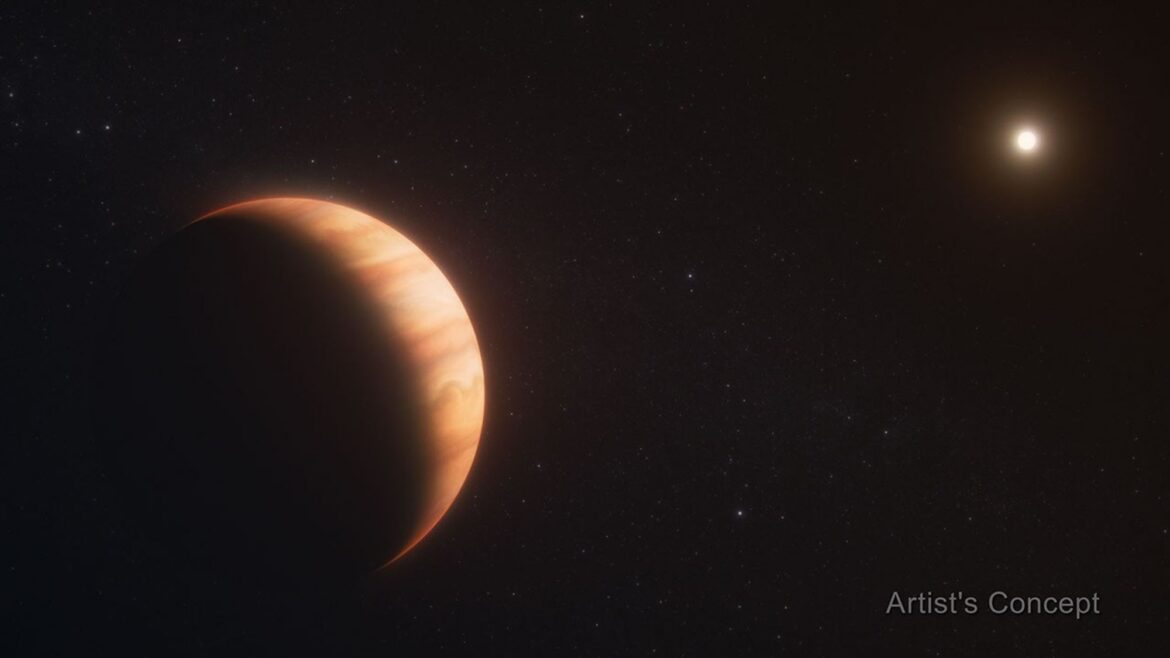
Artist’s impression of WD 1856 b, a potential Jupiter-sized planet, orbiting its much smaller host star, a dim white dwarf. 

© NASA’s Goddard Space Flight Center)

A gas giant surrounding a stellar corpse

A striking difference in size

For astronomers, WD 1856 b is a bizarre exoplanet. Although it’s as large as Jupiter , it orbits a white dwarf , an extremely dense and small stellar remnant . Normally, the death of a star destroys everything nearby. ” The planet is quite unique. It’s about the size of Jupiter, but the white dwarf it orbits is the size of Earth, so the planet is seven times larger than its star ,” explains Ryan MacDonald, a researcher at the University of St Andrews in Scotland and lead author of the study. This size difference makes observing its atmosphere very difficult for the James Webb Space Telescope. Its transit in front of its small star lasts only eight minutes .

The enigma of the heat of WD 1856 b

A late and turbulent rapprochement

One of the mysteries of this planet is its temperature. The James Webb Space Telescope measured a surface temperature of about 126°C (440°F). This is much warmer than expected. If the planet received heat only from its current star, it should be icy cold, around -113°C (-440°F). This excess heat indicates that the planet migrated toward its star long after it had died . ” As the planet moved inward, its interactions with the strong gravity of the white dwarf heated it considerably, and it has been cooling ever since ,” explains Christopher O’Connor, a researcher at Northwestern University and co-author of the study. This heating by gravitational friction is thought to have occurred between 3 and 5.5 billion years ago.

Clues hidden in methane

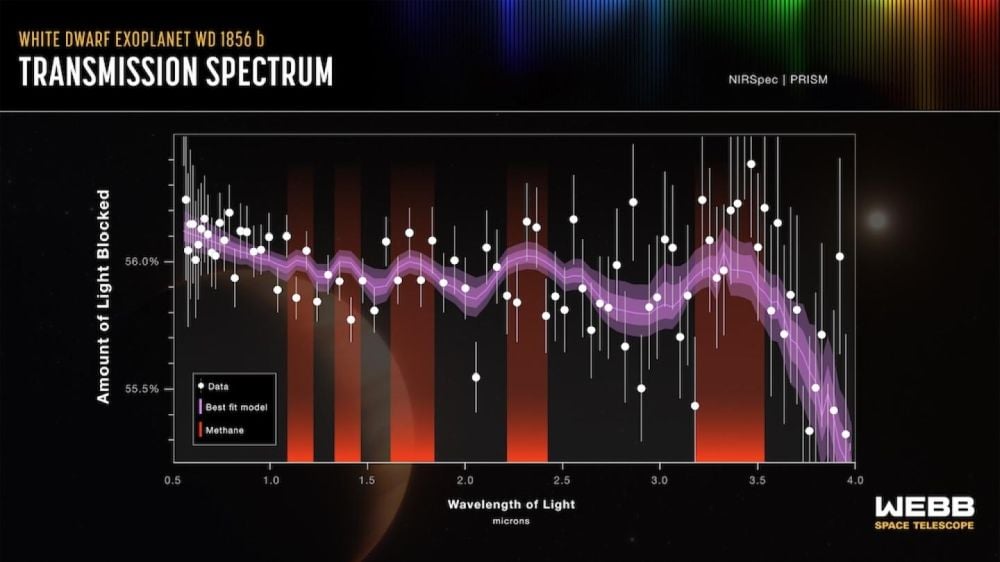
Another clue that the planet migrated is the presence of methane . For the first time on a planet orbiting a dead star, scientists have detected this gas in the atmosphere. This suggests that the planet formed far from its star, in cold regions, before beginning its journey toward the center of the system. ” Our observations with Webb revealed the characteristic signatures of small cloud particles and hydrocarbons, most likely methane, which is the first time we’ve seen an atmosphere on a planet transiting in front of a dead star ,” explains Victoria Boehm of Cornell University. These gases and clouds allow scientists to reconstruct the story of a planetary survival that was once thought impossible .

The JWST detected a large amount of methane in the giant planet’s atmosphere. This suggests that it formed further from its star and migrated inward.

© NASA, ESA, CSA, Joseph Olmsted (STScI)

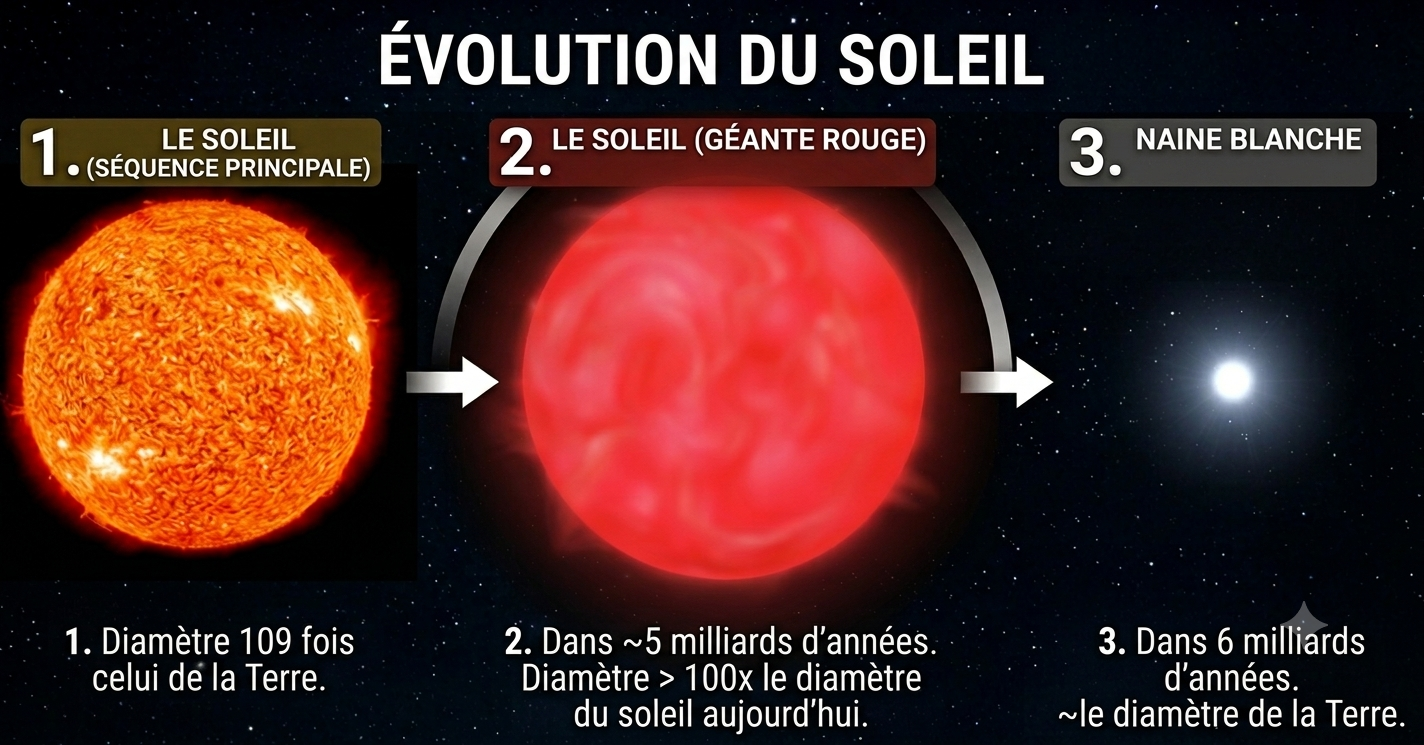
The sun will transform into a red giant before becoming a white dwarf.

© Cité de l’espace

A mirror of our own future

The study of WD 1856 b offers a concrete glimpse of what could happen to our own giant planets, like Jupiter or Saturn , in about 5 billion years . When the Sun has exhausted its fuel, it will swell before leaving behind a small, dense core. As Dr. Ryan MacDonald summarizes, ” We’re used to looking back in time when we use telescopes, but this is the first time we’ve been able to look forward to see what might happen to the outer planets around the remnant of a Sun-like star .” This discovery proves that the death of a star doesn’t necessarily mean the end of its planetary system .

Related articles
