




• Launch

Starship: SpaceX successfully completes final test flight of Version 2.0

Published on 14 October 2025

SpaceX's Starship has completed its 11th suborbital test flight, the last of Version 2.0. This flight validated the reuse of the Super Heavy booster and the Ship's thermal reentry tests, paving the way for Version 3.0 early next year.

Starship: SpaceX successfully completes final test flight of Version 2.0

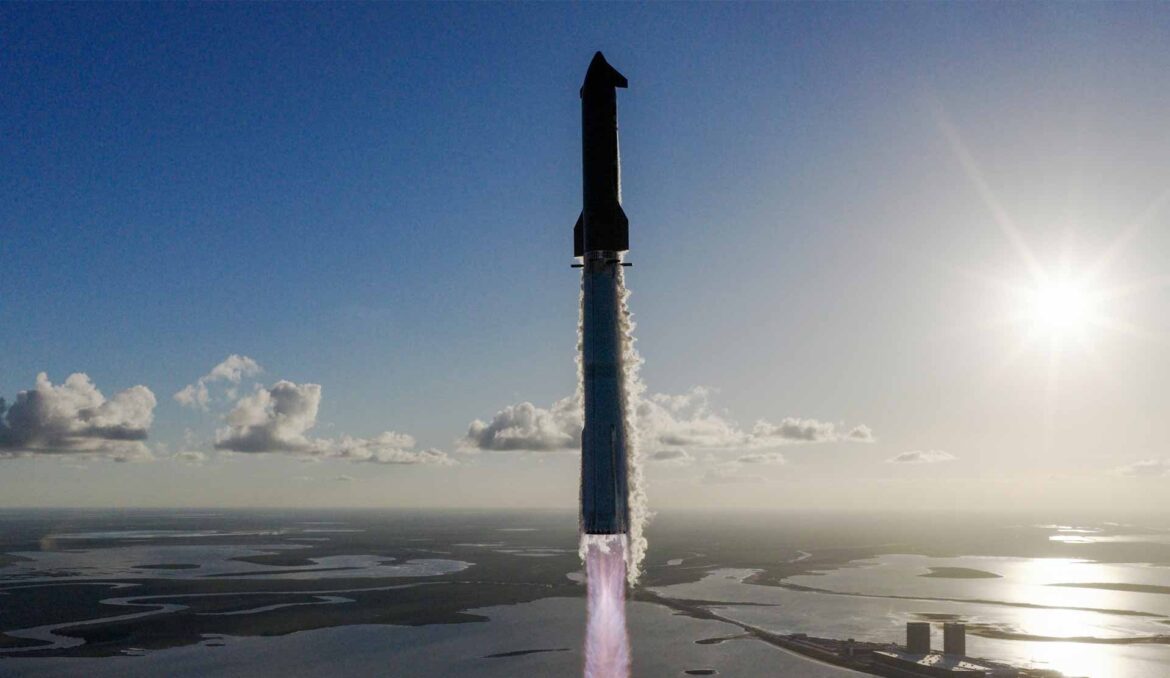
The 11th test flight of SpaceX’s Starship launch vehicle successfully completed on October 14, 2025. This marks the end of the test series for Version 2.0 (V2) of the giant launch vehicle. A version that posed many problems for SpaceX engineers. Of the five Starship V2 flights , all carried out in 2025, only the last two can be considered successful in accordance with the set objectives . Departing from Starbase in South Texas, this suborbital flight aimed to confirm the technical advances made during the previous mission and to prepare for the future Version 3 (V3) of the launch vehicle. This new generation will be larger and more powerful in order to achieve the lunar and Martian objectives set by the company.

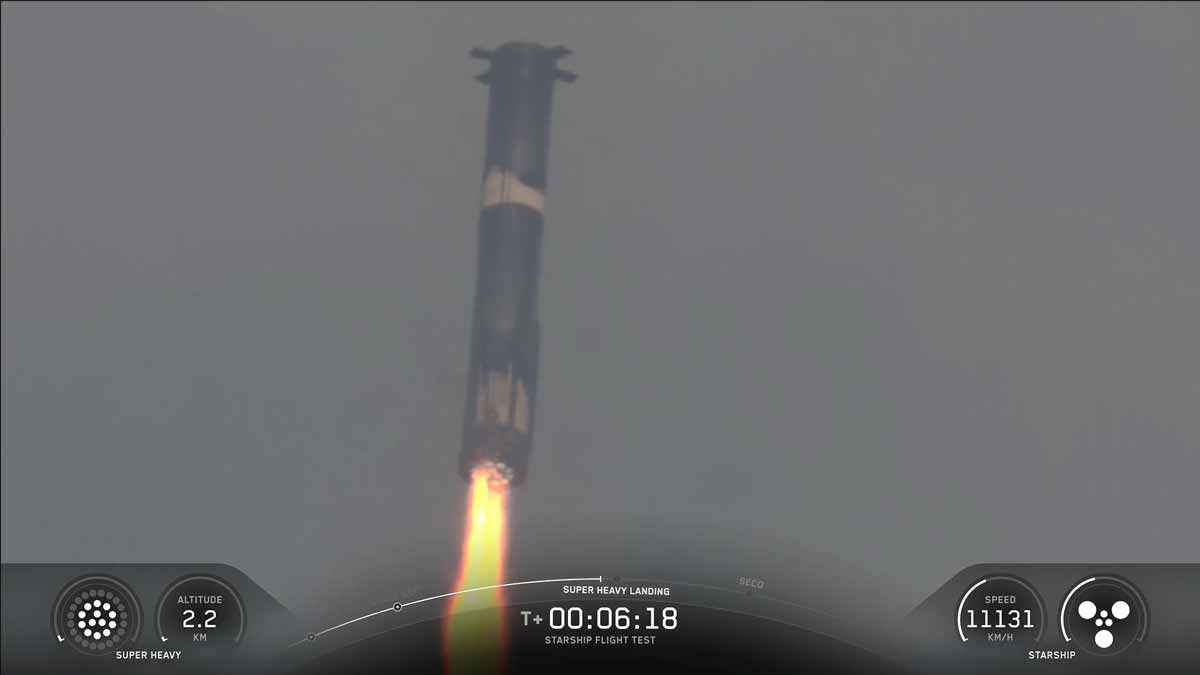
The Super Heavy booster’s new landing sequence had it fire 13 engines, then 5, then 3.

© SpaceX

Flight IFT11 Progress

A series of successful tests in the suborbital phase

The Starship launch vehicle lifted off from Starbase at 1:23 a.m. (Paris time). Approximately 2:30 minutes after launch, the separation of the two stages, the “hot staging,” went smoothly. The main booster, Super Heavy (B15), which had already flown during IFT8 last March , began its atmospheric reentry. This was a key step in this launch. The Super Heavy tested a new engine configuration, planned for the future Version 3 of the booster. The objective was to ignite 13 engines at the beginning of the landing burn, then switch to a new configuration with five engines running for the approach phase to the launch tower. Previously carried out with three engines, the use of five engines for this phase responsible for precise trajectory adjustment adds safety in the event of an engine failure. The booster completed its mission with a smooth, planned splashdown in the Gulf of Mexico , approximately four minutes after stage separation. For this test, no recovery by the launch tower was planned.

Experiments on the upper stage of Ship 38

Heat shield tested and simulators deployed

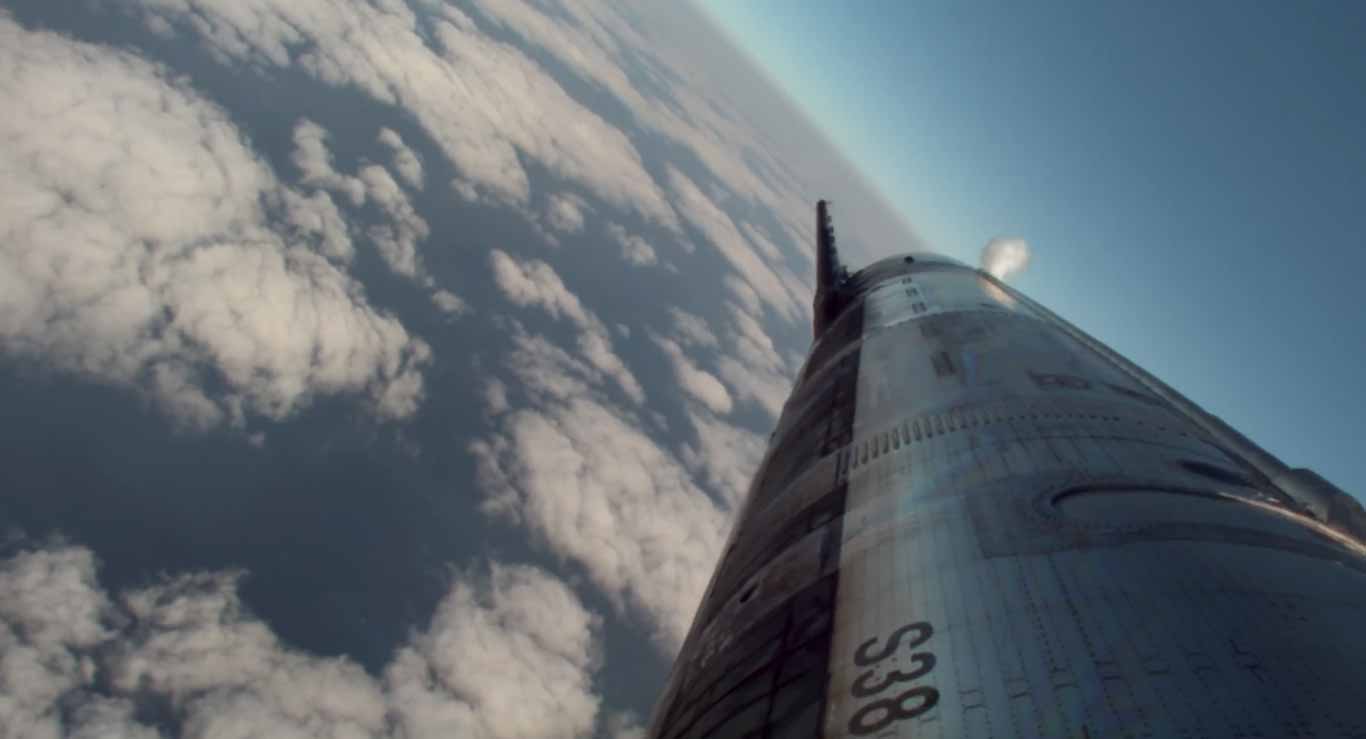
The upper stage, Ship 38, the last of the V2 generation , continued its suborbital trajectory. It accomplished several crucial objectives for future missions. Following the success of the previous mission, the Ship once again deployed eight Starlink satellite simulators. This deployment took place over a six-minute period, beginning approximately 19 minutes after liftoff. In addition, a brief restart of a single Raptor engine was performed during the cruise phase in space. This capability is “critical for future missions to the Moon and Mars , ” SpaceX assures.

Atmospheric reentry provided an opportunity to test the heat shield . Engineers had intentionally removed tiles from the shield to test vulnerable areas. Then, to simulate a future reentry and capture for reuse of the spacecraft, the final phase of the trajectory included a dynamic tilt maneuver to test the guidance algorithms. Ship 38 ended its flight with a precision splashdown in the Indian Ocean off the west coast of Australia , just over 66 minutes after takeoff.

After 66 minutes of flight, Ship 38 made a controlled landing over the Indian Ocean.

© SpaceX

© SpaceX / Translation Cité de l’espace

Goals and challenges for the future of the Starship program

Version 3 and beyond

IFT11 concludes the Starship Version 2 era. The next step for SpaceX is the development and launch of Version 3 of the Starship, which will include improvements to increase payload performance. The Starship V3 launch vehicle will be larger, with a total height of 124.4 meters , while its Super Heavy booster will measure 72.3 meters, compared to 71 meters for the V2. Version 3 marks a complete overhaul of the upper stage, including new Raptor engines and docking adapters that will allow propellant transfers in orbit. This step will be essential for the Starship to reach lunar orbit. The new Super Heavy V3 also incorporates redesigned control grids. There will be three instead of four. The first launch of the V3, IFT12, could take place next year. An attempt to reach orbit, however, is not expected until Flight 13 at the earliest. But SpaceX’s ambitions don’t stop there. Elon Musk has mentioned a version 4 of the Starship, even taller, at 142 m , and more powerful, capable of carrying 200 t into low orbit. This will require a redesign of the launch site. ” We are installing, among other things, a new orbital launch support, a new flame trench system and we are improving the chopsticks for future captures ,” said Jake Berkowitz, principal propulsion engineer at SpaceX during the launch broadcast.

Starship at the heart of the Artemis program

Expectations and skepticism about the lunar calendar

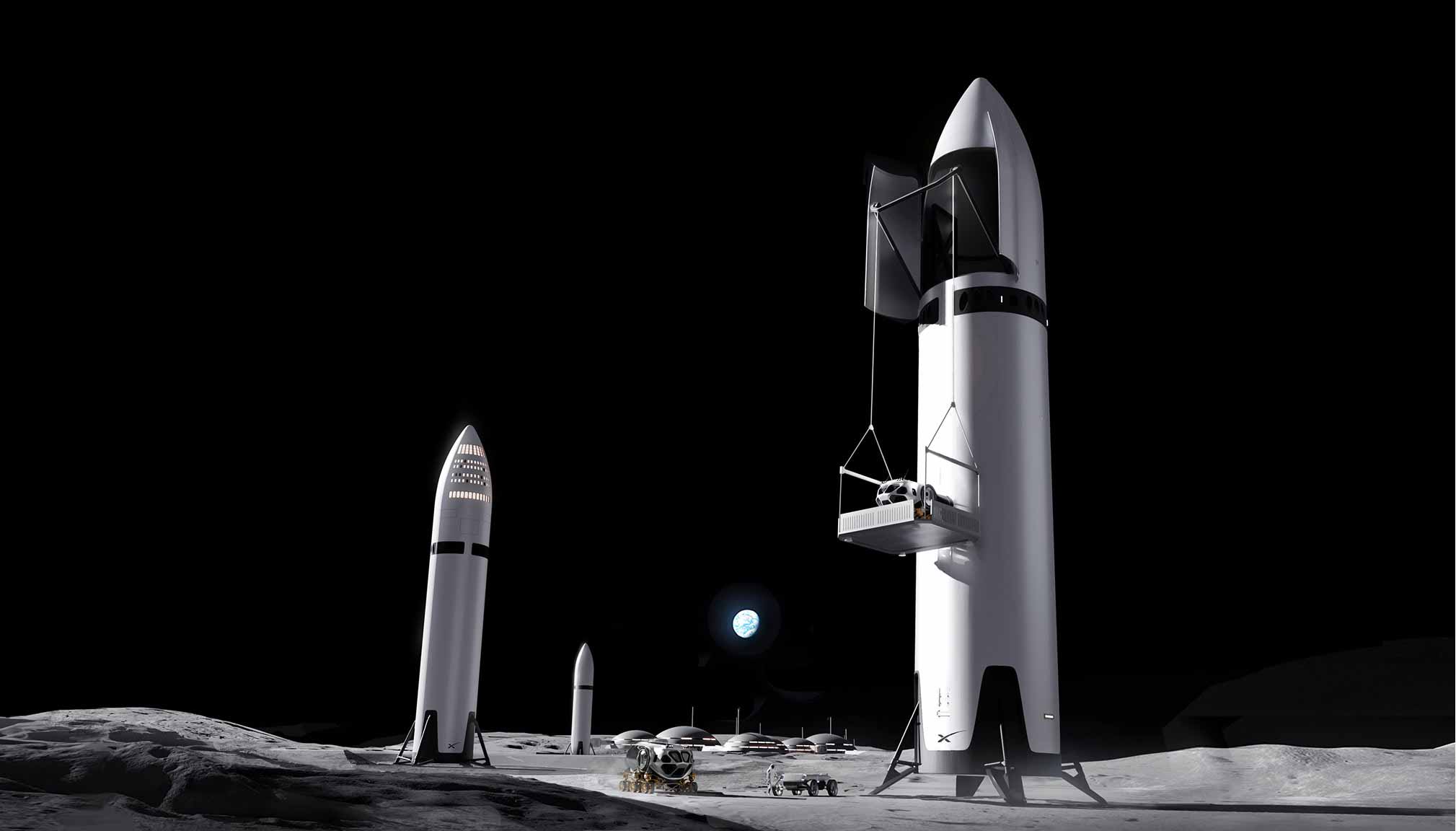
Starship plays a vital role in returning humanity to the Moon: NASA selected the vehicle to be the manned lander for the Artemis III and Artemis IV missions . If the schedule is met, the Artemis III mission is scheduled for 2027. However, delays in Starship’s development have led to skepticism about whether this deadline will be met. NASA’s Aerospace Safety Advisory Committee noted at a public meeting on September 19, 2025, that the mission could be delayed by “several years.” Before taking humans, SpaceX will have to make an uncrewed trip and demonstrate its capabilities to resupply its spacecraft in orbit. Despite these scheduling challenges, SpaceX has updated its website, announcing cargo missions to the Moon starting in 2028 and deliveries to Mars starting in 2030. The price tag has already been announced: $100 million per metric ton of cargo delivered to the surface.

SpaceX has shared visuals of cargo delivery to the Moon, here, and even to Mars on its website, with prices ranging from $100 million per ton.

© SpaceX

Related articles