




• Earth
  • Satellite

Starlink: more than 355,000 collision avoidance maneuvers in one year

Published on 16 July 2026

The Starlink constellation performed over 355,000 avoidance maneuvers in one year. This volume is constantly increasing and has tripled since 2024, primarily due to the expansion of the fleet. And this trend is likely to intensify even further in the coming years.

Starlink: more than 355,000 collision avoidance maneuvers in one year

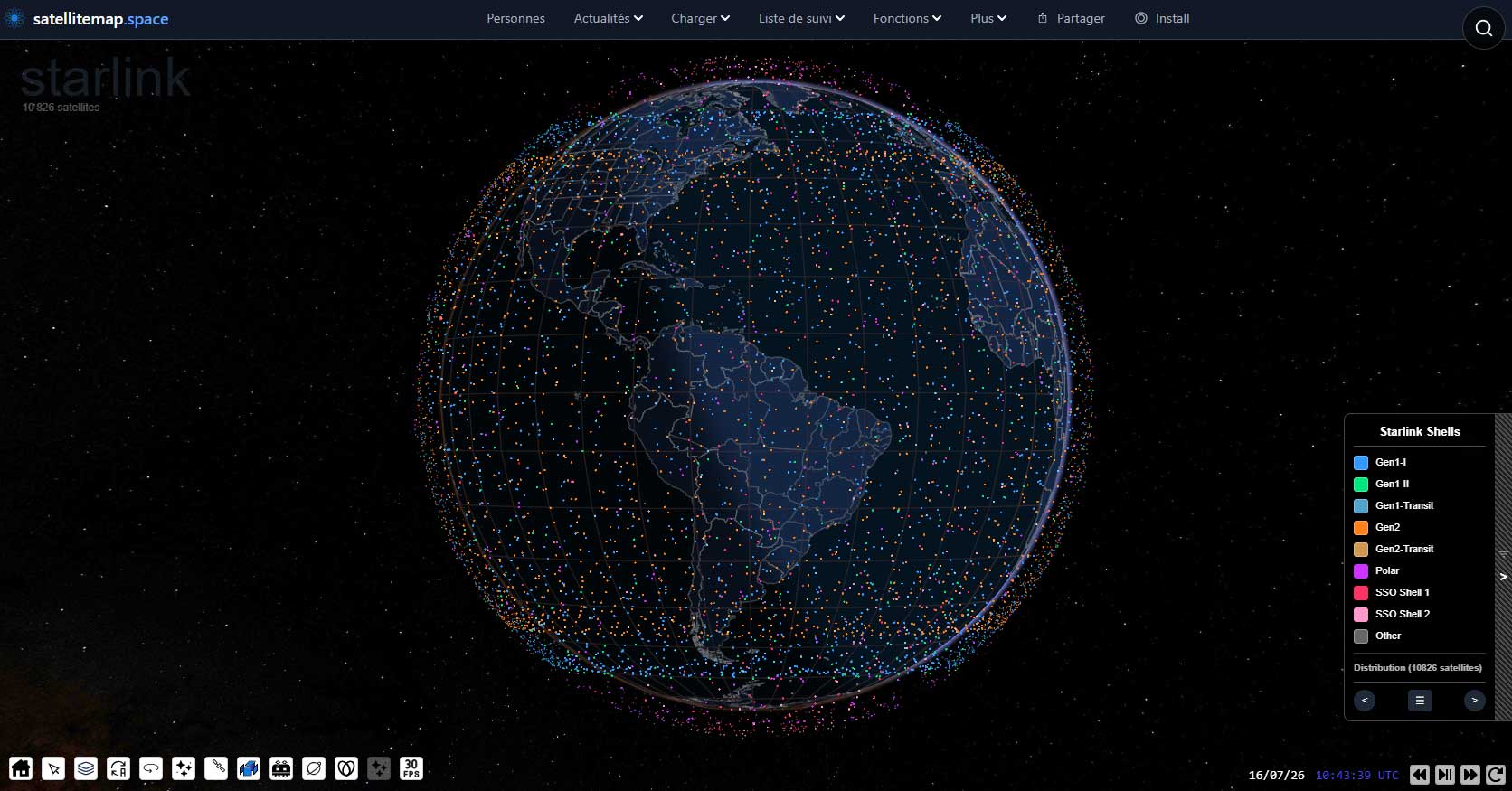
The occupation of low Earth orbit is intensifying, and this is not very reassuring. Neither for astronomers , who see the sky increasingly crisscrossed by satellites , nor for agencies, which are concerned about an increasingly saturated orbit. According to data submitted to the Federal Communications Commission (FCC), the Starlink constellation performed more than 355,000 avoidance maneuvers between June 2025 and May 2026. This figure represents a very sharp increase . While SpaceX has already placed more than 10,000 satellites into orbit and plans to deploy many more, this figure illustrates the questions raised by mega-constellations and their proliferation.

The Starlink fleet listed by the website Satelittemap.space

© Satelittemap.space

A marked acceleration in orbital traffic

The number of Starlink avoidance maneuvers has tripled since 2024.

Watch out, debris here! Watch out, a satellite there! The annual volume of Starlink trajectory corrections has reached a new milestone. It has tripled since 2024 , and this trend is only accelerating. The latest figures submitted to the FCC cover the period from December 2025 to May 2026. During this six-month period, 207,152 maneuvers were performed, compared to 148,696 in the previous period from June to November 2025. This increase directly follows the growth of the constellation, which has expanded from approximately 6,000 satellites in 2024 to over 10,000 in June 2026. The orbital environment is also becoming increasingly crowded . There are more than 34,000 objects larger than 10 cm in orbit around Earth , and the number of objects larger than 1 mm is estimated at over 200 million.

Always more?

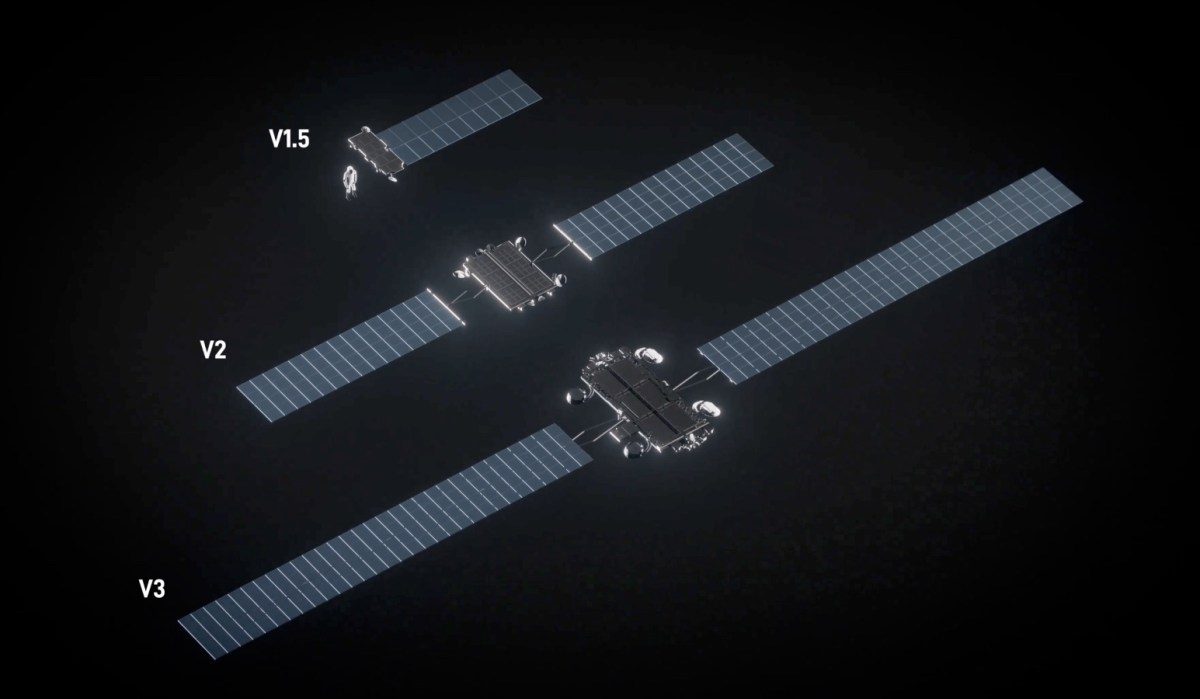
To manage this flow, SpaceX relies on an autonomous system that triggers an action as soon as the risk of collision exceeds 3 in 10 million. The American company believes this extreme precaution explains these figures. Indeed, SpaceX indicates that the standard practice is to perform a maneuver when the risk of collision is 1 in 10,000. Each Starlink satellite therefore performs, on average, more than 40 maneuvers per year, which also forces it to use some of its propellant and thus reduces its lifespan. And this situation is not likely to improve. According to astronomer Jonathan McDowell, on his X account, ” SpaceX has requested authorization from the FCC for a ‘Gen3 NGSO’ satellite system of 100,000 units .” Each satellite would weigh between 2 and 2.5 tons, with a surface area of ​​300 to 400 square meters. For comparison, the Starlink V2 mini satellites currently deployed by Falcon 9 launchers are 30 meters long once their solar panels are open and weigh less than a ton. The goal would be to use the power and payload capacity of Starship to deploy this new generation of the mega-constellation.

Heavier and larger than their predecessors, the third-generation Starlink satellites could also be much more numerous.

© SpaceX

Related articles