• Launch

SpaceX’s record-breaking summer

Published on 19 September 2025

SpaceX set a string of records this summer, including the 500th booster landing, the 300th Starlink mission, and the reusing of a booster 29 times. This achievement raises questions about the congestion of low Earth orbit and its future implications.

SpaceX’s record-breaking summer

SpaceX has been on a roll this summer. The company has surpassed the symbolic milestone of 500 Falcon launches, 500 booster returns, and 300 successful Starlink mission launches. This is an unprecedented launch rate in the history of space. These successive milestones demonstrate the American company’s expertise, particularly in the field of launcher reuse. However, this rapid expansion also raises questions about the congestion of low Earth orbit and its impact on the space environment .

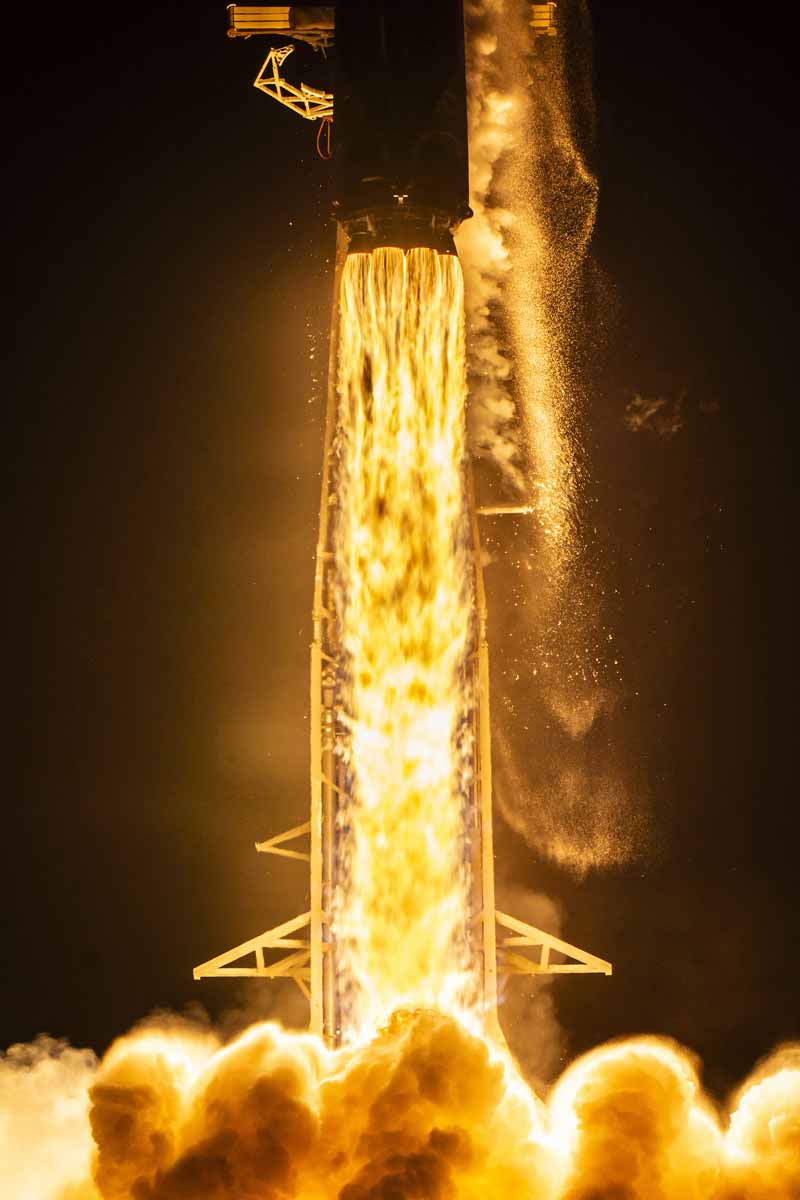
On September 13, 2025, SpaceX completed the 300th mission to deploy Starlink satellites.

© SpaceX

Starlink, a rapidly expanding constellation

The 300th Starlink mission and launcher performance

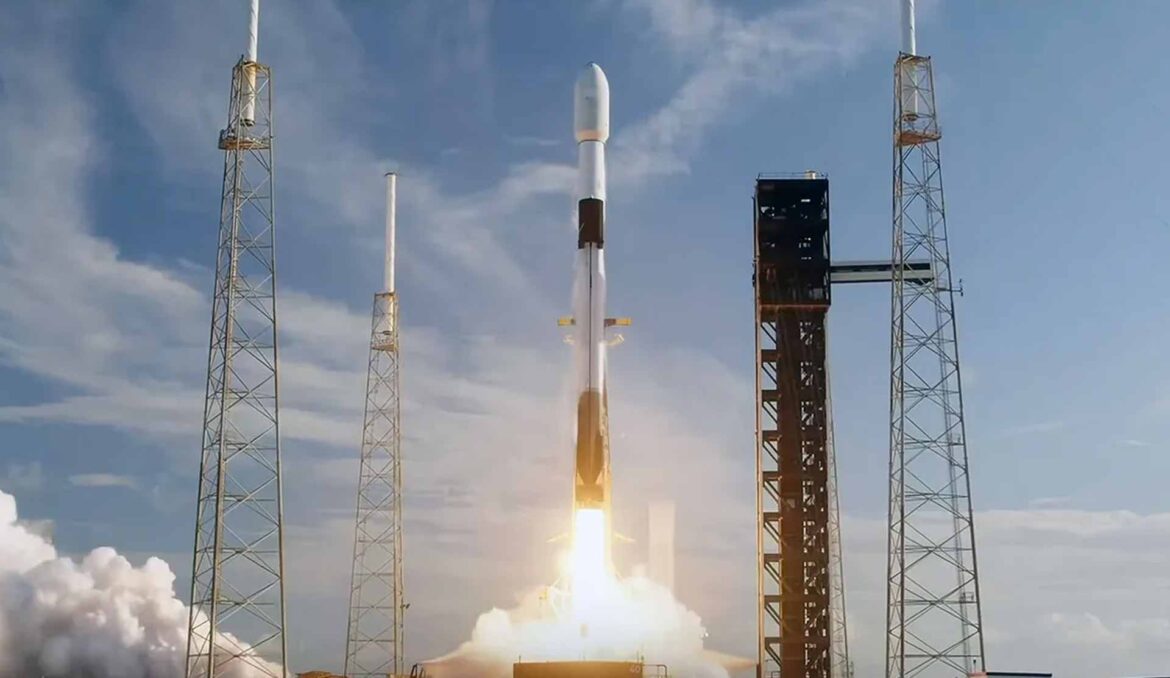
The latest achievement was on September 13, 2025. SpaceX completed its 300th mission dedicated to Starlink satellites . This mission saw a Falcon 9 launcher deploy 24 additional Starlink satellites from Vandenberg Space Force Base in California. This was the 115th Falcon 9 launch of 2025. The booster designated B1071 made its 28th launch and landing on this mission. The new satellites joined the Starlink constellation, which now has more than 8,300 active spacecraft, forming the largest satellite network ever assembled.

Mastering reuse

The 500th successful landing of a booster


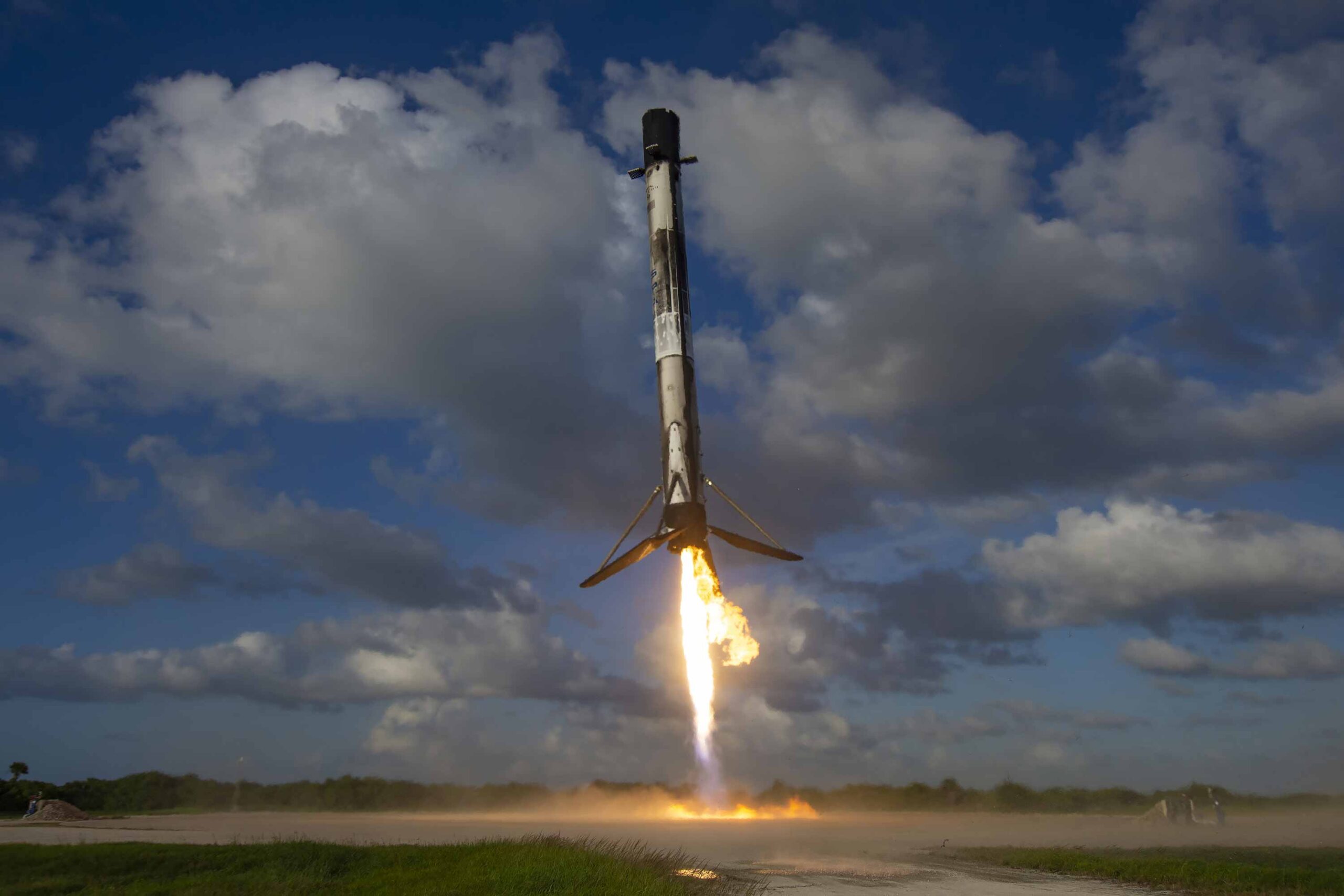
A few days earlier, on September 5, 2025, SpaceX had reached a significant milestone by successfully landing its 500th booster . This success came during a Falcon 9 mission that sent 28 Starlink satellites into low Earth orbit from NASA’s Kennedy Space Center in Florida. The rocket’s first stage landed as planned on the “Just Read the Instructions” drone ship about 8.5 minutes after liftoff. The booster used, Booster 1069, was making its 27th successful landing.

On September 15, 2025, the first stage of the Falcon 9 launch vehicle returned to LZ-2 at Cape Canaveral after launching Northrop Grumman’s Cygnus cargo ship to the ISS.

© SpaceX

Falcon 9 liftoff, September 12, 2025.

© SpaceX

The feat of longevity

Booster 1067 pushes the boundaries of engineering

In early July, this time, booster 1067 set a reuse record. During its 500th Falcon 9 rocket launch on July 2, booster 1067 made its 29th successful landing on the drone ship “A Shortfall of Gravitas” in the Atlantic Ocean. This performance surpassed the company’s previous record of 28 launches and landings for a single booster. This mission also placed 27 Starlink satellites into orbit. This event demonstrates, this time, the growing durability and reliability of the Falcon 9 rocket’s components.

Increased cadences

500 Falcon missions and the prospect of 170 launches in 2025

Prior to these recent successes, SpaceX’s Falcon family of rockets, including Falcon 9 and Falcon Heavy , had already surpassed the 500-mission mark on June 12, 2025. Falcon 9 alone surpassed this mark on July 13. SpaceX commented on the X network, saying, ” Falcon completes its 500th mission overall! Congratulations to the entire SpaceX team for making the impossible possible on the path to rapidly reusable rockets! ” SpaceX’s launch cadence has also intensified. In late May 2025, Anne Mason, SpaceX’s director of national security space launches, announced in a press conference that the company was targeting 170 orbital launches by the end of the year . If this goal is reached, it would easily surpass the record of 134 orbital launches set in 2024 . She said the cadence, which increased from about 25 launches in 2020 to one launch every two to three days in 2025, ” demonstrates how critical Falcon’s reusability and reliability, and the hard work and dedication of the SpaceX team, have been in ensuring guaranteed access to space .”

The other side of the coin:

congestion and environmental challenges

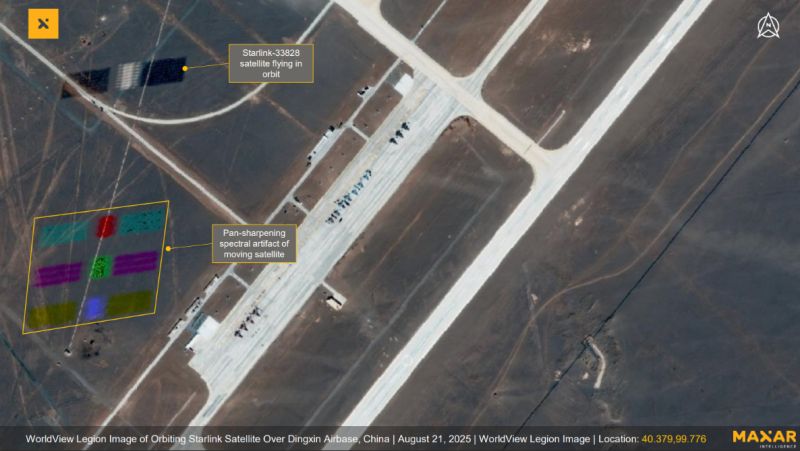
While SpaceX’s successes are undeniable, this acceleration of launches and the proliferation of low-Earth orbit (LEO) satellite constellations also raise concerns. The Starlink constellation, with more than 8,300 active satellites, is by far the largest constellation. This increasing density is not without consequences. On August 21, a Starlink satellite (number 33828) appeared in an image of a Chinese airbase taken by a Maxar Technologies Earth observation satellite.  Susanne Hake, Maxar’s general manager for the U.S. government, shared this image on her LinkedIn account. For her, this event demonstrates ” how crowded near-Earth space has become. […It] is no longer just about collision avoidance; it’s about understanding how these overlapping capabilities create both opportunities and complexities for mission planning .” Indeed, more actors and more satellites also mean more risks of orbital collisions.

Image captured by a Maxar satellite that was performing a routine observation mission when a Starlink satellite entered the picture. 
The rainbow seen underneath is what’s called a “pan-sharpening spectral artifact.” These satellites capture a highly detailed black and white image and a less detailed color one. This effect occurs when there’s a fusion error between the two. © Maxar Technologies

Furthermore, the massive presence of Starlink satellites is generating criticism from the astronomical community . Sunlight reflected by these satellites leaves trails on telescopic images , particularly affecting large observatories. In addition, radio telescope observations are disrupted by noise from the satellites’ electronic components, even when their internet beams are deactivated. These aspects call for reflection on the sustainable management of our space environment , but also question our uses to determine what is essential and what might be superfluous.

Related articles