




• Earth

SMILE set off to observe the Earth’s magnetic field, at a distance of 121,000 km

Published on 19 May 2026

The Sino-European satellite SMILE was launched on May 19, 2026 to study the Earth's magnetic field. Its orbit, culminating at 121,000 km, will allow it to capture, for the first time, global X-ray images of the polar cusps.

SMILE set off to observe the Earth’s magnetic field, at a distance of 121,000 km

On May 19, 2026, the SMILE (Solar Wind Magnetosphere Ionosphere Link Explorer) mission launched from the Guiana Space Centre in Kourou, aboard a Vega-C rocket . This 2.2-ton Sino-European satellite aims to study the interaction between the solar wind and Earth’s magnetosphere . Using in-situ measuring instruments and imagers, it will provide global data on the behavior of our planet ‘s magnetic shield .

Relive the takeoff of SMILE

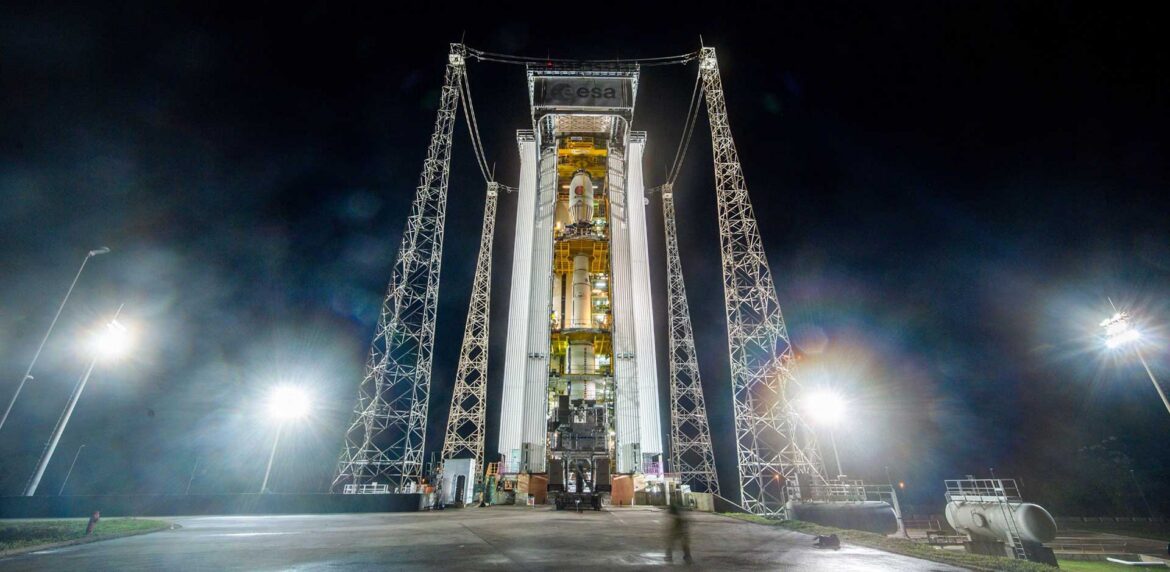
The launch took place on May 19 at 5:52 a.m. French time from the Guiana Space Centre

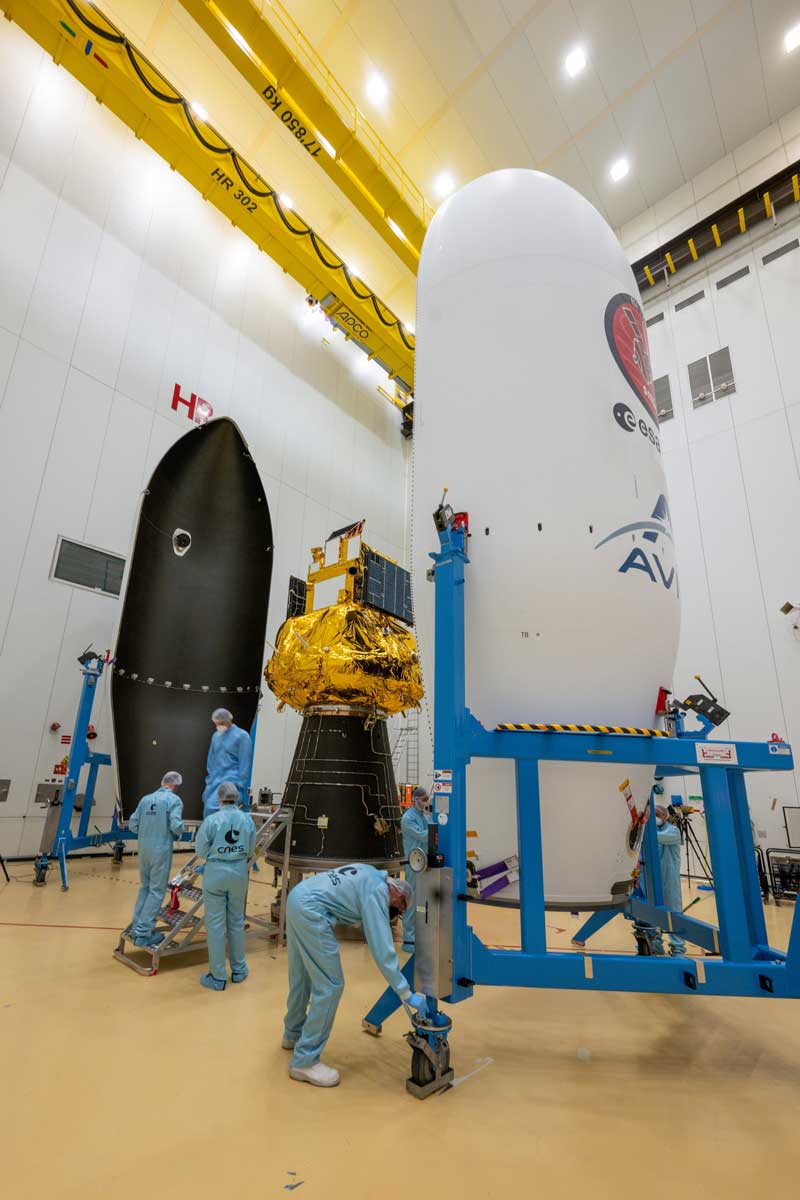
The SMILE satellite just before its installation in the Vega-C fairing.

© ESA

What is the objective of the SMILE mission?

The unprecedented observation of polar cusps

One of SMILE’s major goals is to obtain, for the first time, global X-ray images of the polar cusps . These cusps are regions located in each hemisphere where charged particles from the solar wind are not deflected by the magnetic field , but have direct access to Earth’s ionosphere. By visualizing these magnetic “funnels,” researchers will be able to understand how solar energy is channeled towards the poles to create, among other things, the polar auroras . ” What we really want to be able to do is image as much of the magnetosphere as possible so we can see the overall dynamics, the overall influence that the solar wind has on our magnetosphere, and how that eventually reaches the ionosphere as well ,” explains Dr. Colin Forsyth, European co-principal investigator for the mission at the Mullard Space Science Laboratory.

Technical specifications and instruments

The satellite carries four instruments, including the Soft X-ray Imager (SXI), a wide-field-of-view telescope designed to map the edge of the magnetic field. This instrument uses optical technology inspired by a lobster’s eye to focus low-energy X-rays . It will be complemented by the Ultraviolet Imager (UVI), which will continuously film the auroral oval—the area most likely to display auroras—for 45 hours per orbit. This will allow scientists to establish a correlation between the solar wind ‘s impact and the effects visible in the atmosphere .

© ESA


How will the mission unfold?

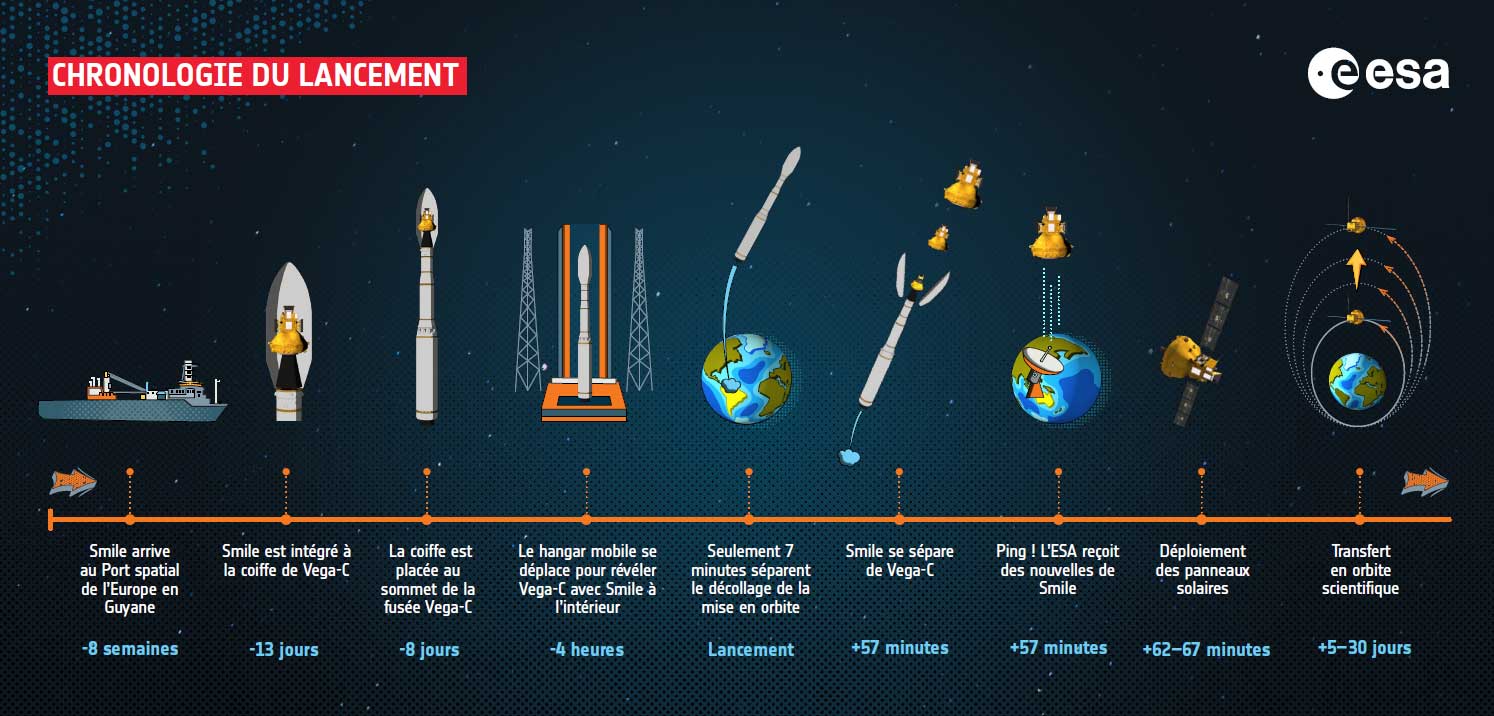
A launch on the European Vega-C light launcher

SMILE was placed into orbit by a Vega-C launcher . This 35-meter-tall launcher deployed the satellite into a low circular Earth orbit at an altitude of approximately 700 km . After this initial phase, the satellite ‘s own propulsion module , developed by the Chinese team, will take over to propel it into its final, highly elliptical trajectory. ” The farthest point above the Earth ‘s North Pole is about one-third the distance to the Moon ,” explains David Agnolon, SMILE project manager at ESA. ” This therefore requires a fairly significant amount of propellant to achieve this .”

The strategic importance of an orbit at 121,000 km

To fulfill its objectives, SMILE must reach an apogee 121,182 km above the North Pole . This considerable altitude is essential for its instruments to be able to survey the magnetopause (the boundary of the magnetic field) and the polar cusps in their entirety. At this distance, the satellite will spend approximately 80% of its time in continuous observation , remaining far from the disturbances of the Van Allen radiation belts. Once operational, SMILE will complete one orbit every two days, with an initial mission duration planned for three years.

© ESA


Related articles