• Exploration
  • Podcast Ici Occitanie

Ramses: a mission to the asteroid Apophis that unites ESA and JAXA

Published on 13 May 2026

The space agencies ESA (Europe) and JAXA (Japan) signed an agreement in early May to study the asteroid Apophis with the Ramses probe during its close passage to Earth on April 13, 2029.

Ramses: a mission to the asteroid Apophis that unites ESA and JAXA

“ Planetary defense is, by definition, a global responsibility ,” emphasized Josef Aschbacher, Director General of the European Space Agency (ESA), on May 7. This statement echoes existing collaborations in sky monitoring aimed at identifying asteroids potentially hazardous to our planet . And on May 7, the agreement signed with the Japanese space agency JAXA adds a new collaboration to the Ramses mission, which will closely study the asteroid Apophis.

SEE YOU ON FRIDAY THE 13TH

Discovered in 2004, asteroid (99942) Apophis (or simply Apophis) is an object approximately 325 meters wide that garnered significant attention when initial estimates gave it a 1 in 37 chance of impacting Earth on Friday, April 13, 2029. Increased observations, thanks to international coordination, have ruled out this possibility, but have raised another potential impact in 2037 if, in 2029, Apophis passes through a specific 600-meter-wide zone nicknamed “the keyhole.” Given its size, the asteroid would cause destruction over a radius of several hundred kilometers or create a giant tsunami if it were to strike an ocean.

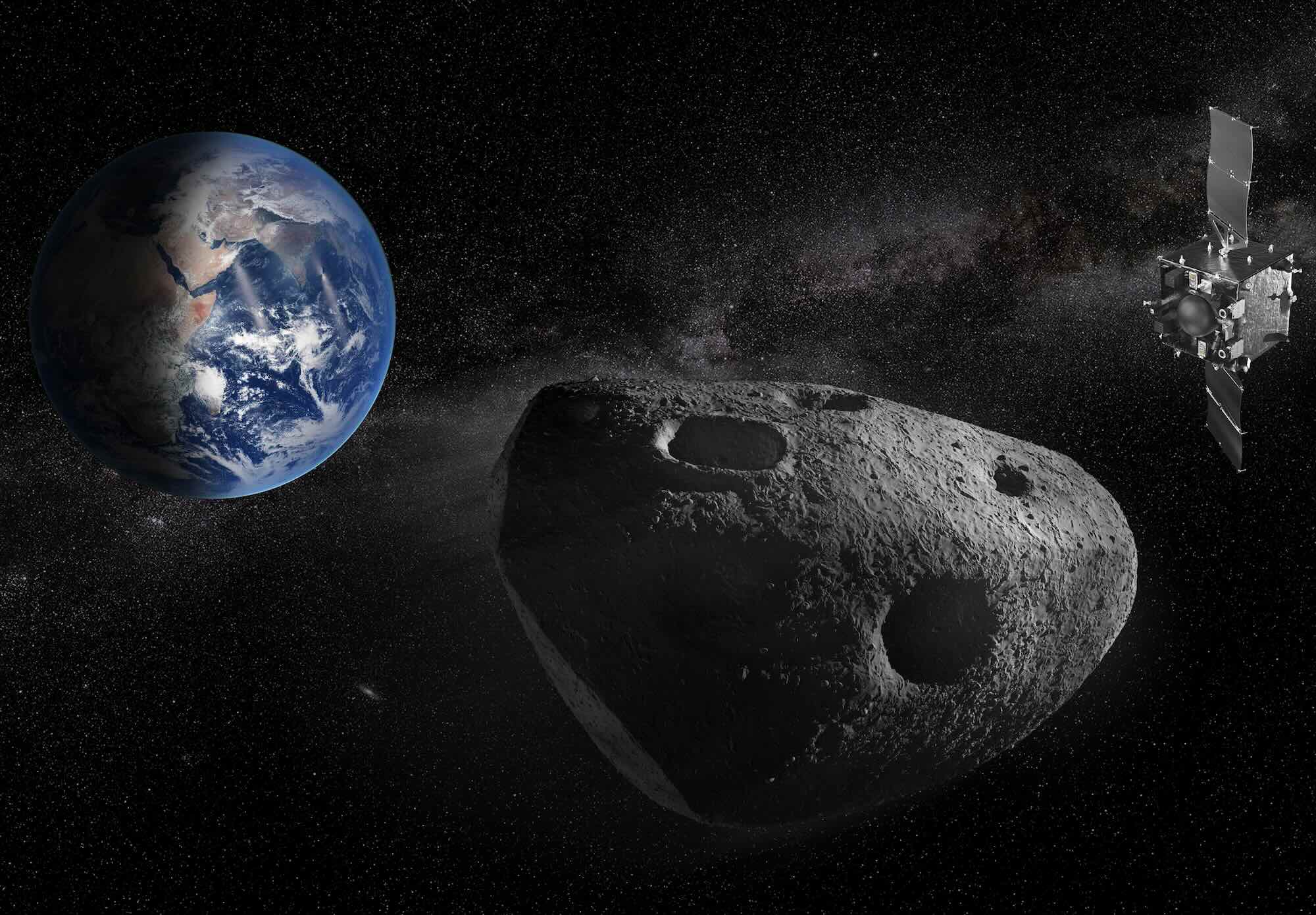
ESA illustration of the Ramses mission, which involves sending a probe to study the asteroid Apophis when it passes within 31,600 km of Earth in April 2029.
© ESA

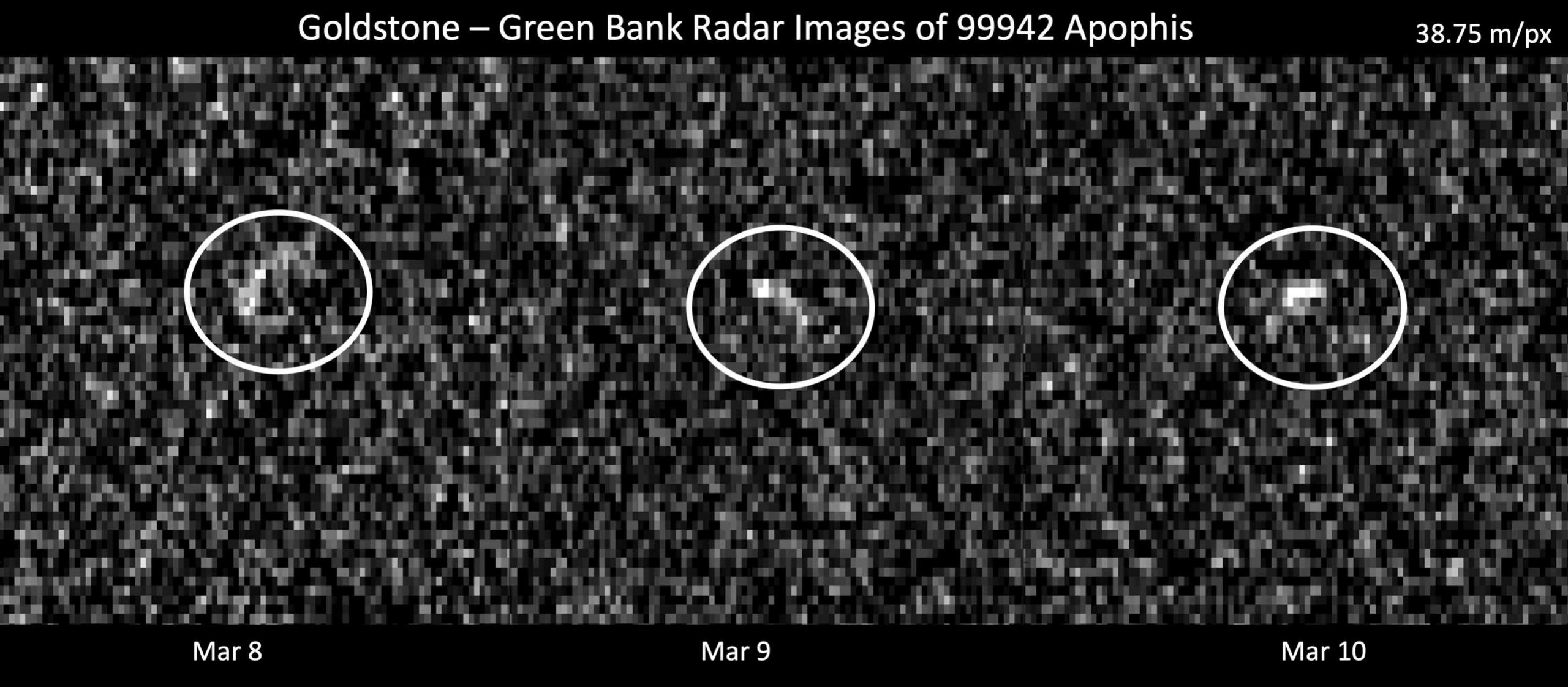
Radar observations of asteroid Apophis in 2021 using the Goldstone radio telescope in California and the Green Bank radio telescope in West Virginia.
© NASA/JPL-Caltech and NSF/AUI/GBO

APOPHIS WILL PASS WITHIN 31,600 KM OF EARTH IN 2029

Here again, the accumulation of observations (particularly radar data in 2021) refined the trajectory, and NASA’s Jet Propulsion Laboratory (JPL) ruled out any risk for the coming century. We now know that Apophis will safely pass within 316,000 km of Earth on Friday, April 13, 2029 , slightly closer to us than geostationary satellites. Today, this encounter is seen as an extraordinary scientific opportunity that the Ramses mission, a joint project between the ESA and JAXA, intends to take full advantage of.

RAMSES

A MISSION TO PROTECT THE EARTH

Even though the asteroid Apophis poses no danger to our planet on April 13, 2029, nor for a century, Ramses remains a mission to protect Earth . The reason is simple: the more we know about asteroids, the better we can identify those at risk in advance and the better we can develop effective deflection methods if necessary. As such, Apophis’s close approach in April 2029 presents a unique opportunity to study such an object very closely, and that is why the scientific community has consistently explained the need to send a probe to take advantage of it . 

ESA video explaining the principle of the Ramses mission to the asteroid Apophis.

WHY IS THE PROBE CALLED RAMSES?

This probe is called Ramses because of a deliberate reference to an Egyptian dynasty, echoing the name of the asteroid Apophis, inspired by an Egyptian deity. Ramses is also an acronym for Rapid Apophis Mission for Space Safety . To meet the very tight deadlines for a project of this scale, the Ramses probe was developed rapidly, incorporating principles developed for another ESA probe (and also a planetary protection mission), Hera, en route to the asteroid Didymos and its small moon Dimorphos (impacted by the NASA DART probe in 2022).

The memorandum of understanding between ESA and JAXA for the Ramses mission was signed on May 7 at the Italian Embassy in Berlin. In the center, each holding a copy of the agreement, are ESA Director General Joseph Aschbacher and JAXA President Hiroshi Yamakawa. The event took place with the participation of the Italian Space Agency (ASI), as the selected industrial partner is OHB Italia.
© ESA/Jorge Pérez de Lara

DEPARTURE IN 2028

The memorandum of understanding signed on May 7 between ESA and JAXA details the cooperation between the two agencies. ESA is responsible for the probe’s design , integration, and mission operations. JAXA will notably provide the solar panels and an infrared camera. Most importantly, the Japanese agency will launch Ramses to its target using its H3 rocket . The launch from the Tanagashima Space Center in Japan is scheduled for 2028 so that Ramses can rendezvous with Apophis the following year in April 2029. The coordination between the data collected by the probe and observations from Earth should advance our understanding of asteroids in unprecedented ways.

Related articles