• Earth

Pharao: time more precise than ever from space

Published on 07 May 2025

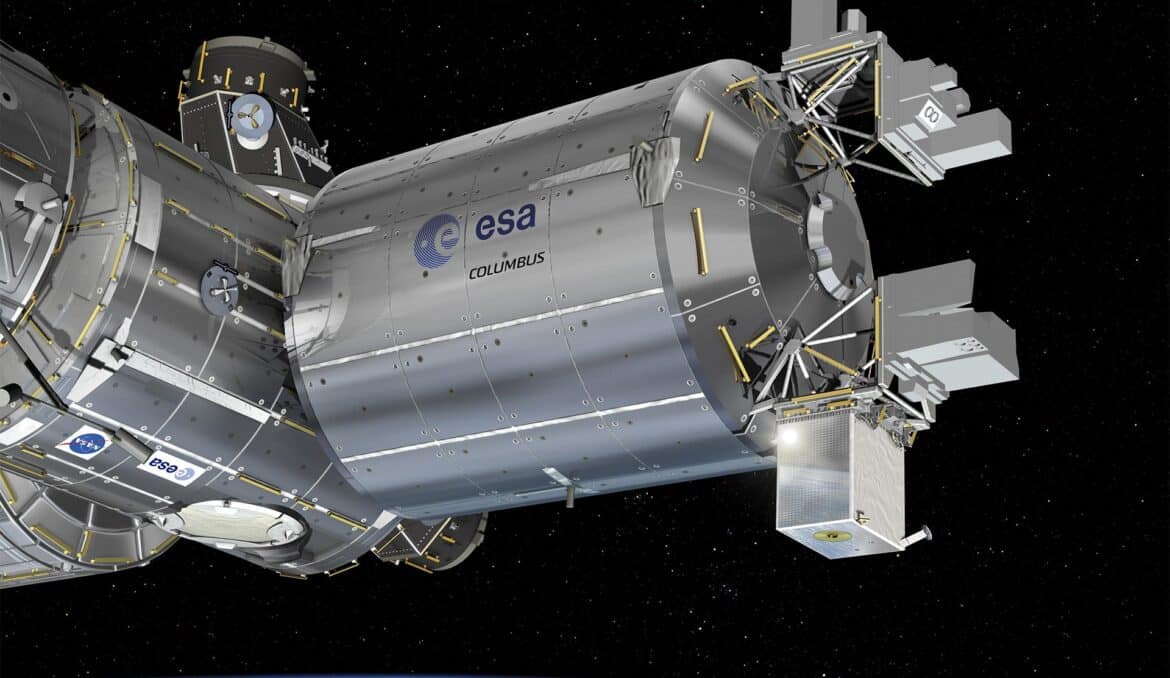
CNES's Pharao clock, soon to be installed outside the Columbus module on the ISS, will be the most accurate clock ever built. It will be able to test Einstein's theory of relativity, which predicts that time flows differently on Earth and in space.

Pharao: time more precise than ever from space

It’s a revolution in time measurement! The PHARAO project (Project for a Cooled Clock for Atoms in Orbit) will become the first atomic clock using cooled cesium atoms to orbit the Earth . It is part of the European ACES (Atomic Clock Ensemble in Space) mission. This clock will be so precise that it should only go out of sync by one second every 300 million years! Developed by CNES (Centre national d’études spatiales), this instrument is scheduled to take off on April 21, 2025 at 10:15 a.m., aboard a Dragon cargo ship launched by a SpaceX Falcon 9.

A Journey to the Heart of Time

Unparalleled precision thanks to cold and space


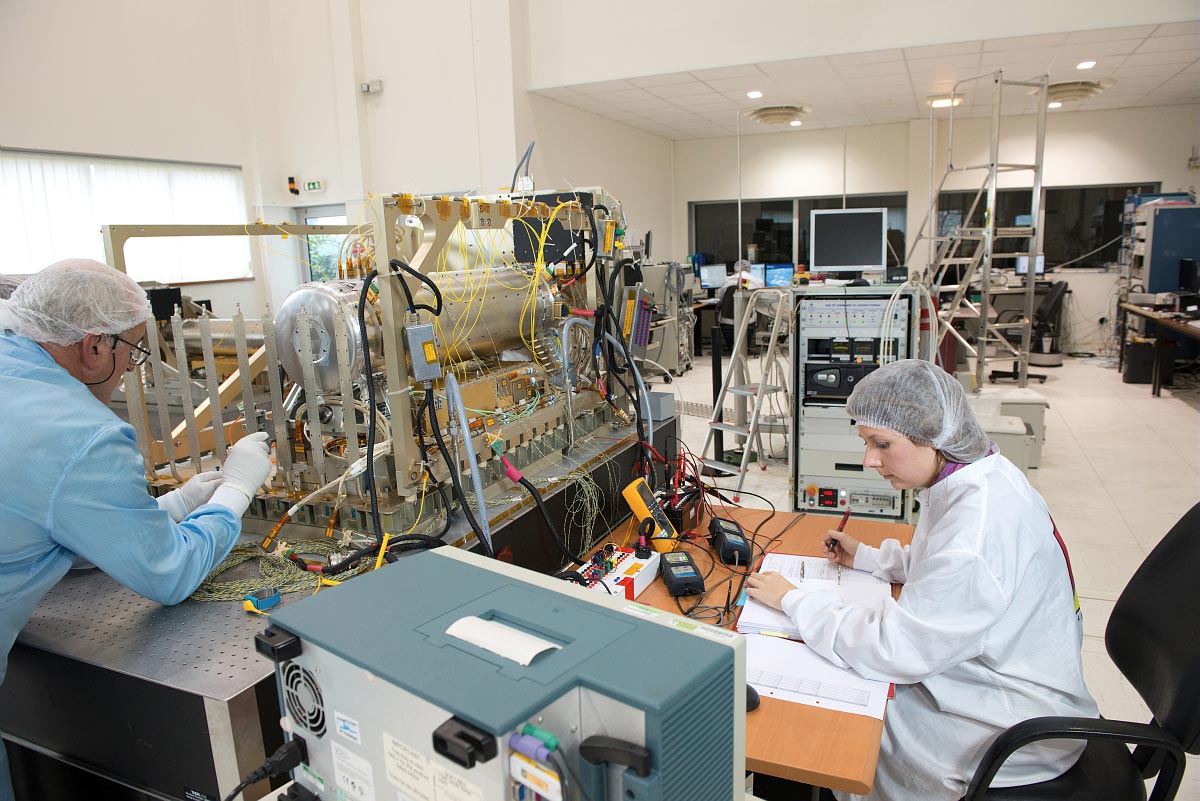
Today, the most efficient terrestrial atomic clocks use laser-cooled cesium atoms. The interaction time between these atoms and a microwave field is essential for measurement accuracy. In microgravity, this time can be considerably increased by using cold atoms. This is the very principle of PHARAO: cooling cesium atoms to a temperature close to absolute zero (-273°C) using lasers. Thus immobilized, the oscillations they emit are counted with increased precision. PHARAO will achieve an accuracy of 10⁻¹⁶, or a drift of one second every 300 million years , surpassing the best ground-based clocks which have a drift of about one second every 50 million years. The integration and testing of the flight model were carried out at the Toulouse Space Center. PHARAO is the central element of the European ACES (Atomic Clock Ensemble in Space) mission of the ESA (European Space Agency).

Testing Einstein’s Theories in Orbit

Relativity put to the test by weightlessness


As we commemorate the 70th anniversary of Albert Einstein’s death in April 2025, PHARAO’s main objective is to test his theories of relativity. They reveal that time is not absolute, but depends on the observer’s movement (this is special relativity) and that gravity influences the flow of time (this is general relativity). For example, time passes faster on board the ISS because of its distance from the center of the Earth (general relativity) but more slowly because of its orbital speed (special relativity). Satellite positioning systems such as GPS must already take these effects into account. The PHARAO mission will measure this “Einstein effect” with unprecedented accuracy. PHARAO’s data will be compared with data from ground-based clocks developed in laboratories around the world to detect possible errors and verify that the fundamental laws of physics apply as expected.

The Pharao instrument, being tested at the Toulouse Space Center

© CNES / Sébastien Girard

Applications on Earth

Beyond fundamental physics, the ACES/Pharao program has concrete scientific and technical objectives. It will validate new space technologies and refine global timescales . Thanks to ACES, it will become possible to compare distant terrestrial atomic clocks with unparalleled precision, which will have an impact on fields such as metrology (the science of measurement), geodesy (the study of the Earth’s dimensions), and gravimetry (the study of gravity).

Related articles