





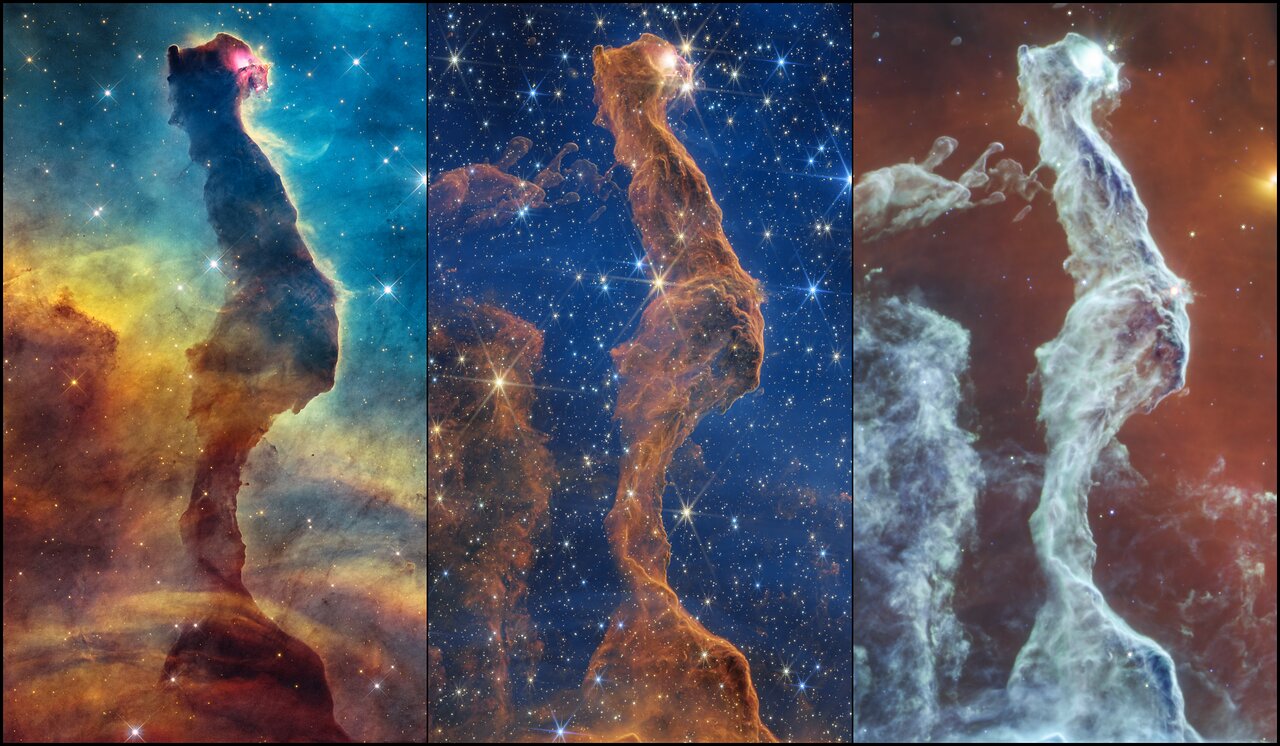
On October 29, 2026, NASA and ESA published these three images of the Horsehead Nebula taken by Hubble (left), the NirCam instrument on the James Webb telescope (center), and the Miri instrument on the James Webb telescope (right). Does Hubble, which observes in visible light, remain very complementary to the James Webb telescope?
© NASA, ESA, STScI. Image Processing: J. Depasquale (STScI).
Natural wear in low Earth orbit
The three options considered by NASA
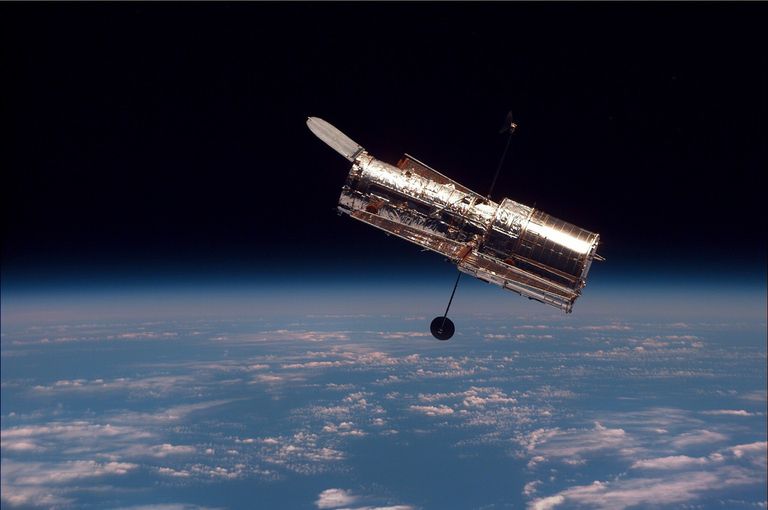
Positioned at about 470 kilometers in altitude, the telescope is gradually losing altitude due to atmospheric drag. NASA analyses now put the risk of atmospheric reentry at 10% by September 2032, and at 50% by December 2033. In the official document published on the SAM.gov platform, the U.S. space agency outlines three possible scenarios:
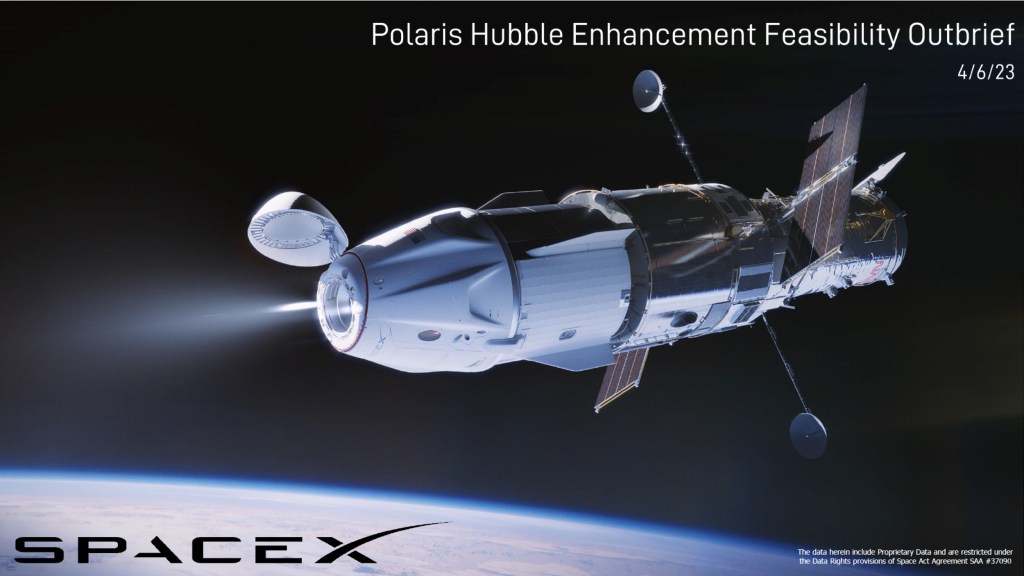
- capturing the telescope to raise its orbit above 600 kilometers,
- carrying out a servicing mission to reinforce its equipment,
- or organizing a controlled reentry to destroy it safely.
“Hubble is a national icon that has fundamentally changed the way humanity perceives our universe for more than 35 years,” explains Nicky Fox, associate administrator for NASA’s Science Mission Directorate. For her, the private sector has new solutions to propose. “The commercial industry has evolved rapidly in recent years to offer new capabilities for capturing and servicing satellites in space. Given the time we have before Hubble’s expected atmospheric reentry, we are eager to explore the range of possibilities to boost Hubble to a higher orbit while we develop the flagship mission that will succeed it.” Often presented as Hubble’s successor, the James Webb space telescope is above all complementary. It observes in the infrared, where Hubble detects visible light.



