• Podcast Ici Occitanie
  • Satellite

More than 4000 Starlink antennas will pass below 500 km altitude

Published on 06 January 2026

SpaceX plans to lower 4,400 Starlink satellites from an altitude of 550 to 480 km in 2026. This decision follows a technical failure of a Starlink satellite and a near-collision with a Chinese satellite. The goal is to ensure faster deorbiting.

More than 4000 Starlink antennas will pass below 500 km altitude

On January 1 , 2026, SpaceX announced a change to the structure of its Starlink satellite constellation. Approximately 4,400 satellites, nearly half of the currently operational fleet, will be deorbited from their altitude of 550 kilometers to reposition themselves at around 480 kilometers . This technical decision, which will be phased in throughout 2026, aims to improve safety in orbit by facilitating the reentry of satellites at the end of their operational life and reducing the risk of collisions.

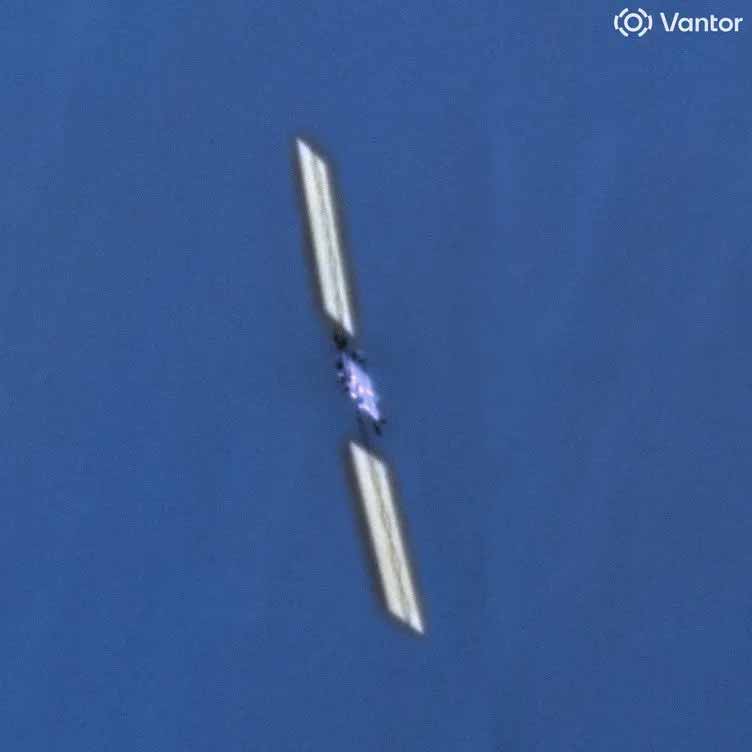
On December 17, Starlink-35956 generated hundreds of pieces of debris but remained intact in appearance, as confirmed by this image taken by a satellite of the company Vantor (formerly Maxar Intelligence).

© Vantor

A response to recent incidents in orbit

Starlink-35956 Satellite Failure

This reconfiguration follows an anomaly that occurred on December 17, 2025, on the Starlink-35956 satellite. This incident caused a leak in a propellant tank, generating several hundred pieces of debris . By lowering the overall altitude of the constellation, SpaceX aims to ensure that if such an event recurs, the debris will be slowed more quickly by the atmosphere and burn up within weeks instead of remaining in orbit for years. Space below 500 kilometers is currently less congested with debris and other constellation projects. By moving its satellites to this zone, SpaceX mechanically reduces the probability of accidental collisions .

An uncoordinated rapprochement with a Chinese launcher

Another determining factor is an incident involving a satellite launched by CAS Space from a Chinese Kinetica-1 rocket , which came within 200 meters of a Starlink satellite without any prior coordination between the operators . Michael Nicolls, Starlink’s vice president of engineering at SpaceX, explained on the social network X that these measures are intended to protect the constellation against ” risks that are difficult to control, such as uncoordinated maneuvers and launches by other operators .”

Anticipating the natural cycles of the atmosphere

The influence of the solar minimum on the contrail

The Earth’s atmosphere is not static. It expands or contracts according to the Sun ‘s activity , which follows an eleven-year cycle. We are still in a period of solar maximum for a few more months, but the solar minimum is predicted around 2030, a period during which the atmosphere becomes less dense at high altitudes. At 550 km, a malfunctioning satellite could then take more than four years to fall back to Earth naturally. At 480 km, atmospheric drag is stronger. According to Michael Nicolls, this change will allow for a ” reduction of more than 80% in ballistic reentry time ,” bringing this period down to just a few months.

starlink

With each launch, SpaceX deploys around thirty Starlink satellites into low Earth orbit. The company’s number of active satellites is estimated at over 9,000. Ultimately, SpaceX plans for its constellation to comprise 40,000 satellites.

© SpaceX

Related articles