• Astronomy

First images from the Vera Rubin Observatory

Published on 23 June 2025

The Vera C. Rubin Observatory has unveiled its first images. This Chilean giant, measuring 8.4 meters and equipped with the largest camera ever designed, is expected to map the universe over the next ten years. It will also help identify potentially dangerous asteroids.

First images from the Vera Rubin Observatory

The Vera C. Rubin Observatory in Chile presented its first-ever images on Monday , June 23. These detailed views of distant galaxies and star-forming regions offer new perspectives on the Universe . This large-scale telescope, which took more than twenty years to build, is preparing to map the sky with expanded capacity, opening new avenues for the study of the cosmos.


© RubinObs/NOIRLab/SLAC/DOE/NSF/AURA/W. O’Mullane

A giant of the Andes

A powerful eye on the Universe

The Vera C. Rubin Observatory, jointly funded by the National Science Foundation (NSF) and the U.S. Department of Energy (DOE), sits atop Cerro Pachón in the Chilean Andes. This location is ideal for cosmic observation, benefiting from low cloud cover and a dry climate. Equipped with an 8.4-meter telescope and the world’s largest digital astronomical camera ever built , the observatory has an unparalleled capacity to peer into the universe . Its primary mission, the Legacy Survey of Space and Time (LSST), will see the observatory photograph the southern sky for ten years, generating an unprecedented amount of data.

The Legacy of Vera Rubin

The observatory is named after Vera C. Rubin, a renowned American astronomer. She is famous for providing the first convincing evidence for the existence of dark matter , a mysterious substance that acts as a glue for galaxies , preventing stars from being ejected from them. Dark matter , along with dark energy —a force responsible for the expansion of the Universe—is believed to make up 95% of the Universe. Data from the Rubin Observatory holds great hope for helping scientists unravel the mysteries of these two fundamental components .

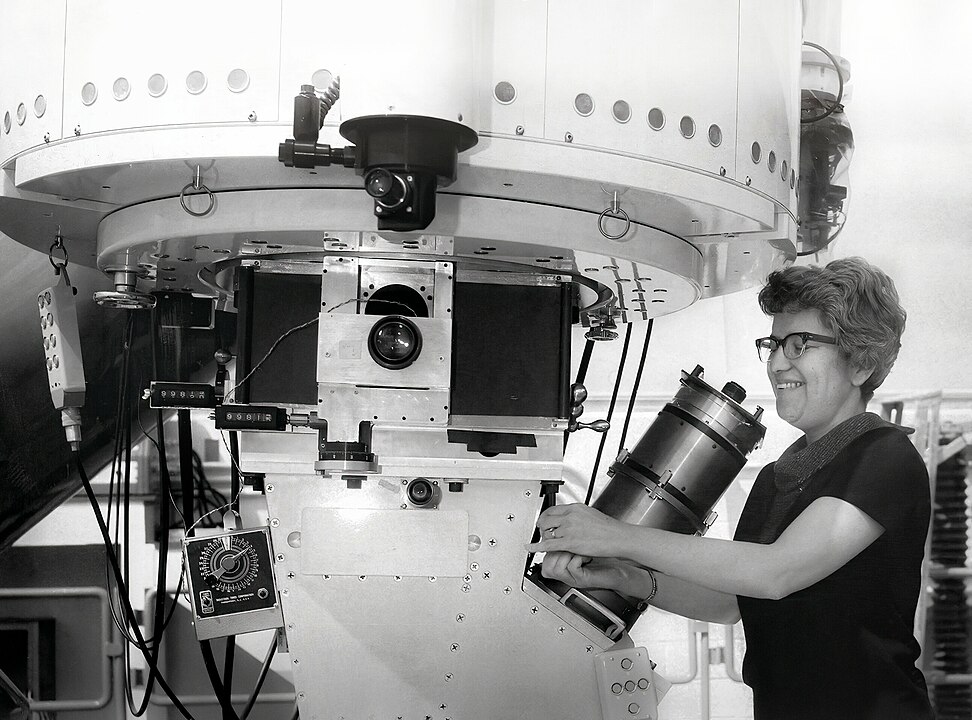
Vera Rubin in 1963 using the Kitt Peak National Observatory telescope with Kent Ford’s picture tube spectrograph.

© CC by 4.0 KPNO/NOIRLab/NSF/AURA  –  Vera Rubin at Work , NOIRLab

Breathtaking first views

Star nurseries and galaxy clusters

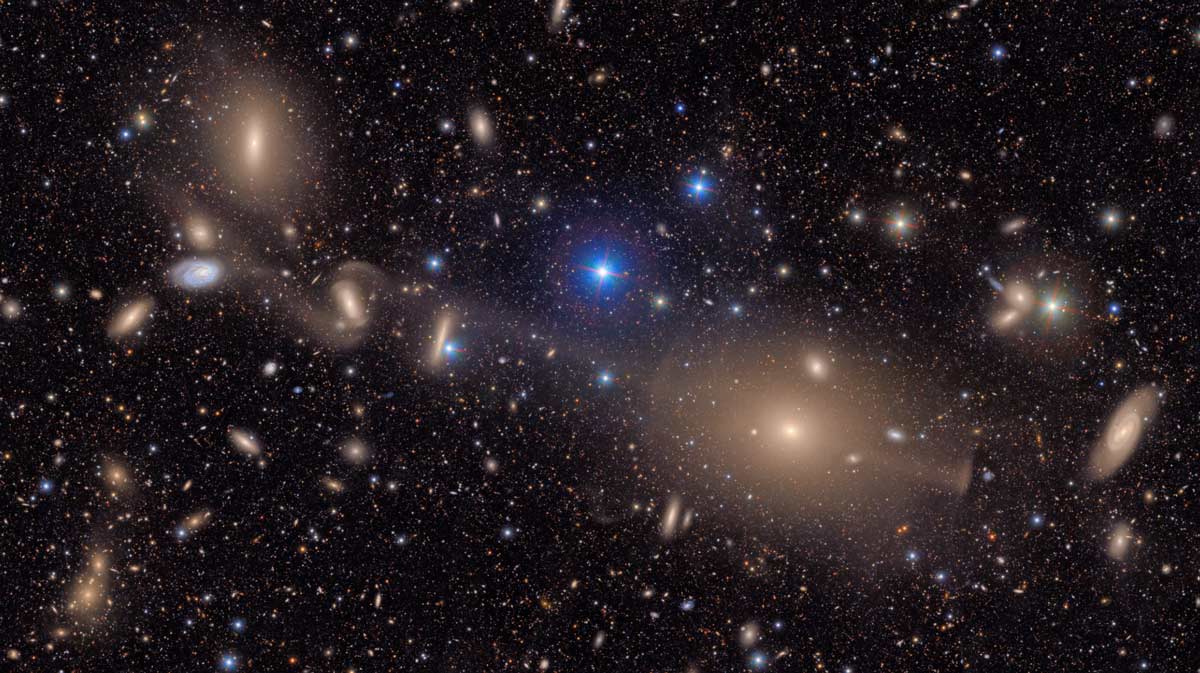
Among the first images released is a breathtaking view of the Trifid and Lagoon nebulae . These stellar nurseries within our Milky Way, located thousands of light-years from Earth, are revealed in unprecedented detail, revealing features never before seen. This striking image, with its vibrant pink colors against a reddish-orange background, is the result of 678 exposures taken over a period of seven hours. Another image offers an incredible view of part of the Virgo galaxy cluster , showing stars from our galaxy in the foreground and much more distant galaxies in the background. These initial images are just the beginning, offering a glimpse of the camera’s depth of observation and the enormous number of objects still to be discovered and understood.

camera_vera_rubin

The Vera Rubin Observatory’s camera is the largest ever built, capturing 3,200 megapixel images.

© J. Orrell/SLAC Lab

Mapping the Universe and Monitoring Asteroids

The LSST: a decade to unravel the mysteries of the cosmos

The first images are just the beginning of the Rubin Observatory’s main mission: the Legacy Survey of Space and Time (LSST). This ambitious project, scheduled to begin later this year, will scan the sky every night for the next decade , capturing the most subtle changes with unparalleled precision. Over ten years, it will generate 60 million gigabytes of data, resulting in a time-lapse “movie” of the Universe. LSST’s goals are vast: to unlock the secrets of dark matter and dark energy, to spot rapidly moving or constantly changing celestial objects, and to map the visible Universe.

A guardian of the solar system

In addition to exploring the far reaches of the Universe, the Rubin Observatory is also considered one of the most powerful instruments for tracking asteroids . In just ten hours, it has already discovered 2,104 new asteroids in our Solar System, including seven near-Earth asteroids that pose no threat. For comparison, all other observatories combined, whether in space or on Earth, discover about 20,000 new asteroids per year. The observatory is also expected to be the most effective at spotting interstellar objects passing through our Solar System.

Related articles