




• Moon
  • Technology

ESA and Venturi Space are studying the technologies of future lunar rovers

Published on 27 February 2026

ESA is partnering with Venturi Space to validate critical components for future lunar rovers. Using the Mona Luna vehicle, tests on the wheels, batteries, and deployment system will be conducted in the Luna hangar in Cologne, which simulates the lunar surface.

ESA and Venturi Space are studying the technologies of future lunar rovers

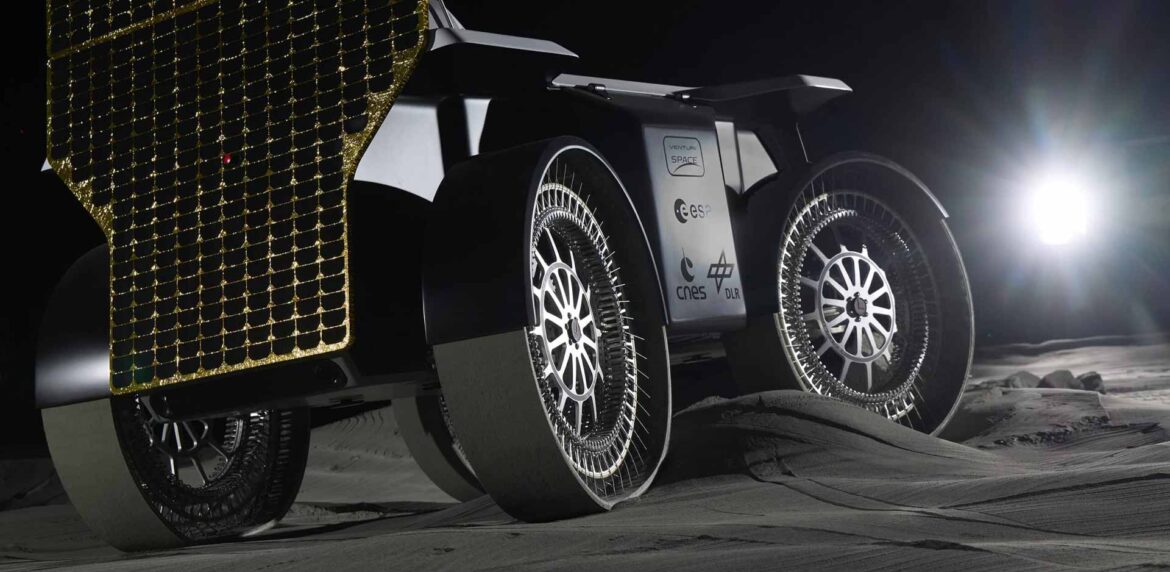
The European Space Agency has signed a contract with Venturi Space for a risk reduction study on three key technologies for future lunar rovers . Beginning on January 1, 2026, this collaboration aims to test locomotion, power supply, and thermal regulation . The Mona Luna rover , designed by the Toulouse-based company, will serve as an experimental platform to validate these systems.

The Mona Luna rover during the very first tests carried out in December 2025 in the Luna hangar in Cologne.

© Venturi Space

Tests in analog environments for future rovers

Validation of locomotion and energy systems

The study focuses on locomotion capabilities, power systems, and thermal regulation—essential elements for vehicles that can weigh several tons. The test campaigns will take place in the Luna hangar in Cologne, which replicates a lunar environment . ” To strengthen European agility and capabilities, agencies and institutions are establishing new partnerships with industry,” explains Daniel Neuenschwander, Director of Human and Robotic Exploration at ESA. The Mona Luna rover , a full-scale model of which will soon be presented at the Cité de l’espace (Space City), will be installed on the Luna regolith . There, the rover will be able to test its highly deformable wheels and high-performance batteries . Initial tests were conducted in December and proved very successful in demonstrating the rover’s adaptability to the Moon ‘s rugged environment . The challenges are numerous. This equipment must be able to operate on soft ground while withstanding temperature variations of 400°C, which can damage the onboard electronics and battery capacity. ” This project is fully in line with this pioneering approach ,” asserts Gildo Pastor, President of Venturi Space. ” Identify a need, imagine a new solution, and test it against reality .”

Deployment system analysis

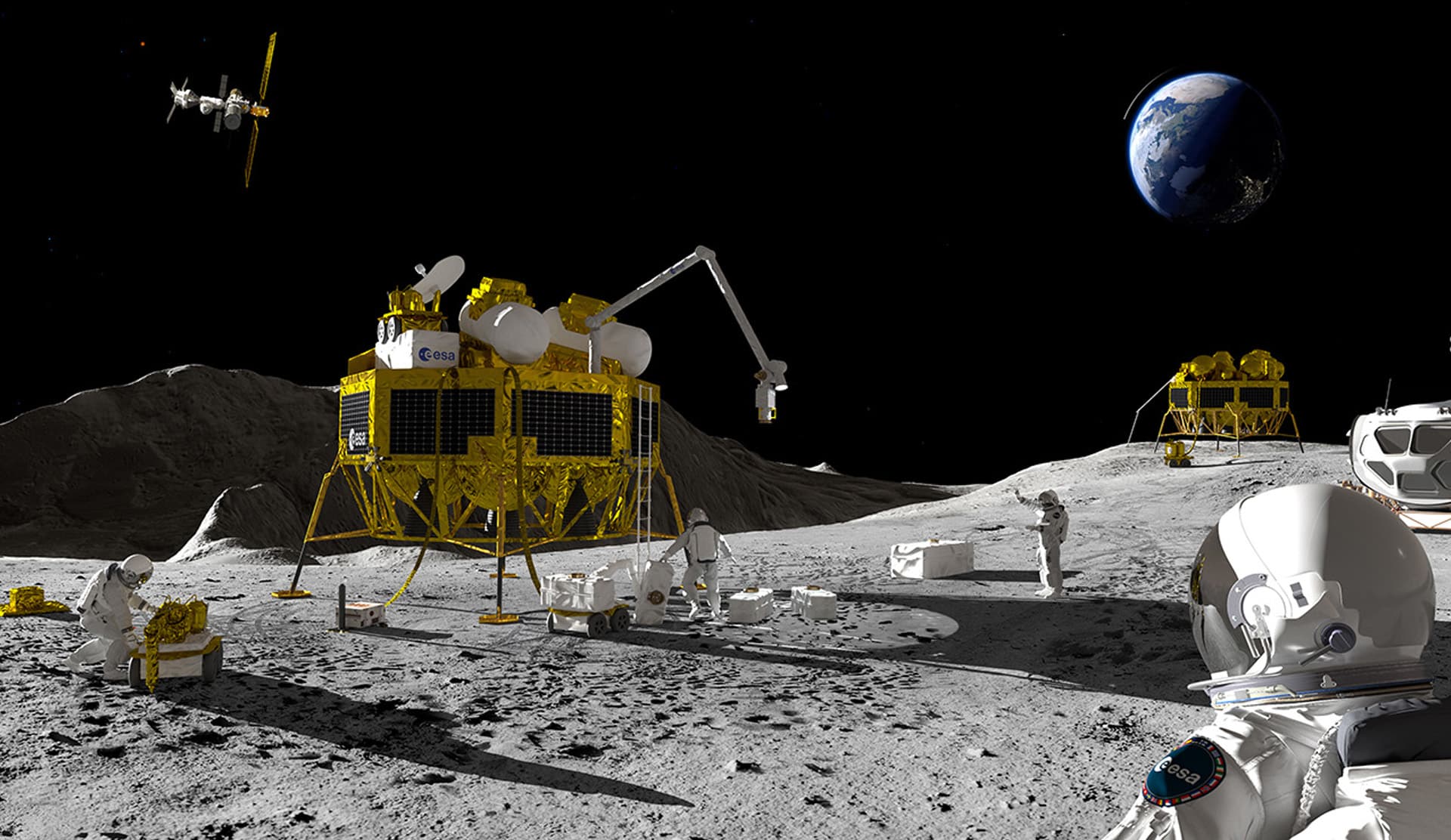
The contract also includes testing the “egress,” the rover ‘s descent phase from the lander. To this end, a device simulating the geometry of the European Argonaut lander will be designed by the ESA to validate the mechanical interfaces . ” The goal is to consolidate solutions aligned with the agency’s roadmap and bring them to a level of maturity compatible with the operational requirements of future missions,” says Antonio Delfino , Director of Space Affairs at Venturi Space, who notably participated in the design of the hyper-deformable wheels of the Mona Luna rover. “The egress process, in particular, is a key issue, and we are pleased to be able to propose and test an innovative concept within a joint and structured framework.”

Venturi Space has developed a unique descent system specifically adapted to the European Argonaut lander.

© ESA
.

Related articles
