

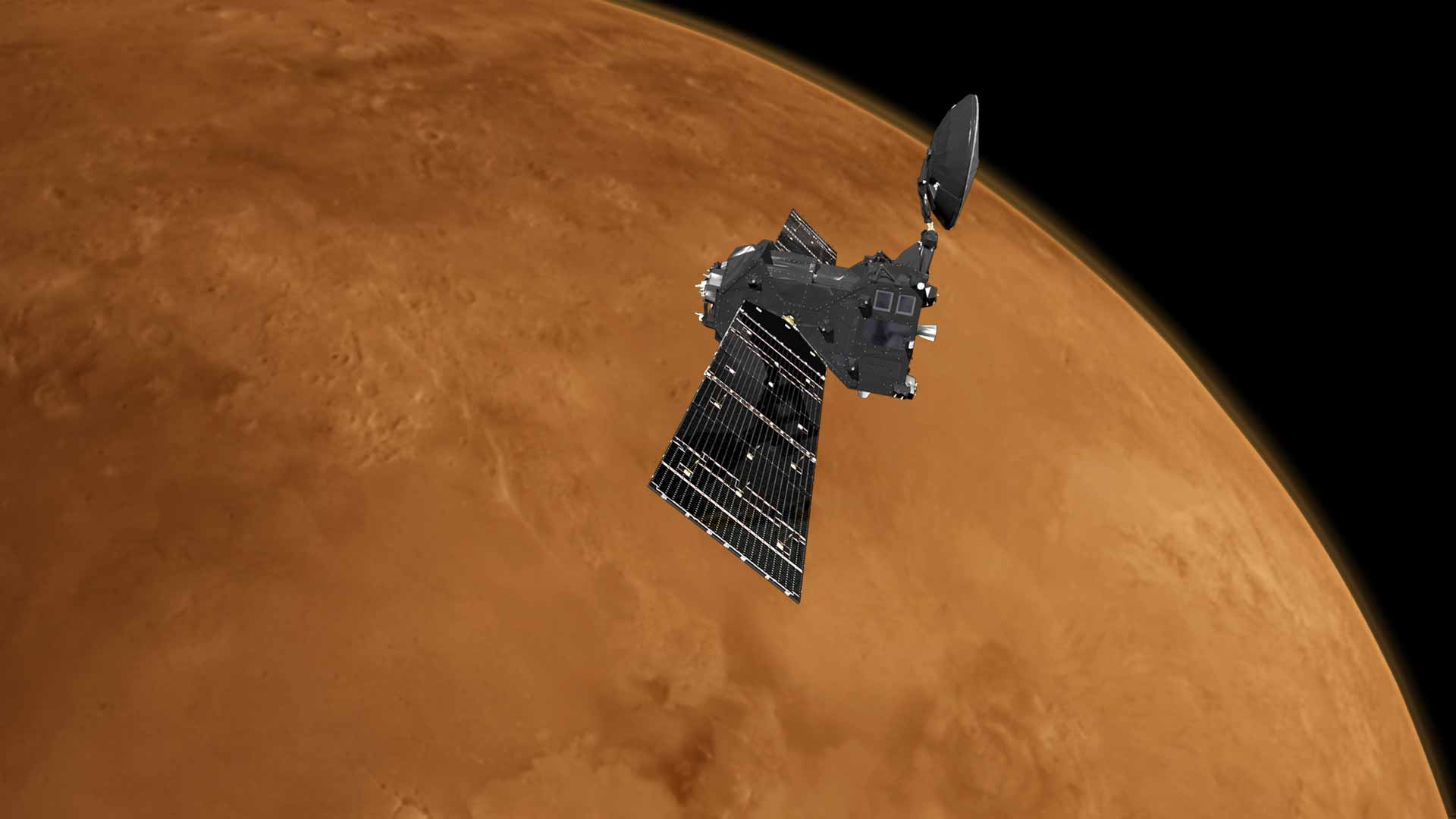
Artist view of the Exomar TGO probe.
© ESA
A complex technical observation
First pictures of TGO
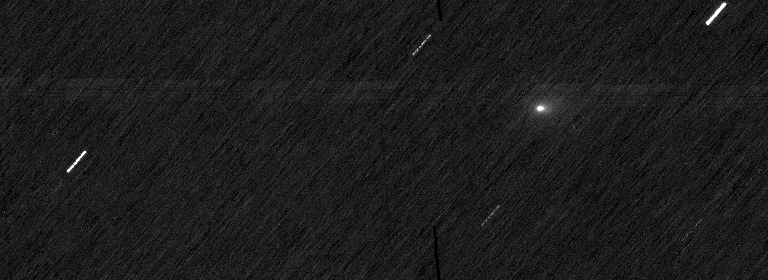
Each probe used its own dedicated camera to track the comet ‘s passage . Scientists were uncertain about the outcome of these observations because 3I/ATLAS was a relatively faint and very distant target. ExoMars TGO’s Colour and Stereo Surface Imaging System (CaSSIS) managed to capture a series of images . ” This was a very challenging observation for the instrument. The comet is about 10,000 to 100,000 times fainter than our usual target ,” explains Nick Thomas, the lead scientist for the CaSSIS camera, in the ESA press release. In the images, Comet 3I/ATLAS appears as a slightly blurred white dot . This dot represents the center of the comet , with its rocky nucleus and coma. But the nucleus, a kilometer wide, was impossible to image. At that distance, it would be like spotting a smartphone-sized object on the Moon from Earth . The coma, which astronomers call a coma, is a few thousand kilometers across, so it’s clearly visible.