

• Crewed Flights
  • Moon

What does the Artemis III mission consist of?

Published on 12 June 2026

Scheduled for completion by the end of 2027, Artemis III will remain around Earth to test the docking between the Orion capsule and the lunar spacecraft provided by the private companies SpaceX and Blue Origin.

What does the Artemis III mission consist of?

During the presentation of the four astronauts selected for Artemis III on June 9 in Houston, NASA’s chief scientist Nicky Fox warned that it would be a “technically complex mission“, emphasizing the importance of a spaceflight that, even though it will remain in Earth orbit, will prepare for future journeys to the Moon.
While the precise program for Artemis III has not been detailed and changes cannot be ruled out, some broad outlines have already been established.

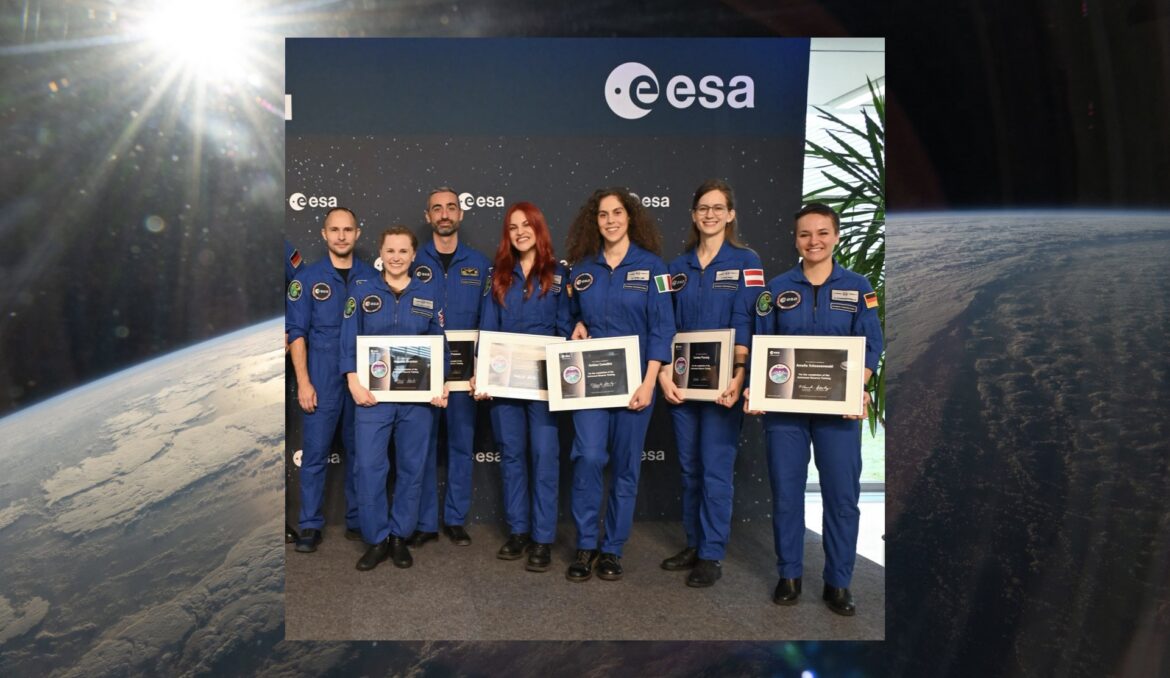
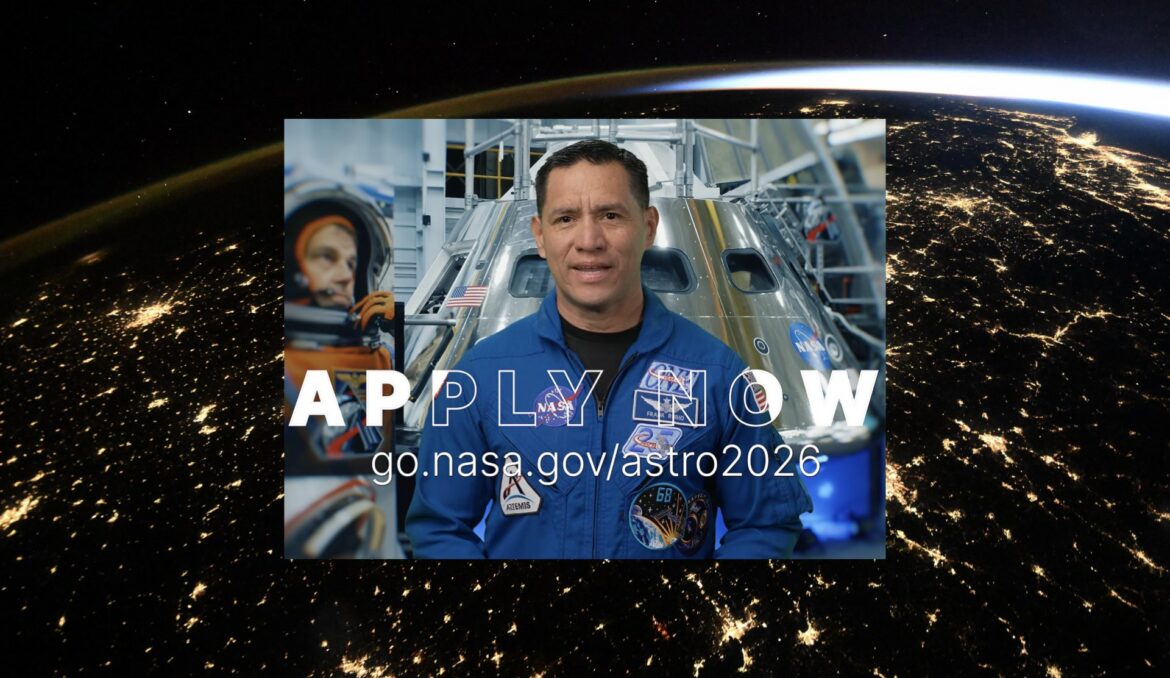
Note: The image at the top of this article was created by the Cité de l’espace using a photo of Earth and an illustration from NASA.

ARTEMIS III

AROUND THE EARTH TO PREPARE FOR THE MOON

Since the end of February, NASA has determined that its astronauts will return to our natural satellite not with Artemis III, but with Artemis IV. Following this logic, which includes a test flight similar to Apollo 9 (the Lunar Module’s test flight around Earth in March 1969), Artemis III in 2027 serves to reduce risks for subsequent lunar missions.
On June 9 in Houston, NASA presented the four astronauts selected for Artemis III: American commander Randy Bresnik , accompanied by his compatriots Andre Douglas and Frank Rubio as mission specialists, while the pilot position will be held by Italian astronaut Luca Parmitano of the European Space Agency (ESA).

The crew of Artemis III (from left to right): Luca Parmitano, Andre Douglas, Randy Bresnik, and Frank Rubio.
© NASA/Helen Arase Vargas

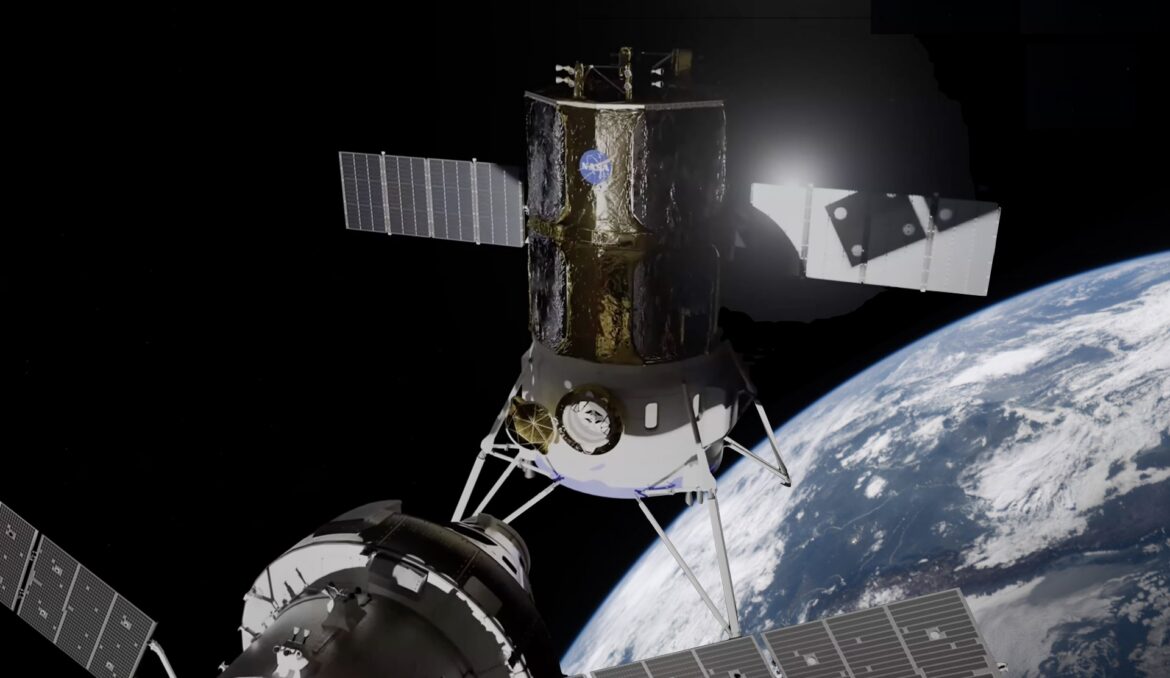
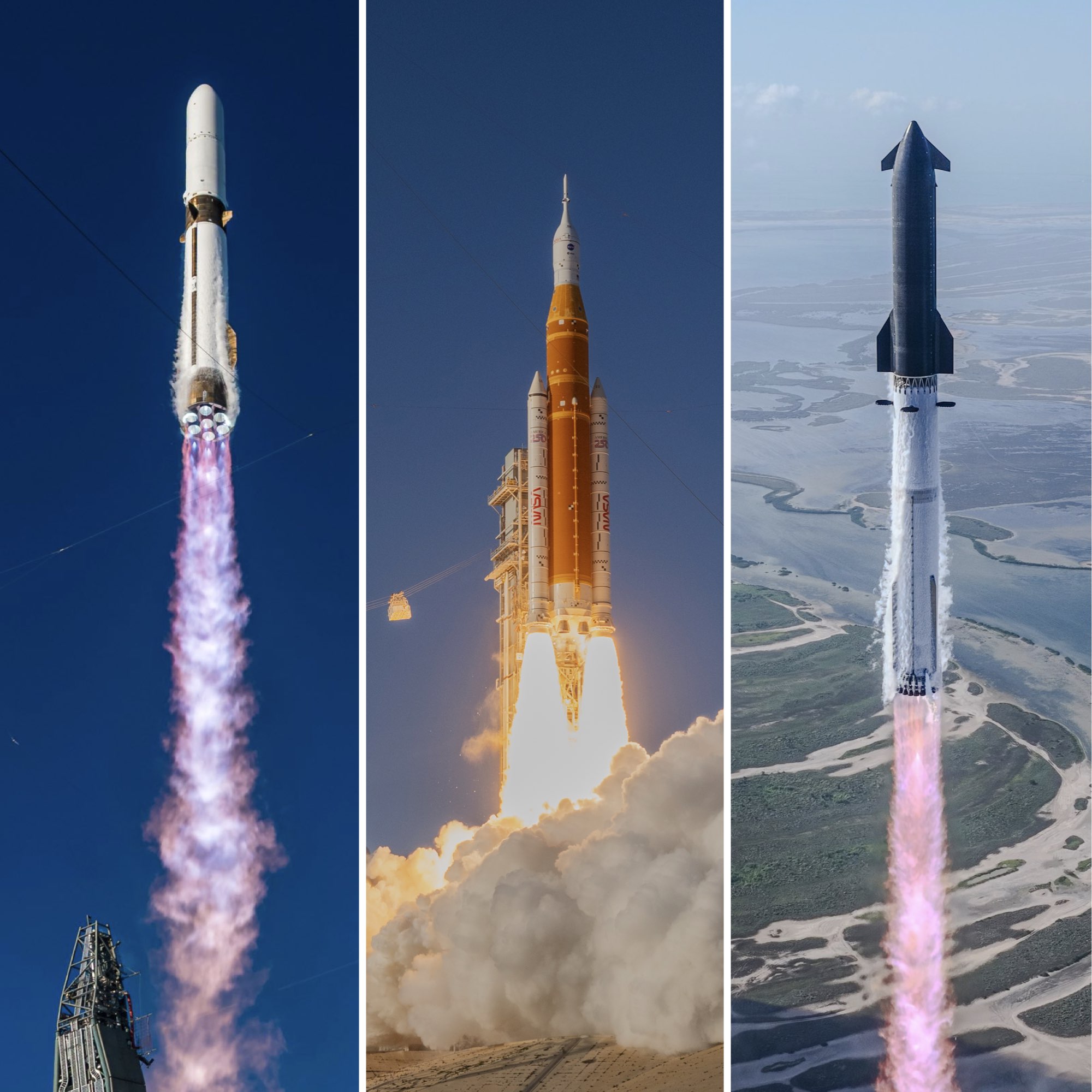
The Artemis III mission around Earth relies on three launches. First, the launch of a New Glenn rocket from Blue Origin to send a simplified version of the Blue Moon lander, then NASA’s SLS with Orion, and finally a Starship from SpaceX.

© Cité de l’espace based on images from Blue Origin, NASA and SpaceX

THREE LAUNCHES TO TEST THE LUNAR SPACECRAFTS

The mission relies on 3 launches which must follow one another . Normally, it is the New Glenn launcher of the company Blue Origin founded by billionaire Jeff Bezos that opens the ball in order to place into Earth orbit a so-called “pathfinder” version of its Blue Moon lunar lander.

Next, the SLS (Space Launch System) rocket, currently being prepared at the Kennedy Space Center in Florida, will launch with an Orion capsule and its European Service Module (ESM ) atop it. The Artemis III SLS will not have an ICPS upper stage like Artemis I and II, as this is unnecessary since Orion remains in Earth orbit.

Immediate goal: the Blue Moon. Finally, it will be the turn of a Starship to take off in order to carry out the second rendezvous of Artemis III, this time between Orion and the SpaceX spacecraft.
Rendezvous with BLUE MOON

NASA notes in its press releases that the “pathfinder” version (also called the Earth Orbit Rendezvous Demonstrator in a video) of Blue Origin’s Blue Moon can remain in Earth orbit for several weeks. This provides welcome flexibility for the launch of the four astronauts aboard Orion atop the SLS. It also explains why Blue Origin is launching first. The private company will lift off from its launch site in Florida, which was severely damaged on May 28 by the explosion of a New Glenn rocket .

Nevertheless, Blue Origin CEO Dave Limp announced a resumption of flights by the end of 2026 (a real challenge), therefore compatible with Artemis III at the end of 2027.

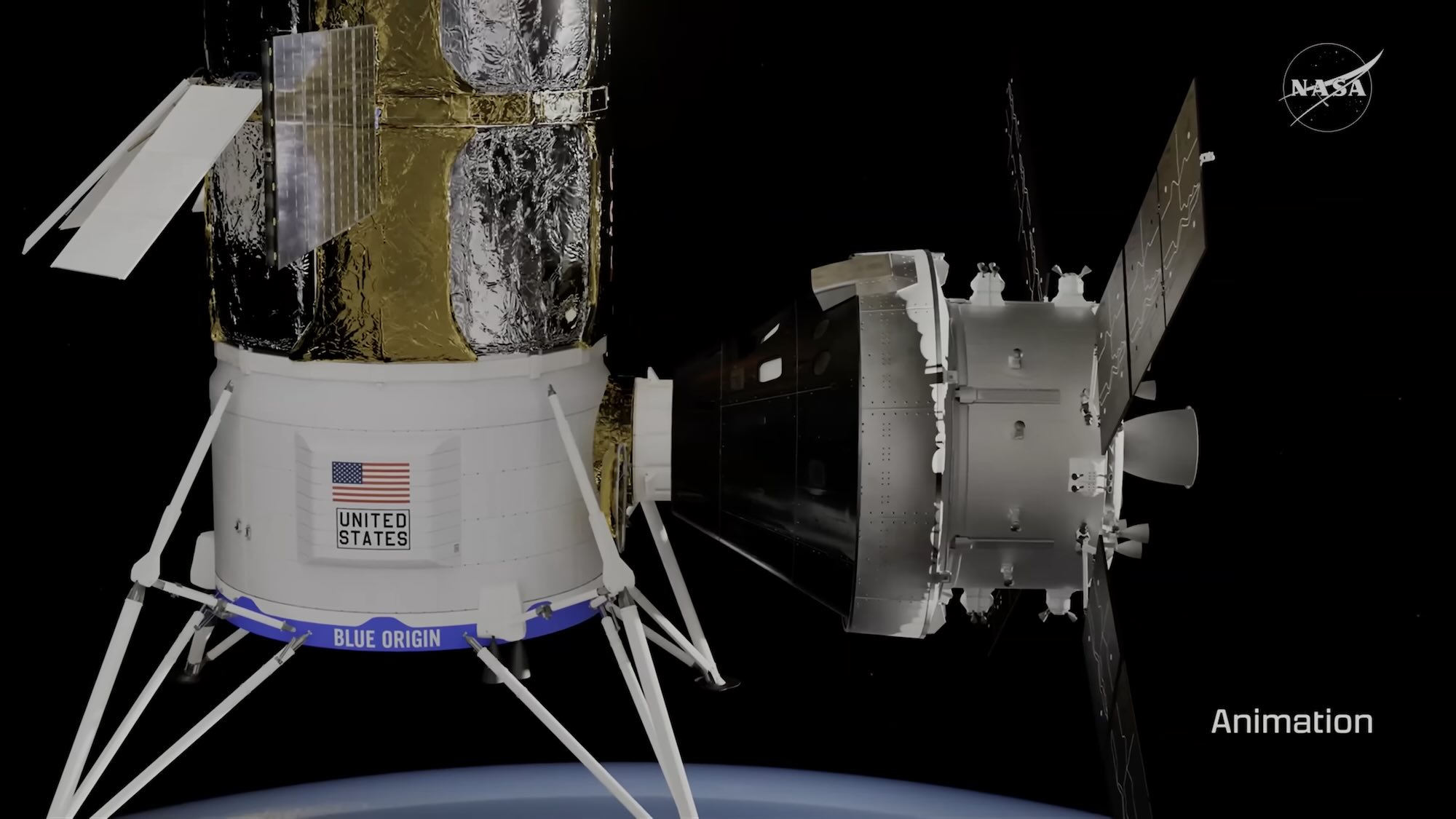
Illustration of the Orion spacecraft (right) docked to the Blue Moon Pathfinder version of Artemis III. This craft is smaller and less complete than the Blue Moon Mark II.
© NASA screenshot by Cité de l’espace

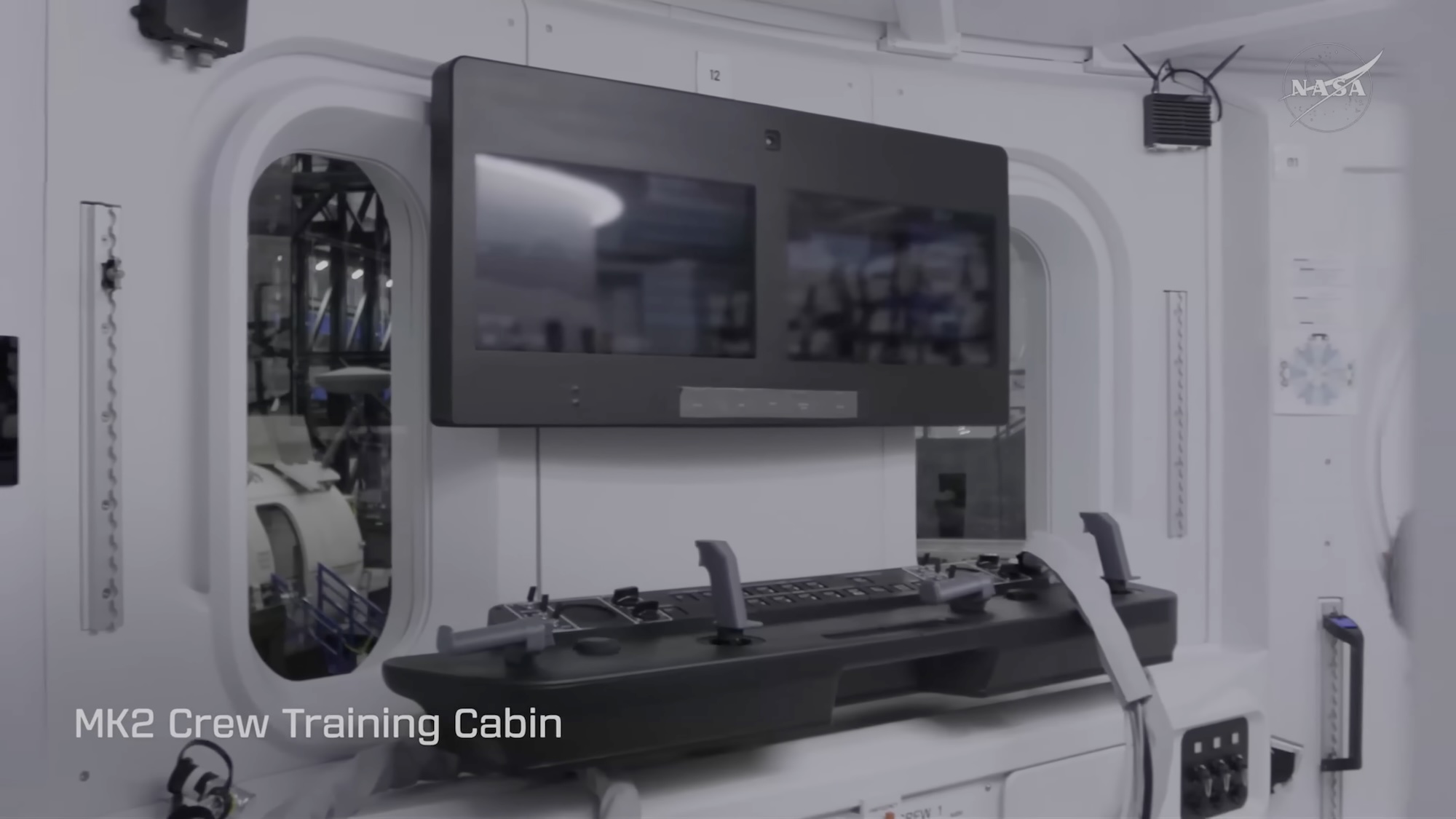
The interior of a Blue Moon training version, showing the cockpit.
© NASA screenshot by Cité de l’espace

Orion is scheduled to dock with the Blue Moon Mark II “pathfinder“, a simplified and smaller version of the lunar lander. The two spacecraft will remain docked for approximately two days . The planned tests include astronauts entering the lunar lander. This Blue Moon, lacking the BE-7 thrusters required for a lunar landing, will instead be equipped with avionics and a life support system in its habitable segment identical to the Blue Moon Mark II.

This part of the mission could also include tests of the Axiom Space lunar spacesuit, but it has not been stated that a spacewalk will be conducted. It’s worth noting that NASA’s Office of Inspector General (OIG) recently estimated that this spacesuit might not be ready in time .

RENDEZVOUS WITH A STARSHIP

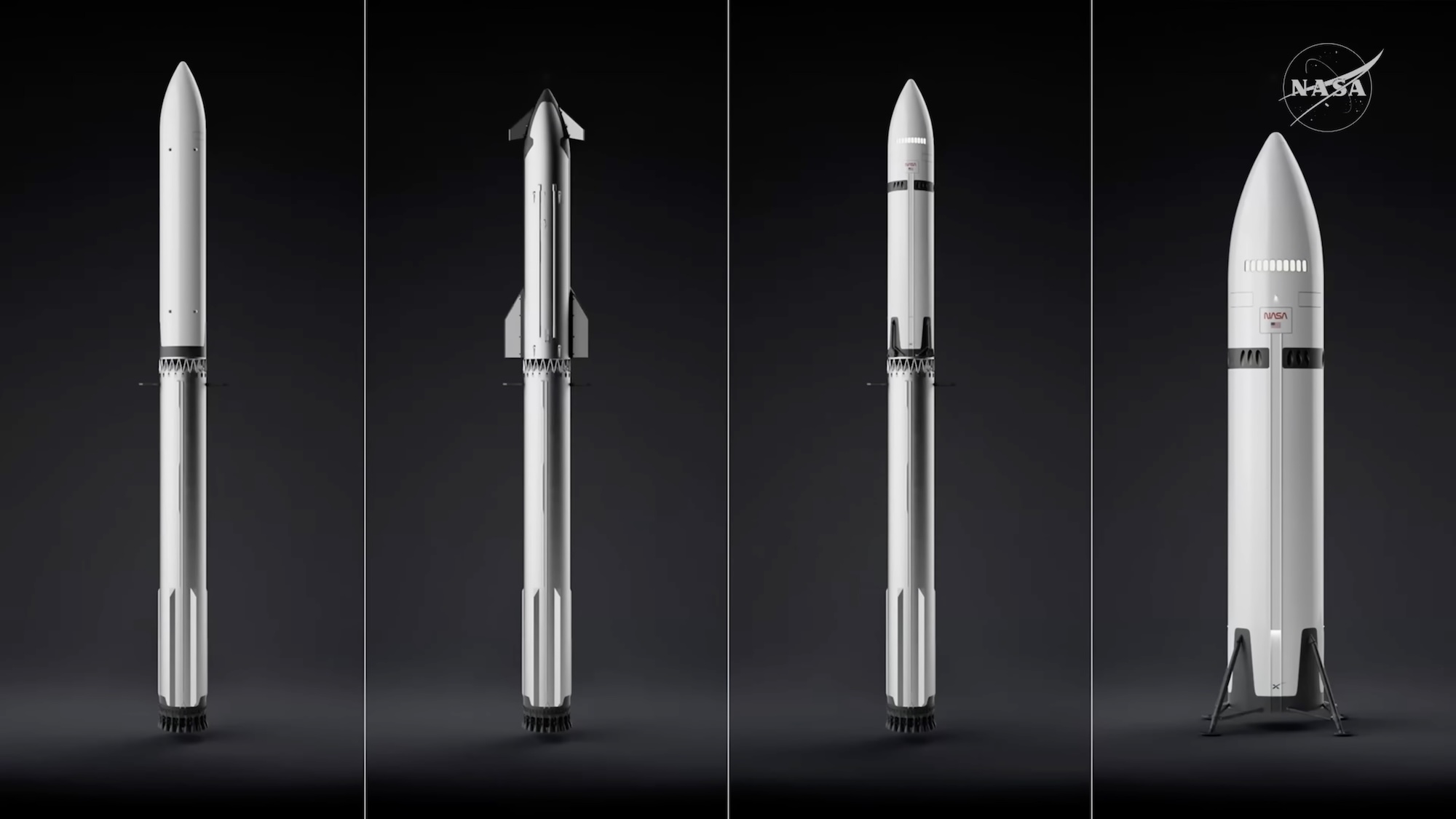
After two days docked to Blue Moon, the Orion capsule (and its Extra-Summit) will separate to proceed to its second rendezvous. This rendezvous will, of course, be with SpaceX’s Starship , more precisely its second stage, Ship. NASA is again announcing a “pathfinder” version, but this Starship will be even less complete than Blue Moon . While it has been emphasized that the crew compartment of the lunar version of Starship is now well advanced, the spacecraft that will rendezvous with Orion for Artemis III will be essentially identical to a Ship V3 with the addition of the docking system. There will be no crew quarters, and therefore no astronaut transfers are planned. The docking between this Starship Pathfinder and Orion will thus last only one day. It seems that NASA’s interest lies in testing maneuvers between two spacecraft of very different sizes (50 meters long for Starship and 7.3 meters for Orion with the Extra-Summit).

Different versions of SpaceX’s Starship. From left to right: a simplified second stage Ship to bring fuel into orbit, a Starship with its Ship in version 3, the lunar version of Starship on a Super Heavy first stage and then on its own.

© NASA screenshot by Cité de l’espace

NASA video presenting the Artemis III mission.

Splashdown IN THE PACIFIC

At the end of a mission expected to last two weeks , Orion will jettison the European Service Module (ESM) and re-enter the atmosphere. For the four astronauts on board, this return, which will conclude with a splashdown in the Pacific Ocean off the coast of California , will be very similar to that of their colleagues on Artemis II. However, the Artemis III capsule will be equipped with a new heat shield.

Related articles