




• Mars

Curiosity explores Martian “spider webs”

Published on 25 February 2026

The Curiosity Mars rover explored "spiderweb" structures on Mount Sharp. These geological formations reveal that groundwater may have been present on Mars for longer than previously thought, based on data from orbiting probes.

Curiosity explores Martian “spider webs”

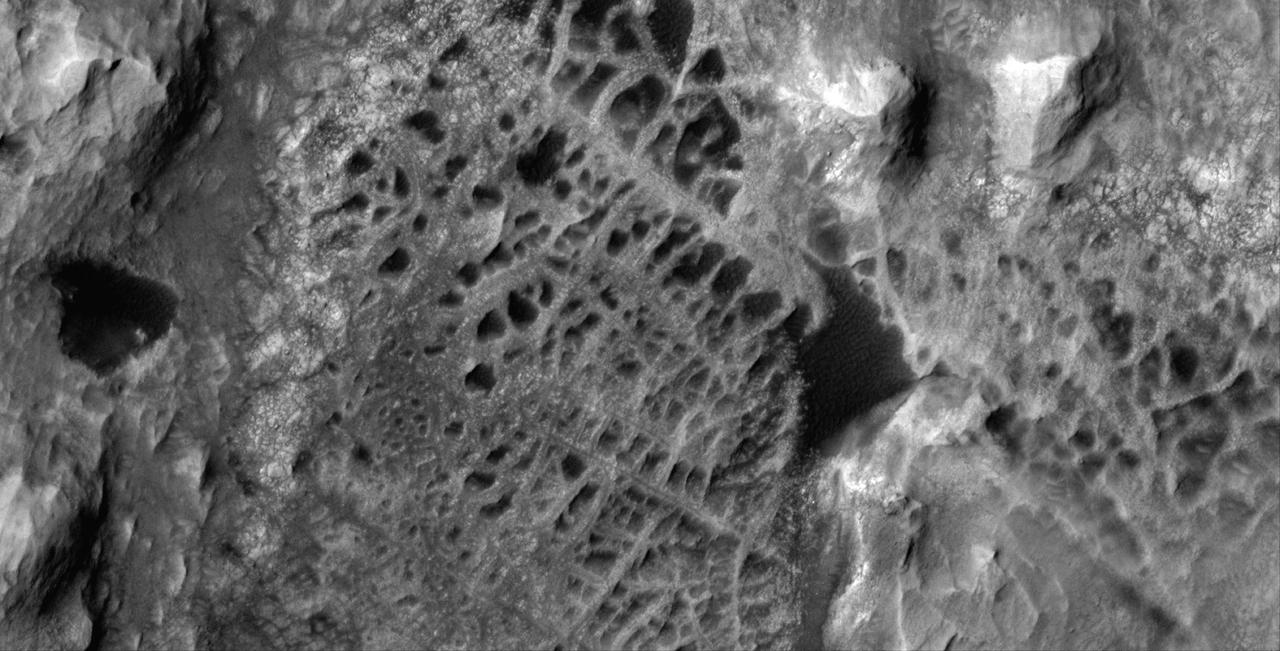
For about six months, NASA’s Curiosity rover has been exploring a region of Mount Sharp characterized by formations called “boxwork.” Seen from space, these structures resemble immense spiderwebs stretching for kilometers across the surface of Mars . They consist of mineral ridges one to two meters high surrounding sandy cavities. These observations suggest that groundwater circulated on Mars later than scientists previously thought.

From orbit, these famous “boxwork” structures, spotted here by the Mars Reconnaissance Orbiter probe, resemble immense spider webs.

© NASA/JPL-Caltech/University of Arizona

The origin of “boxwork” structures

A network shaped by water and erosion

Scientists hypothesize that groundwater flowed through large fractures in the rock , depositing minerals that strengthened the fracture walls. The unmineralized areas were then eroded by the wind, leaving the current ridges in relief. ” Seeing boxwork this high up the mountain suggests that the water table must have been quite high ,” explains Tina Seeger, mission scientist at Rice University in Houston. ” This means that the water needed to sustain life may have been present for much longer than we thought when observing from orbit ,” she adds in a NASA press release.

The constraints of ground navigation

The delicate handling of a one-tonne rover

Navigating this environment presents a technical challenge for the operators at the Jet Propulsion Laboratory, who guide this nearly 900 kg vehicle over ridges sometimes barely wider than the rover itself. ” It almost feels like we’re on a highway we can drive on ,” explains Ashley Stroupe, an operating systems engineer at JPL. ” But then we have to descend into the hollows, where we have to be careful of Curiosity’s wheels slipping or the difficulties of turning in the sand. There’s always a solution. You just have to try different paths .”

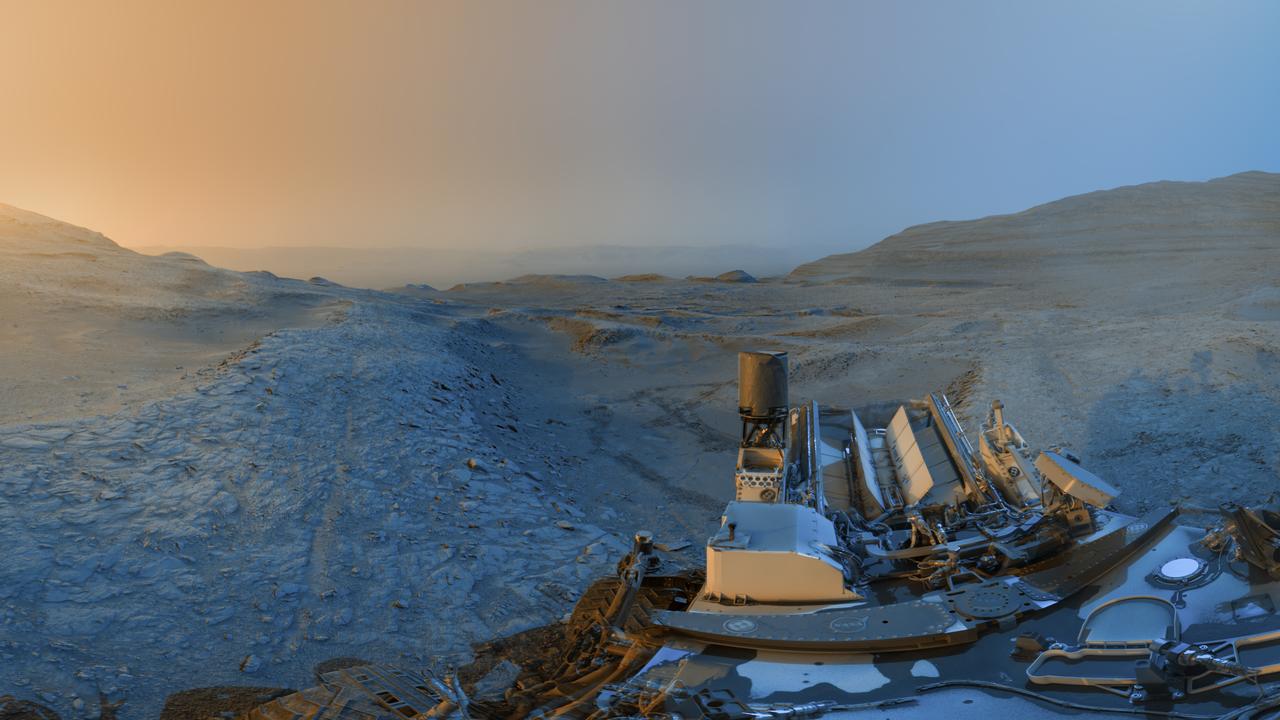
This image, obtained by compiling several shots taken at different times of the day, shows the ridges of the “boxwork” structures, like roads on the surface of Mars, and the sandier hollows where Curiosity has more difficulty moving.

© NASA/JPL-Caltech

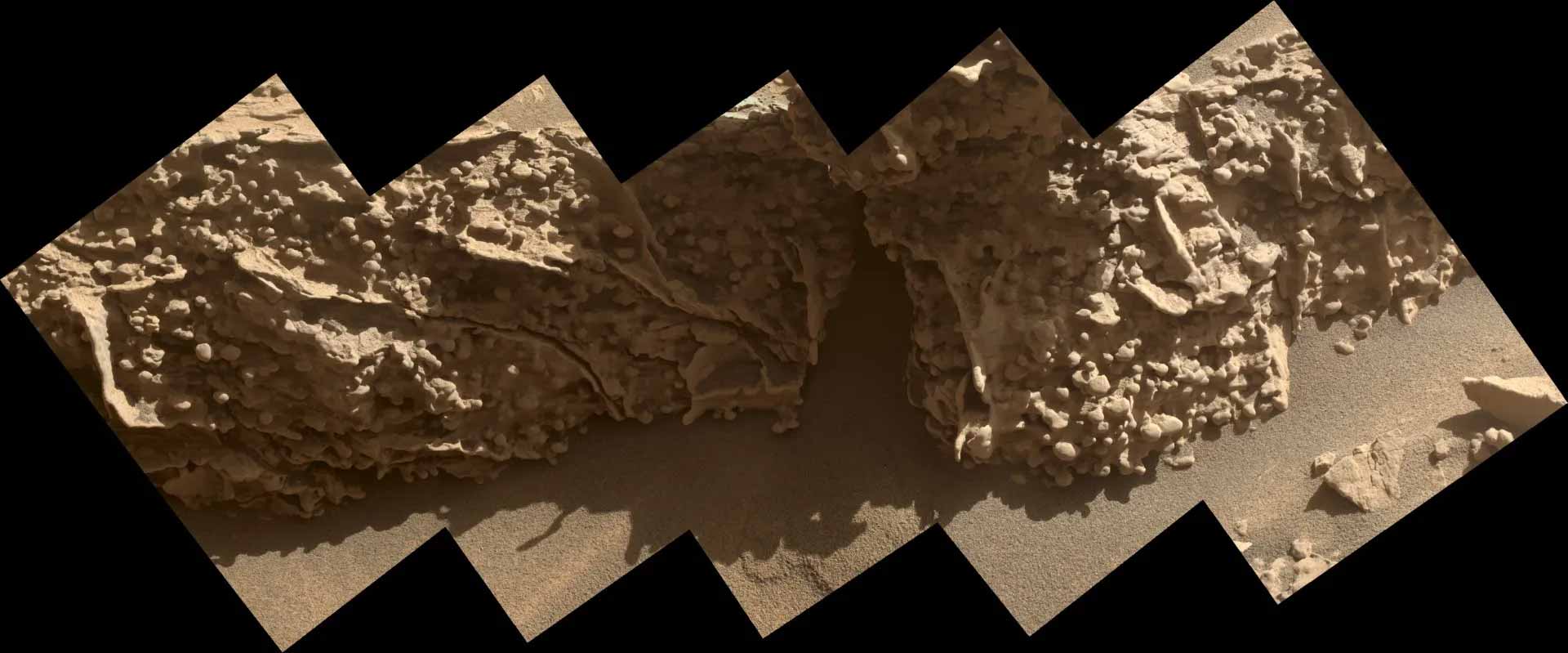
Tiny, pea-sized bumps appear on the surface of Mars . These nodules formed billions of years ago when groundwater evaporated, leaving behind mineral deposits. This image was taken on August 21, 2025, by NASA ‘s Curiosity rover as it explored boxwork in the Mount Sharp region.
© NASA Jet Propulsion Laboratory (JPL) / MSSS

The water has passed through here

The analyses showed mineral indicators and revealed the presence of nodules.

Analyses conducted by Curiosity revealed the presence of clay minerals in the ridges and carbonates in the cavities, providing further details on the formation processes. The rover also identified nodules, characteristic signs of past water circulation , the distribution of which remains to be explained. ” Perhaps the ridges were initially cemented by minerals, and subsequent episodes of groundwater left nodules around them ,” suggests Tina Seeger. The rover will leave this area in a few days to continue its ascent toward a sulfate-enriched layer.

Related articles
