




• Launch

Ariane 6 successfully completes its first commercial flight

Published on 10 March 2025

Ariane 6 has placed its first commercial satellite into orbit. After a 1h06 flight, the European launcher deployed, at an altitude of 800 km, CSO-3, a military observation satellite on behalf of the French army. Four other flights are planned for 2025.

Ariane 6 successfully completes its first commercial flight

Europe is back in space. On March 6, 2025 at 5:24 p.m., the European launcher Ariane 6 left the ELA 4 launch pad at the Kourou base in French Guiana. After 1 hour and 6 minutes of flight, Ariane 6 released the CSO-3 military satellite, which will increase the observation and reconnaissance capabilities of the French army. After the success of the inaugural flight this summer, the success of this first commercial flight paves the way for other flights this year. Four are planned and the order book for the coming years is already full.

2 min 18 after launch the boosters separated.

© ESA / CNES / Arianespace / ArianeGroup

5:24 p.m.: Ariane 6 takes off from Kourou

The European launcher has perfectly succeeded in its mission until the release of the CSO-3 satellite

No more postponements, no more faulty valves, this time, it’s the right one. At 5:24 p.m., Ariane 6 tore away from the ELA4 launch pad. After 2 minutes and 18 seconds, the two boosters that had burned all the powder they contained separated. After passing the Karman line at an altitude of over 100 km, the fairing weighing over 3 tonnes also separated. At this altitude, the almost non-existent atmosphere no longer represents a friction hazard for the satellite, which may be confronted with the vacuum of space.

Then, 7 minutes and 46 seconds after launch, it was the main stage, now empty, that detached to allow the Vinci engine of the first stage to ignite. Before fading away to continue its ballistic flight for 37 minutes.

Space sovereignty, military sovereignty

Ariane 6 guarantees Europe access to space. CSO-3 increases military observation capabilities

The flight was highly anticipated. In a tense international context, this first commercial flight of Ariane 6 represents a dual sovereignty issue. First, Ariane 6 allows Europeans autonomous access to space. Second, CSO-3 guarantees France and Europe more reliable information on the military level.

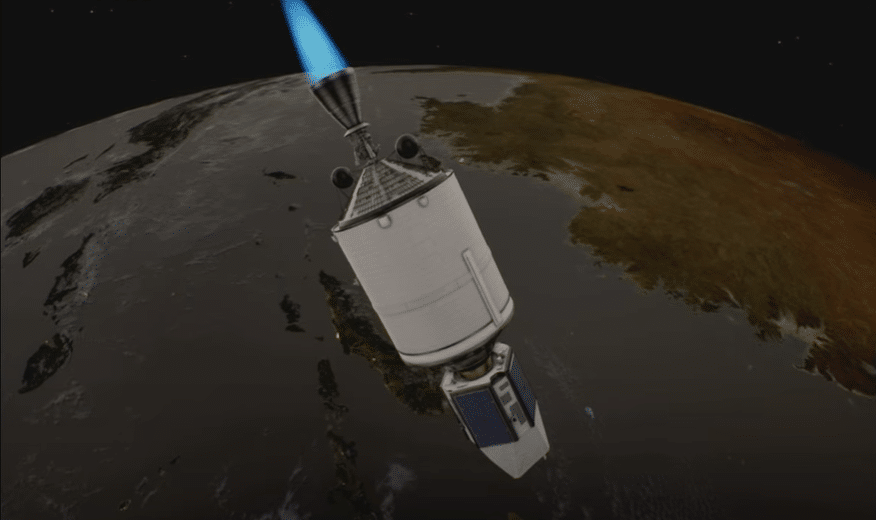
56 minutes after takeoff, the Vinci engine was restarted for a few seconds, then at 6:30 p.m., the satellite was deployed, which meant that the takeoff was a success.

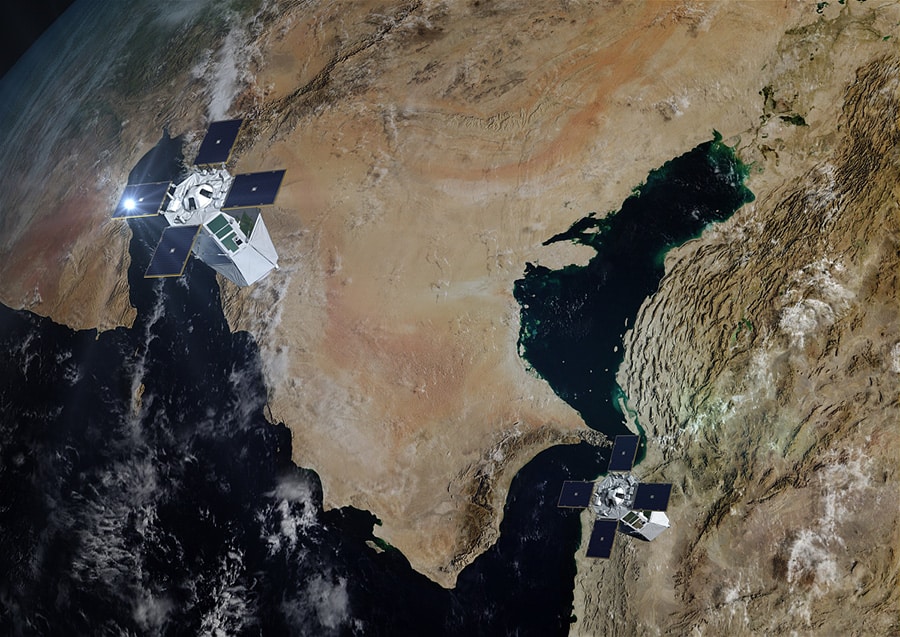
CSO-3 has now joined CSO-1 and CSO-2, two satellites launched, at the time by Soyuz rockets, from Kourou. The war in Ukraine put an end to this Franco-Russian cooperation and as long as Ariane 6 was not ready, it was impossible to send this additional reconnaissance satellite. CSO-3, like CSO-1, is responsible for reconnaissance. Thanks to its infrared vision, it can detect heat sources. It could thus identify an armored vehicle under camouflage or the passage of an airplane on a runway. CSO-3 will above all allow a better image refresh rate. CSO-1 and CSO-3 being placed in opposition, military intelligence can hope to obtain new images every 24 hours. Then, CSO-2 is responsible for identification since it is placed in a lower orbit.

CSO-3 will join CSO-1 and CSO-2 to increase the observation and reconnaissance capabilities of the French army.

© ESA / CNES / Arianespace / ArianeGroup

The core stage, shown here during its second ignition before deploying the CSO-3 satellite, ignited one last time before re-entering the atmosphere.

© ESA / CNES / Arianespace / ArianeGroup

Vinci ignited three times

After deploying CSO-3, the upper stage reignited its Vinci engine to demonstrate its capabilities

This was the other challenge of this flight. It had not worked on July 9, but this time, it was a total success. The main innovation of the Vinci engine is that it can ignite and extinguish several times. The goal is to reach different orbits for different payloads. During the inaugural flight, the Ariane 6 teams, while indicating that it was a demonstration phase, had tried to relight the upper stage engine a third time. In vain. Incidents on the APUs and the attitude correctors had prevented this relighting. This time, this phase, which was, once again, not decisive for the success of the mission, was successful. Rather than remaining space debris in orbit, the upper stage therefore made a final boost to plunge into the atmosphere and not clutter the orbit.

5 Ariane 6 flights in 2025

Ariane 6 is scheduled to fly five times this year and make its first launch in version 64

Now that Ariane 6 has proven its reliability, other launches may follow. This summer, a MetOp satellite launch for EumetSat is planned. We should also see the launch of a Sentinel satellite this year, which should complete the Copernicus program. In addition, a Galileo satellite will also be placed in orbit thanks to Ariane 6 in the third or fourth quarter. Finally, by the end of the year, we should see the launch of a satellite from Amazon’s Kuiper constellation. Jeff Bezos’ firm has signed for 18 launches, in total with the European rocket. This will be an opportunity to see the first launch of Ariane 6 in version 64, its most powerful version with four boosters.

Related articles