
• Exploration
  • Moon

Argonaut: Europe Soon on the Moon

Published on 11 February 2025

Europe has entrusted Thales Alenia Space with the task of designing Argonaut, a lander that promises a lasting presence on the Moon. With dimensions comparable to the Apollo lunar module, the lander will be capable of carrying 1.5 tons of equipment to the Moon.

Argonaut: Europe Soon on the Moon

Europe has ambitions for the Moon. On January 30, the European Space Agency signed a contract with Thales Alenia Space for the construction of Argonaut, the first European lunar lander. Argonaut will transport equipment, scientific instruments, rovers, and resources, paving the way for large-scale lunar explorations. This contract, worth nearly $900 million, will allow Thales Alenia Space to lead a European consortium of aerospace industries in creating the lander.

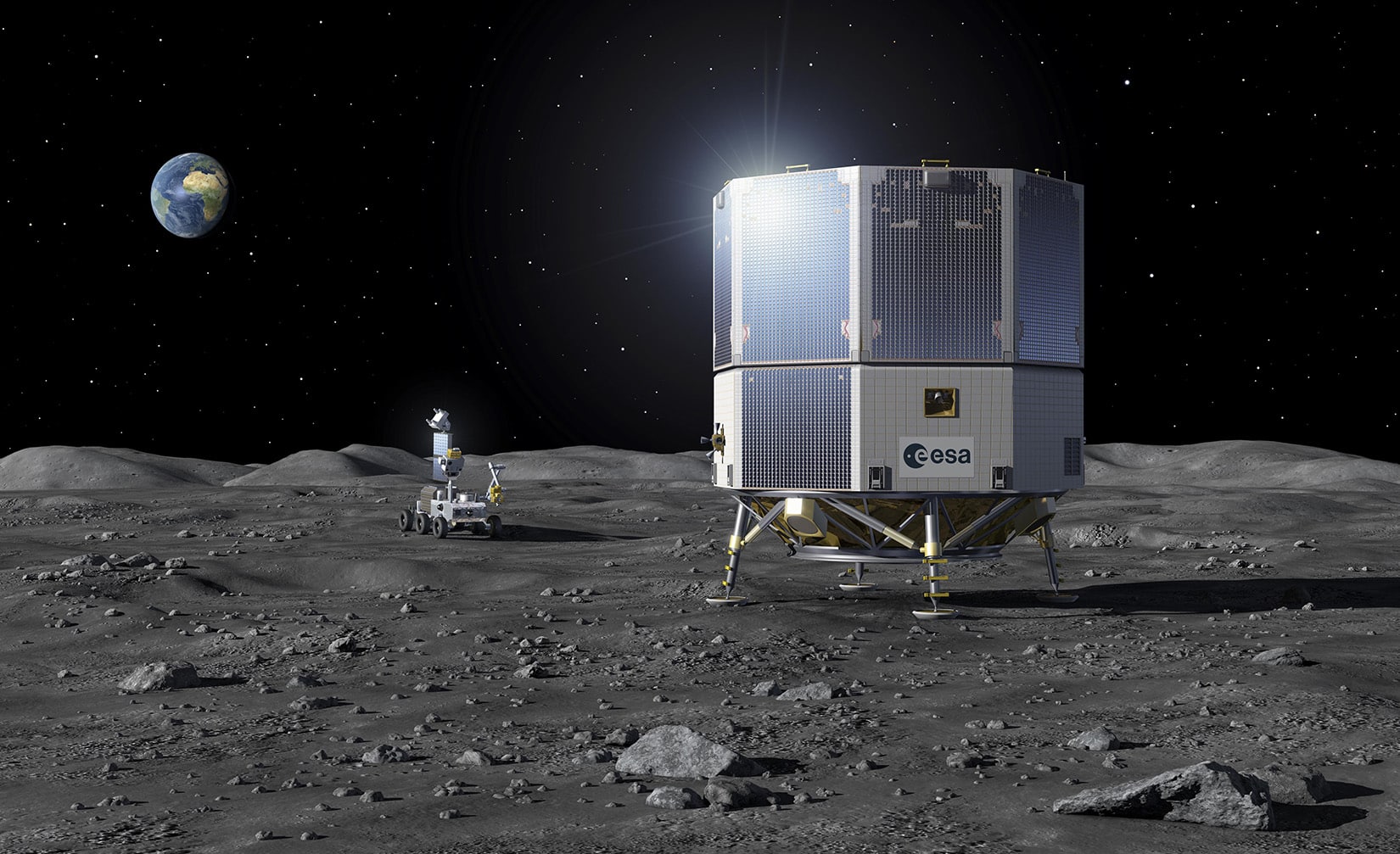
The Argonaut will be 6 m high and 4.5 m in diameter to carry 1.5 t of equipment to the Moon

© ESA

The Role of Argonaut in the Artemis Program

An International Collaboration and European Ambitions

Argonaut is a major contribution from Europe to NASA’s Artemis program. This program aims to establish a lasting human presence on the Moon. ESA is participating in this program by providing essential elements such as modules for the future lunar space station and the service module for the Orion spacecraft. The Argonaut lander is a key element in ensuring the necessary logistics for these missions. ” This first European lunar lander demonstrates ESA’s commitment to advancing our industrial capabilities in deep space exploration ,” says Daniel Neuenschwander, ESA’s Director of Human and Robotic Exploration. “Argonaut will allow Europe to contribute significantly to international partnerships, while paving the way for a lasting human presence on the Moon. Europe is on its way to the Moon and has laid the foundations for European autonomy in exploration.” On January 30, Thales Alenia Space was tasked with leading a consortium of aerospace industries to create this 4.5 m diameter and 6 m high spacecraft, roughly the size of a lunar module from the Apollo missions. The contract is worth 900 million euros with a target for 2030. The first operational launch, named ArgoNET, is scheduled for 2031, using an Ariane 6 launcher.

The Capabilities of Argonaut

A Versatile Lander for Lunar Exploration

Argonaut will have a launch mass of 10 tons. It is designed to be a versatile lander, capable of adapting to various lunar missions. It will be able to transport 1.5 tons of equipment. It should allow delivering freight for astronauts, deploying rovers, serving as a platform for technology demonstrations, or even supporting the exploitation of lunar resources. The lander can also accommodate a telescope or a power station. It is designed to last five years on the surface of the Moon and therefore withstand the harsh lunar conditions. According to Hervé Derrey, CEO of Thales Alenia Space, ” this new element of the Artemis program will facilitate long-term human lunar exploration missions and will be crucial to strengthening European autonomy in lunar exploration “.

The Three Stages of Argonaut

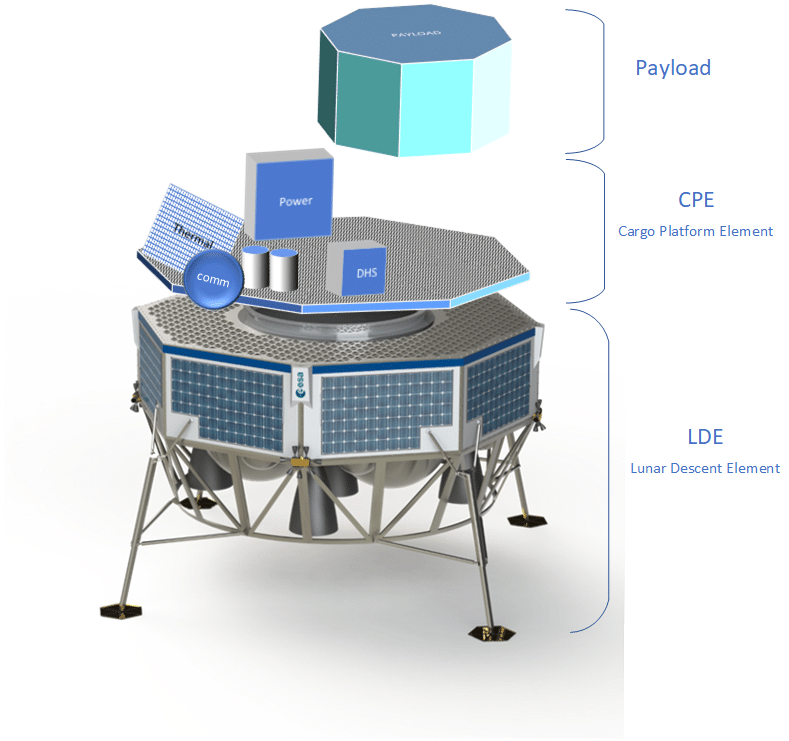
The Argonaut mission is based on three main elements: the Lunar Descent Element (LDE), the payload, and the loading platform. The descent module, developed by Thales Alenia Space, ensures the transport and landing of the spacecraft on the Moon. The loading platform serves as an interface between the lander and the payload, allowing to accommodate various equipment and scientific instruments. The Argonaut will consist of three elements. The descent module (LDE), a platform (CPE) to store the payloads located at the top of the lander.

The Argonaut will consist of three elements: the descent module (LDE), a platform (CPE) to store the payloads located at the very top of the lander.

© ESA

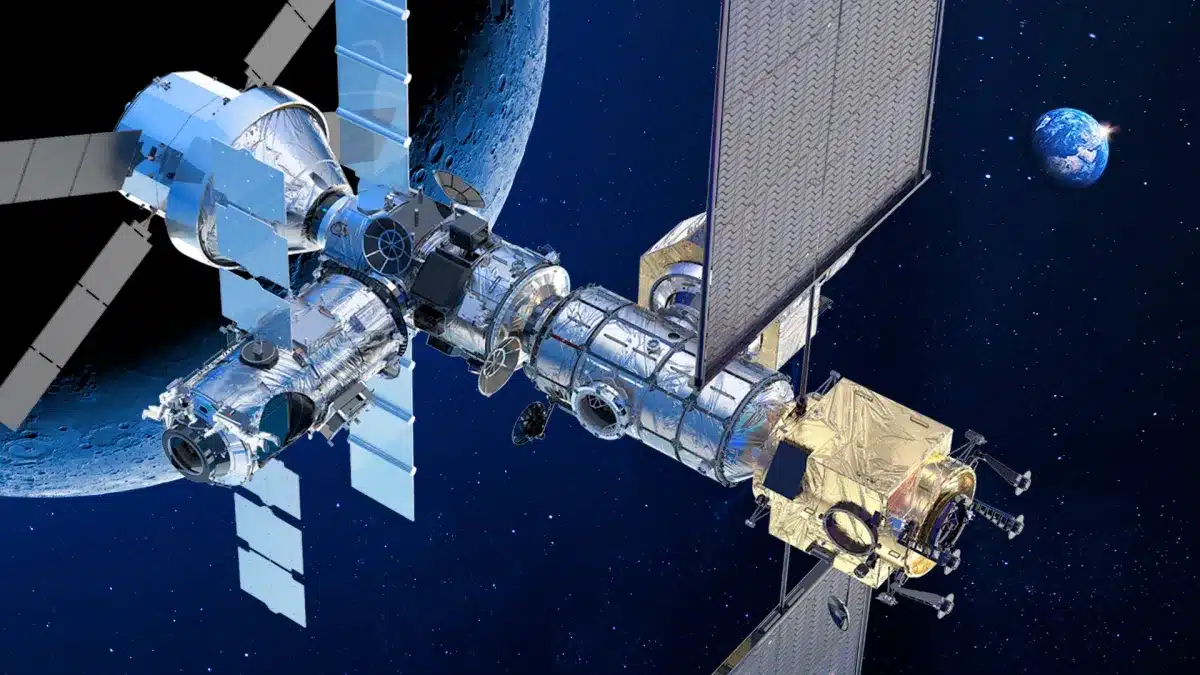
The airlock module, delivered by the United Arab Emirates and designed by Thales, should enable astronauts to carry out spacewalks.

© Thales Alenia Space/Briot

And the Gateway?

Thales Alenia Space has just signed a contract with the United Arab Emirates for the design of the airlock module of the future lunar station

With Argonaut, Thales Alenia Space will be present on the Moon, but the firm will also be around it. Already designers of the Euro-Japanese I-HAB habitation module, the European ESPRIT module and the shell of the HALO module for which Thales is a subcontractor of Northrop Grumman, the firm has just been entrusted with another element of the Lunar Gateway. Thales has indeed won a contract to build an airlock module for the lunar space station which should be placed in orbit around the Moon. It is conceived, in the current architecture of the Artemis program, as a starting point for missions to the lunar surface. This airlock is a contribution from the United Arab Emirates. The delivery of this airlock would offer them a place on a future Artemis mission to the Gateway. The module will allow astronauts to perform spacewalks as well as deploy and retrieve scientific payloads outside the station. It should also include an additional docking port for capsules. It is scheduled to be launched during the Artemis VI mission, no earlier than 2030. However, the plans for the Gateway and the Artemis missions are uncertain. The new Trump administration intends to revise them to reduce costs, and some fear a cancellation of this element of the Artemis program. Already, the Artemis III mission plans a lunar landing without using the Gateway. The Orion spacecraft will dock directly to the Starship lunar landing module.

Related articles