





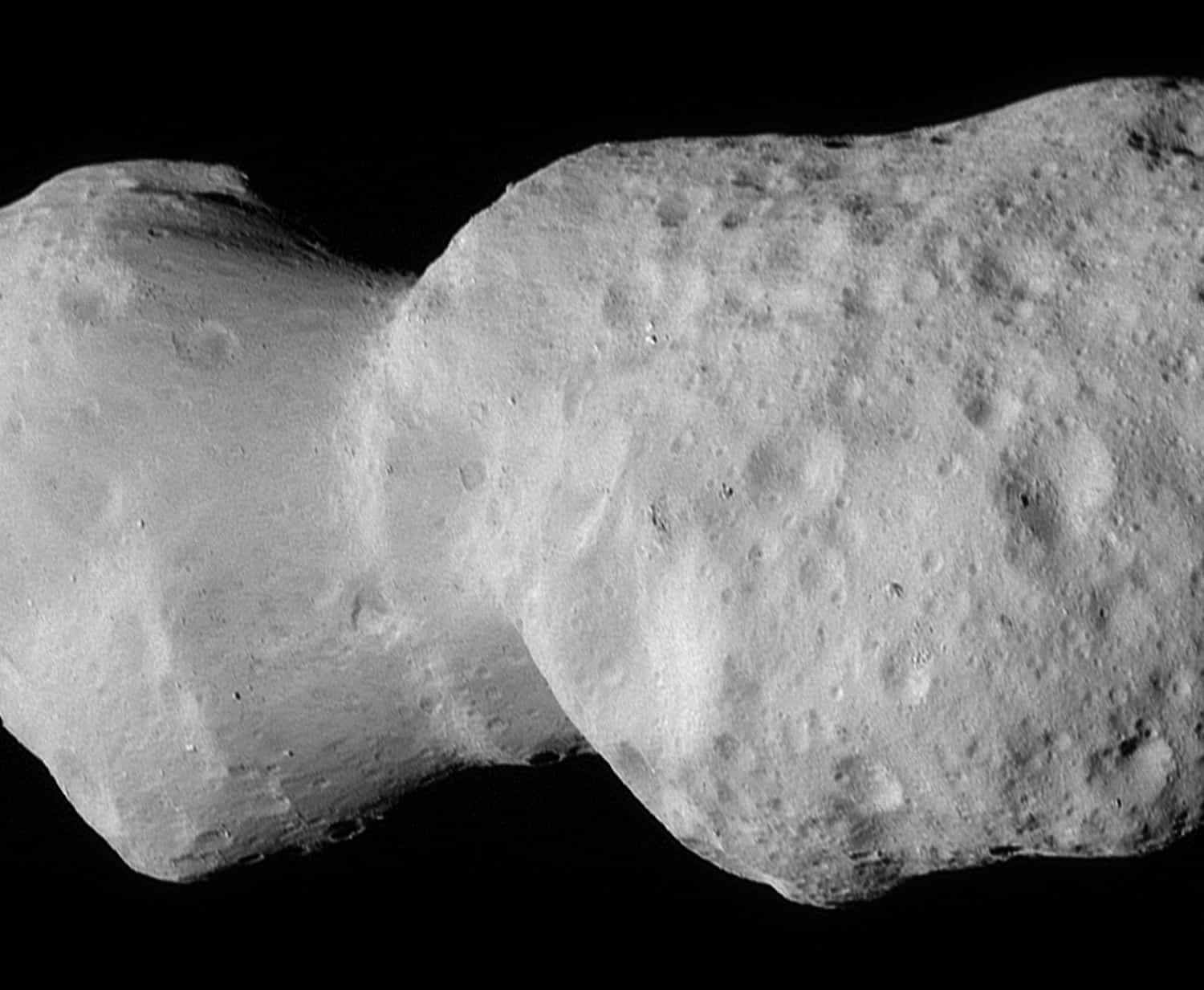
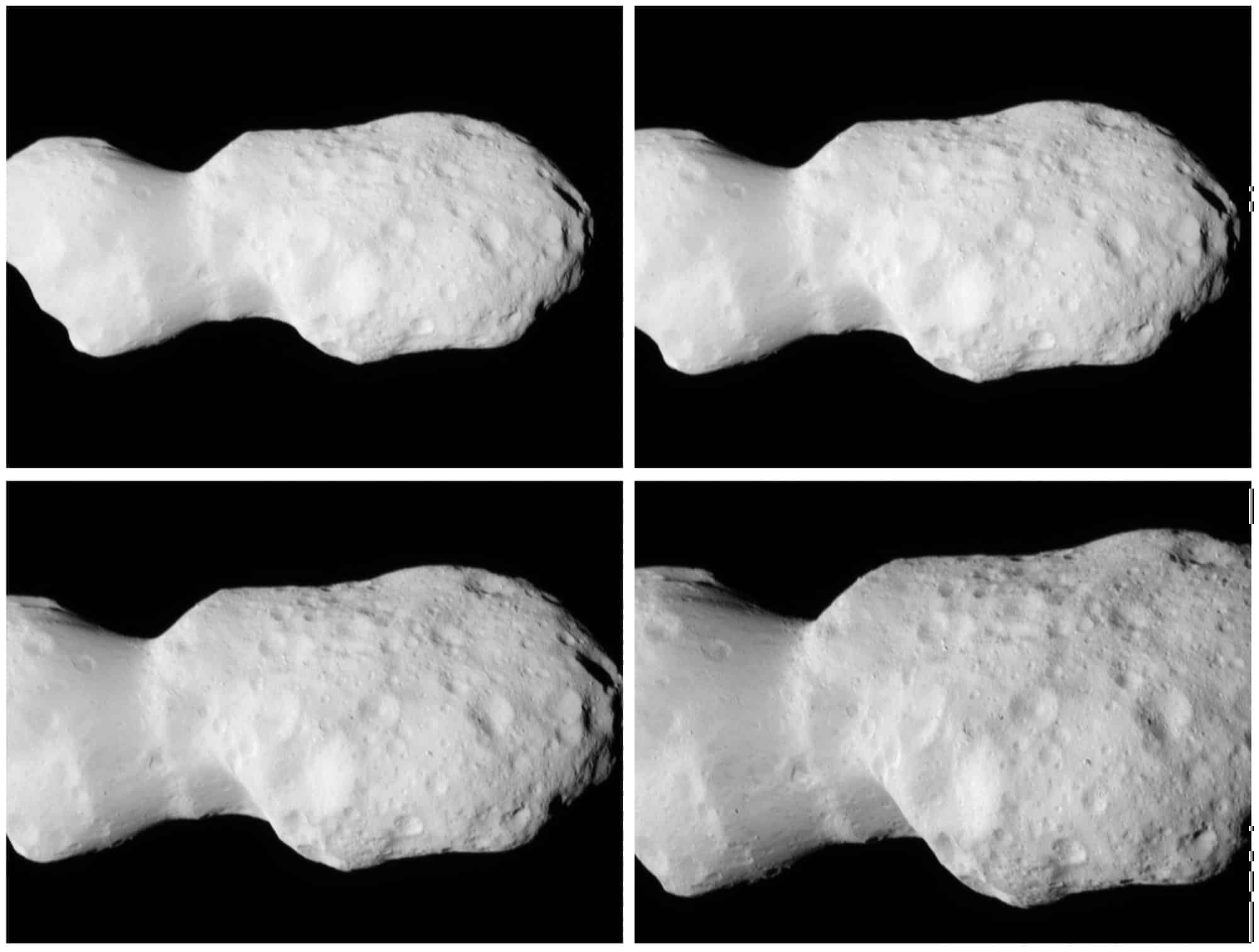

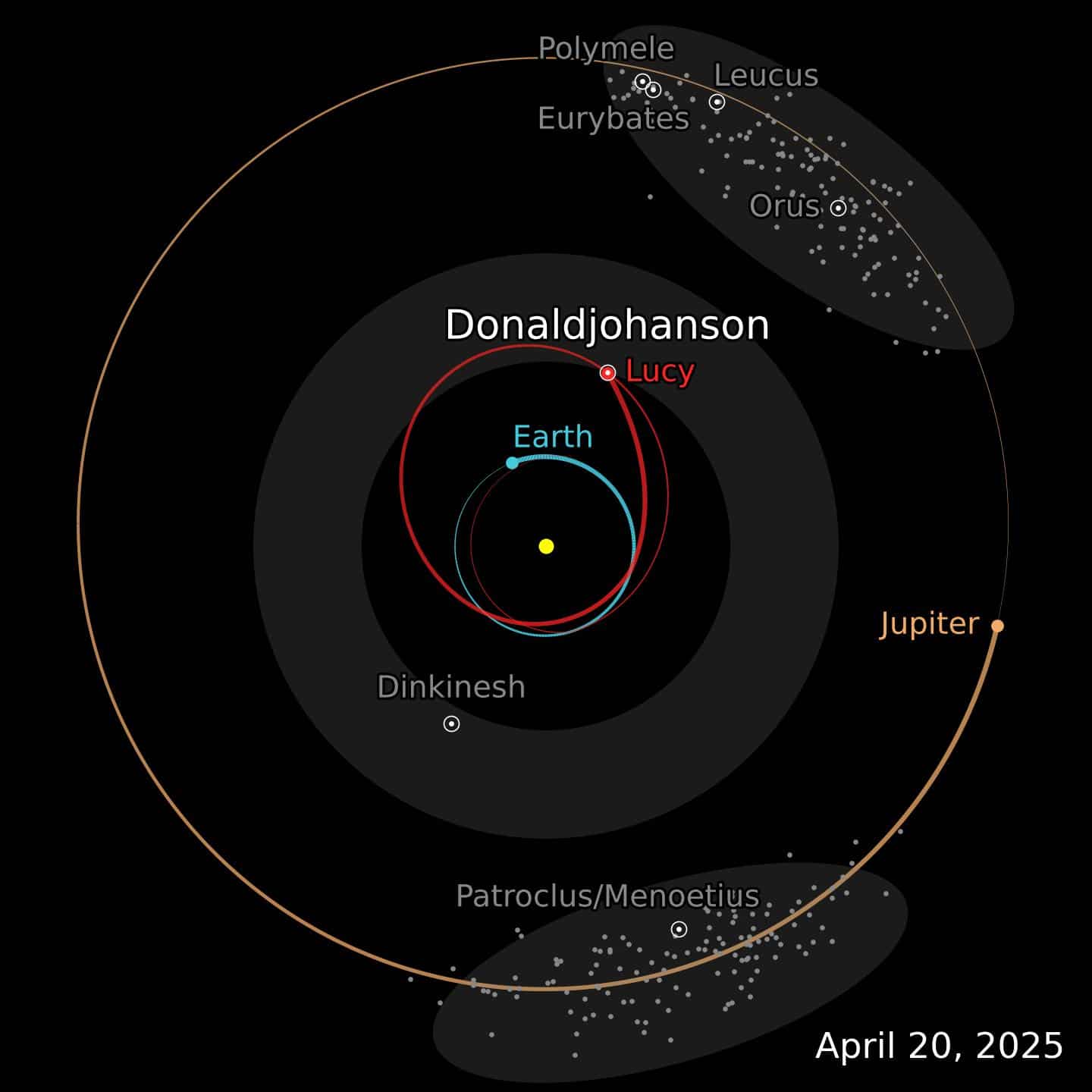
The Lucy probe’s flyby trajectory (52246) for Donaldjohanson. The journey has been simplified here, as NASA’s spacecraft previously flew by the asteroid Dinkinesh in 2023 (also shown). The diagram also shows the locations of Jupiter’s Trojan asteroids, six of which are the mission’s primary multiple destinations. The first Trojan to be visited will be Eurybates (top) in August 2027.
© NASA/Goddard/SwRI/ASU
Lucy and Donald Johanson
This encounter between Lucy and this asteroid allows us to revisit the origin of the name given to this mission . Asteroids being witnesses to the past of our Solar System, the idea is that the probe explores “fossils” of the formation of the planets . The name Lucy for the mission and the probe is therefore a deliberate nod to a famous Australopithecus fossil found in Ethiopia in 1974 by paleoanthropologists Yves Coppens and Donald Johanson with geologists Maurice Taieb and Jon Kalb. The skeleton of the hominid was in fact given the nickname Lucy, because the team was listening to the Beatles song Lucy in the Sky with Diamonds while working on their discovery. As for the asteroid (52246) Donaldjohanson, it obviously pays homage to Donald Johanson (born in 1943). The naming was officially approved in 2015 by the Minor Planet Center (it is allowed to do this with living people for asteroids).
So, on April 20, the Lucy probe, which is a nod to the famous fossil, flew by an asteroid named after one of its discoverers! But we can go further. The first asteroid flown by the Lucy probe in 2023 was 452830 (Dinkinesh) . Dinkinesh means ” you are wonderful ” in Amharic, the most widely spoken language in Ethiopia where the Lucy fossil was found.



