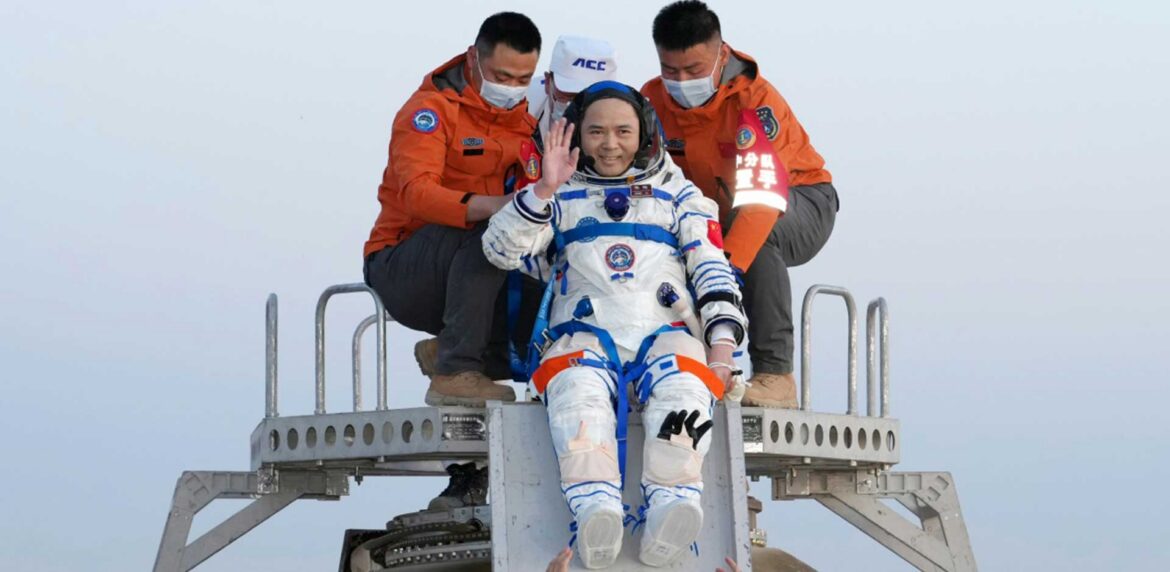

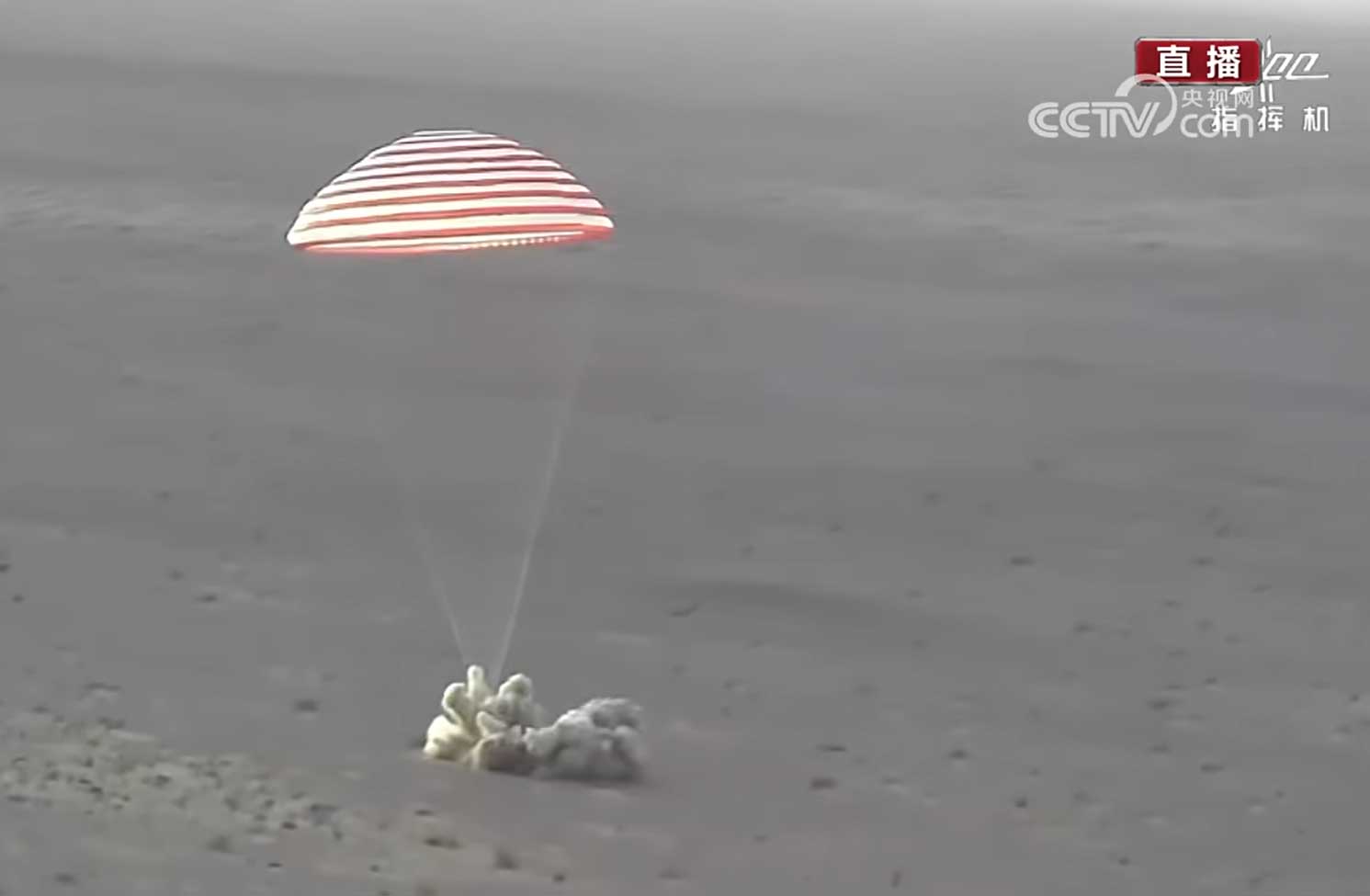
The capsule touched down at 12:11 UTC.
© CCTV
A return aboard the Shenzhou 22 vessel
A capsule exchange to ensure crew safety
Although they arrived at the station last October aboard Shenzhou 21 , mission commander Zhang Lu, Wu Fei, and Zhang Hongzhang made their descent aboard the Shenzhou 22 spacecraft . This unusual configuration resulted from a space debris impact that damaged the window of the Shenzhou 20 capsule last November. Chinese space authorities deemed the damaged vehicle too risky for a crewed flight, so the Shenzhou 20 crew used the Shenzhou 21 spacecraft for their return to Earth , temporarily leaving the newcomers without transportation. To resolve this situation, China launched the uncrewed Shenzhou 22 spacecraft on November 24 to serve as a backup vehicle. Shenzhou 20 then returned to Earth, also uncrewed , in January. During their 210 days in space, they performed three spacewalks and numerous scientific experiments in microgravity. The crew was relieved by the members of Shenzhou 23 . It includes the first representative from the Hong Kong Special Administrative Region, a symbol of the country’s unity. One of the three astronauts is also expected to make the first spaceflight of more than a year for a Chinese astronaut.