
• Crewed Flights

ISS: Crew-11 will return earlier due to a medical issue

Published on 08 January 2026

One of the members of Expedition 74 to the International Space Station (ISS) is experiencing a health problem. Although his condition is considered stable, NASA has opted for an early return of the four Crew-11 astronauts.

ISS: Crew-11 will return earlier due to a medical issue

During their training, astronauts receive first aid instruction and can even perform some simple medical procedures . However, in case of an emergency, returning to Earth always remains a possibility.

NASA OPTS FOR THE RETURN OF CREW-11

UPDATED JANUARY 9

NASA ultimately took less than the announced 24 hours to provide an update on the medical situation aboard the ISS (see below). From NASA headquarters in Washington, during a press conference broadcast live , Administrator Jared Isaacman confirmed that one of the four Crew-11 astronauts (without specifying their gender, as English allows for this exclusion) was experiencing a medical condition requiring an early return. Consequently, the entire crew of the Crew Dragon Endeavour capsule is returning.

AN ACCELERATED RETURN, BUT NOT AN EMERGENCY ONE.

Jared Isaacman, along with Associate Administrator Amit Kshatriya and Dr. James Polk (NASA’s Chief Medical Officer), explained the rationale for the return while respecting medical confidentiality. Neither the astronaut’s identity nor their medical condition was disclosed .
Dr. Polk explained that the astronaut’s condition was not related to ISS operations (it was not an injury) and that their condition was deemed stable. Both Polk and Isaacman emphasized that the situation is not considered a medical emergency . However, it was determined that the health issue would be better assessed and treated on Earth. Therefore, NASA is referring to this as an early return, not an emergency one . The return of the SpaceX Crew Dragon capsule will follow the standard procedure, and no additional measures are planned.
Jared Isaacman clarified that the planning for this departure from the ISS earlier than planned (it was supposed to be at the end of February after the arrival of Crew-12) was under consideration and that dates could be communicated within 48 hours .

AN EARLIER DEPARTURE FOR SOPHIE ADENOT?

Thanks to the seat-swap agreement between NASA and Roscosmos (see below), the American agency will have one astronaut aboard the ISS (Chris Williams, who arrived on Soyuz MS-28). However, an accelerated arrival of the Crew-12 crew is being considered to minimize the time the ISS hosts only three astronauts.
The Crew-12 crew includes American Jessica Meir (commander), her compatriot Jack Hathaway (pilot), French astronaut Sophie Adenot from the ESA, and Russian astronaut Andrey Fedyaev. This means that Sophie Adenot could depart for the ISS before February 15. When a journalist asked Jared Isaacman if this acceleration could interfere with the launch of the Artemis II manned lunar mission given the February launch window, he remained cautious, explaining that this was being studied and that he did not foresee any operational conflict at the moment. The NASA administrator has repeatedly praised the professionalism of the astronauts and ground crews in handling the situation.

A spacewalk HAS BEEN CANCELLED.

For several days, NASA had been preparing to conduct the first spacewalk of 2026 from the International Space Station on Thursday, January 8. A live video stream on YouTube had even been announced. The two astronauts selected for the spacewalk were Expedition 74 commander Mike Fincke and Zena Cardman . This American duo arrived at the ISS in early August 2025 aboard the Crew Dragon Endeavour capsule (Crew-11 flight) with Japanese astronaut Kimiya Yui and Russian astronaut Oleg Platonov.

But as early as Wednesday, January 7, NASA clarified that this spacewalk was postponed to a later date , explaining that it was monitoring “a medical issue concerning a crew member that occurred Wednesday afternoon .”

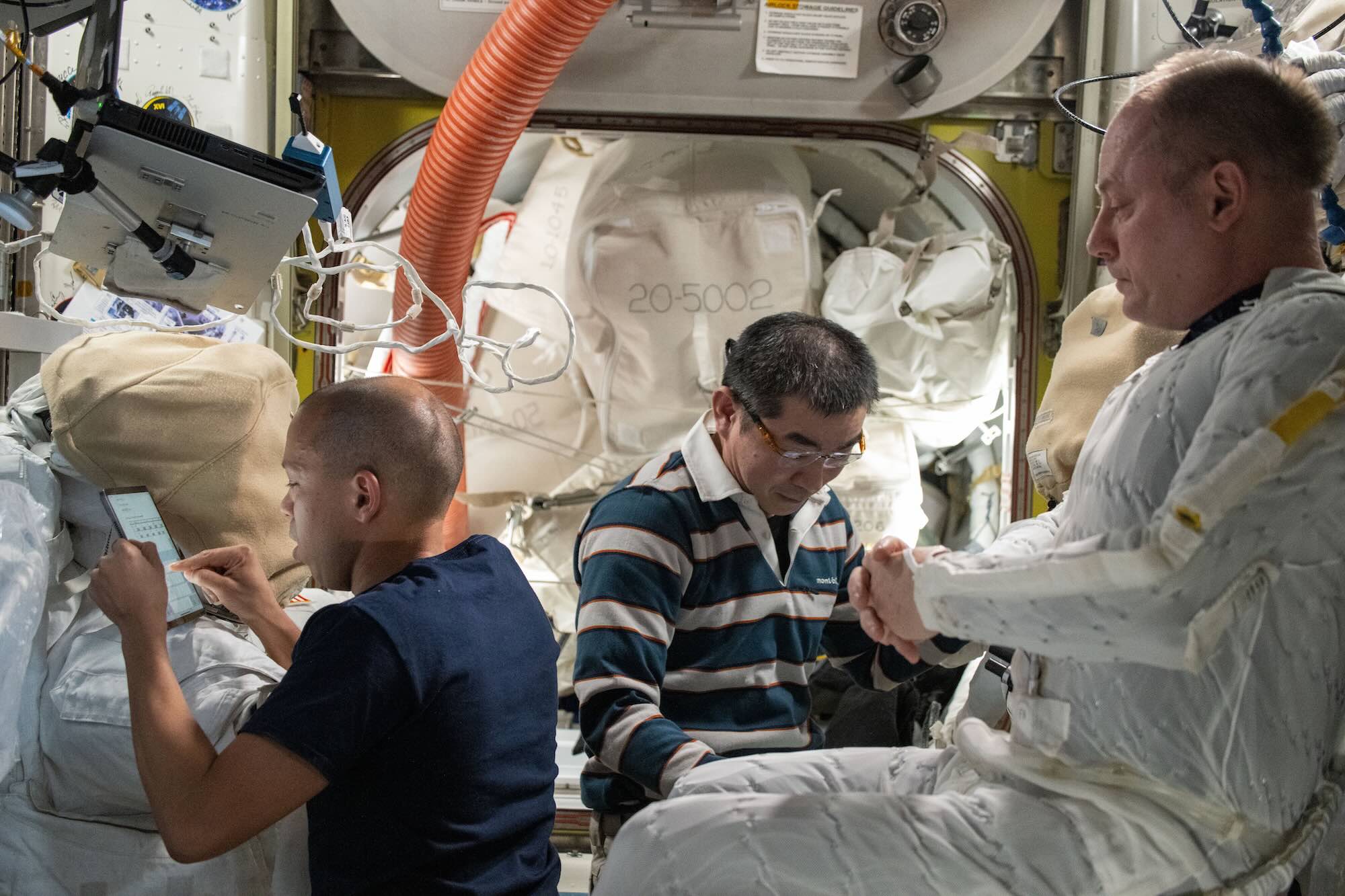
Preparations for the spacewalk scheduled for January 8 (photo taken on December 30).

From left to right: Chris Williams (arrived on a Soyuz flight), Kimiya Yui, and Mike Fincke.
© NASA

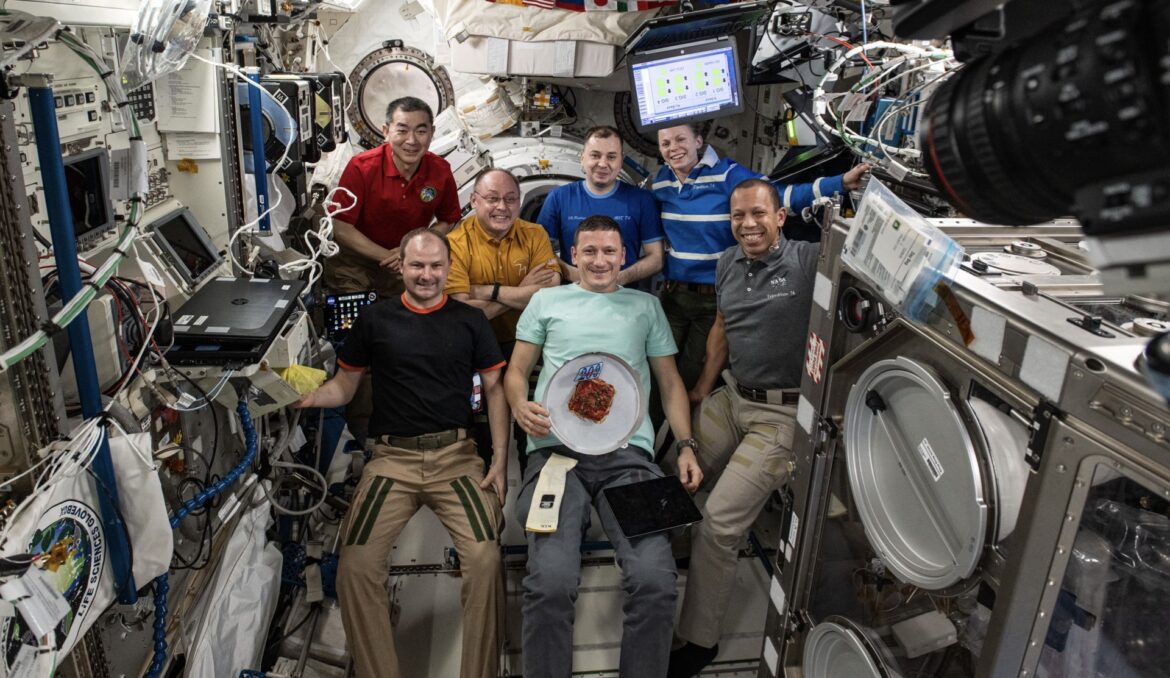
The current crew of the ISS (Expedition 74). Front row, from left to right: Sergei Mikaev, Sergey Kud-Sverchkov, and Chris Williams (arrived on Soyuz MS-28 in late November 2025). Back row: Kimiya Yui, Mike Fincke, Oleg Platonov, and Zena Cardman (arrived on Crew-11 in early August 2025).
© NASA

AN EARLY RETURN OF CREW-11?

Adhering to its policy of medical confidentiality, NASA has not revealed the astronaut’s name or the medical condition in question . However, a new statement from the agency specifies that if the affected individual is in stable condition, an early return from Crew-11 is not ruled out : ” Conducting our missions safely remains our top priority, and we are actively exploring all options, including the possibility of aborting the Crew-11 mission .”
This clarification seems to indicate that the ill astronaut is one of the four crew members from the Crew-11 flight that arrived in early August (Fincke, Cardman, Yui, and Platonov). Indeed, as a matter of principle, an early return for a medical emergency is carried out with all the crew members of the spacecraft involved. This is easily understood, because otherwise, those who remained would find themselves aboard the ISS with no possibility of returning to Earth in the event of a serious malfunction of the orbital complex.

This early return was only a possibility on January 8, with NASA concluding its statement with: ” We will keep you informed in the next 24 hours .”
Since then, a press conference held on January 8 at 5 p.m. Washington time (11 p.m. in France) confirmed that this return option had been chosen.

THE BENEFITS OF THE SEAT EXCHANGE BETWEEN NASA AND ROSCOSMOS

This situation highlights the value of the seat exchange between the American and Russian space agencies. Under this agreement, one of the four seats on SpaceX’s Crew Dragon capsules is reserved for a Russian astronaut, while conversely, one of the three seats on Roscosmos’ Soyuz spacecraft accommodates a NASA astronaut . Thus, in the event of an early return due to a medical emergency for one of the spacecraft, NASA and Roscosmos will have at least one of their representatives on board the ISS. Since this exchange takes place without monetary compensation, it has not been affected by the sanctions related to the war in Ukraine.

Related articles