
• Moon

Donald Trump sets the course for American space exploration by 2030

Published on 07 January 2026

The "Ensuring American Space Superiority" decree signed by the American President sets the course: a return to the Moon in 2028 and a permanent base in 2030. This plan relies on nuclear energy, orbital defense and a reform of NASA's budgets.

Donald Trump sets the course for American space exploration by 2030

Will things finally become clearer? Donald Trump took nearly a year to appoint an administrator for NASA . Furthermore, announcements of budget cuts cast a long shadow of uncertainty over American space programs. On December 18, 2025, the White House finally published an executive order entitled “Ensuring American Space Superiority .” This document outlines the strategic priorities of the United States for the coming years, notably confirming the goal of returning astronauts to the Moon by 2028. The text also sets the objective of a sustainable lunar presence , strengthening national security in orbit, and reforming the budgetary management of NASA programs , while encouraging greater participation from the private sector .

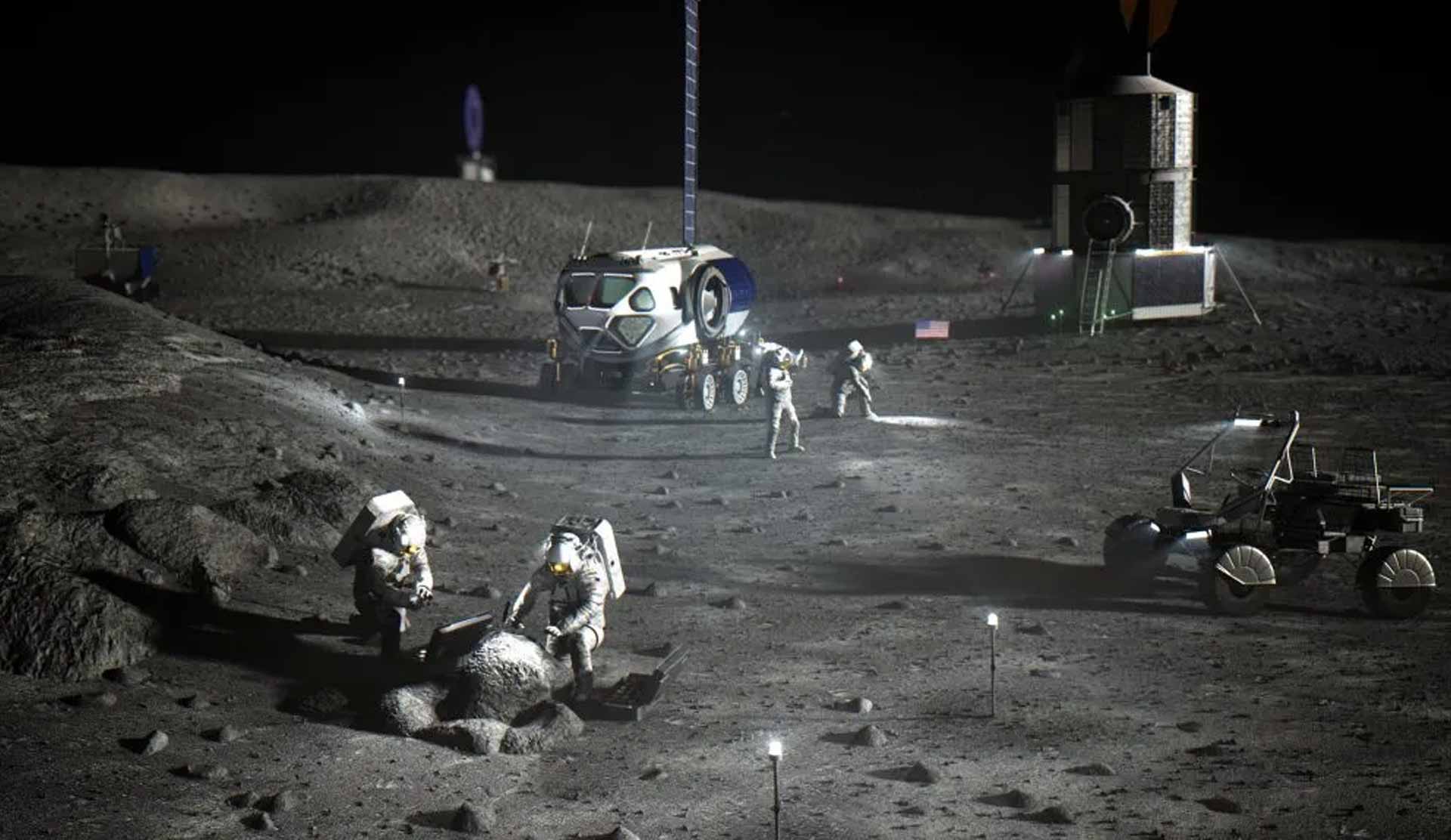
The decree provides for the installation of a lunar base by 2030.

©NASA


A reaffirmed timeline for lunar exploration

Towards a lasting presence on the lunar surface

The executive order sets two major milestones: the return of American crews to the Moon in 2028 via the Artemis program , followed by the establishment of the first elements of a permanent base by 2030. During his Senate confirmation hearing , Jared Isaacman emphasized the urgency of returning to the Moon before China . The choice of 2028 as the target date indicates that the United States is aware that the Chinese might want to set foot on the Moon as early as 2029 to celebrate the 80th anniversary of the Revolution. Regarding the lunar base, it is presented as an essential stepping stone before considering more distant and complex expeditions to Mars . According to the presidential text, this strategy aims to ” extend the reach of human discovery ” and lay the groundwork for economic development on the Moon. There is never any mention of the Gateway  space station that Donald Trump wanted to eliminate , but there is talk of developing infrastructure around the Moon and that the return to the Moon will be via the Artemis program, of which the Gateway is one of the pillars.

The introduction of space-based nuclear energy

To ensure the operation of these facilities, the administration plans to deploy nuclear reactors in orbit and on the surface of the Moon . The plan calls for the launch of a surface reactor by 2030. This technology is considered necessary to provide a constant energy source. This option would also allow for greater independence from sunlight and avoid the need to locate the reactors as close as possible to the south pole , where some crater rims are always illuminated.

Defense and restructuring of the orbital economy

Enhanced security in orbit

The security component of the decree calls for the development, by 2028, of next-generation missile defense technologies as part of the “Iron Dome for America” ​​project. The idea is to equip the country with a surveillance and protection system capable of detecting threats in deep space , much like an air traffic control radar that would cover an area far larger than the Earth’s atmosphere . The plan also aims to improve the detection of potential nuclear weapons placed in orbit by adversary powers.

The transition to private space stations


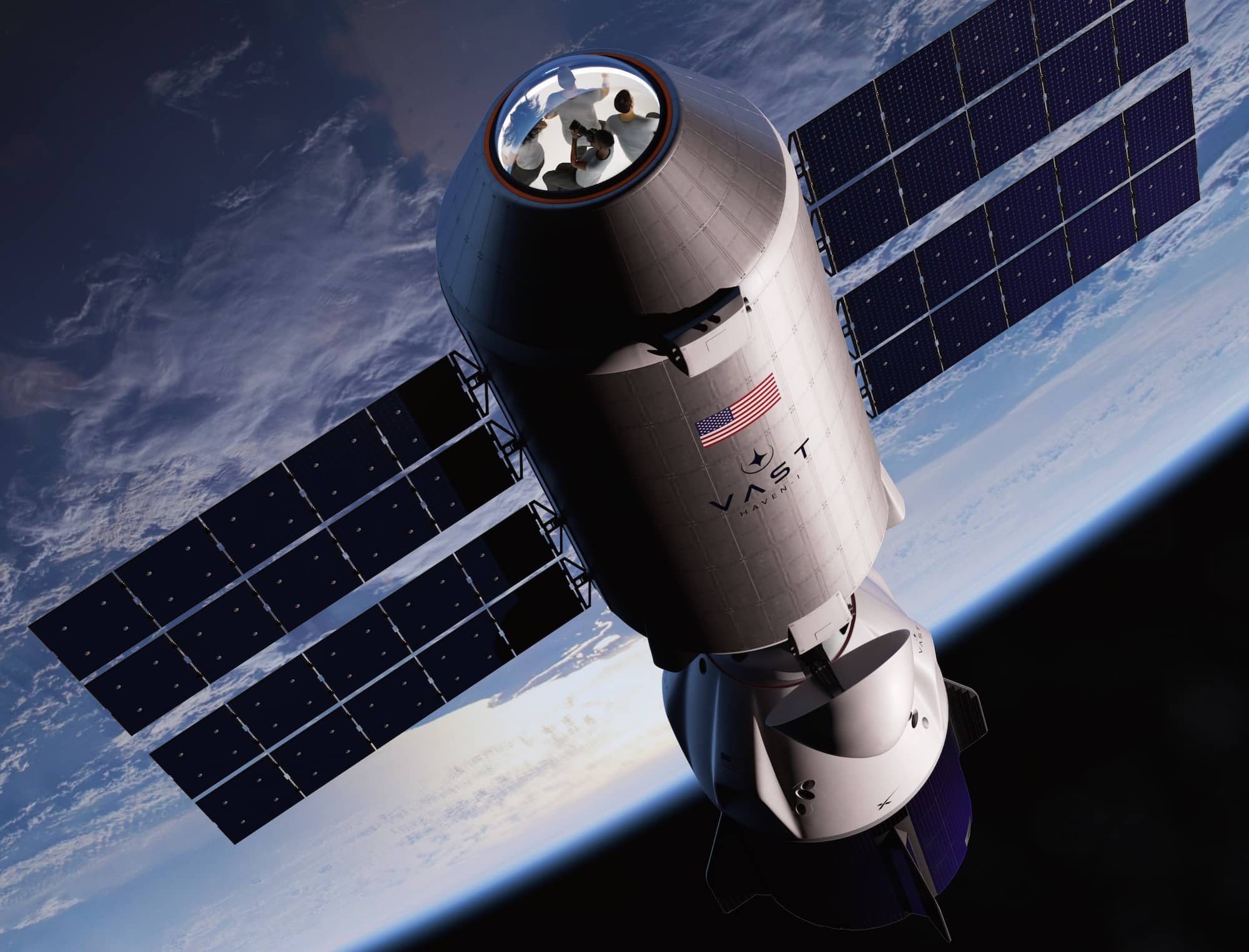
By 2030, the United States plans to replace the International Space Station with facilities managed by the private sector. Several companies, such as Axiom Space, Vast , Blue Origin , and even Airbus, are already working on station projects that could accommodate astronauts. The idea is to retain astronauts but delegate the infrastructure to the private sector. This is simply a variation on the model used for cargo and astronaut transport to the ISS. The same system has also been implemented for transporting equipment to the Moon with the CLPS program. The government hopes to attract an additional $50 billion in private investment to the space sector by 2028 .

The first module of Vast’s Haven-1 space station could be launched as early as May 2026.

© Vast


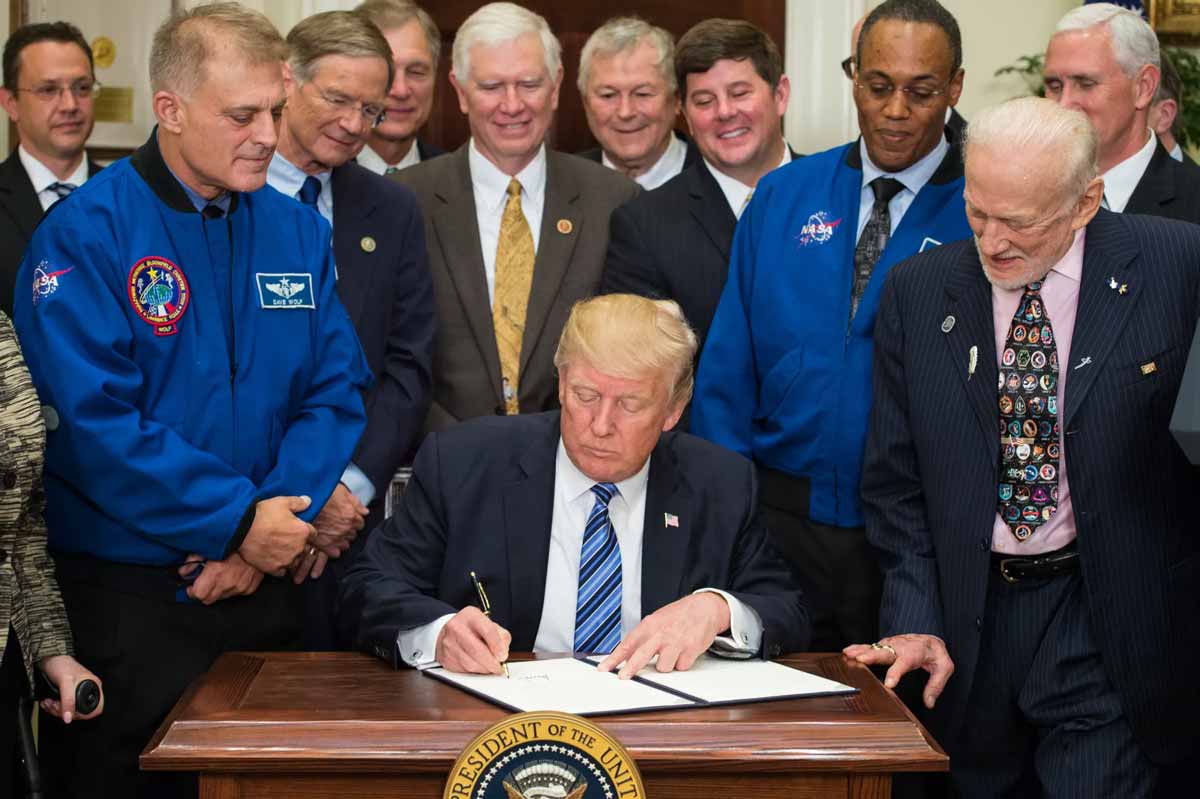
The National Space Council was recreated by Donald Trump in 2017 and then extended by Joe Biden in 2021.

© White House


Change in spatial governance

The National Space Council is disappearing

A significant portion of the executive order concerns financial efficiency. Jared Isaacman, the new NASA administrator , is tasked with identifying, within 90 days, programs that are more than 30% behind schedule or more than 30% over budget . The goal is to streamline procurement processes by prioritizing existing commercial solutions rather than developing costly, custom technologies. Finally, the order revokes a 2021 decision regarding the National Space Council . This council had been reinstated in 2017 by Donald Trump during his first term and was retained by Joe Biden . This could change how space-related decisions are coordinated at the highest levels of government. Traditionally, the Vice President is in charge of space policy. Donald Trump is shifting this responsibility to the Oval Office. Indeed, the responsibility for implementing this policy now rests with the Assistant to the President for Science and Technology (APST, Michael Kratsios, to the right of Donald Trump in the front-page image), who must coordinate the efforts of the various agencies, including NASA and the Department of Commerce.

Related articles