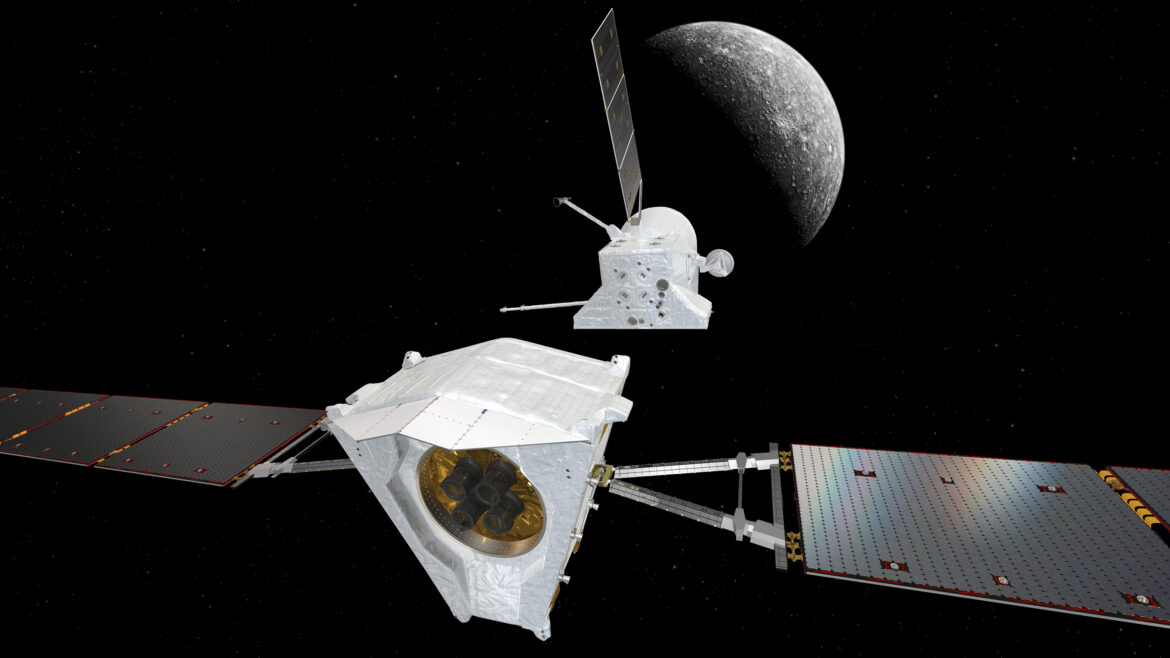

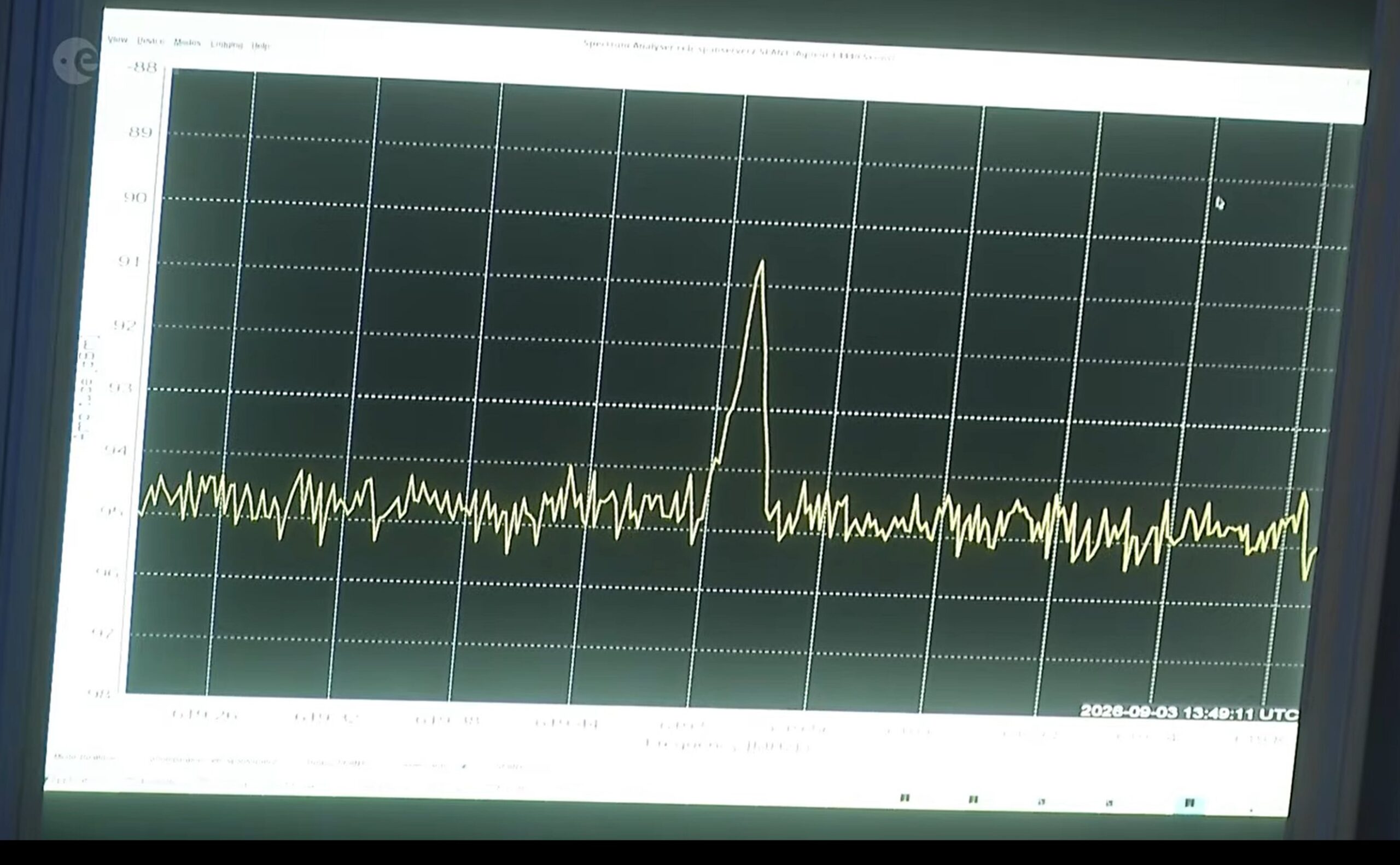
At 15:49 the antennas received confirmation of the separation of the MTM from the rest of the BepiColombo probe.
© ESA
The success of today’s maneuver and the acquisition of the signal
An autonomous separation executed to the second.
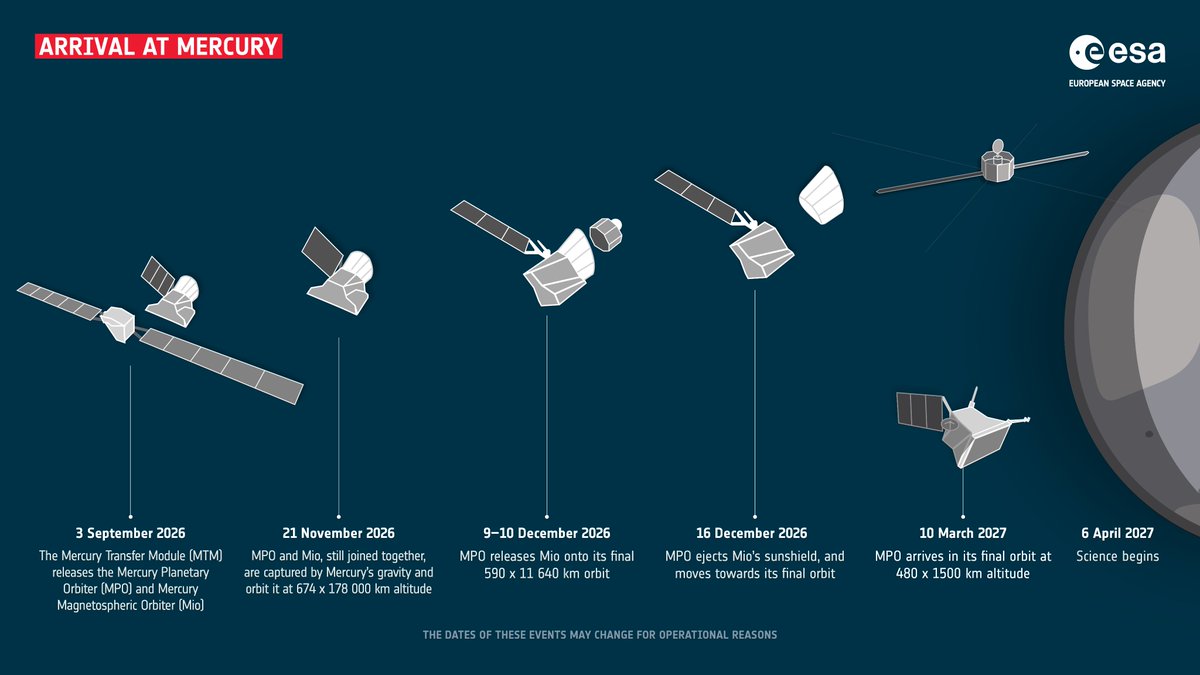
On Thursday, September 3, 2026, at 2:00 PM Paris time, the BepiColombo spacecraft autonomously initiated the separation of its Mercury Transfer Module (MTM) . Due to the immense distance of over 200 million kilometers separating the spacecraft from Earth, radio signals took approximately 11.5 minutes to reach Earth . The mechanical separation was achieved via non-explosive actuators. These released tensioned springs to gently push the module back at a relative speed of about 40 cm/s.
Relief and joy at the Darmstadt control center
After separation, the orbiter, now free from the MTM, temporarily switched to an automatic safety “safety mode” to orient its panels and point its communication antennas towards Earth . At 3:49 p.m., the Cebreros antenna in Spain and the Malargüe antenna in Argentina received a strong signal confirming the success of the operation . ” This is excellent news. I am extremely relieved, I am speechless. This is the best possible scenario: the telemetry arrived exactly when we expected it, and we can see from this data that the probe’s configuration is correct ,” reacted Elsa Montagnon, head of the ESA’s Mission Management and Science Operations Division, during the agency’s live broadcast. “ This means that the spacecraft has completed its reconfiguration as planned, that it is using its basic functions, that it has power and propulsion, that it was able to reorient itself, and that it is communicating with us.” “We have a mission, we have a probe. ” Enthusiasm shared by Bruno Sousa, head of operations and engineering at ESA. ” It’s a new mission that begins today ,” he assures.