
• Crewed Flights
  • Podcast Ici Occitanie

Air leak on the ISS: why did NASA order the crew to be confined?

Published on 08 June 2026

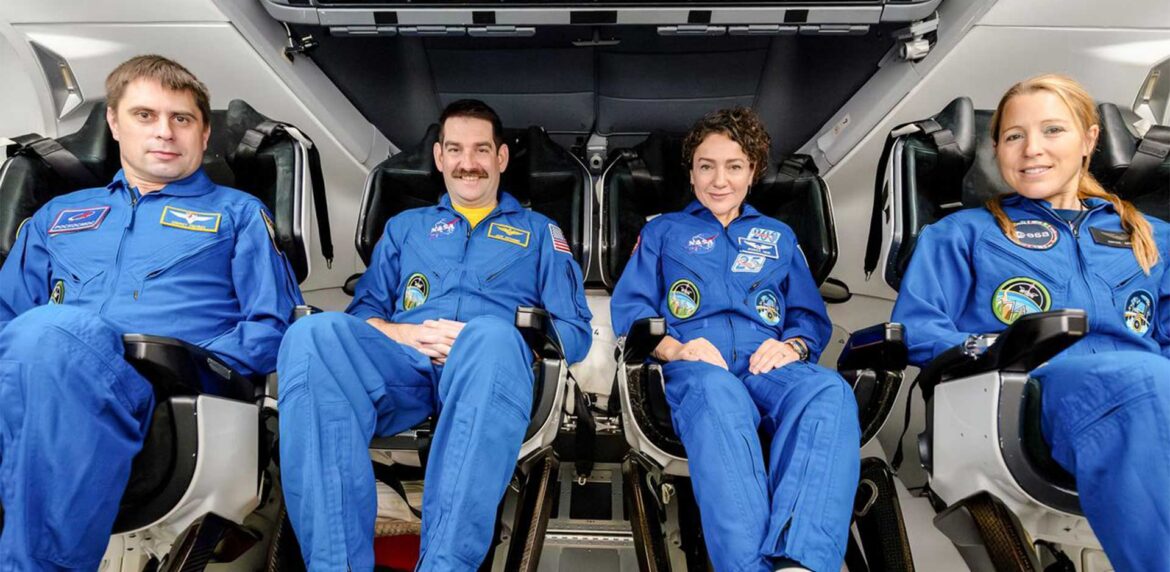
Following the Russians' decision to repair an air leak in the Zvezda module, NASA activated a containment protocol. The Crew-12 astronauts, along with American Chris Williams, took refuge in the Crew Dragon capsule for nearly two hours.

Air leak on the ISS: why did NASA order the crew to be confined?

On June 5, 2026, NASA ordered five crew members of the International Space Station to temporarily take refuge in SpaceX’s Crew Dragon spacecraft , docked to the Harmony module. This precautionary measure was triggered as two Russian cosmonauts prepared to repair a persistent air leak in the Zvezda module . Although the situation did not present an immediate danger, the delicate nature of the intervention necessitated this standard safety protocol.


iss054e047999~medium

On February 15, 2018, the Progress 69 cargo ship prepared to dock at the port of the Russian Zvezda module. Since the beginning of the ISS program, it has been used 68 times by Progress cargo ships, Soyuz spacecraft, and European ATV cargo ships.

© NASA / JAXA / Norishige Kanai

A precautionary measure

Two Russians were tasked with sealing the PrK

Safety management aboard the ISS relies on strict protocols, particularly during interventions on the station’s structure itself. On June 5, the activation of the “safe haven” procedure involved the four members of the Crew-12 mission , including French astronaut Sophie Adenot and American astronaut Chris Williams , who arrived last November aboard Soyuz MS-28. The intervention targeted the PrK transfer tunnel of the Russian Zvezda module . This tunnel provides access to the docked Progress or Soyuz spacecraft. Sixty-eight docking procedures have taken place there since the ISS’s inception. Currently, the Progress 95 cargo spacecraft has been docked there since April 28. This section has been affected by micro-cracks since 2019. Recently, the leakage rate has increased to approximately one kilogram of air per day. To address the problem, Roscosmos scheduled a structural repair involving the application of a hardening paste . This required, beforehand, cutting away a support structure to access the source of the leak. However, this method was deemed to present a “high risk” to the module’s structural integrity by NASA engineers. ” As a precautionary measure, NASA asked the four SpaceX Crew-12 crew members and NASA astronaut Chris Williams to adopt a high security posture in the Dragon spacecraft while the repair is underway ,” explained NASA spokesperson Bethany Stevens in a statement. Jessica Meir, Jack Hathaway, Sophie Adenot, Andrey Fedyayev, and Chris Williams then went to the Dragon capsule . The flight controller asked them not to immediately don their pressure suits. Ultimately, this confinement lasted less than two hours, as cosmonauts Sergey Kud-Sverchkov and Sergei Mikaev quickly suspended their work. The decision was made to further assess the causes of these micro-cracks. It is known that NASA and Roscosmos are not yet in agreement on this point. ” Given this development, NASA has ordered the crew members inside the Dragon spacecraft to end shelter-in-place procedures and resume planned operations aboard the International Space Station ,” concluded Bethany Stevens.

Crew confinement ordered 7 times

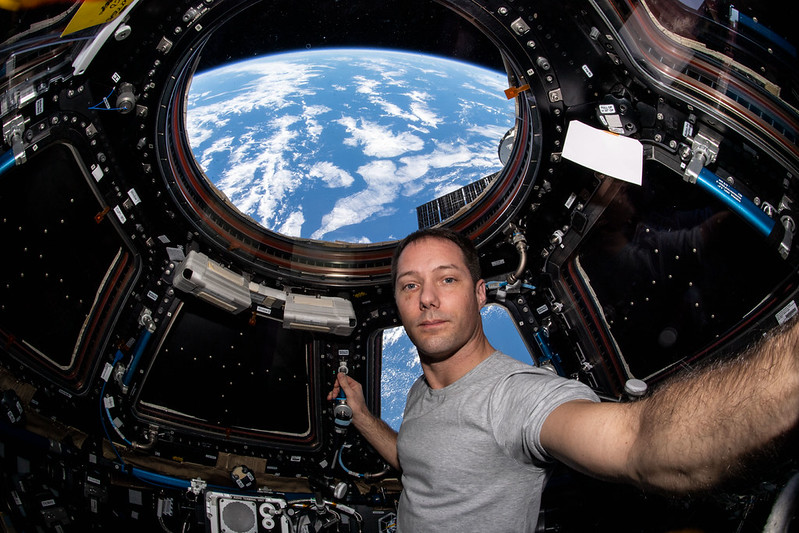
This procedure, called “Safe Haven,” has been ordered seven times on the ISS. Five times it was in response to a space debris alert . Debris threatened the integrity of the station’s modules. But in 2021, this procedure was triggered during the docking of the Nauka module . Thomas Pesquet, then commander of the International Space Station, recounts this episode in his book, My Life Without Gravity . From its launch on July 21, 2021, Nauka experienced a series of technical problems: propulsion failures, computer glitches, and, most importantly, a malfunction of the automatic rendezvous system. “ On launch day, the atmosphere on board was electric. For the first time since our arrival, we implemented a safe haven procedure ,” he writes. The Russians, meanwhile, continued their activities as normal. “ We closed the hatches of several modules to isolate the American segment from the Russian segment, in case the predicted collision punctured the station.” Everyone is ready to evacuate to their escape vehicle. Aki, Shane, Megan, and I float at the entrance of our Dragon capsule, lifeline straps at the ready, eyes glued to the screens. If the docking goes smoothly, a few hours later, an alarm sounds. Nauka’s thrusters have started firing continuously and uncontrollably, causing the entire space station to tilt . ” Through the Cupola windows, the sight is surreal: the Earth, which should be stationary beneath our feet, suddenly rushes past vertically, then disappears, replaced by the blackness of space, then reappears. The ISS, this giant the size of a football field, is rolling over, ” he recounts. The emergency lockdown is immediately reinstated, the astronauts isolating themselves once again while waiting for physicists and engineers on the ground to regain control. “ We reintroduced emergency procedures, isolated ourselves, and waited for Nauka’s fuel to run out. When its tanks were finally empty, the engines of the Russian segment and a Progress cargo ship managed to counteract the movement. We had rotated 540 degrees. That evening, as I went to bed, I looked out the window and thought to myself that space knows how to remind us of our limitations when we start to feel too safe. ”

Thomas Pesquet dans la Cupola, quelques jours après l’amarrage de Nauka. « À travers les vitres de la Cupola, le spectacle est irréel : la Terre, qui devrait être fixe sous nos pieds, se met à défiler à toute vitesse à la verticale, puis disparaît, remplacée par le noir de l’espace, », explique-t-il, dans son livre Ma Vie sans Gravité à propos de l’événement du 21 juillet 2021.

© NASA / ESA / T.Pesquet

Related articles