• Astronomy

Webb scans the atmosphere of the exoplanet TRAPPIST-1d

Published on 14 August 2025

Similar in size to Earth, the exoplanet TRAPPIST-1d orbits a red dwarf 40 light-years away. However, the James Webb Space Telescope has not detected an atmosphere similar to ours.

Webb scans the atmosphere of the exoplanet TRAPPIST-1d

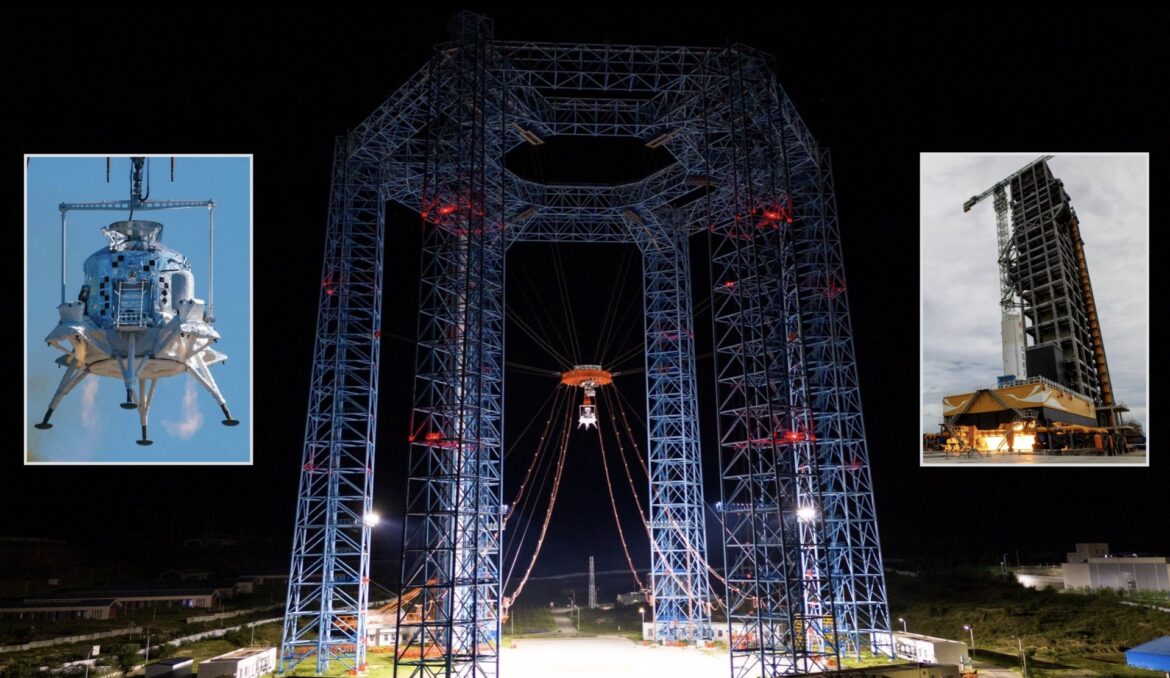
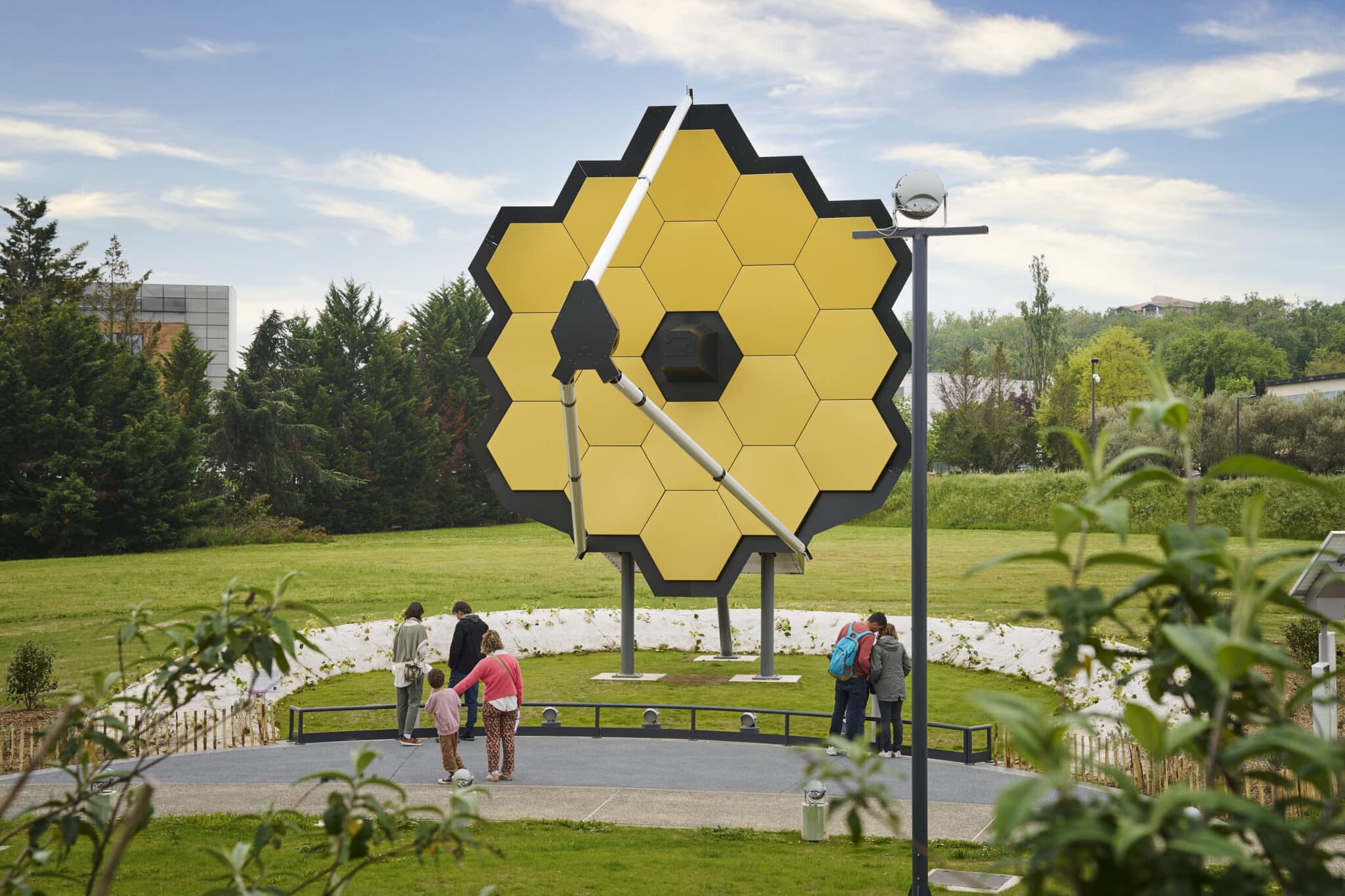
A full-size model of the Webb’s 6.5-meter mirror is on display in the gardens of the Cité de l’Espace in Toulouse. This gives a sense of the sheer size of this extraordinary optic, made up of 18 hexagonal mirrors.
© Cité de l’Espace/Pierre Carton

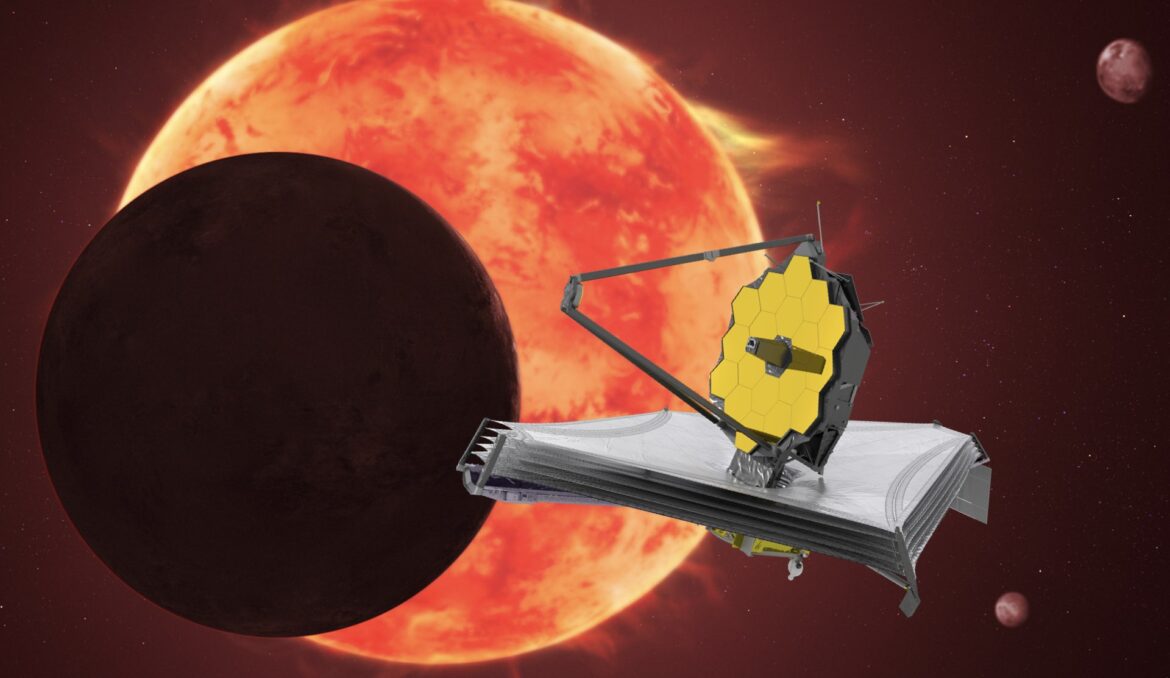
Launched with Ariane 5 on December 25, 2021, the James Webb Space Telescope (JWST), or simply the Webb, is distinguished by its 6.5 m wide mirror, the largest sent into space. It scans the sky from an orbit around the L2 Lagrange point 1.5 million kilometers from Earth and involves NASA, the European Space Agency (ESA), and the Canadian Space Agency (CSA). The Webb’s unprecedented infrared
capabilities benefit several disciplines of astronomy (cosmology, galaxy dynamics, life and death of stars, etc.) and in particular the study of exoplanets, those worlds that revolve around stars other than our own.

TRAPPIST-1

A RED DWARF WITH SEVEN WORLDS

TRAPPIST-1 is a red dwarf star 40 light years away from us . It was discovered in 1999. In 2015, the two Belgian TRAPPIST telescopes(TRAnsiting Planets and Planetesimals Small Telescope), one in Morocco (see the video opposite) and the other in Chile, collected data that revealed the presence of three exoplanets around this star. Observations from other telescopes, including Spitzer, which works in infrared in space, then revealed four other worlds . The usual nomenclature thus uses TRAPPIST-1a for the star, then the other letters in alphabetical order for the seven planets (i.e. from b to h).

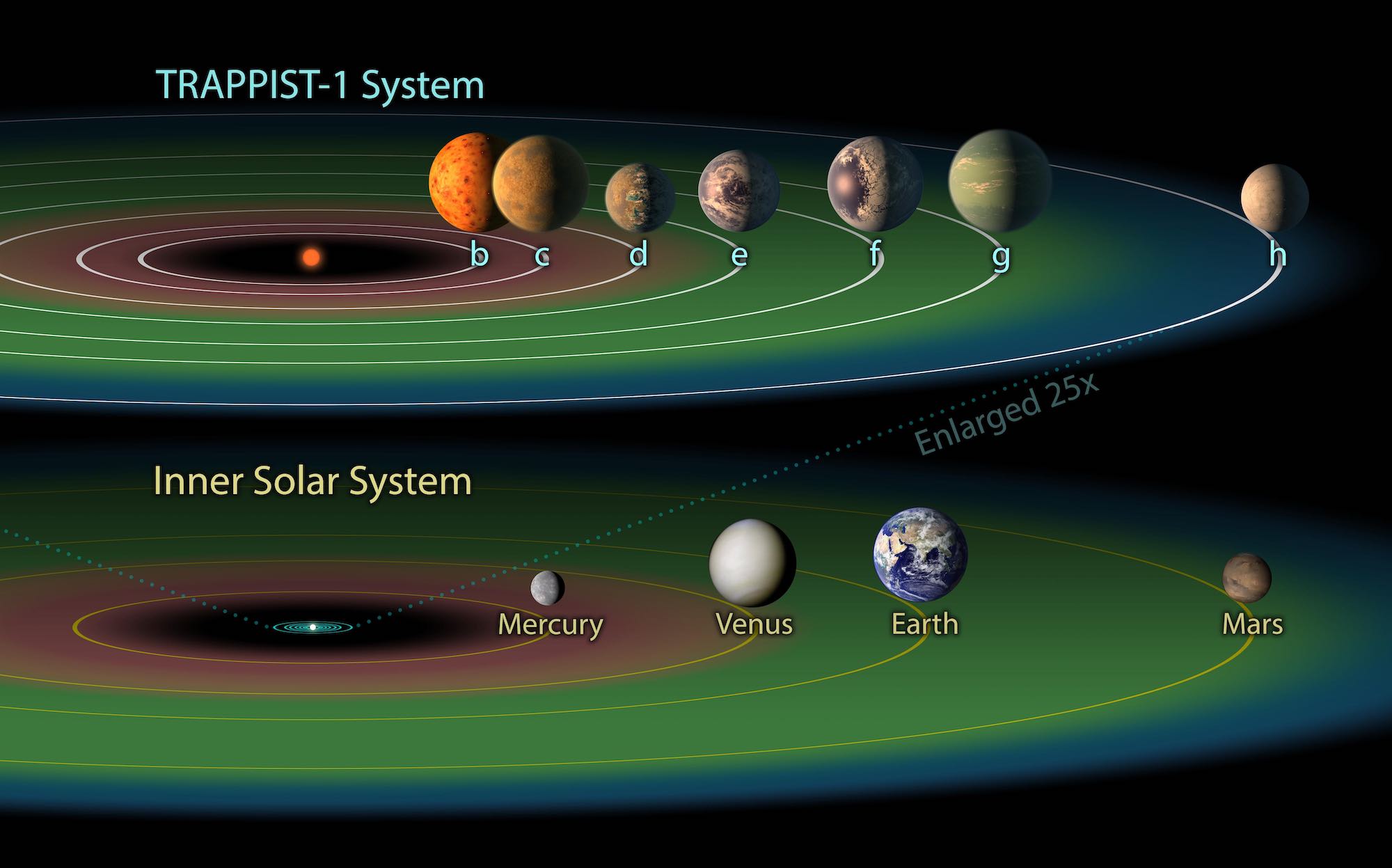
Comparison diagram between the TRAPPIST-1 system and our solar system. Note that the red dwarf and its seven planets do not even reach the orbit of Mercury (by far)!
© NASA/JPL-Caltech

TRAPPIST-1D

A WORLD SIMILAR TO EARTH…

The planetary system around TRAPPIST-1a is of great interest because red dwarfs are the most common stars. Their ability to host worlds means that there are potentially many planets in the universe.
Importantly, TRAPPIST-1a’s seven planets are similar in size to Earth . Finally, TRAPPIST-1d orbits at the edge of what is called the habitable zone , so it is neither too close (it would be too hot) nor too far (too cold) from its star. This is despite being very close to its star (only 2% of the Sun-Earth distance), with the year lasting only four Earth days. A red dwarf being cooler, this compensates for the proximity.

BUT WITHOUT ITS ATMOSPHERE!

All these elements made TRAPPIST-1d a potential “Earth twin” (in addition, it is the third planet in its system, like our world).   However, it seems that TRAPPIST-1d does not have an atmosphere comparable to Earth . This verdict results from spectroscopy observations carried out with the James Webb Space Telescope at the end of 2022 and published in a scientific article in The Astrophysical Journal on August 13. The measurements do not show the presence of water, methane, or carbon dioxide molecules .
Caroline Piaulet-Ghorayeb of the University of Chicago and the Trottier Institute for Research on Exoplanets (IREx) at the University of Montreal, who led this study, puts forward two possibilities that explain the result, while allowing TRAPPIST-1d the capacity to have an atmosphere: ” Its atmosphere could be extremely thin, difficult to detect, a bit like that of Mars. Or it could be covered in very thick, high-altitude clouds, blocking the detection of specific atmospheric signatures, much like Venus .” The scientist acknowledges, however, that “it could be a barren rock , with no atmosphere at all .”

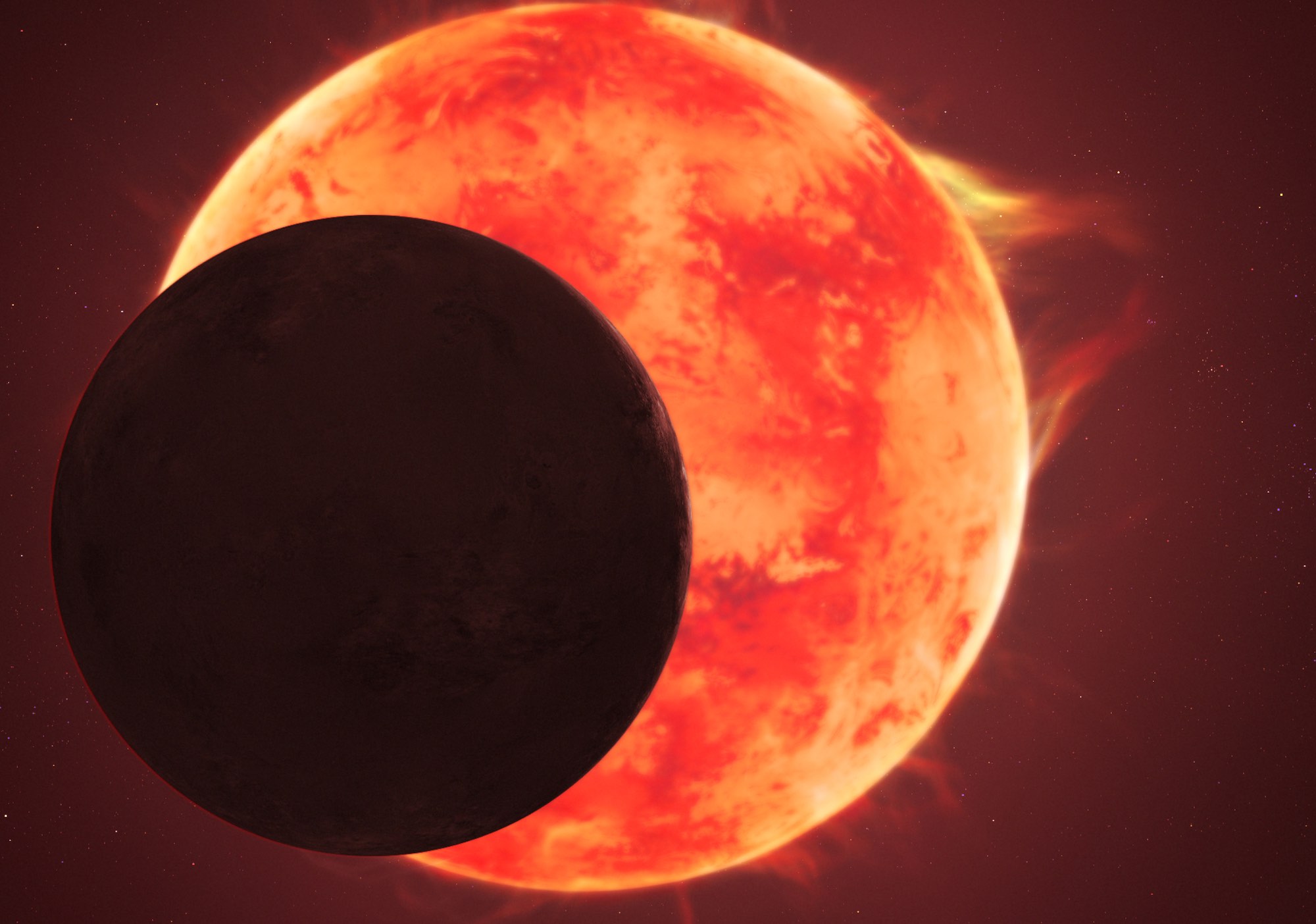
Artist’s impression of TRAPPIST-1d passing in front of its Sun. Spectral analysis of an exoplanet’s atmosphere is often done by observing the starlight passing through the atmosphere of the world in question.
© NASA, ESA, CSA, Joseph Olmsted (STScI)

DID YOU KNOW?

TRAPPIST: A PUN BASED ON BELGIAN BEERS

The TRAPPIST telescopes mentioned at the beginning of the article having been initiated by the University of Liège in Belgium , their acronym, besides meaning TRAnsiting Planets and Planetesimals Small Telescope, is a nod to Trappist-type beers, brewed by Trappist monks or under their control.

Related articles