




• Solar System

A comet from beyond the solar system is coming to visit us

Published on 04 July 2025

Comet 3I/ATLAS is passing through our Solar System. It has arrived from interstellar space. It is only the third object of this type to be identified. Its closest approach to the Sun is expected in late October, providing ample opportunities for observation.

A comet from beyond the solar system is coming to visit us

On July 1, 2025, the NASA-funded Asteroid Terrestrial-impact Last Alert System (ATLAS ) announced the detection of a new celestial object . Since identified as Comet 3I/ATLAS, this object is of interstellar origin . It is the third such object identified to pass through our solar system after Oumuamua and Borisov. Its trajectory, described as hyperbolic and unrelated to the Sun , makes it a subject of study for astronomers.

Updated 07/10/2025: On July 8, the European Southern Observatory, ESO, obtained new images of this object and its movement.

ESO releases new images from 3I/ATLAS

The European Southern Observatory has managed to obtain the sharpest images of this interstellar object yet.

Updated 07/10/2025:

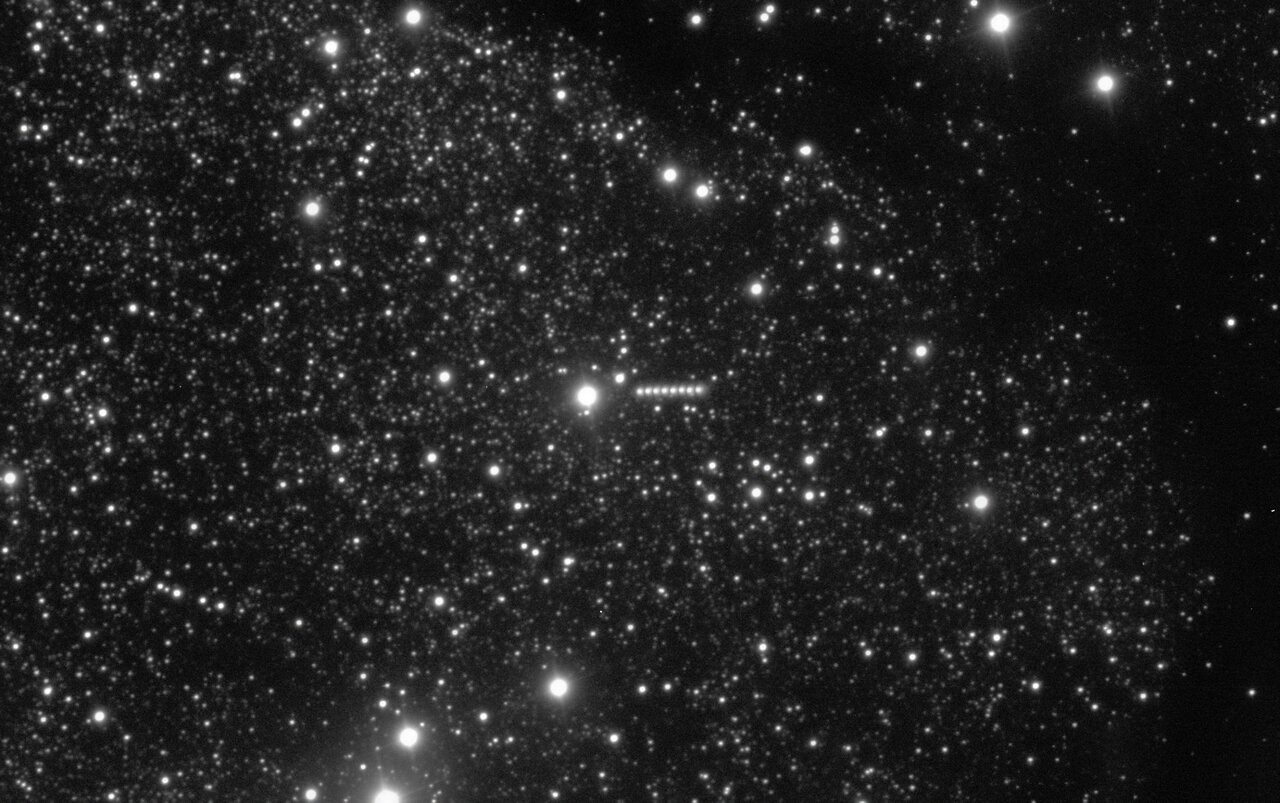
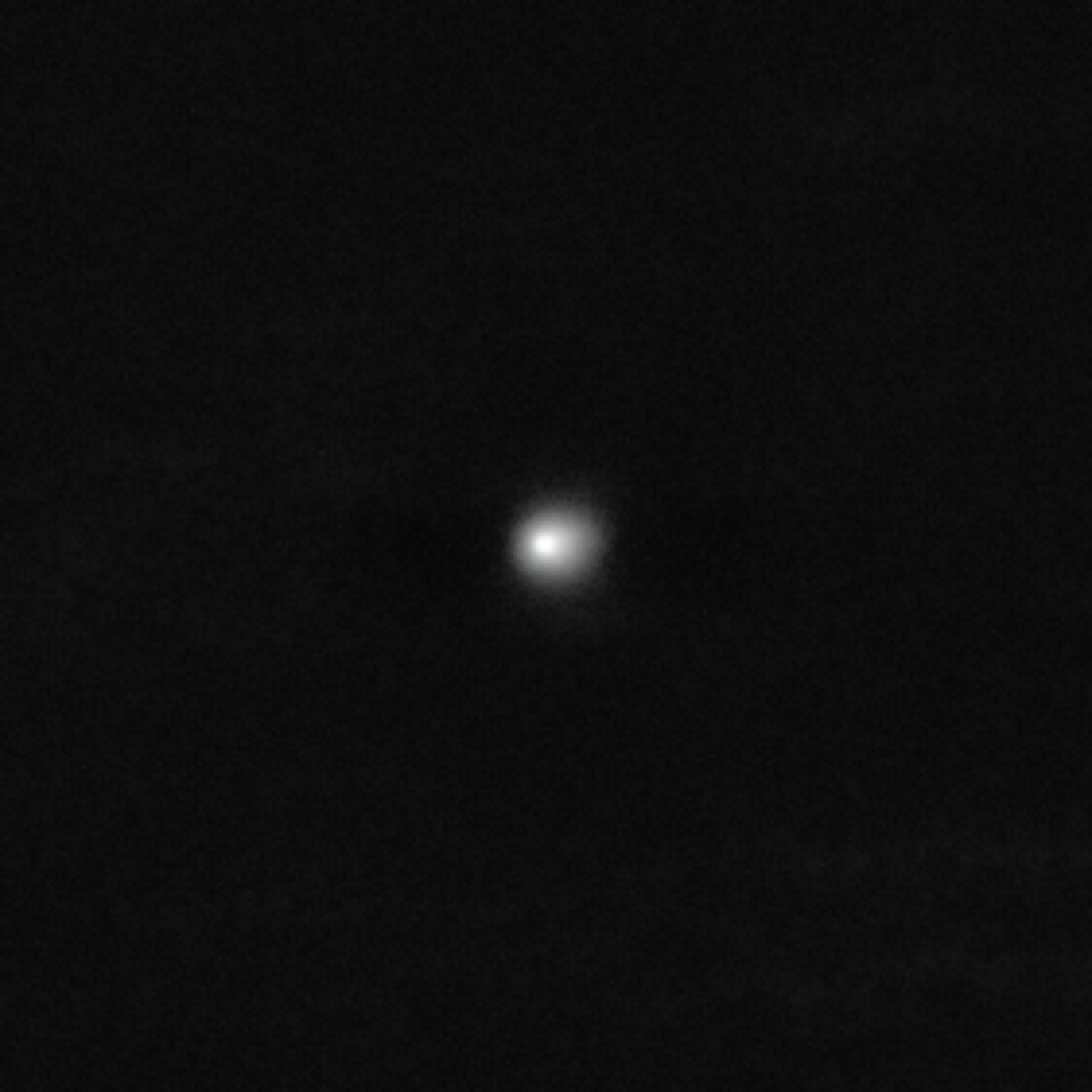
On July 8, the European Southern Observatory released new images of 3I/ATLAS. These images were obtained using the Very Large Telescope (VLT) in Alma, Chile. One image shows the movement of 3I/ATLAS during the night of July 3-4. It is a superposition of several images taken between 6:49 and 7:02 a.m. The second image compiles all the data collected during these 13 minutes to produce the sharpest image of this object since its discovery.

These images of 3I/ATLAS and its movement during the night of July 3-4, 2025, were obtained using the Very Large Telescope.

© ESO

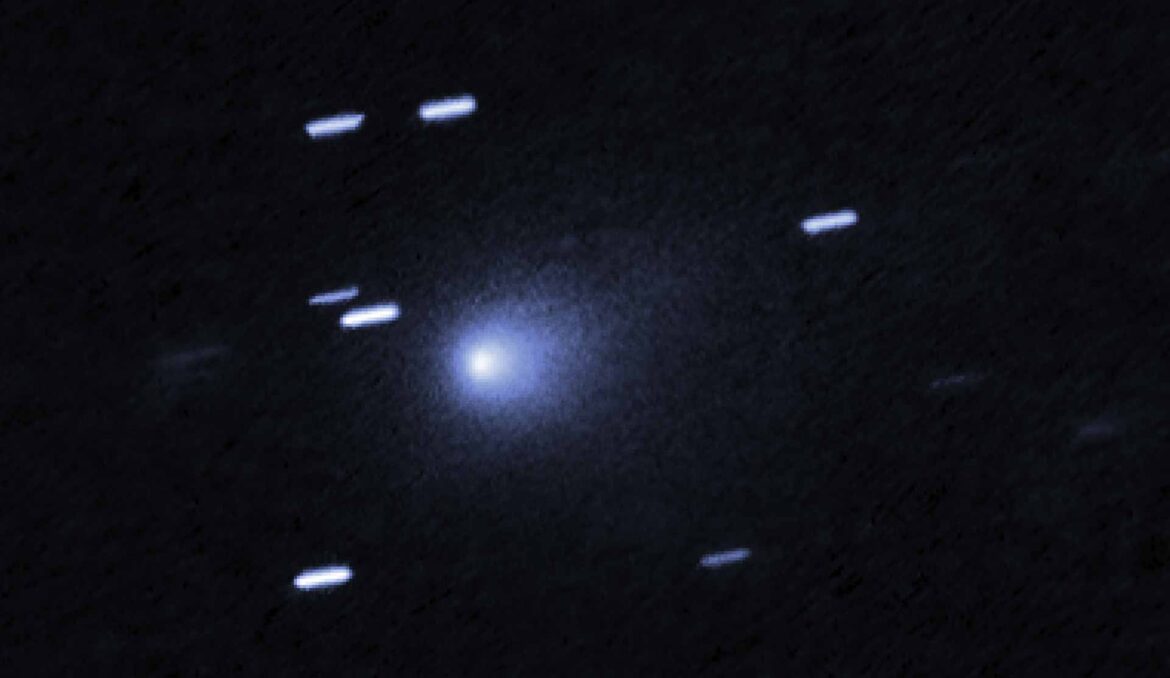
Observation of the interstellar comet 3I/ATLAS by the ESA Las Cumbres Obervatory.

© ESA

A third interstellar visitor

How did the ATLAS System detect and identify the origin of comet 3I/ATLAS?

Comet 3I/ATLAS, originally known as A11pl3Z, was discovered on July 1, 2025, by the ATLAS telescope in Río Hurtado, Chile. At the time of its discovery, the object had an apparent magnitude of 18 and was 527 million km from Earth . It was moving slowly across the sky, bordering the constellations of Ceres Tail and Sagittarius. Initial observations of 3I/ATLAS were unclear as to whether it was an asteroid or a comet . However, follow-up observations on July 2, 2025, by telescopes in Chile , the Lowell Discovery Telescope in Arizona, and the Canada–France–Hawaii Telescope on Mauna Kea showed a coma and a short tail, confirming its nature . It was subsequently given the name 3I/ATLAS. “3I” indicates that it is the third known interstellar object. Before it, Oumuamua was identified as coming from outside the Solar System in 2017. Two years later, another similar object, Borisov, was confirmed.

A journey through our System

Comet 3I/ATLAS will be at its closest approach to Earth at the end of December

3I/ATLAS is following a hyperbolic, unbound trajectory . This means that it is not gravitationally bound to the Sun and will therefore eventually leave the Solar System. It has a particularly eccentric orbit. The comet will reach its perihelion, its closest point to the Sun, around October 30, 2025, at a distance of 1.4 AU, about 210 million km. At that time, it will be traveling at a speed of 68 km/s. Its maximum diameter is estimated at about 20 kilometers. However, as an active comet surrounded by a large envelope of reflective dust, the actual size of its nucleus is expected to be much smaller. The comet will pass close to Mars on October 3, 2025, at a distance of only 29.2 million km. It will then pass 269 million km from Earth on December 19, 2025. Then, it will approach to within about 52 million km of Jupiter around March 16, 2026. Currently, 3I/ATLAS has a magnitude of about 18.8, making it far too faint to be observed with the naked eye or even with amateur telescopes. However, it should brighten slightly as it approaches perihelion.

© ATLAS

Related articles