



• Astronomy
  • Solar System

Euclid discovered a comet

Published on 20 October 2026

Although not designed for this task, the European space telescope Euclid recently detected a previously uncatalogued comet. Designated C/2026 S1 (Euclid), it is 1.3 billion kilometers from Earth.

Euclid discovered a comet

Since 2023, Euclid has been scanning the sky with its 1.2-meter diameter primary mirror. This European Space Agency (ESA) space telescope is equipped with a 600-megapixel camera , and its mission is to create a 3D map of the universe in order to obtain data that could help scientists understand dark matter (matter that cannot be seen, but whose gravitational effects are observable) and dark energy (the force that accelerates the expansion of the cosmos). This program, therefore, does not seek to detect comets.

EUCLID IS NOT SUITED FOR COMETS.

Although primarily a cartographer, particularly adept at cataloging galaxies , Euclid has already demonstrated its ability to produce stunning images of the sky . Its mission, mainly focused on dark matter and dark energy, means it prioritizes scanning parts of the celestial sphere beyond the plane of our solar system . As the ESA explains, the goal is to ” reduce unwanted reflections from dust that could hinder sensitive deep-sky imaging .” This choice, justified by the scientific objectives, means that Euclid does not observe sections of the sky that favor the discovery of new objects (asteroids or comets) in our solar system.

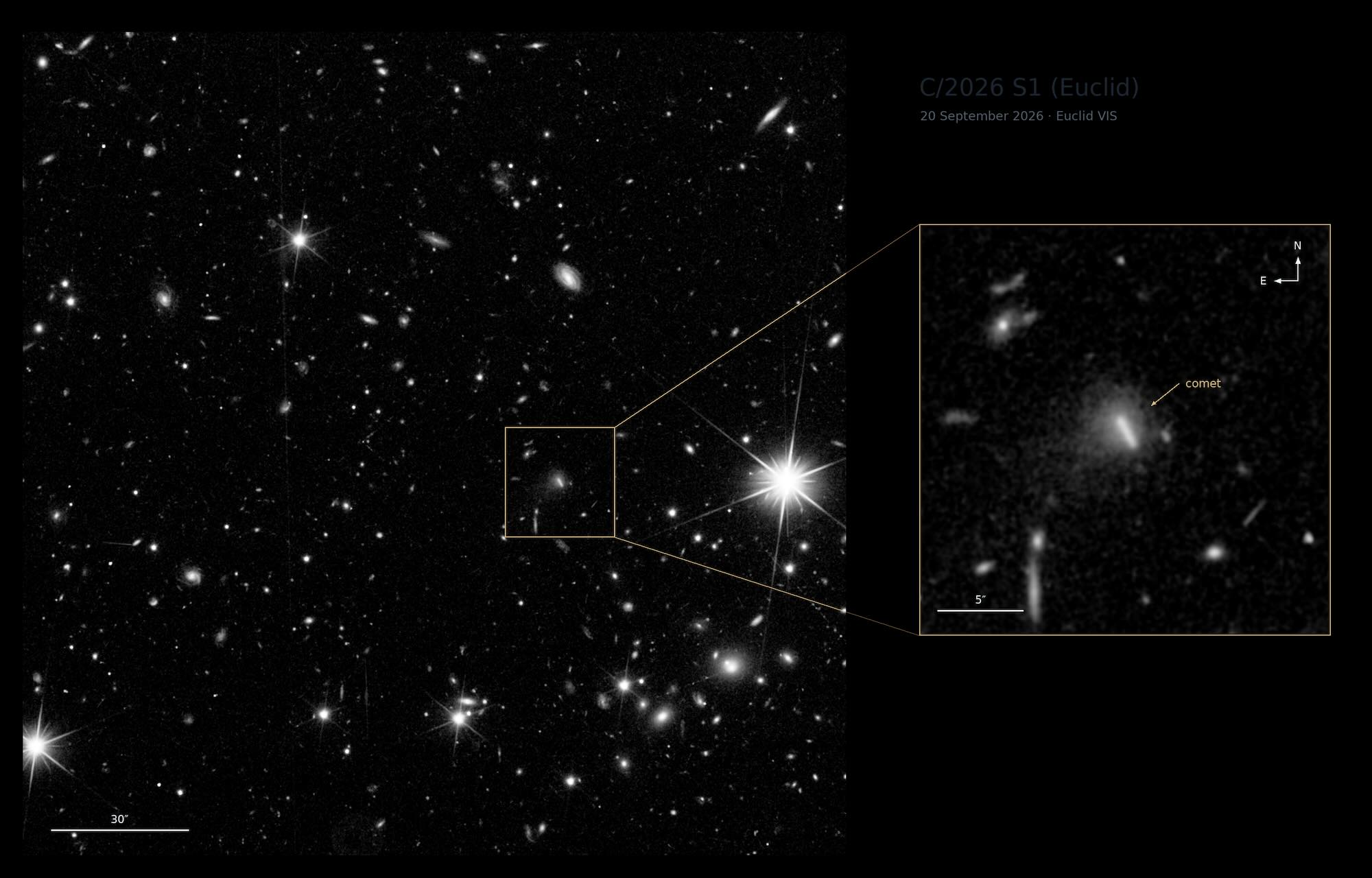
The image on the left is one of the images acquired by Euclid in September that led to the discovery of a new comet (this one is from September 20). On the right, a close-up shows the comet appearing as a faint trail due to its own motion.
©ESA/Euclid/Euclid Consortium/NASA, M. Pöntinen et al. 2026

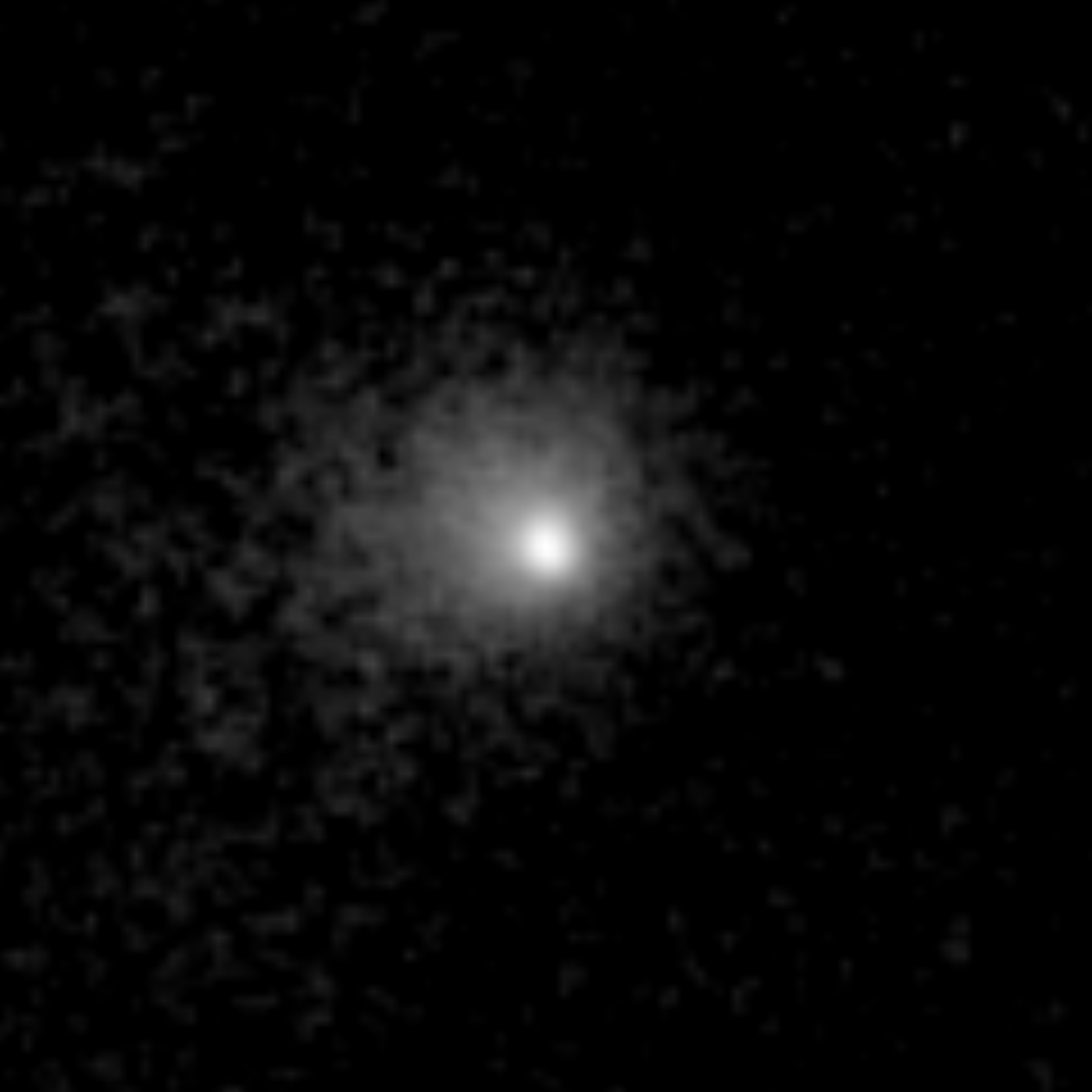
Comet C/2026 S1 (Euclid) as seen by the VIS instrument on the European Space Telescope. Unlike the previous image, the exposure was shorter, and the comet no longer appears as a trail.
©ESA/Euclid/Euclid Consortium/NASA, M. Pöntinen et al. 2026

AND YET…

But in astronomy, boundaries are far more blurred and nuanced than very human territorial limits. Thus, even if it doesn’t look where it should, Euclid has already captured comets in its images . These were all known and duly cataloged , however . Until last September. From the 16th to the 24th, while collecting 16 images for its Deep Field North (one of the priority regions of the sky in the observation program), Euclid captured an object that left a small trail, revealing a relatively rapid proper motion compared to the rest. By examining the data, doctoral student Mikko Pöntinen from the University of Helsinki, with the help of colleagues working on the European telescope, realized that it was a comet that didn’t appear in any catalog.

C/2026 S1 (EUCLID)

Normally, the software used by Mikko Pöntinen is designed to flag objects in the Solar System so they can be “set aside,” as Euclid primarily aims to map the positions of galaxies in the quest to understand dark matter and dark energy. However, a previously unknown comet deserves special attention!
The observation was therefore reported to the Minor Planet Center (MPC) of the International Astronomical Union so that other ground-based observatories could confirm or refute the discovery, as is standard procedure.

A LONG-DISTANCE COMET

On October 8, the Minor Planet Center (MPC) confirmed the comet as new and assigned it the designation C/2026 S1 (Euclid) . The letter C indicates that it is a non-periodic or long-period comet (over 200 years). Indeed, initial calculations show that Euclid’s comet takes several thousand years to orbit the Sun. 2026 indicates the year, while S identifies the half-week of discovery (letters A through Y without I), and the number is the order number (S1 therefore signifies the first comet found during the second half of September).
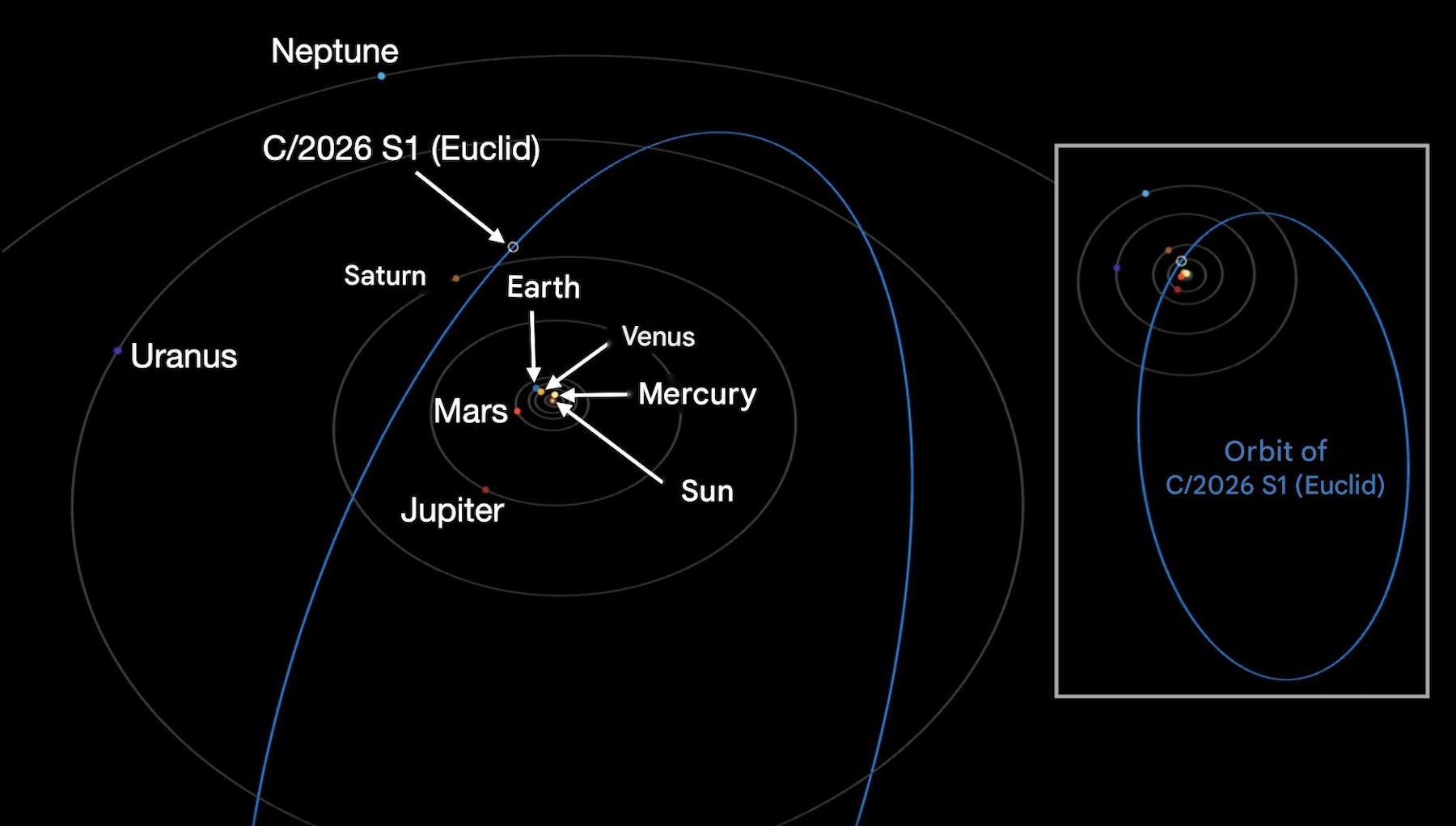
Furthermore, C/2026 S1 follows a trajectory that is almost perpendicular to the plane of the Solar System, and Euclid captured it when it was 1.3 billion kilometers from Earth, essentially “above” the Sun.
Several additional observations will be conducted by different ground-based telescopes in order to refine the orbital parameters of the first comet discovered by Euclid.

Position of comet C/2026 S1 (Euclid) at the time of its discovery by the European Space Telescope Euclid.
© Cité de l’espace, based on diagram and data from the European Space Agency’s (ESA) NEO Toolkit.

Related articles