



• Launch

Starship IFT9: A crucial test flight for SpaceX

Published on 21 May 2025

The ninth test flight of SpaceX's giant Starship launch vehicle, IFT9, is highly anticipated after the consecutive loss of both Ship upper stages during IFT7 and 8 in January and March.

Starship IFT9: A crucial test flight for SpaceX

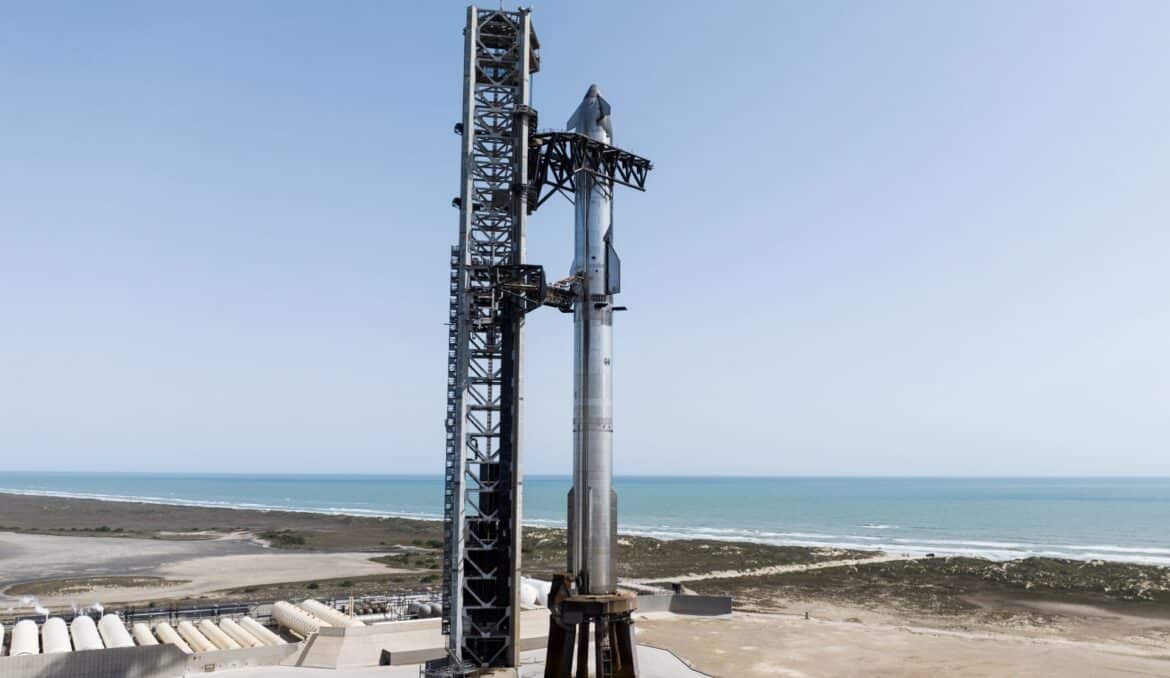
SpaceX currently has two launchers, namely the Falcon 9 (whose first stage is reusable) which dominates the space access market and the Falcon Heavy, a more powerful version of the previous one. But for its future, the firm founded by Elon Musk is counting on the Starship, an enormous 5000 ton and 124 m high fully reusable launcher which displays unprecedented performances (100 tons in low orbit). Since April 2023 with IFT1 (for Integrated Flight Test), SpaceX has been conducting test flights of the Starship in its complete version (both stages together) from its Starbase facilities near Boca Chica in Texas. After IFT7 and IFT8 flights with disappointing results last January and March, IFT9 promises to be a crucial step in the program.

Screenshot from the FAA website’s General Statements page, where the authorization for IFT9 was published on May 22, a launch described as a “return to flight” due to the loss of Ship 34 during IFT8.

FAA Authorizes IFT9

May 23 Update

On May 22, the Federal Aviation Administration (FAA), which authorizes space launches from the United States, approved IFT9, stating that “Starship can return to flight.” For the time being, and after several date slippages, Integrated Flight Test 9 (IFT9) is currently scheduled for Tuesday, the 27th, at 6:30 p.m. Texas time, or Wednesday, the 28th, at 1:30 a.m. for metropolitan France.
This flight will likely (barring any surprises) follow the logic of the most recent precedents, namely a departure from Starbase with a partial orbital insertion of the Ship upper stage, which will aim for a controlled splashdown in the Indian Ocean.

The big news is the reuse of the first stage Super Heavy Booster 14 that was used for IFT7 in January (4 of the 33 Raptor engines were changed). This is the first time that SpaceX has attempted to reuse a 71 m high Super Heavy. However, this time there should not be a spectacular return maneuver on the Mechazilla launch tower of the first stage, but a voluntary splashdown in the waters of the Gulf of Mexico off the Starbase.
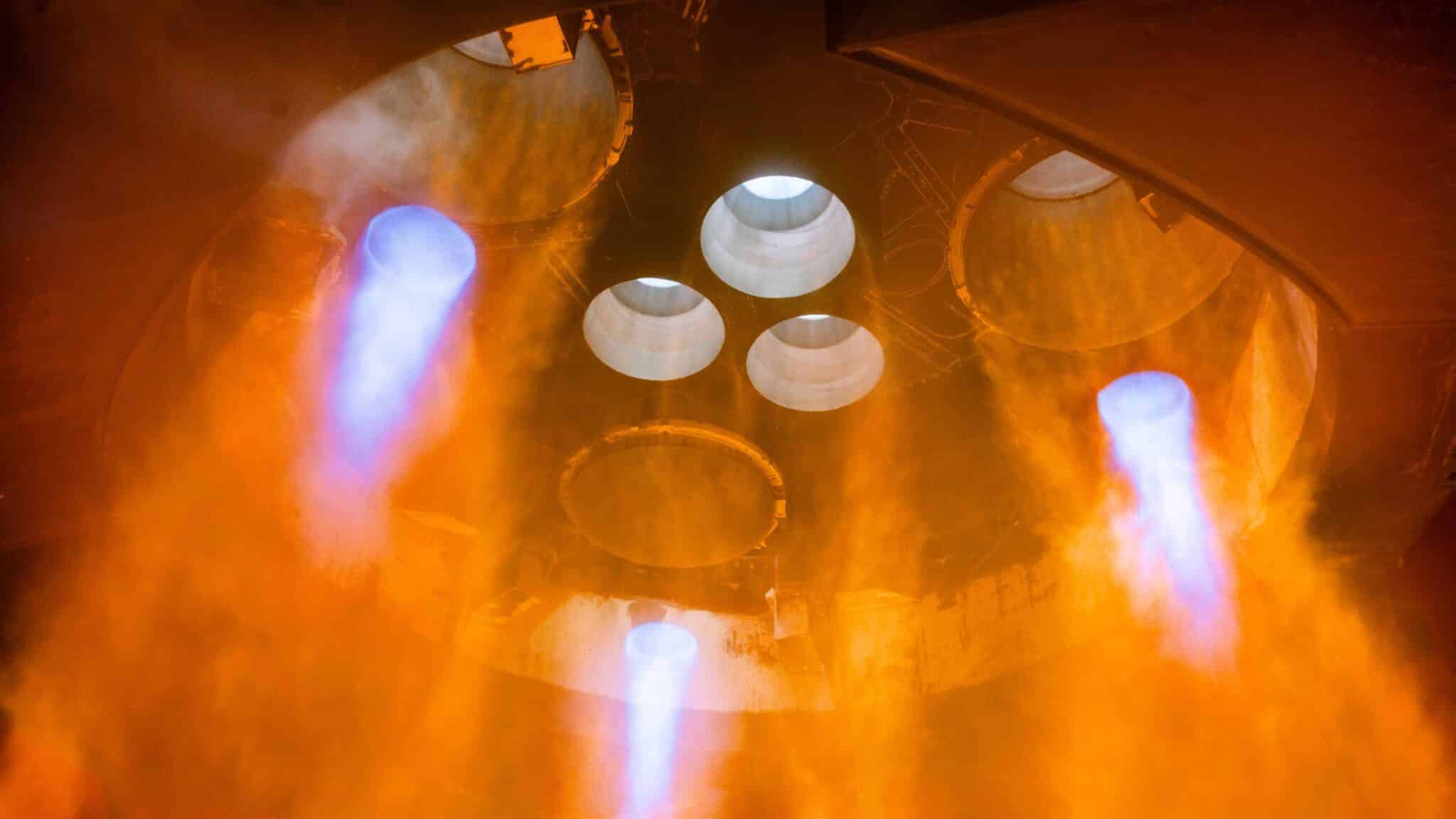
The second stage, the 52 m long spacecraft part, will be Ship 35 again in version 2. SpaceX has not communicated much about the modifications made compared to Ship 33 and 34 (also version 2) which were lost during IFT7 and 8. Each time, a problem occurred in the propulsion bay (which includes 6 Raptor engines).

Screenshot

Ground testing of Ship 35’s six Raptor thrusters on May 12th in preparation for IFT9. Inset: A view of the thrusters during this static firing. Remember that the Raptor is a thruster that uses methane and liquid oxygen.
© SpaceX

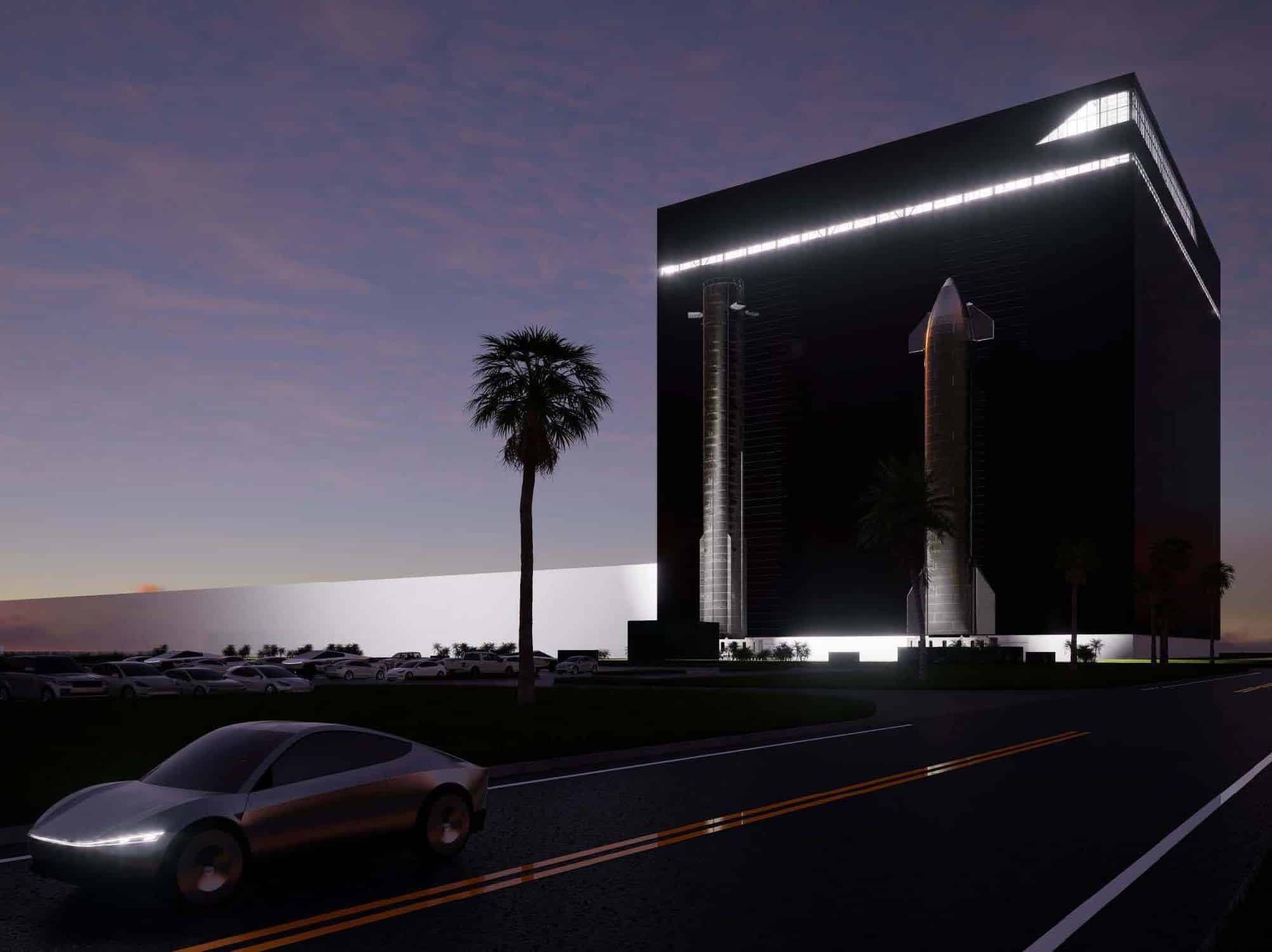
This illustration from SpaceX shows what Gigabay will look like, a vast hangar dedicated to Starship assembly in Florida, which is scheduled for completion by the end of 2026. On its website, the private firm explains that “with launch facilities in Florida as well as Texas, we will be in a position to quickly ramp Starship’s launch rate via rapid reusability.” Once in orbit, the Ship upper stage has very little fuel in reserve and, for many missions (including serving as a lunar lander), requires other Starship “tanker versions” to provide what is missing. The number of flights required (at least ten for the Moon) is based on the “rapid reusability” mentioned by SpaceX.

© SpaceX

A test flight more crucial than the previous ones?

For each IFT, SpaceX set up a live video broadcast that promotes strong media coverage of the development efforts of its giant launcher. The problems encountered (and somewhat expected) were sometimes presented as bitter failures while the test flight nature of these Integrated Flight Tests had been clearly stated. However, each IFT objectively showed one or more notable progress compared to the previous one. And this is what was missing from IFT7 and 8, which was   mainly remembered for the loss of the Ship version 2 in similar conditions. However, the Starship in a specific version must serve as a lunar lander for NASA’s Artemis program. After the Moon tour of Artemis II brought forward to February 2026 , the return of the Americans to our natural satellite is aimed at 2027, which puts an obvious scheduling pressure on the Starship lunar version. Especially since the American agency wants a successful automatic lunar landing test of the SpaceX craft before the mission. Ultimately, there is little time left to achieve this objective, which also requires delicate maneuvers to fill a Starship in orbit (which has not yet been tested). Clearly, a new failure of the Ship in version 2 would be seen as a problem affecting Artemis.

Added to this is increased media attention due to Elon Musk’s significant involvement in American politics, including his support for Donald Trump.

Finally, let’s not forget that SpaceX is investing heavily in the “Starship system,” which is not just a prototype. In addition to a second launch pad at Starbase in Texas, the private firm is already building a launch and return tower at the Kennedy Space Center in Florida, as well as a vast 115-meter-high hangar called Gigabay . It will be used for the on-site assembly of Starship stages.
SpaceX is therefore counting on the success of its giant launcher for its future, making IFT9 an ​​all the more crucial test flight.

Related articles