• Astronomy

NASA now lists more than 6,000 exoplanets

Published on 19 September 2025

Thirty years after the discovery of the first exoplanet in 1995, the counter of these worlds outside our Solar System, as kept by the American space agency, has for the first time crossed the barrier of 6,000 confirmed objects.

NASA now lists more than 6,000 exoplanets

Thirty years ago, in October 1995, astronomers Michel Mayor and Didier Queloz of the Geneva Observatory announced the discovery of 51 Pegasi b, an extrasolar planet (or exoplanet) orbiting the star 51 Pegasi about fifty light-years from Earth.
This discovery, which earned Mayor and Queloz the Nobel Prize in Physics in 2019, would become a particularly fruitful field in astronomy in the years that followed: the study of worlds orbiting stars other than our Sun.

Exoplanet counter exceeds 6,000

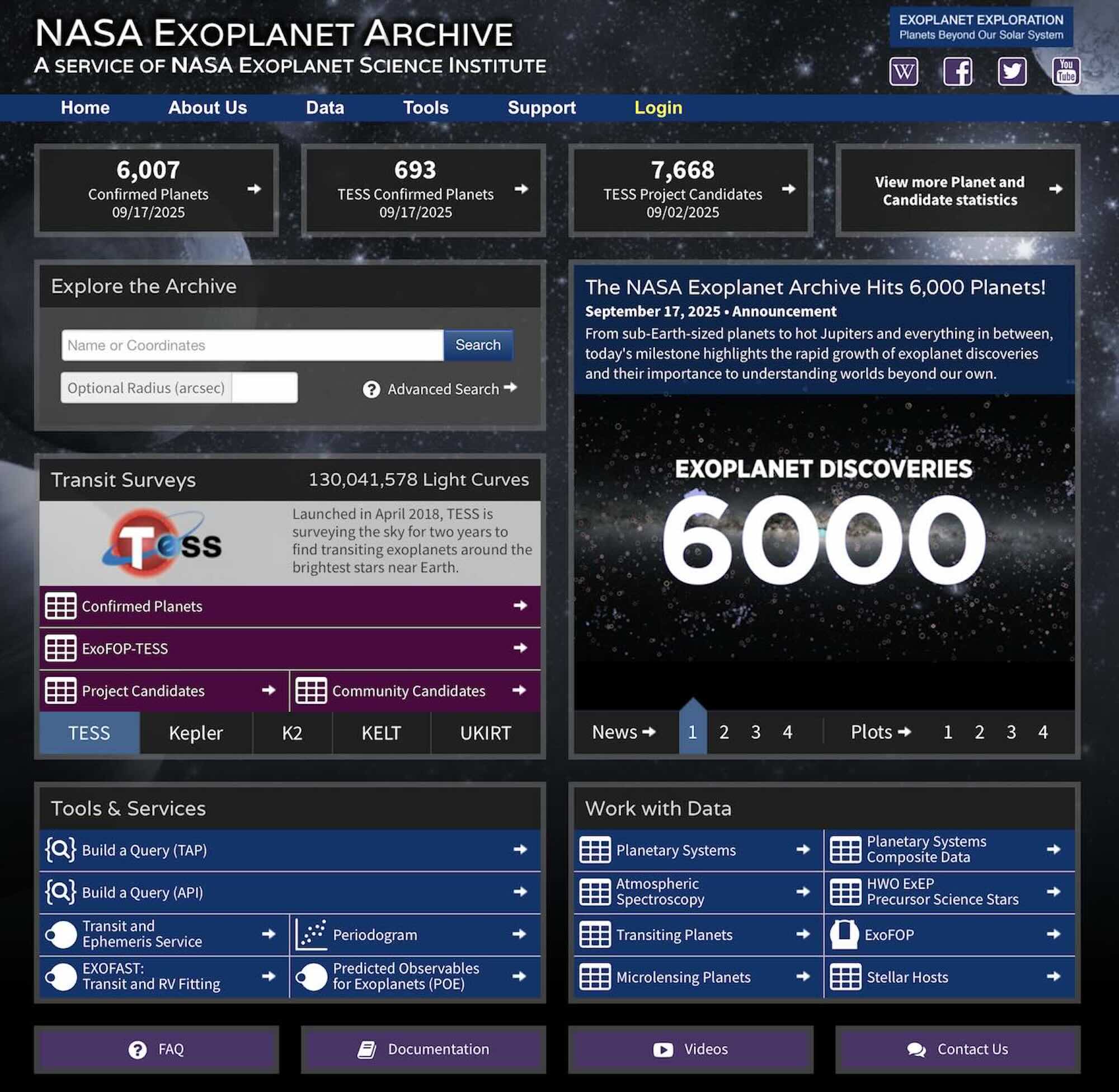
Within the American agency, the management of the exoplanet catalog is carried out by the NASA Exoplanet Science Institute . Various telescopes, some operating from space, detect these distant worlds. But these detections, most often indirect (see below), require confirmation by other observations before resulting in an official entry in the catalog of so-called confirmed exoplanets. On September 17, 2025, the arrival of new confirmations broke the 6,000 barrier with exactly 6,007 exoplanets , while the census was at 5,989 during the previous count on August 28.

Of these 6,007 extrasolar planets, NASA makes the following distribution: 2,035 are catalogued as similar to Neptune, 1,984 are gas giants (like Jupiter or Saturn for example), 1,761 are super-Earths (essentially rocky, but much larger than ours), 220 are considered terrestrial-type (rocky and similar in size to Earth) and 7 are classified as undetermined.

Screenshot from the NASA Exoplanet Archive website . Note the announcement of the 6,000 barrier crossed and in the top left corner the counter at 6,007 confirmed exoplanets as of September 17, 2025.

© NASA/screenshot Space City

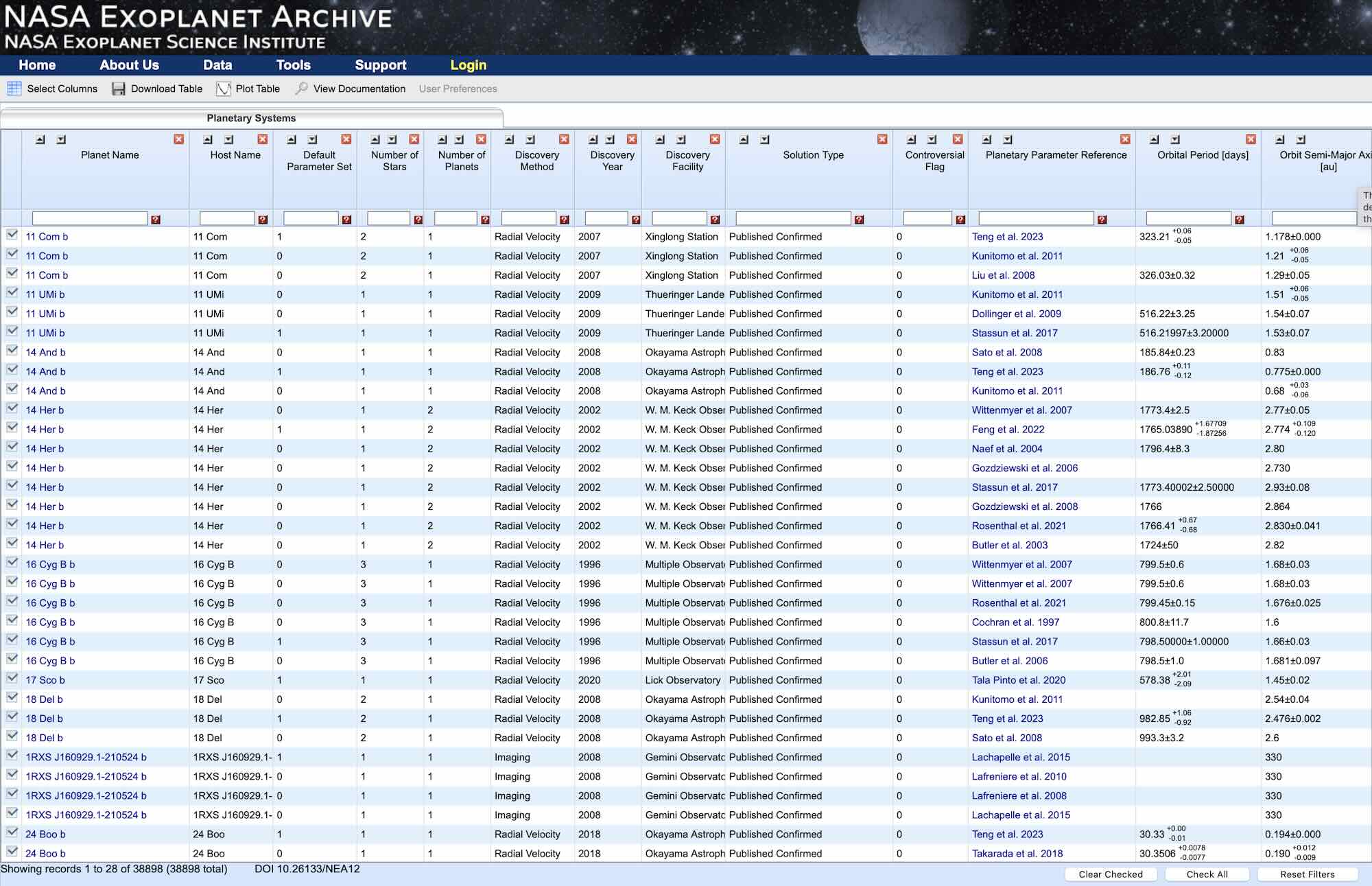
The NASA Exoplanet Archive catalog is available online. All data is accessible.
© NASA/Cité de l’espace screenshot

8000 additional exoplanets pending

This figure of 6007 will probably evolve very quickly, because there are more than 8000 candidate exoplanets waiting to be examined which, if confirmed, will gradually join the NASA Exoplanet Science Institute catalog. We also note an acceleration in the rate of discoveries and confirmations since it was necessary to wait until 2013 to have 1000 certified exoplanets, 18 years after the discovery by Michel Mayor and Didier Queloz. The barrier of 5000 (therefore 4000 more!) was reached less than 10 years later in March 2022. Three years and a few months later, 1000 were added to reach the 6007 of September 17.

Essentially indirect detection

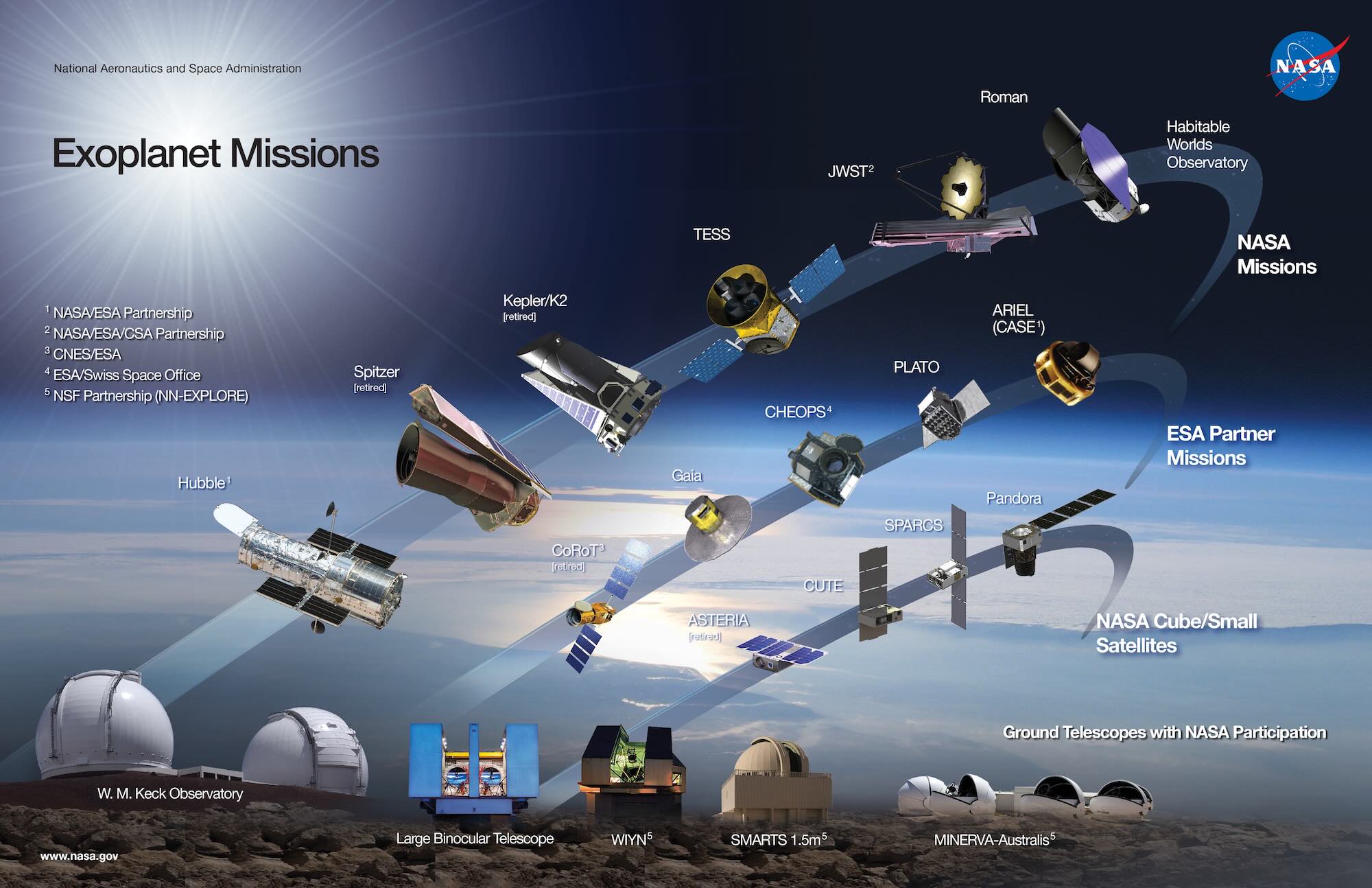
Let us remember that the vast majority of these 6,007 exoplanets were discovered indirectly . There are certainly a few examples of direct imaging of an extrasolar planet (1.4% of cases), but astronomers mainly use the transit method (74%) or radial velocity (19%) . These figures are from the NASA Exoplanet Archive website.

For the transit method , the exoplanet betrays its presence by passing in front of its star, which blocks part of the latter’s light. This type of observation makes it possible to deduce the size of the world in question. Radial velocity is based on the disturbance that the exoplanet induces on its star. By orbiting around its sun, a planet slightly moves it, which gives a so-called radial velocity. This was incidentally the method of Michel Mayor and Didier Queloz. Radial velocity offers the opportunity to calculate the mass of the world in question. By combining transit and radial velocity (when possible), we then determine the mass and size of the world concerned.
You will notice that the percentage of these three methods does not reach 100%, because there are others that are more technically “advanced”, such as gravitational microlensing (an exoplanet interposes itself between the Earth and a distant star, which deflects the light from the latter).

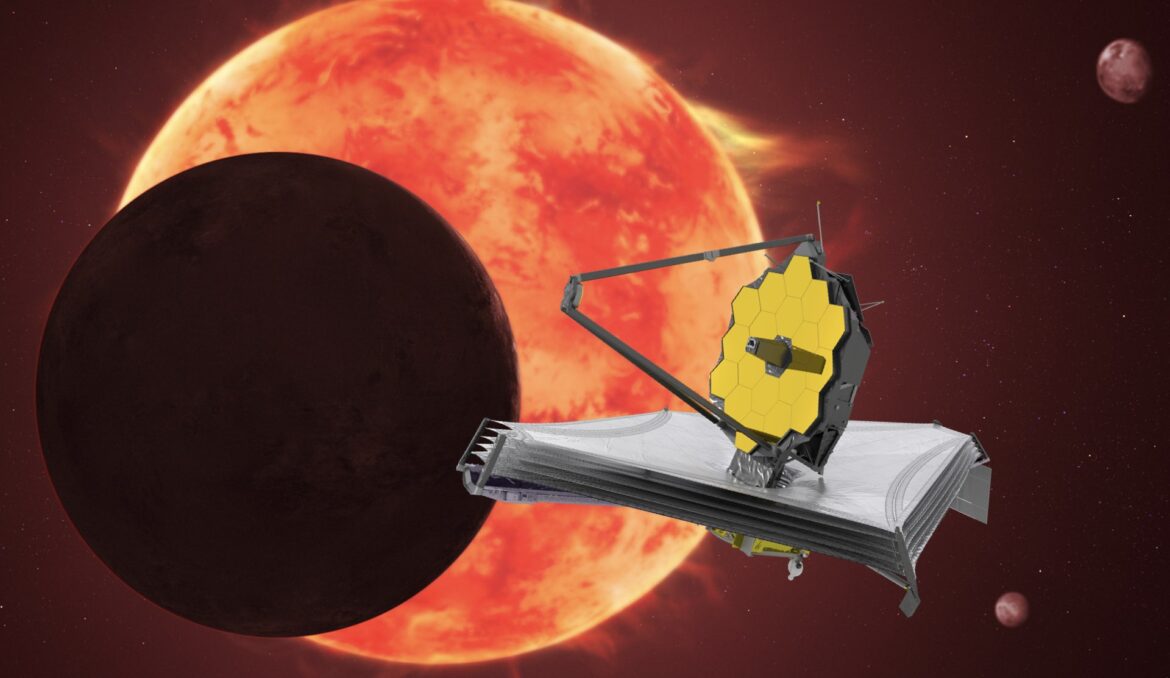
NASA illustration intended to highlight the immense diversity of worlds within the “bestiary” of exoplanets. No current imaging technique can depict these distant worlds in this way: these are therefore artistic interpretations based on the limited data obtained. For example, if the composition of the atmosphere suggests water vapor, clouds would be drawn.

© NASA 

Earth’s twin is still missing

Of these just over 6,000 worlds, the term “Earth-like” for 220 exoplanets should not lead one to believe that another Earth has been found . These are certainly planets of similar size, but none are considered close to ours in terms of habitability, atmospheric composition, and other parameters. On the other hand, strange worlds abound with gas giants that orbit very close to their star (planets nicknamed hot Jupiters), planets covered in lava, not to mention those that revolve around double stars. In the latter case, NASA did not fail to make the connection with Tatooine from the Star Wars saga .

As the number of confirmed exoplanets reaches over 6,000, NASA reiterated its goal for the coming years: ” The future of exoplanet science will focus on searching for rocky planets similar to Earth and studying their atmospheres to detect biosignatures, any characteristic, element, molecule, substance, or feature that can be used as evidence of past or present life .”
The search for an Earth twin remains a priority . Of course, the distances involved make any mission, even a robotic one, to such an exoplanet illusory, but this discovery would show that the mechanisms that made a habitable and inhabited world like ours possible are at work elsewhere and perhaps even relatively widespread.

Related articles