



• Exploration
  • Solar System

Tianwen 2 : China targets an asteroid and a comet

Published on 26 May 2025

China launched Tianwen-2 on May 29 to return samples from the asteroid Kamoʻoalewa and explore comet 311P/PANSTARRS. This mission is key to understanding the solar system and the origin of water on Earth.

Tianwen 2 : China targets an asteroid and a comet

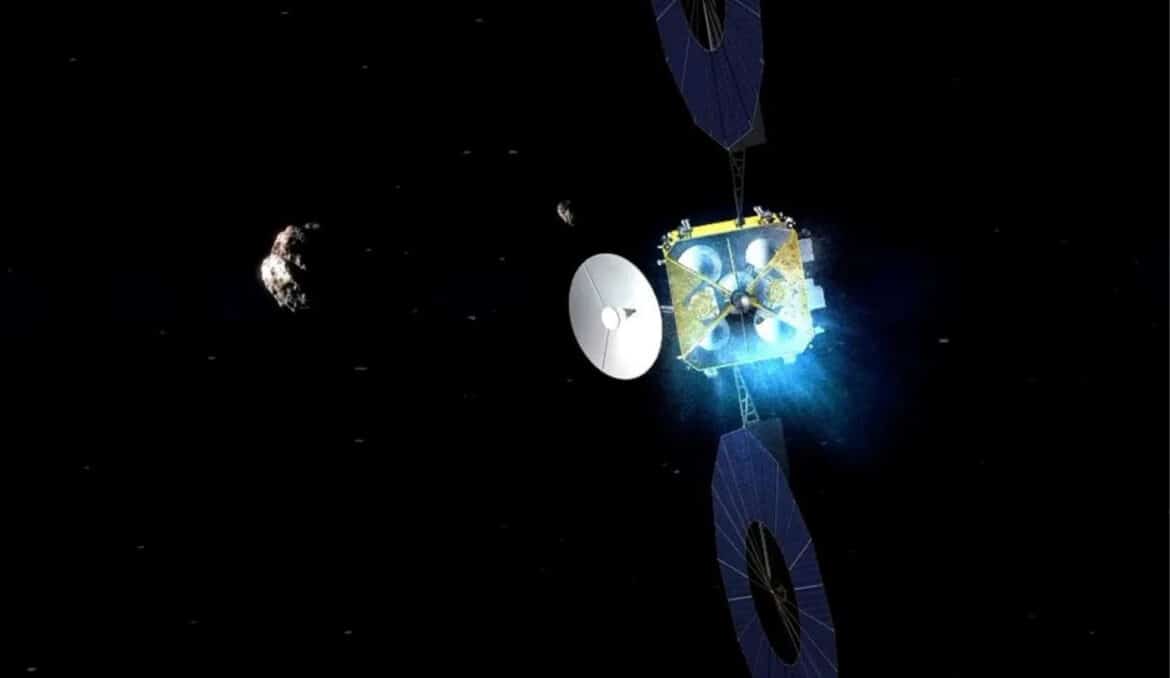
China is aiming to score a double whammy. The Tianwen-2 probe is scheduled to launch on May 29 from the Xichang Satellite Launch Center . This 10-year journey has an ambitious dual objective: to collect samples from a single near-Earth asteroid and then explore a comet in the main belt. This mission, part of China’s solar system exploration program, promises to provide insights into the origins of our planetary system and the distribution of water .

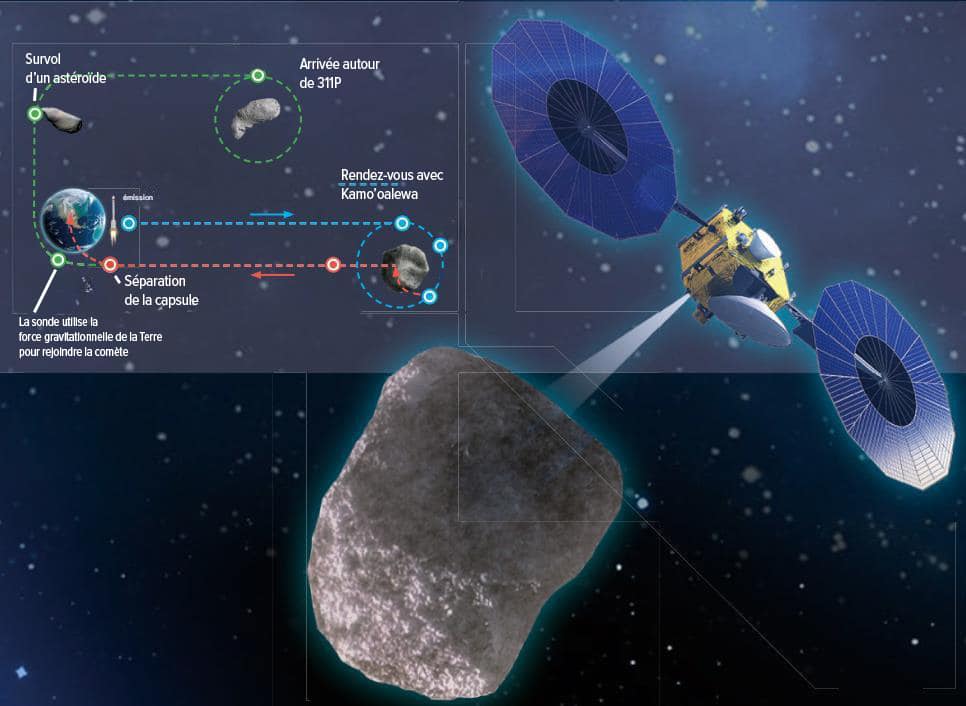
The journey of Tianwen-2 will last ten years.

© CNSA / Translation City of Space

Act One: The Rendezvous with an Asteroid

Kamoʻoalewa: An Unusual Near-Earth Asteroid


Tianwen-2’s first target is the near-Earth asteroid designated 2016HO3, also known as Kamoʻoalewa . This object is a quasi-satellite of Earth. It circulates in an orbit similar to ours. Kamoʻoalewa is of great scientific interest because it is believed to have undergone very little change since the formation of the Solar System 4.6 billion years ago. This orbit of this quasi-satellite facilitates transit from Earth. However, its physical characteristics represent a technical challenge. Very small in size, estimated to be between 40 and 100 meters in diameter, Kamoʻoalewa has very weak gravity. Furthermore, it rotates very rapidly, completing a complete rotation every 28 minutes.

Kamoʻoalewa: A Fragment of the Moon?

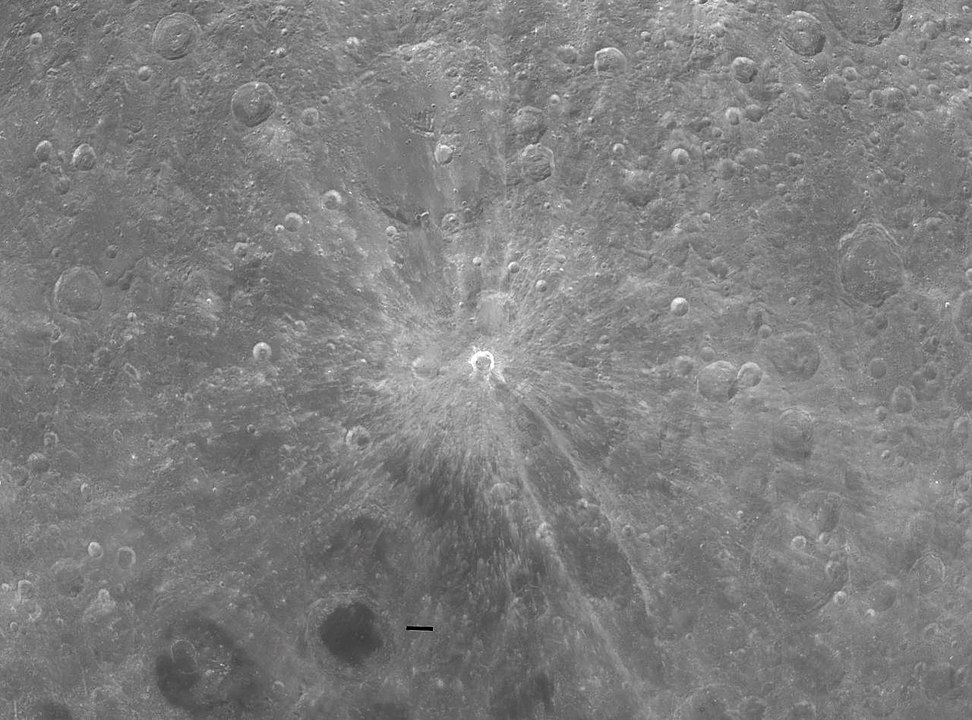
Why such interest in such a small body? Kamoʻoalewa is particularly intriguing because it could be a fragment of the Moon , torn off during an impact. This piece could have been torn from the Giordano Bruno crater . This crater is located on the far side of the Moon. If this is confirmed, analysis of the samples would allow us to study the material ejected from an intermediate-sized impact and directly link it to its source crater. This would also allow us to better understand the physics of impacts.

Beyond basic research, the study of Kamoʻoalewa also has a planetary defense stake . Its size is comparable to that of the object that caused the Tunguska event in 1908. Understanding the structure and cohesion of such a body is essential for possible future deflection strategies . In this respect, Tianwen 2 would be a complementary mission to the American DART or Hera missions , launched in October 2024.

Kamoʻoalewa may be a piece of the Moon ejected from this crater, Giordano Bruno, located on the northern hemisphere of the far side of the Moon.

© NASA

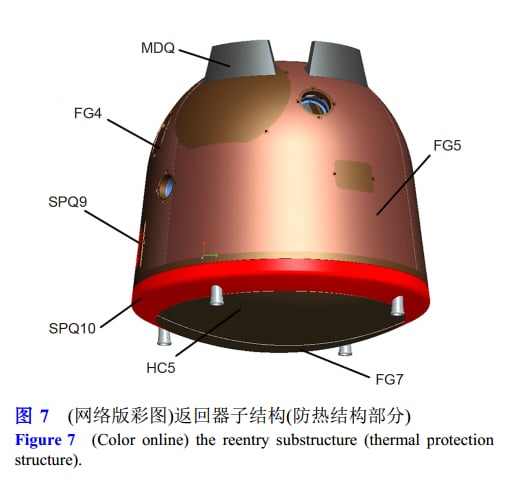
The Tianwen-2 capsule will be able to bring back between 100g and 1kg of samples from the asteroid.

© CNSA

Touch-and-Go and Anchoring

One of the main missions at Kamoʻoalewa is the collection of samples, a first for China. The probe is expected to collect between 100g and 1kg. To overcome the challenges of the asteroid’s low gravity and rapid rotation, Chinese engineers plan to use two methods. First, a ”  touch-and-go ” approach, already employed by the Japanese Hayabusa 2 and American OSIRIS-REx missions . The second, more daring, involves the use of robotic arms equipped with drills to anchor themselves into the rock , similar to the Philae lander’s attempt . This would be the first time this anchoring method has been used on an asteroid. Once the samples are collected, the probe will head towards Earth to release the capsule containing the precious material, expected around 2027-2028. The capsule will enter Earth’s atmosphere and be slowed by a parachute deployed at supersonic speed, a first for Chinese engineers. An in-flight capture by helicopter is planned to avoid any risk of contamination.

Act Two: The Exploration of 311P/PANSTARRS

A Hybrid Comet in the Main Belt

After dropping the samples, Tianwen-2 will use Earth’s gravity assist to continue its trajectory towards its second target: the comet designated 311P/PANSTARRS. Located in the main asteroid belt, between Mars and Jupiter, it has the particularity of having hybrid characteristics between an asteroid and a comet . It is characterized by activity whose origin remains mysterious, potentially due to impacts or the release of volatile elements.

The study of 311P/PANSTARRS, which is expected to be completed around 2033-2034, will allow us to characterize this new family of objects and determine the amount of water they contain . The presence of ice in the asteroid belt is a very important avenue for researching the origin of water on Earth. It will orbit between 398 and 555 million kilometers, making it the most distant object studied by a Chinese space probe to date.

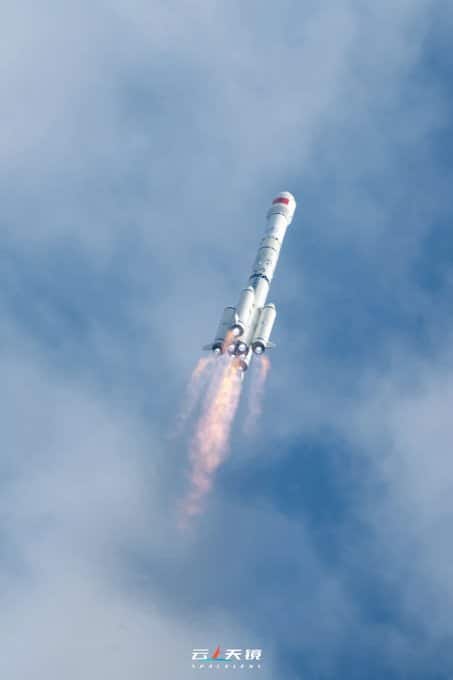
The Tianwen-2 probe will be launched by a Long March 3B Y111 launch vehicle.

© CNSA

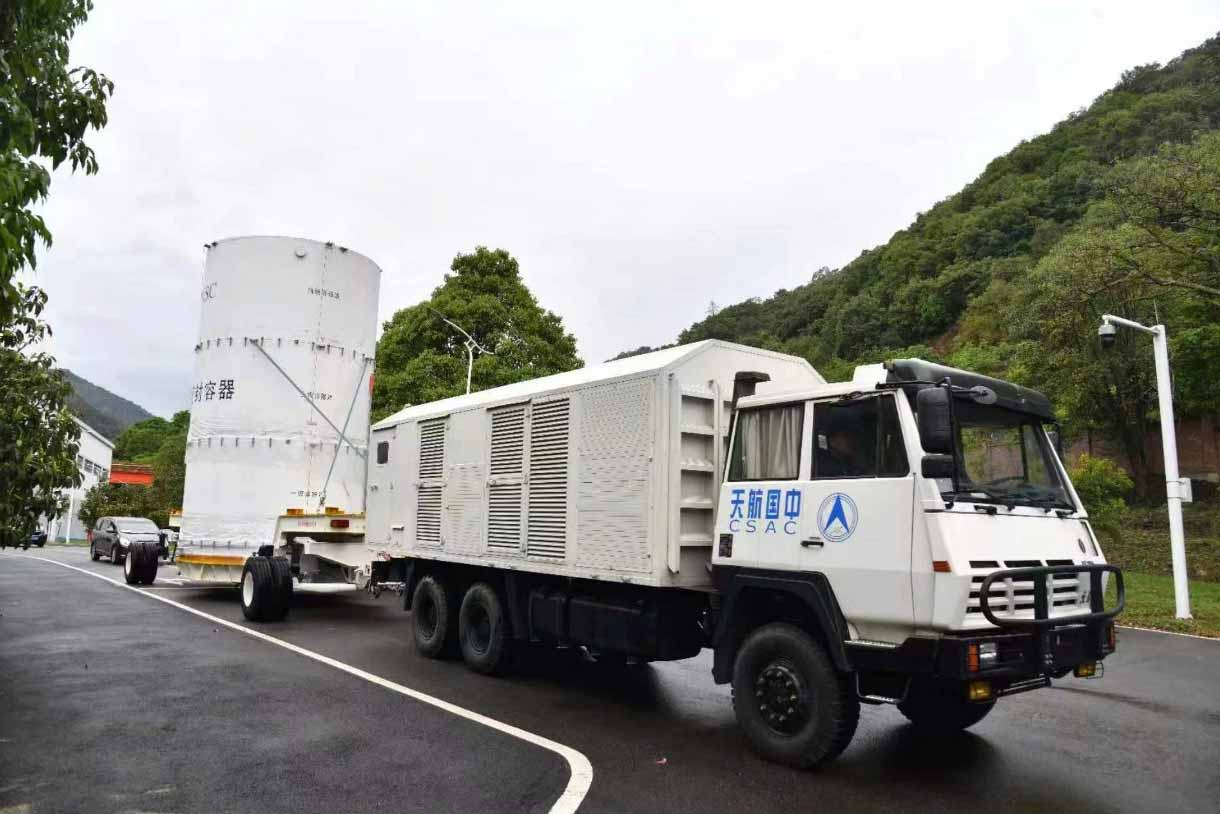
In mid-May, the Tianwen-2 probe was moved to the launch site to be integrated into the launcher and undergo final tests before takeoff.

© CNSA

A Cutting-Edge Scientific Arsenal

Objectives and Instruments

To achieve these objectives, the probe carries a total of 11 scientific instruments, including 8 remote sensing instruments. These include cameras (color, navigation, multispectral, hyperspectral), spectrometers (visible/infrared, thermal) to analyze the composition and surface, particularly in search of water and organic compounds. The probe is also equipped with a laser detector , a ground-penetrating radar (a first for an object of this size, capable of probing the internal structure), a magnetometer, and particle and dust detectors, including one developed in collaboration with Russia.

Related articles