



• Moon

Margaret Hamilton, the Apollo computer scientist, has passed away

Published on 08 October 2026

Born in 1936, computer scientist Margaret Hamilton led the team in charge of the software for the Apollo program, including the software that enabled the moon landing. She passed away on September 30, 2026.

Margaret Hamilton, the Apollo computer scientist, has passed away

The Apollo program most often evokes the image of the enormous Saturn V rocket, 111 meters tall and weighing nearly 3,000 tons at liftoff, associated with images of the moonwalkers. Among the many technological challenges that the lunar missions required overcoming, there is one less well-known but equally essential: software . This “onboard intelligence” within the Apollo spacecraft came from a team at the Massachusetts Institute of Technology (MIT) led by Margaret Hamilton .
She passed away on September 30, 2026, at the age of 90, and her death was announced by MIT on October 7.

MARGARET HAMILTON

THE “MOTHER” OF APOLLO’S BRAIN

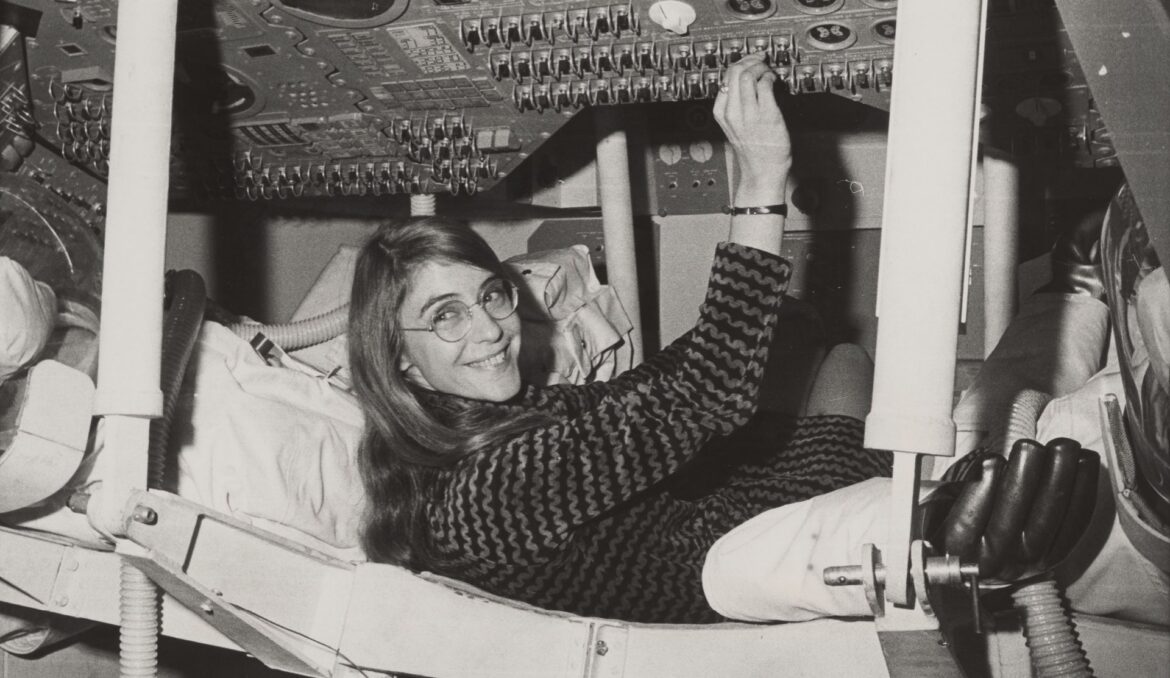
Born on August 17, 1936, in Paoli, Indiana, Margaret Elaine Heafield (who would become Margaret Hamilton after her marriage in 1958) initially studied mathematics before joining the meteorology department of the prestigious Massachusetts Institute of Technology (MIT) in 1959, where she developed weather forecasting software . In the early 1960s, she worked on military computing at MIT’s Lincoln Lab. In 1965, she joined the team developing software for the Apollo lunar program spacecraft (also at MIT). She was the first female computer scientist on this project and later became the team leader. Both the Command Module (the capsule) and the Lunar Module relied on a revolutionary technology at the time: fly-by-wire, where pilot commands no longer operated hydraulic or mechanical systems, but rather passed through electrical systems controlled by a computer .

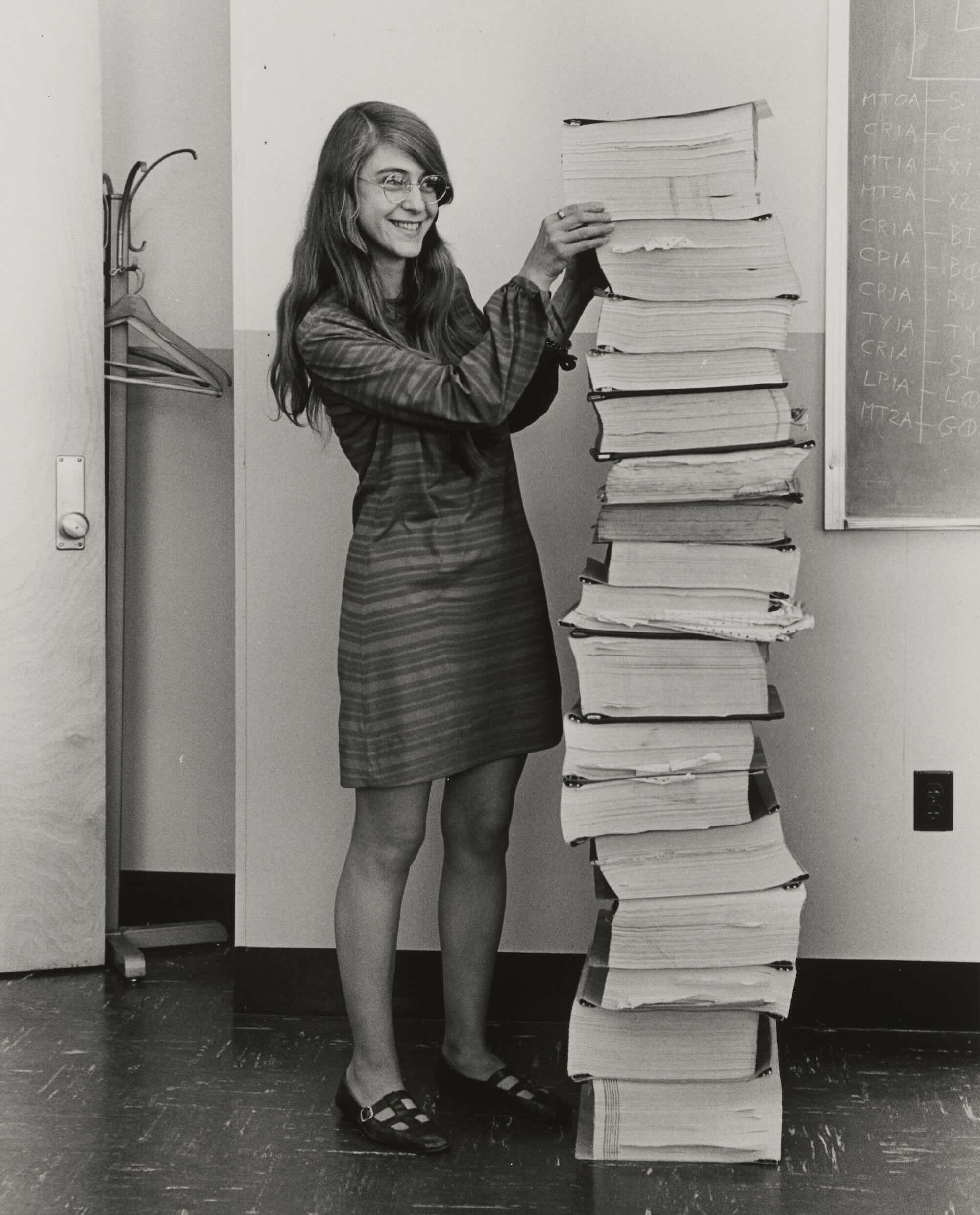
Margaret Hamilton and the software listing developed for the onboard computing systems of the Apollo program spacecraft.
© MIT

Interview with Margaret Hamilton about the software designed for the Apollo program.

ERROR 1202

THE BRILLIANT IDEA THAT SAVED THE MOON LANDING

The Apollo Lunar Module relied on an Apollo Guidance Computer (AGC) to handle automated phases as well as piloting actions by the astronauts (fly-by-wire principle). While the Apollo 11 lunar module, Eagle, was descending towards the Moon on July 20, 1969, the AGC repeatedly displayed error 1202. This was because the rendezvous radar with the Apollo capsule, which wasn’t needed at that moment, continued to send data that overloaded the computer. Yet, on the ground, controllers indicated that the mission could continue—a possibility made possible by a brilliant feature of the software designed under the direction of Margaret Hamilton. The program contained instructions by which the AGC set aside secondary tasks to focus on those established as priorities. Error 1202, therefore, didn’t prevent landing, but rather signaled that the computer was prioritizing the main tasks.

A RECOGNIZED LEGACY

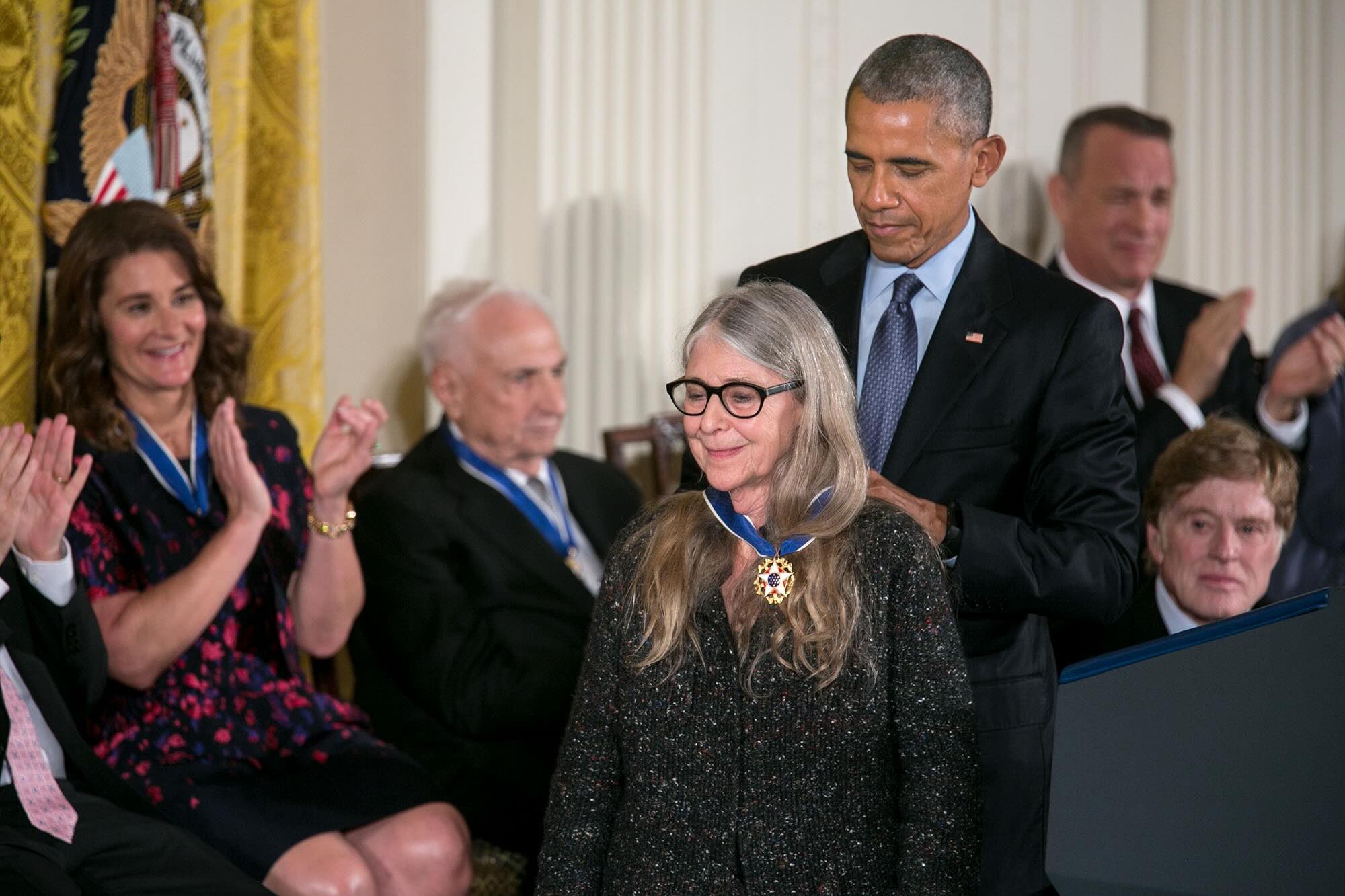
Through her work, Margaret Hamilton is considered the founder of the concept of software engineering ,a term she was the first to use . Her approach to integrating error detection and task prioritization into programs proved essential to the success of the Apollo program before becoming a standard in everyday computing. She consulted for NASA on the software aspects of the Skylab space station and later the space shuttles. In the 1970s, she co-founded Higher Order Software (HOS), and later Hamilton Technologies. Her work has been recognized with several awards, including a NASA Exceptional Space Act Award in 2003. In 2016, President Barack Obama awarded her the Presidential Medal of Freedom , the nation’s highest civilian honor alongside the Congressional Gold Medal.

In 2016, at the White House, Barack Obama awarded Margaret Hamilton the Presidential Medal of Freedom.
© White House/Lawrence Jackson

Related articles